Using Patchouli Oil on Skin: A Careful First Step
Patchouli is a scent first. Put it on skin the way a perfumer would, as a small, well-diluted note, and it can be a lovely, grounding finish to a body oil. Treat it as a skin routine with a goal, and you are asking more of it than anyone has shown it can do. This is how we would approach it, in the order you would meet the decisions.
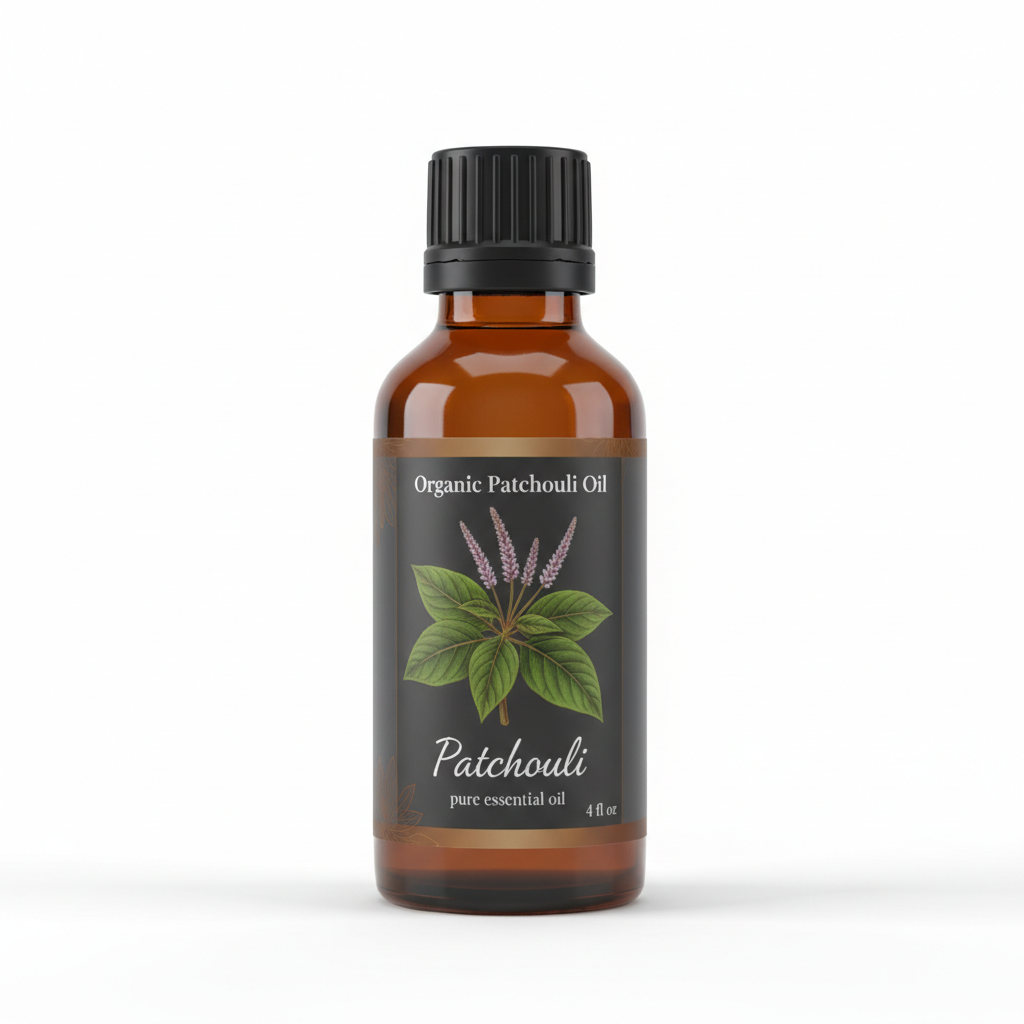
Patchouli Essential Oil
Our own Patchouli Essential Oil, in sizes from 0.5 oz to bulk.
From $20.99
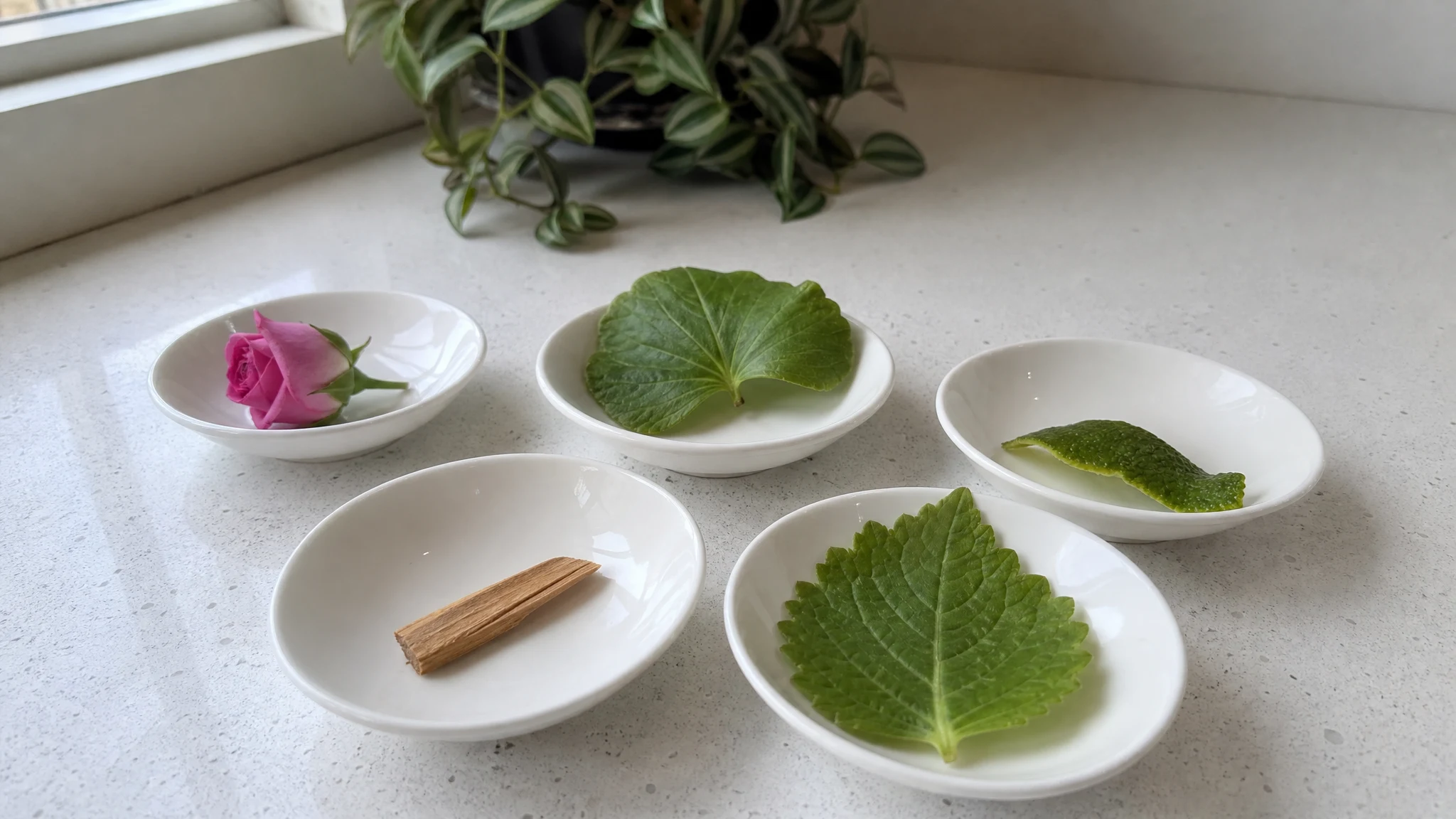
Shop Now →There is an easy way to tell yourself you are being careful and still rush, and we would like you to avoid it. Patchouli is dark, dense and long-lasting, and a little goes a very long way. Before anything else, open the bottle and spend a minute with the smell. Ask yourself honestly whether you want this aroma on your skin all day, because you will be carrying it with you.
First, whether it suits you
A few situations call for a pause or a professional before patchouli goes near your skin:
- Eczema-prone, very dry or broken skin. Our caution article is the place to start, and a dermatologist is the right person to ask.
- A history of reacting to perfumes or scented products. A dermatologist or allergist can tell you what you react to; a home test cannot. See our patch test guide for what it can do.
- Pregnancy or nursing, or any medical condition. Please speak to your physician before use. Our pregnancy article sets out what the authorities publish.
- Children. Keep the oil away from children; it is not a product for their skin, and a paediatrician is the person to ask.
What the safety documents say
The European Food Safety Authority's panel, assessing patchouli oil as an animal feed additive, concluded it should be considered an irritant to skin and eyes and a dermal and respiratory sensitiser. That is a hazard classification for a different purpose, not a cosmetic limit, but it is why we recommend keeping dilution modest. In patchouli's favour, the Tisserand Institute lists it among oils with too few furanocoumarins to be phototoxic, so unlike expressed citrus oils it does not carry a sun-exposure restriction on its own. Any citrus oil you blend with it still might.
How much
We recommend diluting our oil to 0.5% to 2% in a carrier oil and patch testing first, and we start at the low end. The Tisserand Institute offers general guideline ranges for oils without specific restrictions: 0.5% to 1.2% for facial cosmetics and underarms, 1% to 3% for body oils and lotions, 2% to 4% for bath products, and 0.2% to 1% for sensitive or impaired skin. We have not found a patchouli-specific maximum from Tisserand or IFRA, so where those ranges run above our line we follow the lower figure, and we do not treat 2% as a safe number. If you are making something to sell, check the current IFRA standards for your product type.
Here is the arithmetic, using the common convention of 20 drops per millilitre: 30 ml (1 oz) of carrier at 0.5% takes about 3 drops, at 1% about 6, at 2% about 12. For 10 ml at 0.5%, that is about one drop. Our dilution guide has the full table, and a gram scale is more reliable than a dropper.
Where on the body
- Try the body before the face. The ranges are wider and the face is more reactive. Keep it well away from the eyes.
- Choose a spot you can see and wash, such as the forearm, rather than the neck where a collar will hold the scent against you. Patchouli lingers on skin and cloth for days, so a light touch makes sense.
- Not on broken skin or under a dressing. If a rash or other reaction appears, Poison Control's advice is to stop using the product immediately and gently wash it off.
Making a blend you will enjoy
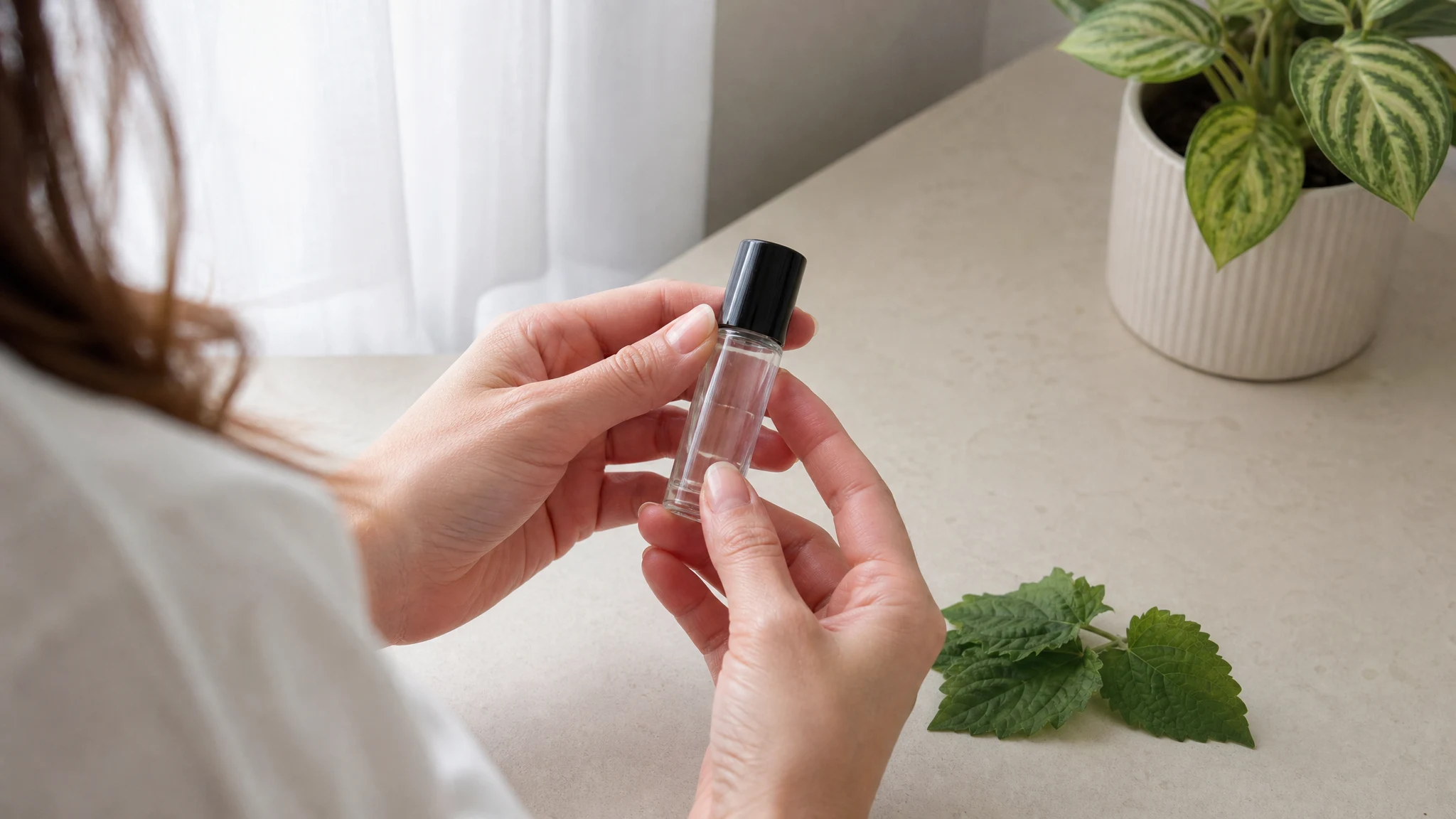
A body oil is a pleasant thing to make once the safety questions are answered. Choose a carrier oil with a texture you like, because that is what you will feel every time you use it. Measure the patchouli carefully, mix, and label the bottle with the date and the percentage so you remember what is in it. Then smell it again a day later. Blends often feel rounder after a rest, and you may find you prefer it a little lighter than you first planned.
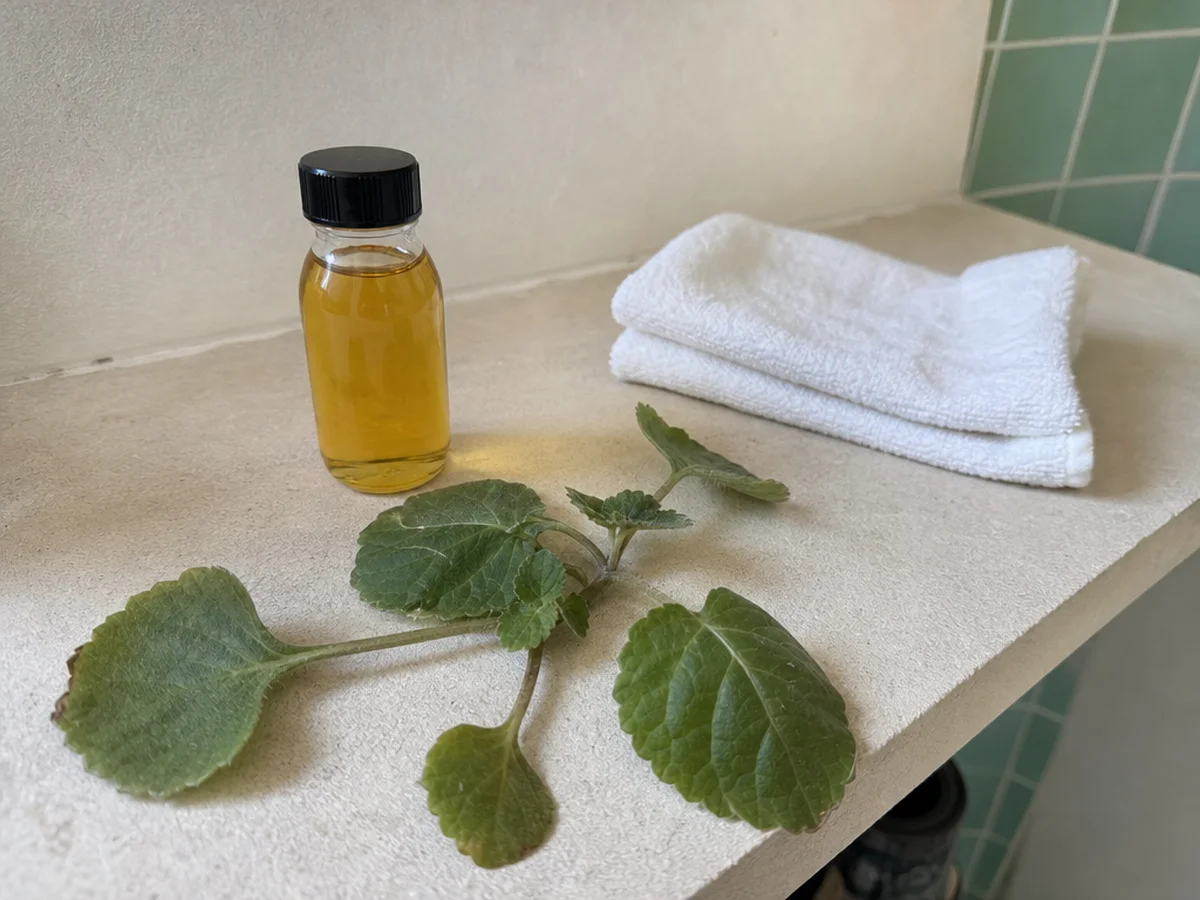
The patch test
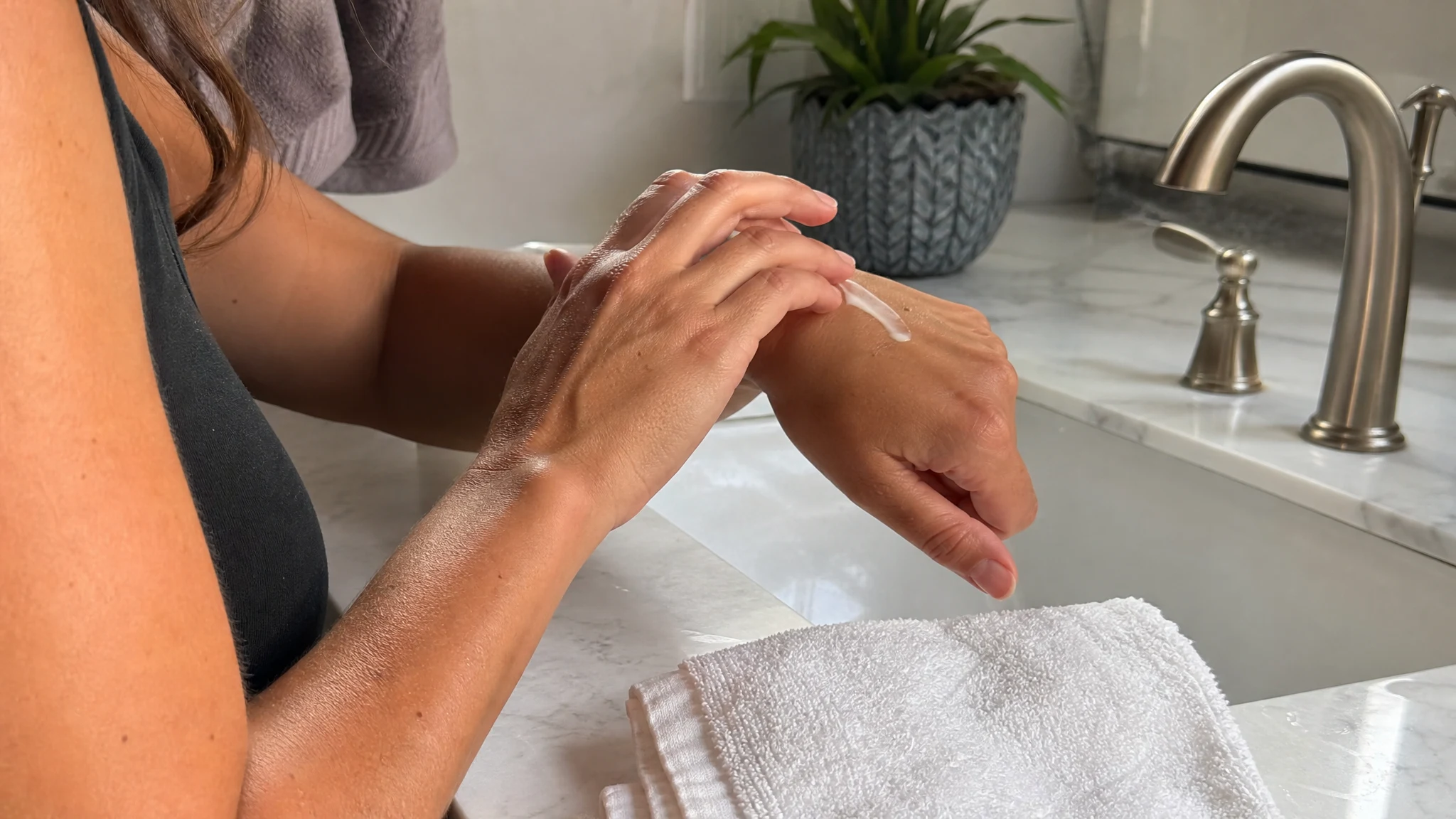
Put a small amount of the finished, diluted oil on the inner forearm and watch it. A delayed reaction can arrive after the moment you decided it was fine, so we give it days rather than minutes. A quiet forearm is also not a promise about next month; a bottle that has been open a long time deserves a fresh test, and our storage article explains why.
What to expect from it
We make no medical claims about patchouli. Its real value is as a base note and a natural fixative, a perfumer's argument rather than a clinical one. If you came with a particular skin or hair concern in mind, a dermatologist is the right first call, and we cover what individual studies did and did not test in our articles on acne, scars and stretch marks and hair.
If you simply love the smell and want it on your skin at a low dose, a small 30 ml bottle of body oil at 0.5%, patch tested, and judged after a week, is a thoughtful place to begin.
Patchouli Essential Oil
Patchouli Essential Oil from our own shop, in sizes from 0.5 oz to bulk.
From $20.99
Shop Now →Sources & Further Reading
- EFSA FEEDAP Panel, 2025. Safety and efficacy of a feed additive consisting of an essential oil derived from the leaves of Pogostemon cablin Benth. (patchouli oil) for use in all animal species (FEFANA asbl).
- Tisserand Institute. Dilution for essential oils.
- Tisserand Institute. Phototoxicity: essential oils, sun and safety.
- Poison Control. Essential oils: Poisonous when misused.