Patchouli Oil Dilution: Drops, Percentages and a Chart
Patchouli is generous: a little goes a long way, and a little too much goes even further, lingering on skin and cloth for days. That makes dilution the single most useful skill to have with it. Our oil is sold neat, so the maths is yours, and the good news is that it only takes one idea: think in percentages, and let drops be a rough guide.
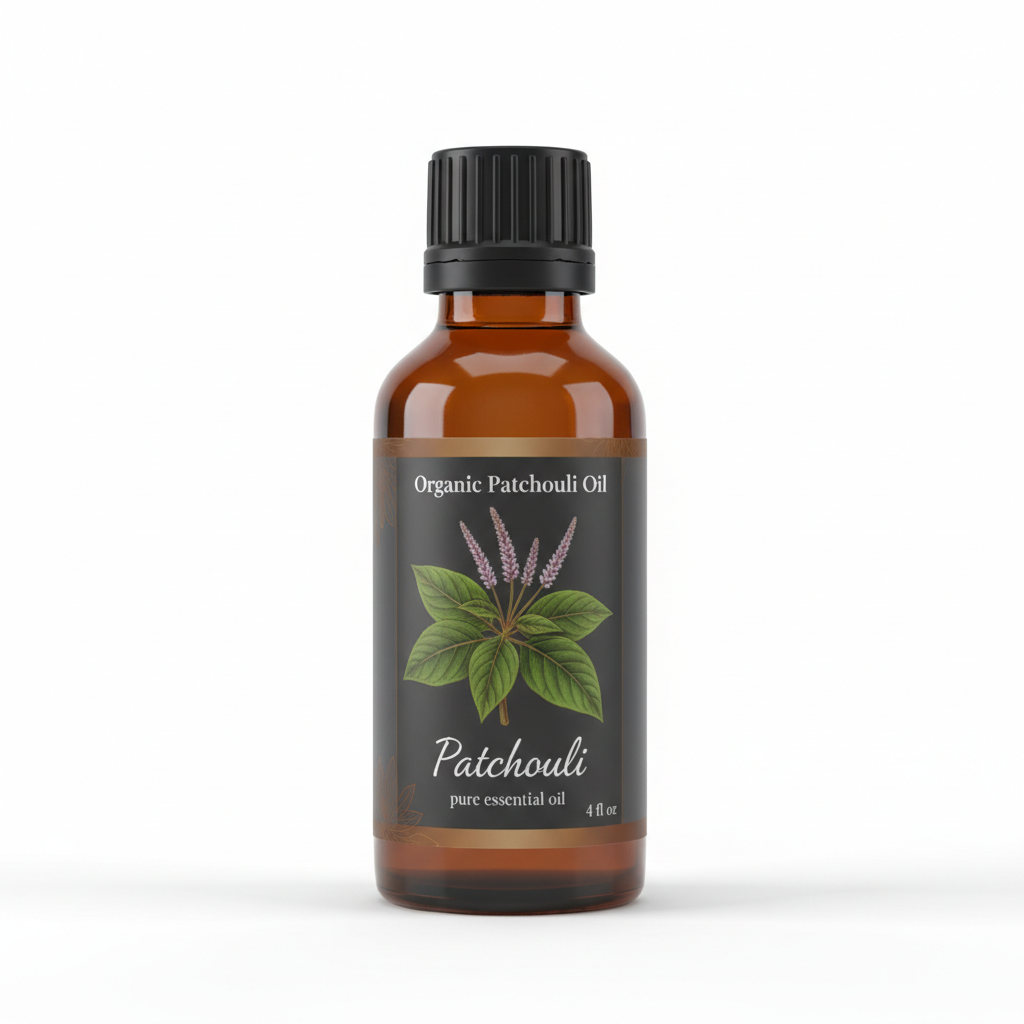
Patchouli Essential Oil
Our own Patchouli Essential Oil, in sizes from 0.5 oz to bulk.
From $20.99
Shop Now →Why percentages beat drops
A percentage means the same thing in every bottle. A drop does not. The Tisserand Institute puts it plainly: conversions that use drops are always approximate, because no two drops of essential oil are the same. A wide dropper tip and a thick oil both give bigger drops, so the same count can land well above or below the strength you wanted, and the effect is largest in small batches. In a 10 ml bottle, one extra drop shifts the strength by half a percentage point.
We use 20 drops to a millilitre below, because it is the common convention, not because it is exact. If you make a blend more than once, weigh it. Our Certificate of Analysis gives a stated density range of 0.950 to 0.975 for patchouli oil, so 1 ml weighs roughly a gram, and a scale that reads to 0.01 g is enough for a 1 oz bottle.
Where we start
Our guidance for skin is to dilute to 0.5% to 2% in a carrier oil and to patch test first. The Tisserand Institute's general ranges, which it offers as guidelines for oils without specific restrictions, run like this:
| Use | Tisserand Institute range | Where we would start |
|---|---|---|
| Sensitive or impaired skin | 0.2% to 1% | Ask a dermatologist first |
| Facial cosmetics, underarms | 0.5% to 1.2% | 0.5% |
| Body oils and lotions | 1% to 3% | 0.5% to 1% |
| Bath and wash-off products | 2% to 4% | Within 2% |
Where a published range runs higher than our own line, we follow the lower figure, and we begin at the bottom of our range even for the body. Patchouli is persistent, and the EFSA panel that looked at a patchouli oil classed it as an irritant and a skin and respiratory sensitiser. We have not found a patchouli-specific maximum from the Tisserand Institute or IFRA, so we do not quote one; if you are formulating a product for sale, check the current IFRA standards for your product category. We would never call 2% a safe number. It is the top of the range you can work toward after a patch test.
The chart
This gives the oil needed for a finished blend, topped up with carrier. One US ounce is 29.57 ml.
| Strength | 10 ml | 1 oz | 100 ml |
|---|---|---|---|
| 0.5% | 0.05 ml (1 drop) | 0.15 ml (3 drops) | 0.5 ml (10 drops) |
| 1% | 0.1 ml (2 drops) | 0.3 ml (6 drops) | 1 ml (20 drops) |
| 1.5% | 0.15 ml (3 drops) | 0.44 ml (9 drops) | 1.5 ml (30 drops) |
| 2% | 0.2 ml (4 drops) | 0.59 ml (12 drops) | 2 ml (40 drops) |
All of these are arithmetic. The small batches are where drops hurt most: a 1 oz blend at 0.5% needs about 0.14 g of oil, which is why many people make a bigger batch or a stock dilution and measure that instead.
A habit that makes small batches easier
If counting single drops makes you nervous, there is a tidy workaround: mix a bigger bottle of blend than you need, label it with the percentage and the date, and pour from that. A larger batch forgives a stray drop far better than a tiny one, and you only have to measure once. Use a clean, dry bottle, amber if you have it, and write the percentage on the label before you do anything else.
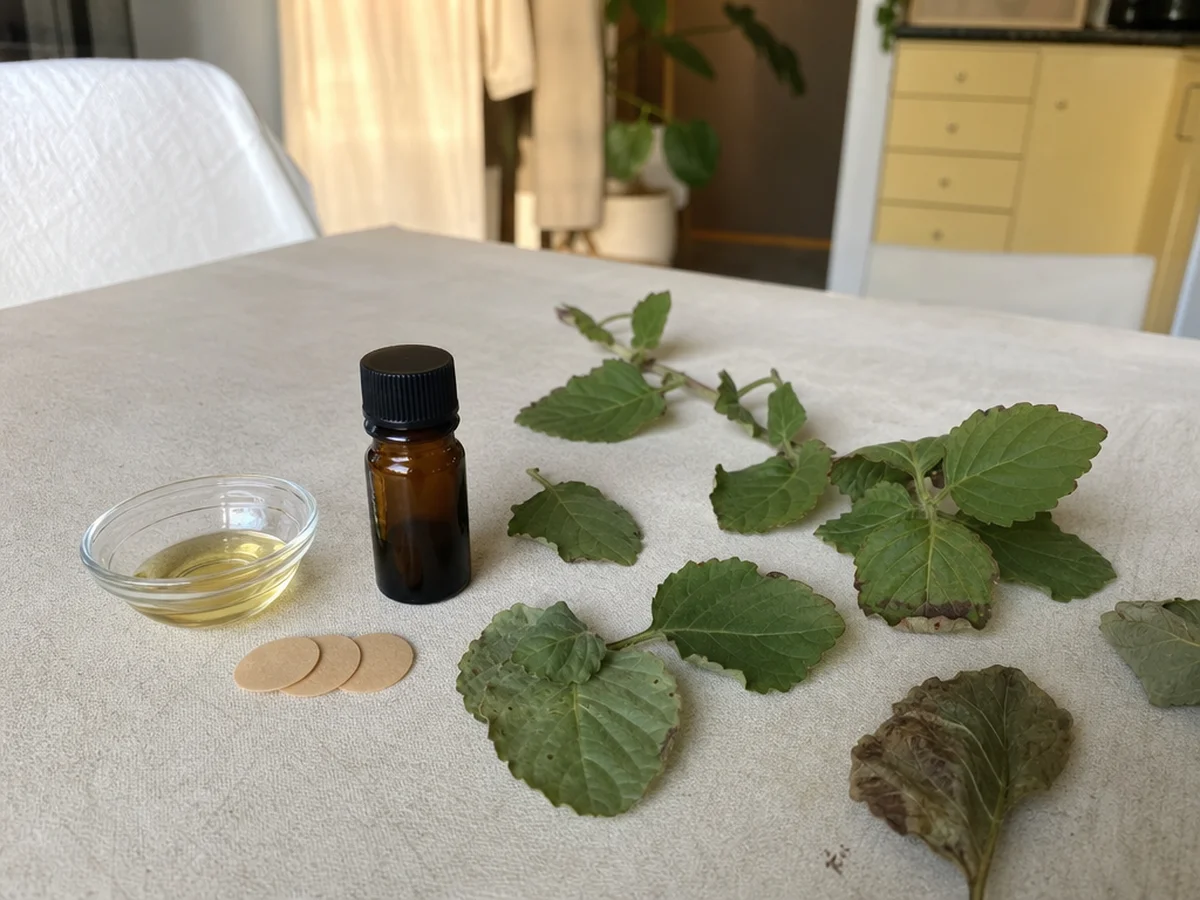
When you open the bottle to measure, take a moment to smell the oil on its own, dark and slow, a little like damp woodland. Then smell your finished blend. Seeing how much a small amount changes the scent is the quickest way to learn that patchouli rewards restraint.
If too many drops went in
It happens to everyone once. The rule is simple: the finished volume you need equals the ml of oil divided by the strength you want. Say 15 drops (0.75 ml) went into a 1 oz bottle. To bring that to 1%, you need 75 ml in all, so you add roughly 45 ml more carrier. To bring it to 2%, you need about 37.5 ml in all, so add about 7 ml. If the bottle has no room, pour it into a larger clean one and relabel it. Do not wipe the over-strong blend off and reuse it at its old strength.

If a stronger blend has already been on your skin and it is red, itchy or stinging, wash it off with soap and water and stop using it. Our patch test article covers what to do next.
Which row for which project
- Leave-on body or face oil: start at 0.5% and patch test. The carrier oil comparison helps you pick what to dilute in.
- Soap, shampoo, wash-off: these are rinsed, but the general range above is not patchouli-specific, so stay within 2%.
- Candles, sprays, diffusers: skin percentages do not apply. Follow the maker's guidance for the wax or the device.
- Children, pregnancy, pets: no table here. Start with a clinician or veterinarian, and see our articles on children, pregnancy and pets.
Keep the neat oil out of reach of children and pets, and never swallow it; Poison Control's advice for all essential oils is to keep them locked up and to wash off and stop at the first rash.
Get the percentage right once, write it on the bottle, and patchouli becomes one of the easiest oils to enjoy.
Patchouli Essential Oil
Patchouli Essential Oil from our own shop, in sizes from 0.5 oz to bulk.
From $20.99
Shop Now →Sources & Further Reading
- Tisserand Institute. Dilution for essential oils.
- EFSA FEEDAP Panel, 2025. Safety and efficacy of a feed additive consisting of an essential oil derived from the leaves of Pogostemon cablin Benth. (patchouli oil) for use in all animal species (FEFANA asbl).
- Poison Control. Essential oils: Poisonous when misused.