Patchouli Oil for Stretch Marks: A Plain Answer
Patchouli turns up on a lot of lists of oils people reach for when they want to look after their skin, and stretch marks come up often. Our plain answer is that patchouli is an aroma oil, we sell it as one, and we make no stretch mark claims for it. What we can do is tell you what the better evidence says, so you can spend your money and attention where they count.
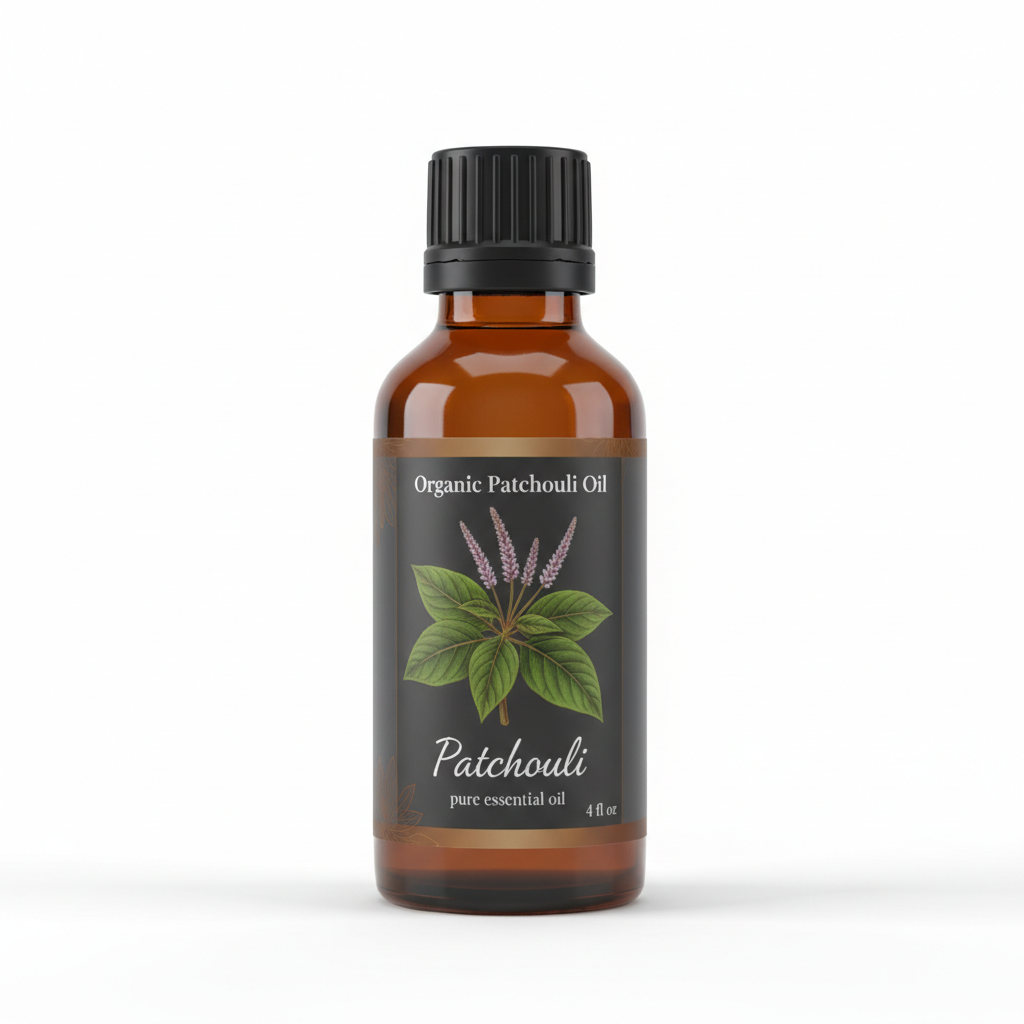
Patchouli Essential Oil
Our own Patchouli Essential Oil, in sizes from 0.5 oz to bulk.
From $20.99
Shop Now →If you are here because of stretch marks, we would like to start by saying they are very common, and very human. Bodies grow, change and carry people through enormous things, and the skin sometimes keeps a record of it. We are not here to tell you what to think about yours. We only want to give you honest information so you do not feel pushed toward a promise.
What stretch marks are
The NHS describes stretch marks as usually caused by sudden growth or weight gain. They are more likely in pregnancy and puberty, with quick weight change, with certain steroid creams or tablets, and when family members have them. They usually fade over time without disappearing completely. The same page says many products claim to prevent, reduce or remove them and that there is very little evidence these work.
What the pooled trials found
The most thorough look at creams and oils for prevention is a Cochrane review of topical products in pregnancy. It pooled six trials with 800 women and found no statistically significant difference in stretch marks between women using products with active ingredients and women using a placebo or nothing. The authors concluded there was no high-quality evidence to support any topical preparation and asked for larger, better-designed trials.
That is worth keeping in mind next time a label promises a percentage improvement. A good question for any such claim is simple: was it tested in people, against a plain base? In our reading, nothing on that front involves patchouli oil.
Where patchouli fits
Patchouli's strengths are in the nose. It is deep, earthy and wine-like, a base note that lasts. If you enjoy that scent in a body oil, it belongs there for the pleasure of it, in a carrier oil at 0.5% to 2% with a patch test first. We would start at the low end, 0.5% to 1%. The European Food Safety Authority's 2025 opinion describes patchouli oil as an irritant to skin and eyes and a skin and respiratory sensitiser, and the Tisserand Institute's general guidelines suggest 1% to 3% for body oils and 0.2% to 1% for sensitive skin, so gentle beginnings make sense.
Keep it to intact skin. Do not use it on broken or freshly healing skin, keep it away from eyes, and never take it internally. For the arithmetic, an ounce of carrier oil (about 29.6 ml) at 0.5% needs roughly 3 drops and at 1% roughly 6, counting about 20 drops per ml.
If you simply like a scented body oil
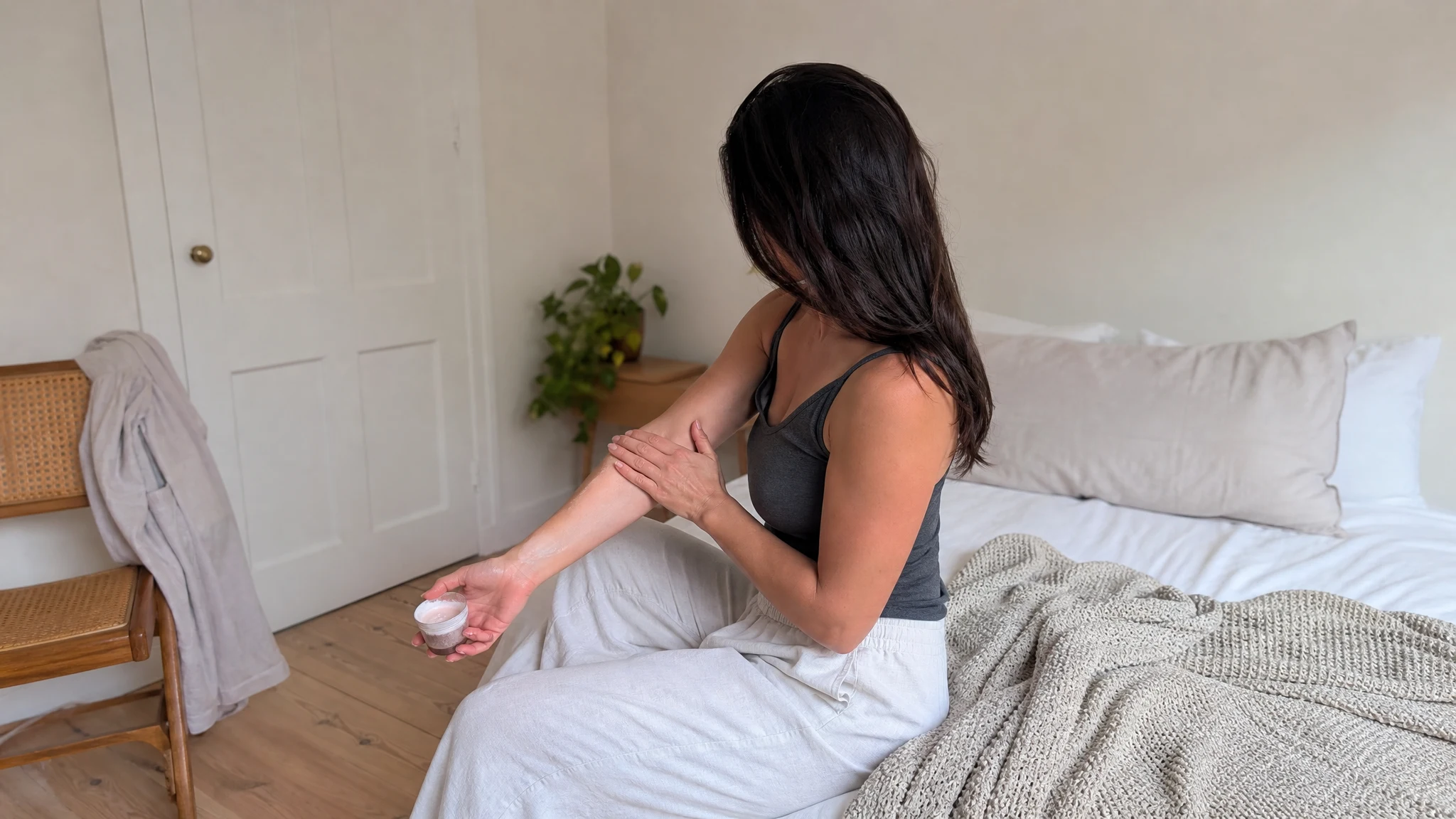
Plenty of people enjoy the daily act of rubbing in a body oil, and that is a perfectly nice thing to do. The pleasure is in the routine: warming a little in your palms, taking a moment, breathing in the aroma. If you like a dark, earthy note in your body oil, patchouli can be one small part of that. Choose a carrier oil you enjoy the feel of, and keep the patchouli to a few drops.
When you put the blend together, smell it again a day later. Patchouli can seem heavier at first and settle into something rounder, so give it a rest before you decide whether to add more.
A word for pregnancy
Stretch marks and pregnancy often arrive together, and pregnancy is a good moment to check with a midwife or doctor about anything that goes on the skin. The NHS page itself notes that retinoid creams should not be used in pregnancy, which shows how much product choice at that time deserves professional input. Our pregnancy article covers what authorities say about patchouli oil, and our disclaimer asks pregnant or nursing readers to consult a physician before use.
Why we are careful with words
The FDA decides whether a product is a cosmetic or a drug by its intended use, shown by labels, advertising and online claims. Its examples include a claim to reduce cellulite making a product a drug. A promise about changing marks in the skin sits in the same territory, which is why you will not find one here.
If stretch marks bother you, the NHS says some treatments may make them look better, and a GP or dermatologist is the person to ask. For the scent side of things, our skin routine and carrier oil guide are the places to go.
If you are ever in doubt about a product, ask a pharmacist, midwife or doctor, and treat the loudest claim on a label with a little suspicion. A pleasing scent and a calm routine are good enough reasons to enjoy a body oil.
Patchouli earns its place by smelling wonderful, and that is the job we ask of it.
Patchouli Essential Oil
Patchouli Essential Oil from our own shop, in sizes from 0.5 oz to bulk.
From $20.99
Shop Now →Sources & Further Reading
- NHS. Stretch marks. nhs.uk/conditions/stretch-marks
- Brennan MG, Young G, Devane D, 2012. Topical preparations for preventing stretch marks in pregnancy. Cochrane Database of Systematic Reviews. pubmed.ncbi.nlm.nih.gov/23152199
- FDA. Is It a Cosmetic, a Drug, or Both? (Or Is It Soap?). fda.gov
- Tisserand Institute. Dilution for essential oils. tisserandinstitute.org/safety/dilution
- EFSA FEEDAP Panel, 2025. Safety and efficacy of a feed additive consisting of an essential oil derived from the leaves of Pogostemon cablin Benth. (patchouli oil) for use in all animal species (FEFANA asbl). EFSA Journal. PMC12004087