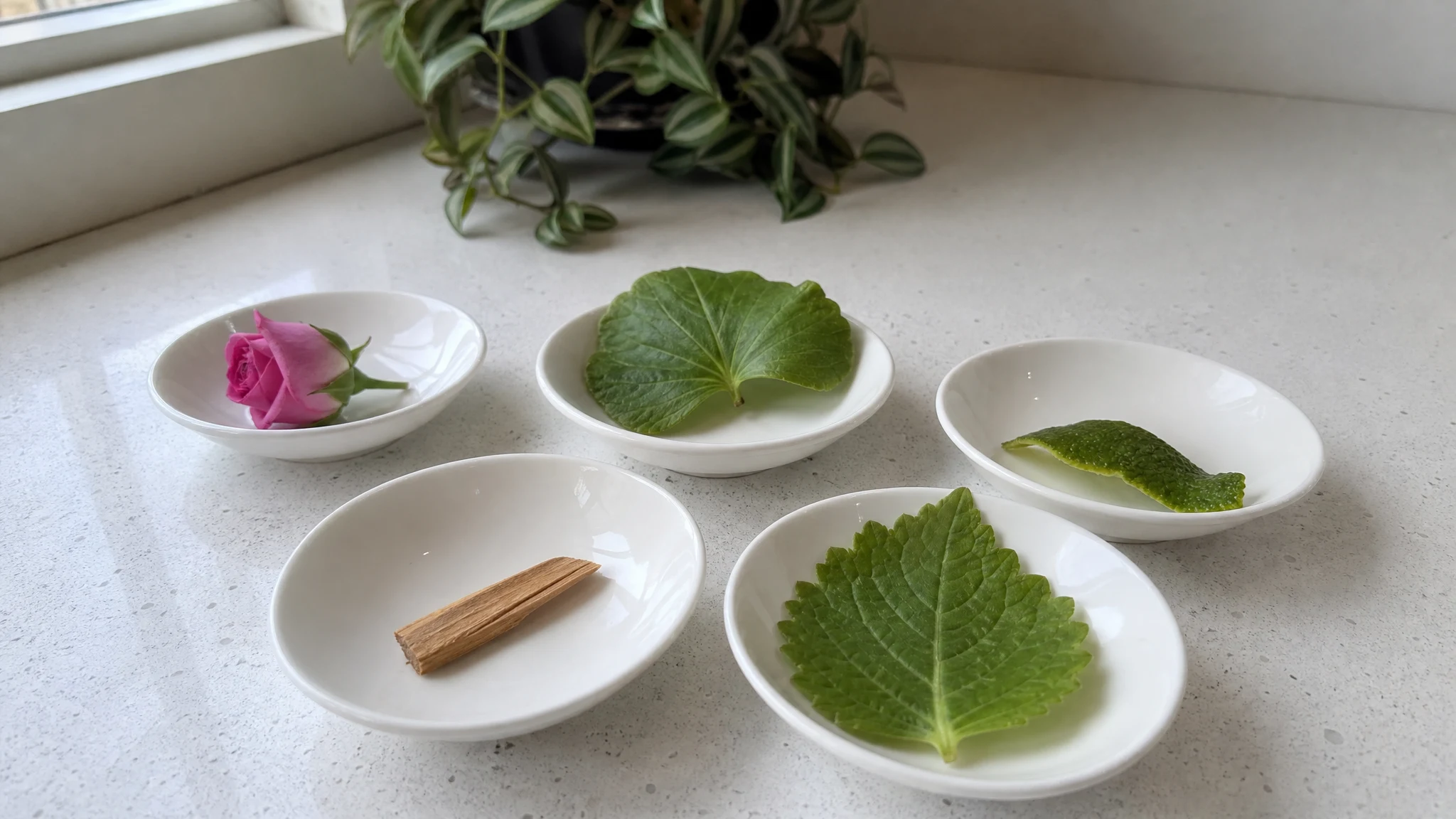
What Blends With Patchouli? Partners and Ratios
Patchouli is the kind of oil that makes other oils look better. It is a deep, earthy base note with a wine-like richness and a damp-forest edge, and it works as a natural fixative, which is why blenders keep it close. We describe it as blending well with rose, geranium, bergamot, sandalwood and cedarwood. Before you start pouring, though, the most useful thing to know about blending is not the list of partners. It is the maths of sharing one limit among all of them.
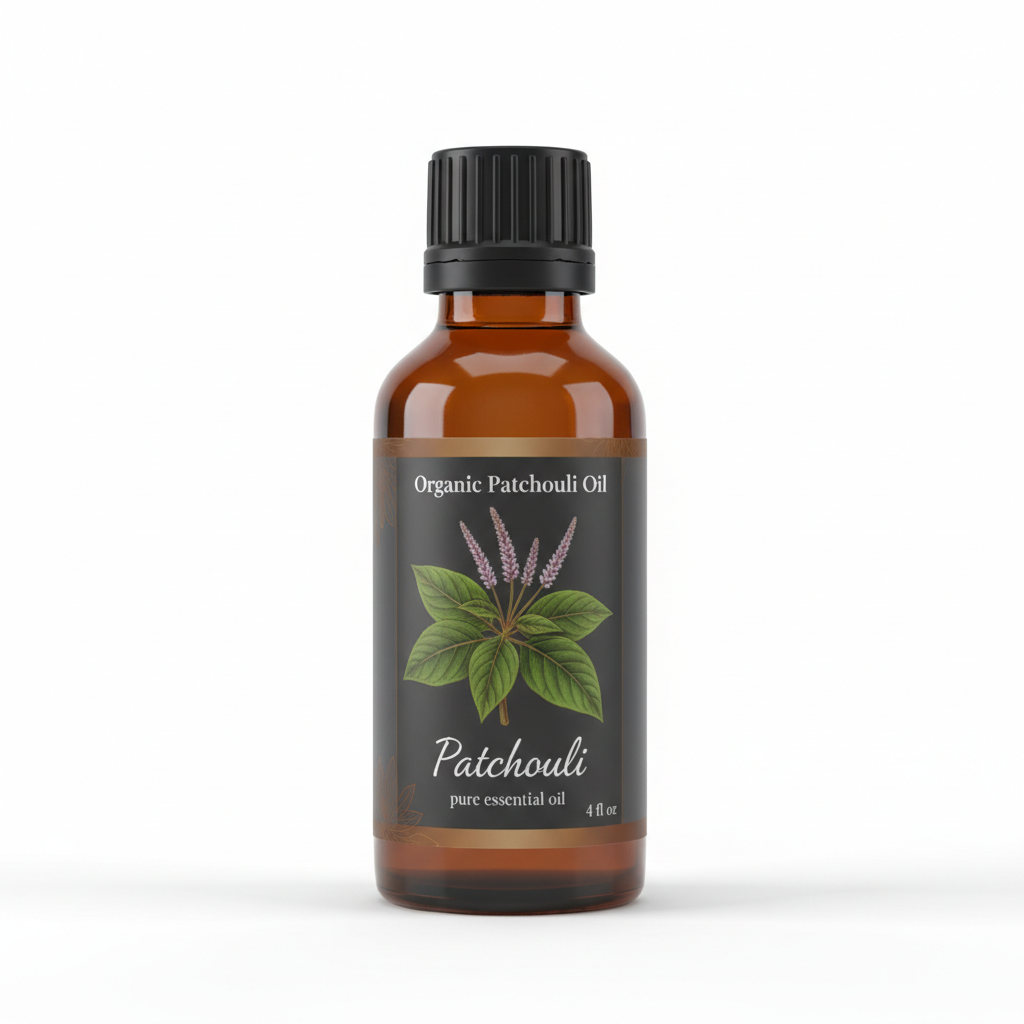
Patchouli Essential Oil
Our own Patchouli Essential Oil, in sizes from 0.5 oz to bulk.
From $20.99
Shop Now →Why patchouli plays the base
The plant-resources entry PROSEA calls patchouli oil almost universally used as a fixing agent in perfumery, usually in very small dosages, although in Oriental-type perfumes it is often a fundamental note. The same entry says the oil improves with age, losing its sharp-green, wet-earthy and minty notes. That is worth bearing in mind: a fresh bottle can sit differently beside a bright citrus oil than an older one does, so smell with the bottle you have.
Think of pairing lists as a prompt for smelling, not a recipe. A list tells you what people have put together. It does not give the ratio, the carrier, the strength or the safety of the whole.
One budget, shared
The dilution ranges from the Tisserand Institute apply to the whole product, not to each oil. Its guideline ranges, for oils without specific restrictions, are 0.2% to 1% for sensitive or impaired skin, 0.5% to 1.2% for facial cosmetics and underarms, 1% to 3% for body oils and lotions, and 2% to 4% for wash-off products. Our own guidance for patchouli is 0.5% to 2% in a carrier oil with a patch test, and we start at the low end. We have not found a patchouli-specific maximum from IFRA or the Institute.
Here is the budget at work, using the usual 20 drops per ml. A 30 ml (1 oz) body oil at 1% total holds 0.3 ml of essential oil, about 6 drops, and that is for the whole blend.
| Blend in 30 ml of carrier | Total oil | Patchouli | Each of two partners |
|---|---|---|---|
| 1% total, patchouli one part in four | 6 drops | 1.5 drops | 2.25 drops |
| 1% total, patchouli one part in three | 6 drops | 2 drops | 2 drops |
| 2% total, patchouli one part in four | 12 drops | 3 drops | 4.5 drops |
Half drops are impossible, so make a 10% stock of each oil and combine the stocks by millilitre; our perfume article shows how. Three oils is a sensible limit for a first blend: patchouli plus one partner for the top and one for the middle. That is a suggestion from the arithmetic, not a perfumery rule.
Bergamot is the one to check first
Of the five partners, bergamot has a published restriction we could confirm. The Tisserand Institute says bergamot oil should be limited to a maximum of 0.4% in the final product when the skin will be exposed to sunshine, with wash-off products excepted, and that bergapten-free bergamot is considered non-phototoxic. If you use more than one phototoxic oil, it advises reducing both. The same page lists patchouli among oils with too few furanocoumarins to be phototoxic, so in a patchouli and bergamot body oil it is the bergamot that sets the sun limit.
In numbers, 0.4% of 30 ml is about 0.12 ml, roughly 2.4 drops. In a 1% blend, that is more than a third of all the oil, leaving 3.6 drops for the rest. For skin that will be in the sun, the choices are a bergapten-free bergamot (ask the seller for documentation) or a different top note.
Rose, geranium, sandalwood and cedarwood
We have not checked published limits for these four and do not state any. IFRA's guidance says the key information a supplier should share is the presence of IFRA-restricted materials in a natural oil, because it is needed to calculate the maximum use level. So ask each seller for the species and any restricted constituents, and look up the oil's own limit before fixing a ratio. Because a restricted constituent can reach a finished product from more than one oil, a short ingredient list is easier to manage. We sell only the patchouli, so these partners come from a craft or supply shop or a specialist seller.
One small habit makes blending far more enjoyable: write every trial down, with the drops of each oil and a few words about how it smells after ten minutes and after an hour. Your notes become a personal recipe book, and a blend you loved is one you can make again.
A working order for a first blend
- Decide on the use and the total strength. Body oil at 1% is a gentle starting point; the face needs less.
- Pick two partners and look up each one's limit and species.
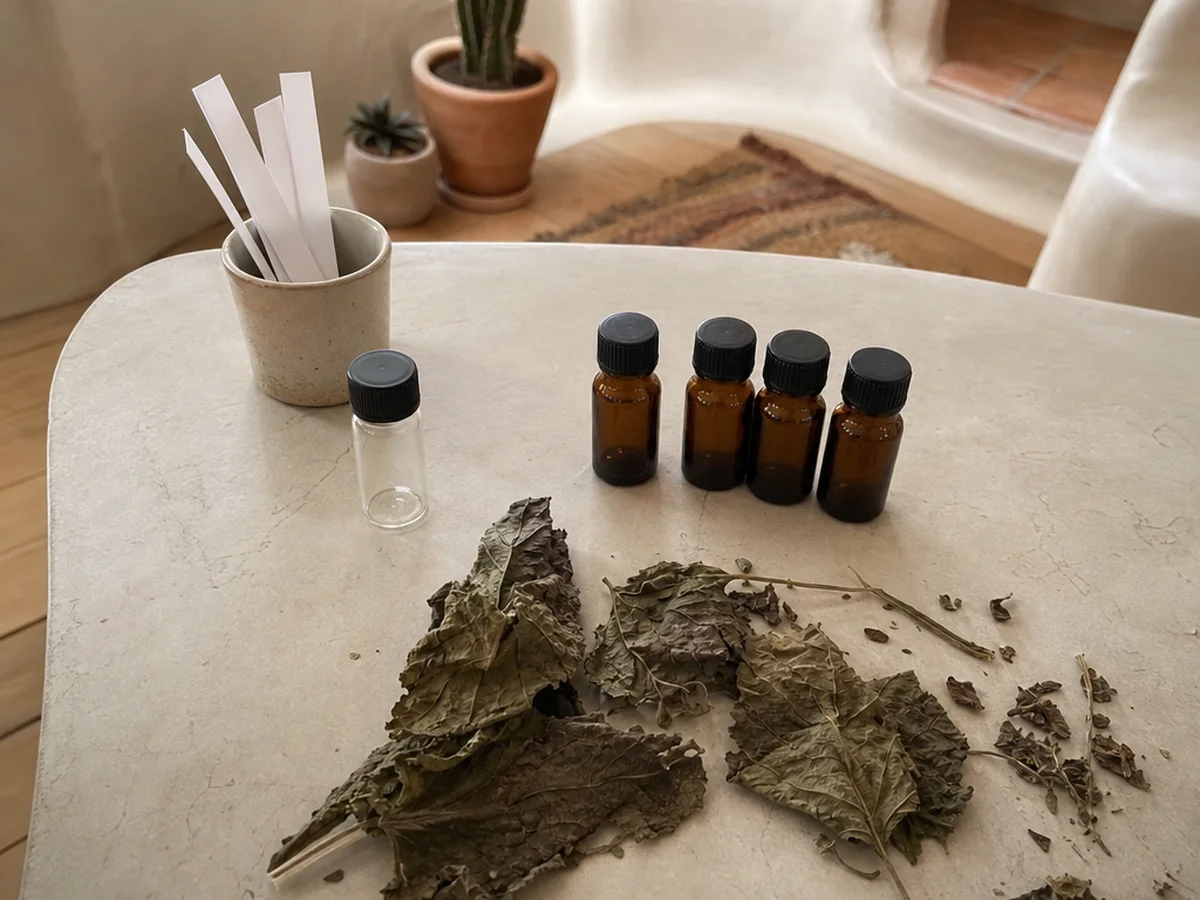
- Make 10% stocks. Smell the combination on a paper strip after a few minutes and again after an hour, since patchouli persists long after lighter oils fade.
- Begin with patchouli at no more than a quarter of the oil. It is easy to add and hard to take out.
- Patch test the finished blend, as in our patch test article.
Patchouli lingers on skin and cloth for days, so a heavy hand shows. If it happens, our smell removal guide helps. For cooler months, see the autumn and winter blends article, and for exact drop counts at other batch sizes, our dilution chart.
Keep it small, keep it simple, and let the patchouli sit quietly underneath. A single drop and a good partner can say more than a crowd. When you are ready to order, the shop has our current sizes, the bulk page covers larger quantities, and how bulk buying works is set out in our patchouli essential oil bulk guide.
Patchouli Essential Oil
Patchouli Essential Oil from our own shop, in sizes from 0.5 oz to bulk.
From $20.99
Shop Now →Sources & Further Reading
- Oyen LPA. Pogostemon (PROSEA), Pl@ntUse.
- Tisserand Institute. Dilution for essential oils.
- Tisserand Institute. Phototoxicity: essential oils, sun and safety.
- IFRA, 2023. Guidance for the use of IFRA Standards (June 30, 2023; third-party hosted copy).