How Is Patchouli Oil Made? Harvest, Curing, Still
Most oils are about the still. Patchouli is about the waiting. Before a single drop of steam touches the leaf, it has been cut, dried and often cured for days, and after distillation the oil is stored so it can settle. That slow rhythm is a big part of why patchouli smells the way it does, and why it rewards a little attention.
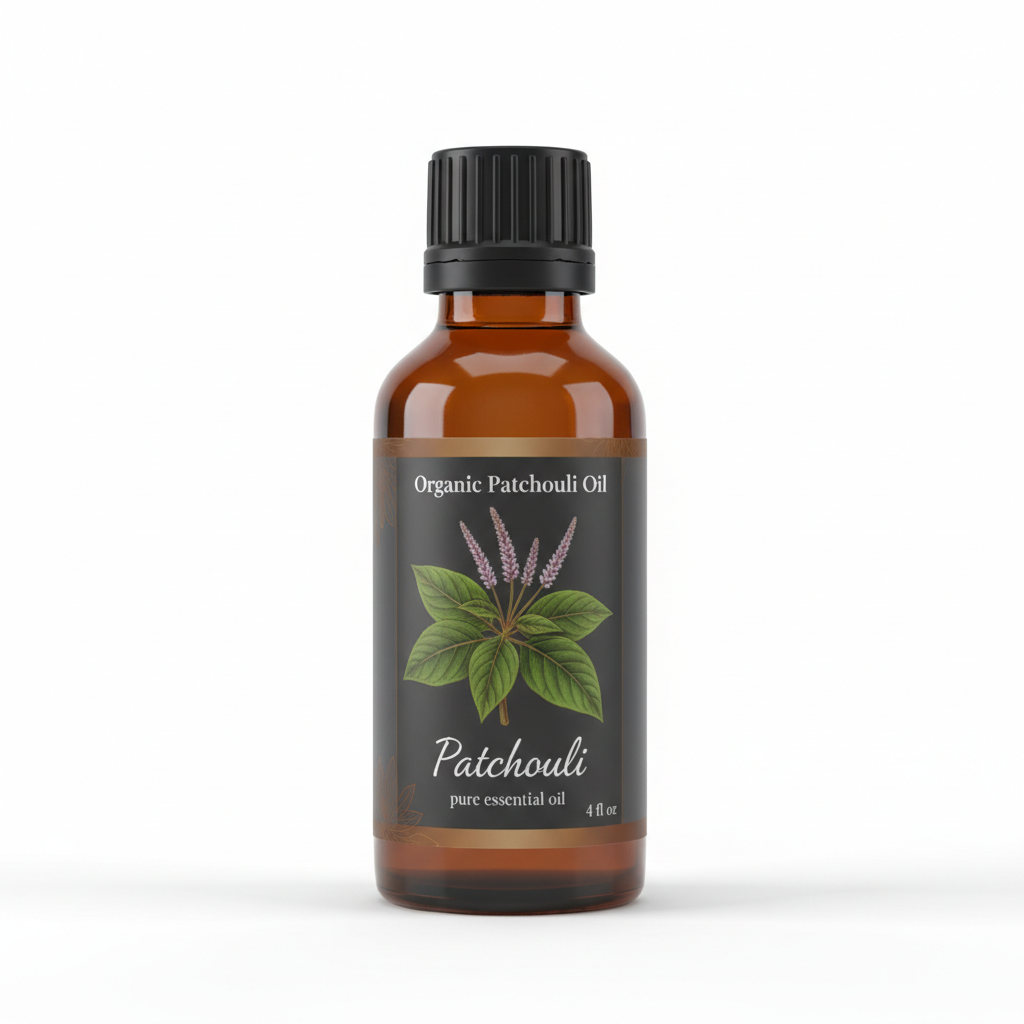
Patchouli Essential Oil
Our own Patchouli Essential Oil, in sizes from 0.5 oz to bulk.
From $20.99
Shop Now →Harvest: young plants, repeat cuts
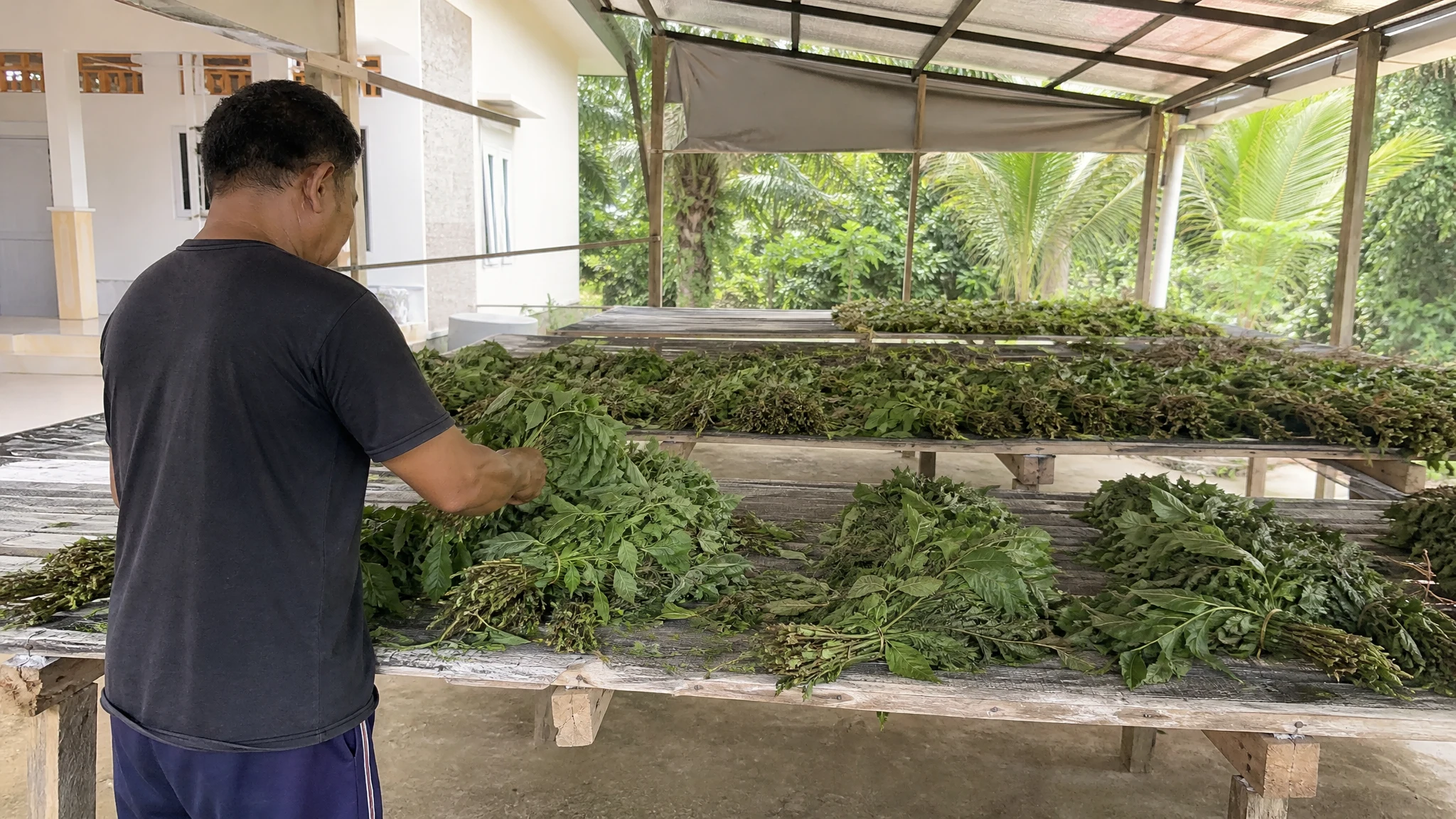
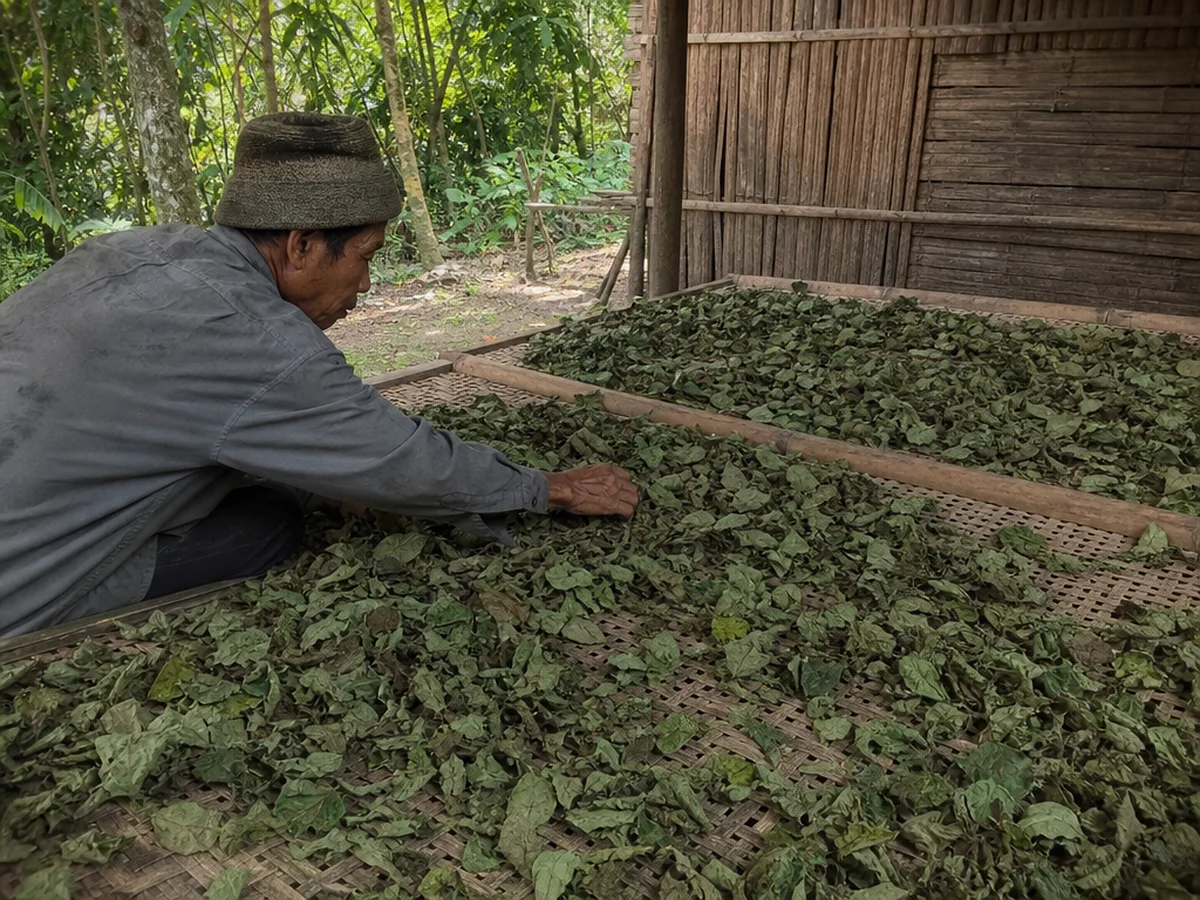
The plant-resources reference PROSEA describes the first harvest at 6 to 8 months, when plants stand 0.5 to 1 m tall, with later cuts every 3 to 5 months until the crop is about three years old and yield and quality begin to fall. Plants are cut 10 to 20 cm above the ground, wet leaves from rain or dew are avoided, and the best oil comes from leaves harvested in the wet season.
Drying: where the aroma can be lost
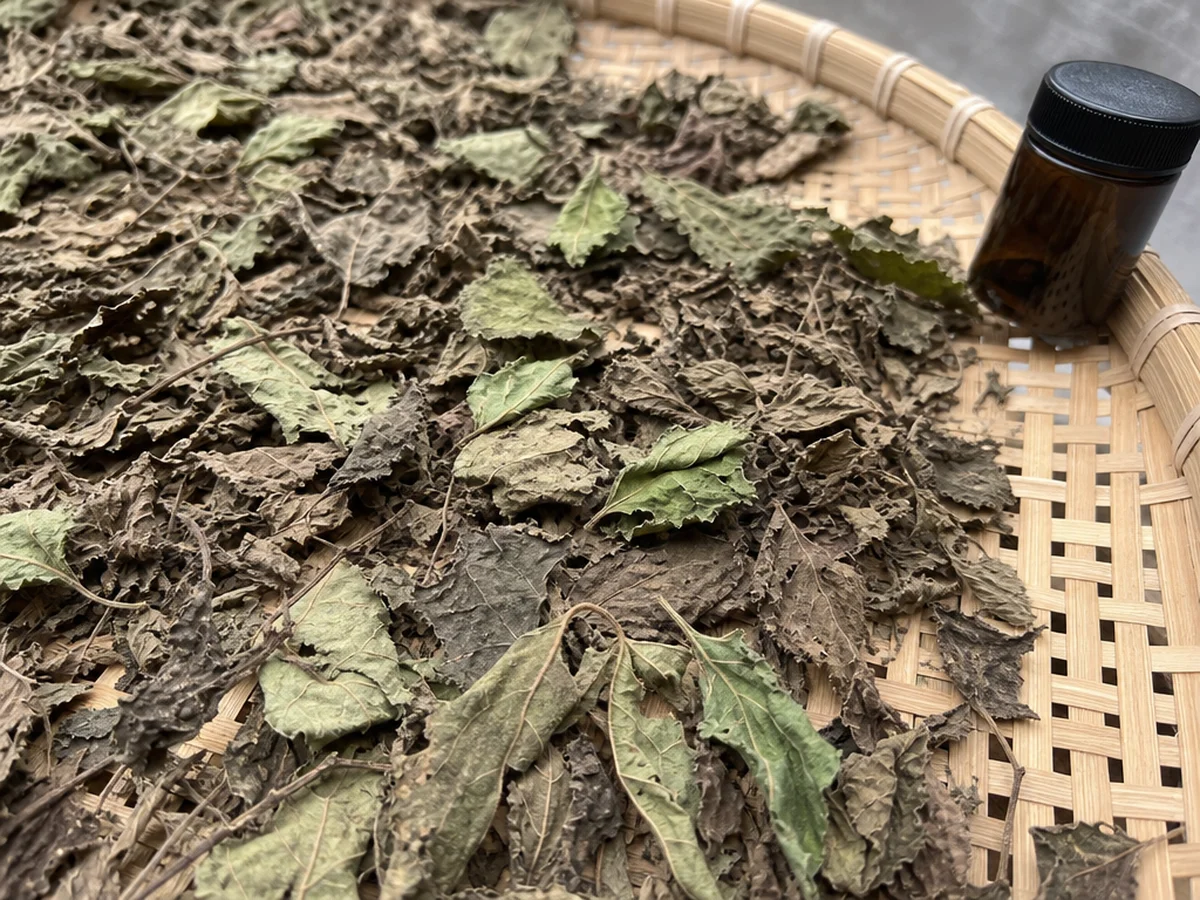
Stems and leaves are dried for 2 to 5 days on racks or a hard floor. PROSEA prefers shade with plenty of ventilation. Sun-drying is common but can over-dry the leaf, leaving it brittle and costing oil. In one Malaysian case a drying temperature above 40 degrees C cost 80% of the oil. The oil we sell comes from shade-dried leaves, which is the approach the reference favors, so the leaf keeps as much of its aroma as it can.
Curing: the part that feels like cooking
After drying, leaves are stripped from the stems and packed under humid conditions in woven baskets or steel drums. Skilled growers can steer this curing by smelling the leaves. Too much fermentation gives the oil a mouldy note, and too little reduces yield. The oil we sell is steam-distilled from lightly fermented leaves, which sits between those two. Curing is a craft choice rather than a universal rule: PROSEA notes that in Malaysia growers do not cure deliberately, and the European Food Safety Authority's short description of the oil it assessed mentions only that it was extracted from dried leaves by steam distillation.
The still: hours of steam
In small-scale production, direct-fired stills hold leaf on a perforated plate or grille above the water. A charge of 75 to 100 kg usually takes 6 to 8 hours, and it is sometimes stretched to 24 hours because the most desirable fractions are the last to come over. A run cut short therefore changes the oil, and a bottle cannot tell you which kind of run it came from. PROSEA also reports that an open wire grille gives noticeably more oil than a steel plate, and that in Indonesia raising steam temperature from 100 to 200 degrees C lifted yield from 1.3% to 2.2%. One hectare yields roughly 40 to 60 kg of oil, a reminder that a bottle holds a lot of leaf.
When the steam condenses, oil and water separate and the oil is decanted. A review of the plant notes that steam and fractional distillation cause thermal degradation of a few constituents, which is why researchers also explore other extraction methods. Those give different materials, and our article on absolute, CO2 extract and essential oil explains how they differ.
If you have a favourite scent that seems to improve over a season, you already know the feeling. Patchouli is a patient oil, and it rewards the person who keeps the bottle capped, cool and out of the light and does not judge it on the first day.
After the still: maturing
This is the step we love most. PROSEA says patchouli oil is stored to mature and that its quality improves in storage, with both its patchouli types losing sharp-green, wet-earthy and minty notes as they age. It also notes that Indonesian-distilled oil tends to be dark orange or brownish and viscous, while oil distilled in Europe or the US is pale orange or amber. Our own description matches the spirit of that: fresh patchouli is comparatively rough, and the oil mellows and rounds out, growing noticeably smoother after about a year in the bottle. We cover keeping a bottle happy in storing patchouli oil.
Smelling the journey
Once you know the steps, the bottle becomes more interesting to smell. Open it and take a slow breath, then notice the layers: an earthy, slightly sharp opening, a damp-forest middle and a sweet, woody tail that hangs around long after the cap is back on. A dried patchouli leaf has a recognisable family resemblance to the oil, though the oil is deeper, darker and more layered.
If you ever have the chance to smell a few patchouli oils side by side, do it on separate paper strips and come back over an hour. The differences between bottles are often easiest to hear in the dry-down, which is where patchouli does its best work.
What this means when you choose an oil
Because plant, harvest and process all vary, two bottles labelled patchouli can differ. The EFSA assessment of one commercial oil measured five batches and found patchouli alcohol, the signature compound, close to a third of the oil each time. A GC-MS report is the way to see what is in a particular oil, and our GC-MS guide shows how to read one. The Certificate of Analysis we publish covers one batch and lists the leaf as the part used, steam distillation, a batch number and a best-by date. If you need GC-MS for your own work, ask us in writing through the contact page before ordering.
For the plant itself, our patchouli plant article is the place to start. Next time you smell that damp-forest-floor depth, remember how many days of drying, curing and patient steaming went into it.
Patchouli Essential Oil
Patchouli Essential Oil from our own shop, in sizes from 0.5 oz to bulk.
From $20.99
Shop Now →Sources & Further Reading
- Pogostemon (PROSEA), Pl@ntUse
- Safety and efficacy of a feed additive consisting of an essential oil derived from the leaves of Pogostemon cablin Benth. (patchouli oil) for use in all animal species (FEFANA asbl), EFSA Journal 2025
- A Comprehensive Review on the Phytochemical Constituents and Pharmacological Activities of Pogostemon cablin Benth.: An Aromatic Medicinal Plant of Industrial Importance, Molecules 2015