Patchouli Oil for Sensitive Skin: When to Hold Off
Dry, easily upset skin is exactly where a lot of people look for something gentle, and an earthy oil like patchouli can seem like it belongs there. We think it deserves a more careful answer. Patchouli is a wonderful aroma, but if your skin is eczema-prone or currently flaring, it is a question to put to your clinician before it becomes a product for your skin. Here is how we reason about it.
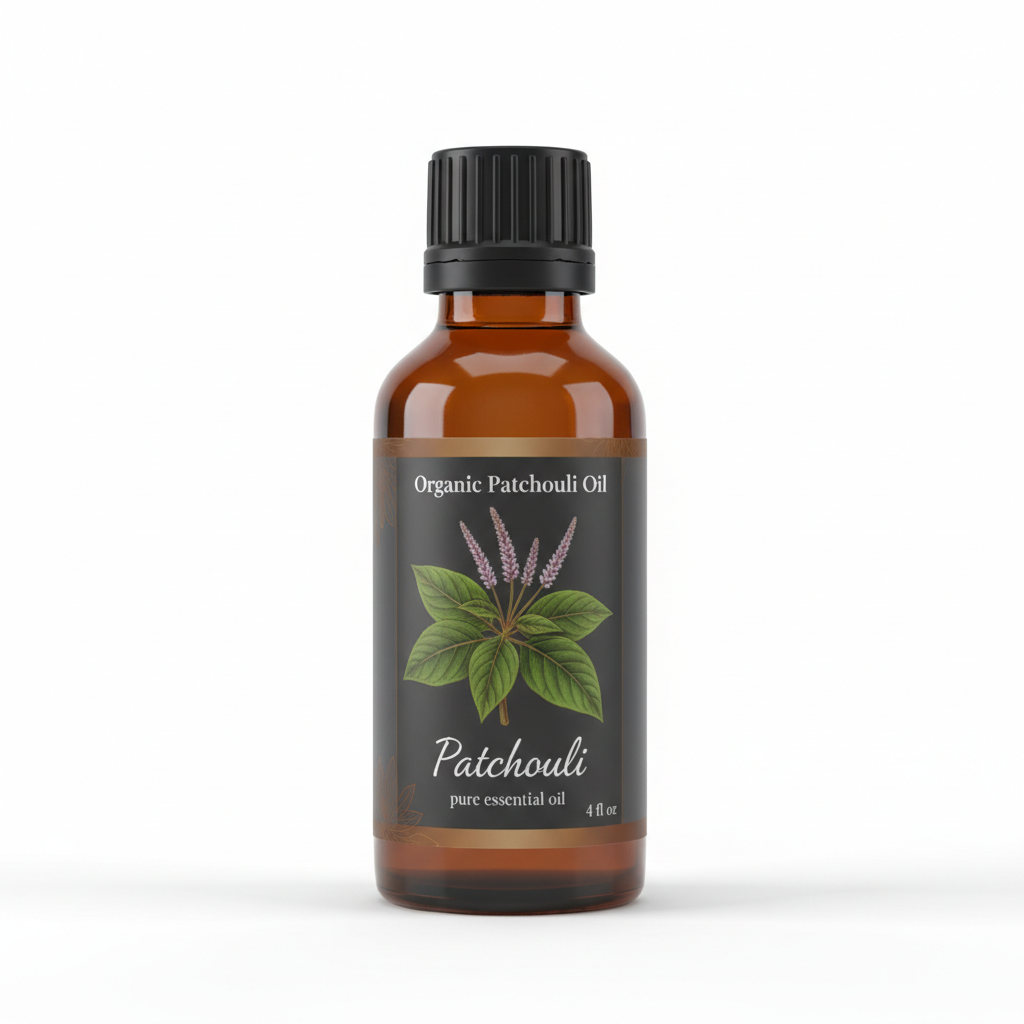
Patchouli Essential Oil
Our own Patchouli Essential Oil, in sizes from 0.5 oz to bulk.
From $20.99
Shop Now →What the eczema organisations say about fragrance
The National Eczema Association lists "Fragrance: Perfumes, other scented products" among common eczema triggers, and products that carry its Seal of Acceptance must not include fragrance. The page does not discuss essential oils by name. Because an essential oil is a fragrance in function, applying that logic to patchouli is our own inference, but it is a sensible one.
The NHS atopic eczema page takes a practical approach: moisturise with an emollient at least twice a day, even when the skin improves, and wash with an emollient in place of soap. Nothing in that baseline involves an essential oil, and we don't think it needs one.
What the patchouli research covers
The most direct study is a 2024 paper in the journal Gels. Researchers turned patchouli oil into a microemulsion gel and tested it on BALB/c mice whose dermatitis was induced with a chemical sensitiser, DNCB. Compared with untreated mice, the gel group had lower dermatitis scores, fewer mast cells, thinner epidermis and lower inflammatory signals in skin samples, and a rat irritation test and a cell viability assay found the gel non-irritating. The abstract does not give the patchouli concentration or group sizes. The material was an engineered gel designed to carry the oil, and induced mouse dermatitis is not human eczema, so this is a reason for further research rather than a guide for a bottle at home.
On the safety side of the ledger sits a 2026 case report in Contact Dermatitis, titled "Allergic Contact Dermatitis to a Product Containing Patchouli Essential Oil in a Non-Occupational Setting". A single case cannot give a rate, but it shows that clinicians have recorded people reacting to patchouli products.
Put the two side by side and the lesson is plain: the mouse study says the question is interesting, and the case report says caution is reasonable. Neither one predicts how your skin will respond.
What the safety assessment says
A 2025 European Food Safety Authority opinion on patchouli oil as a feed additive says the oil "should be considered as irritant to skin and eyes and as a dermal and respiratory sensitiser" and that "Any exposure is considered a risk". That assessment concerns the oil it evaluated, in a feed setting, and is not a cosmetic limit for our oil. Even so, a sensitiser on skin that is already compromised is the combination a clinician would want to hear about first.
Our guidance for skin in general is to dilute to 0.5% to 2% in a carrier oil and patch test first, and we lean toward the lower end, 0.5% to 1%, for leave-on use. For eczema-prone or currently inflamed skin we do not give a percentage, because we have no source showing that any figure suits it. A patch test on healthy skin also can't tell you how a flaring area will behave. Our article on allergy and patch testing explains the method and its limits.
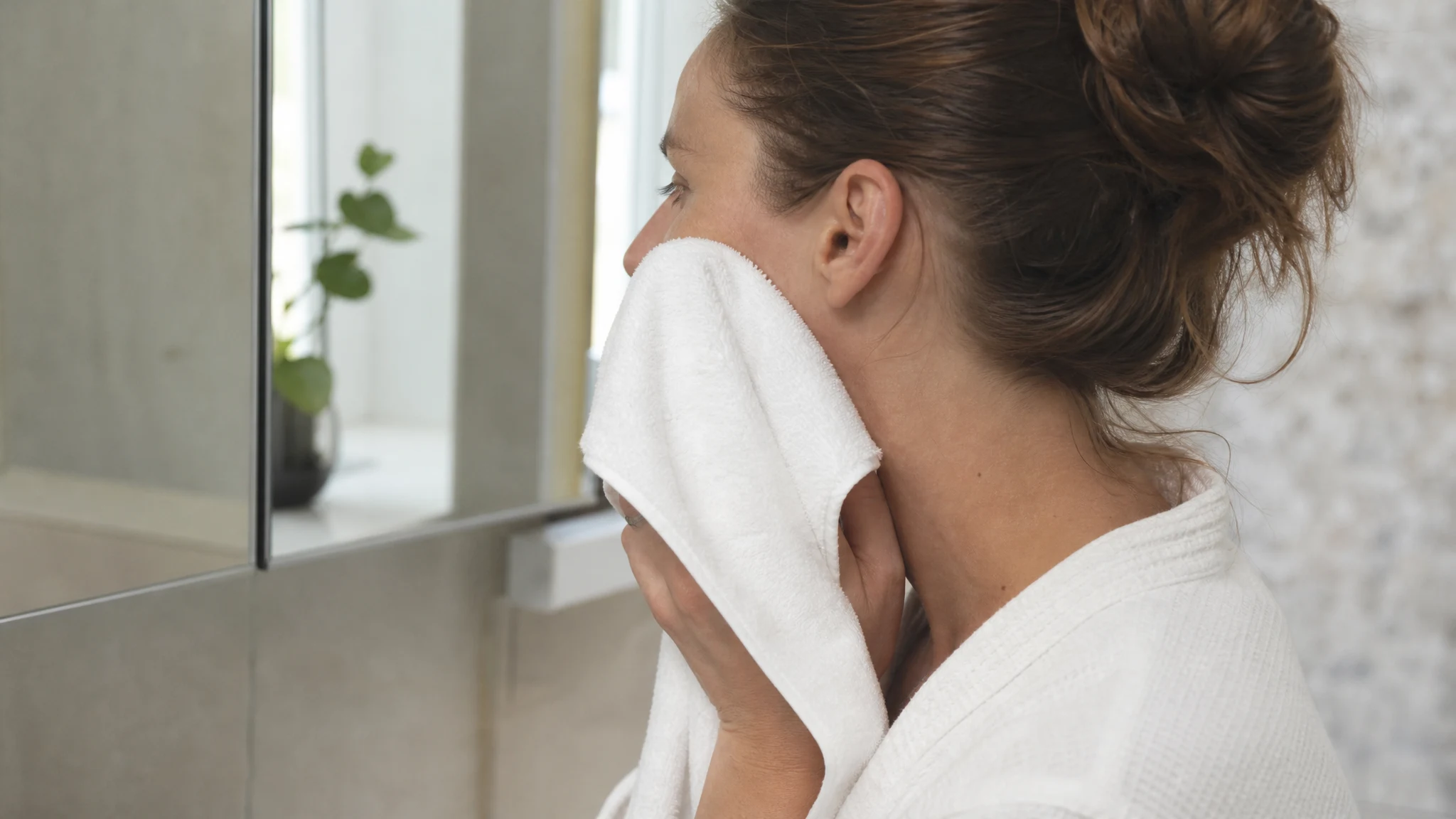
When skin feels tight, itchy or fragile, everything seems to matter more, including the scent of a product. We think the kindest approach is to keep things plain and boring for a while. A simple moisturiser you know you tolerate, a short lukewarm wash and soft fabrics are not exciting, but they are what a gentle routine looks like.
If your skin is simply dry
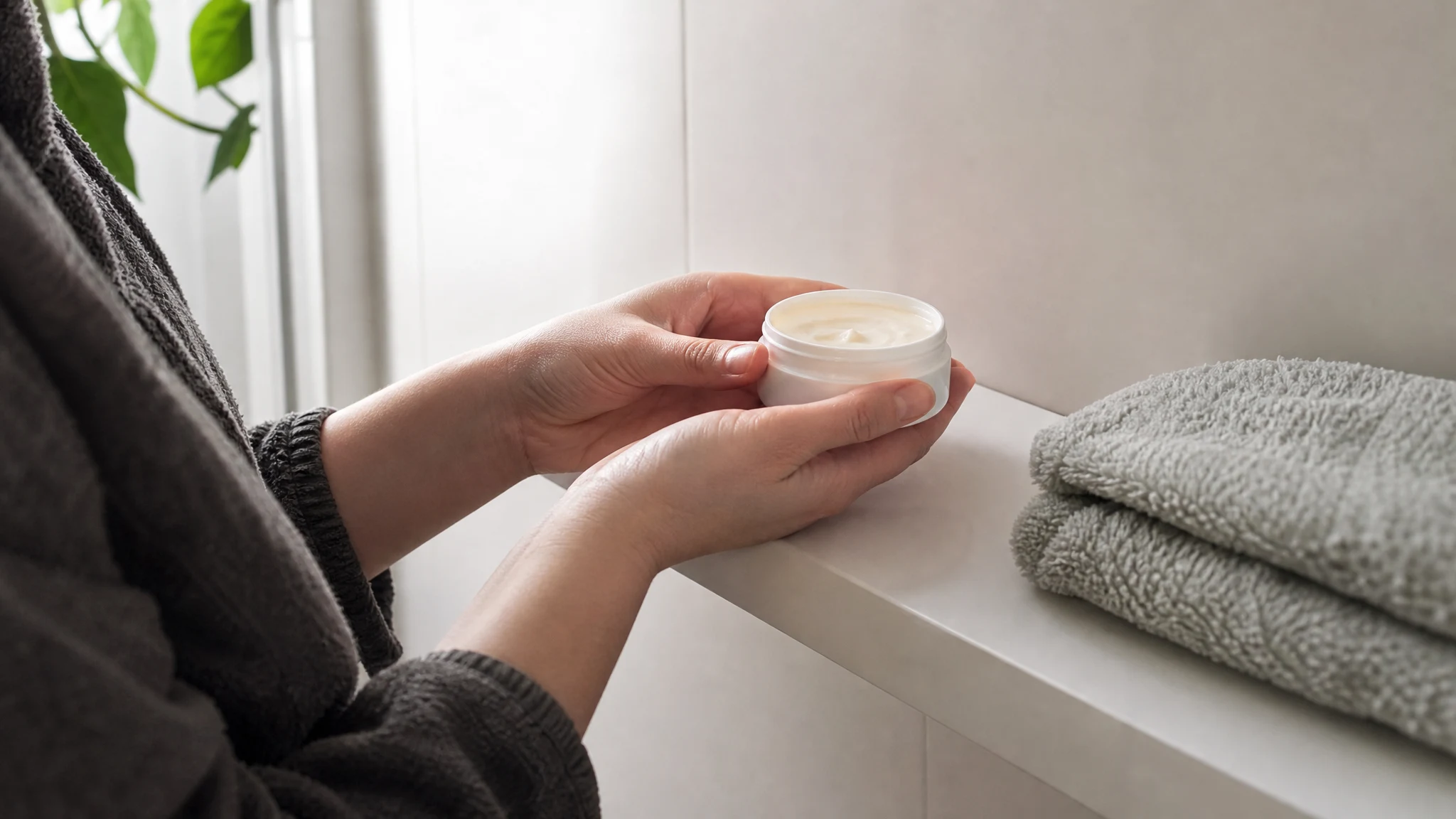
This is where the carrier does the real work. At 0.5% to 2%, patchouli makes up two parts in a hundred or fewer of whatever you apply, so 98 or more parts are the oil, butter or lotion that actually moisturises. Choose that base for your skin first, and consider patchouli, if at all, as a fragrant finishing touch. Our guide to carrier oils for patchouli compares the options, and patchouli on skin covers where and how much for healthy skin. If dryness cracks, spreads or itches enough to disturb sleep, mention it to a GP, since eczema and other conditions can look like plain dryness at first.
Keeping patchouli for the good days
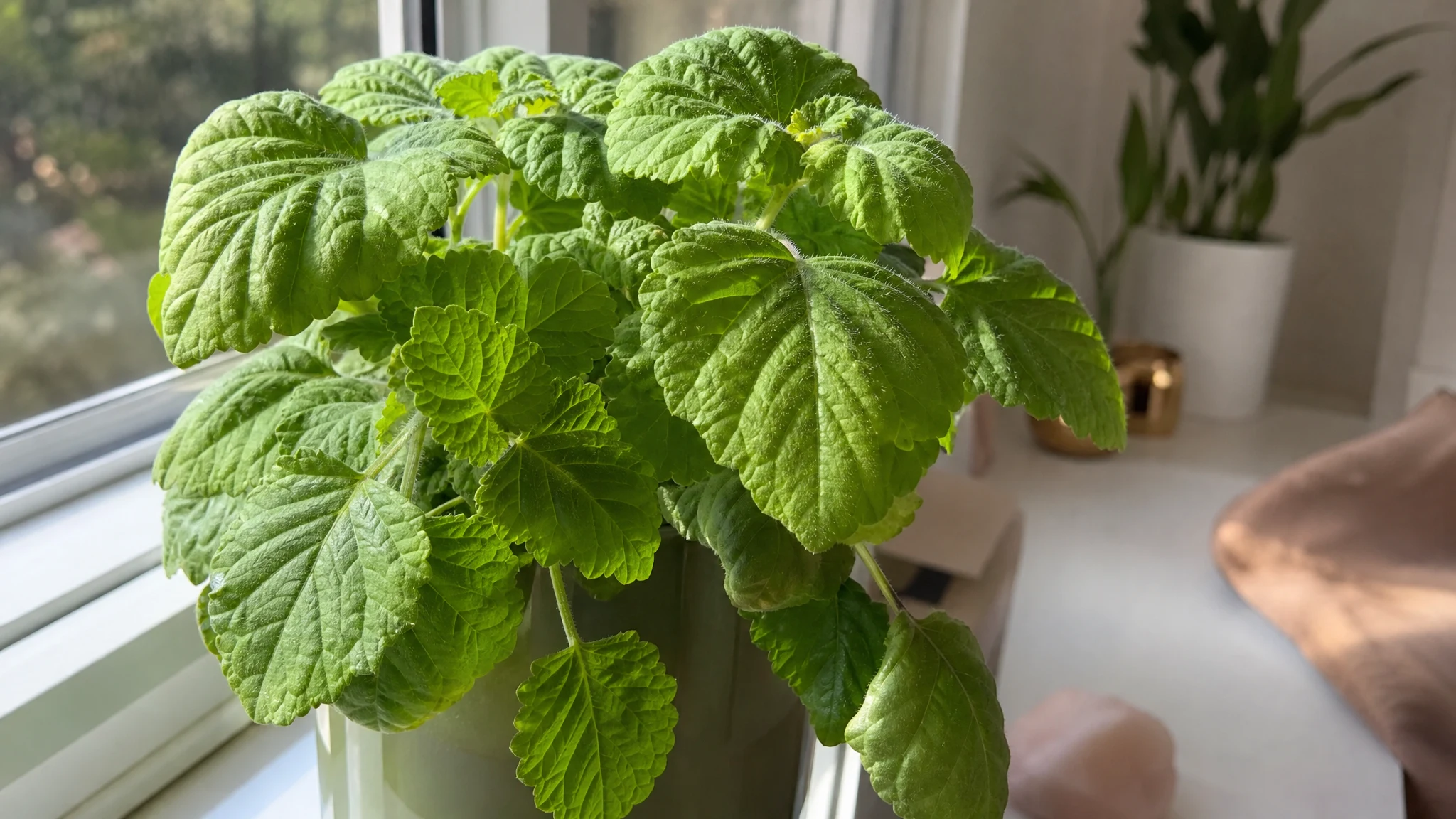
One way to think about it is that patchouli is for pleasure, so it can wait until you are feeling comfortable. On a day when your skin is quiet, you might enjoy the scent from a bottle on a shelf, or on a cotton pad tucked in a drawer, without it touching you at all. That way you keep the part of patchouli you love, the aroma, and leave your skin out of the question.
When to get help
The NHS advises a non-urgent GP appointment if you or your child have symptoms of atopic eczema or treatments aren't helping. It says to ask for an urgent appointment or contact NHS 111 if the eczema is blistered, crusty, leaking fluid or has pus-filled spots, is painful, swollen or warm, suddenly gets worse or spreads, or comes with a high temperature or feeling unwell, since these can signal infection. A GP can prescribe treatments or refer you to a dermatologist.
For babies and children with eczema, keep our oil out of the picture: it should stay away from children, and a paediatric clinician is the right guide. Patchouli will always be there to enjoy as a scent on a day when your skin is calm.
Patchouli Essential Oil
Patchouli Essential Oil from our own shop, in sizes from 0.5 oz to bulk.
From $20.99
Shop Now →Sources & Further Reading
- National Eczema Association. Eczema (contact dermatitis): Symptoms, causes, types & treatment. nationaleczema.org/eczema/causes-and-triggers-of-eczema/
- NHS. Atopic eczema - NHS. www.nhs.uk/conditions/atopic-eczema/
- Chen T et al., 2024. Preparation of Patchouli Oil Microemulsion Gel and Its Topical Application to Ameliorate Atopic Dermatitis in Mice. Gels. pubmed.ncbi.nlm.nih.gov/39727555/
- Rosato WA et al., 2026. Allergic Contact Dermatitis to a Product Containing Patchouli Essential Oil in a Non-Occupational Setting. Contact Dermatitis. pubmed.ncbi.nlm.nih.gov/41461377/
- EFSA FEEDAP Panel, 2025. Safety and efficacy of a feed additive consisting of an essential oil derived from the leaves of Pogostemon cablin Benth. (patchouli oil) for use in all animal species (FEFANA asbl). pmc.ncbi.nlm.nih.gov/articles/PMC12004087/