How to Make a Patchouli Perfume at Home
Patchouli is the note that perfumers reach for when they want a fragrance to last. At home, the pleasure of making your own signature scent comes with one piece of arithmetic that is easy to miss: on skin, a homemade perfume is really a dilution, and the strengths of a department-store bottle are far above what is published for essential oils on skin. A good patchouli perfume at home is therefore a light, lingering one by design, and patchouli is the right oil for that.
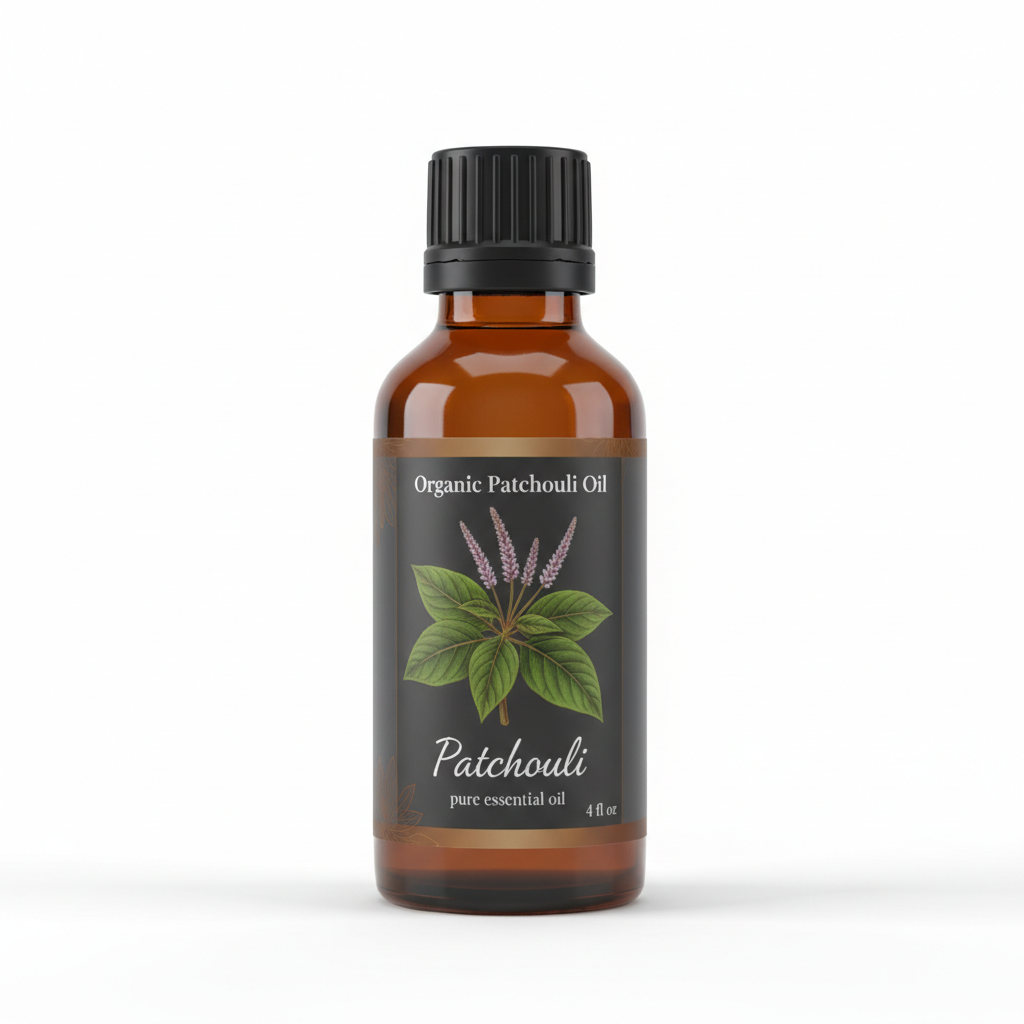
Patchouli Essential Oil
Our own Patchouli Essential Oil, in sizes from 0.5 oz to bulk.
From $20.99
Shop Now →Start by choosing the format
IFRA's guidance on its standards, which sorts finished products into categories by how they meet skin, has a section on attars, the concentrated oil perfumes. It says an attar can be dabbed on pulse points like a fine fragrance or spread more widely like a body oil, and that most often it is used neat. Fine fragrance formats, including solid perfume and eau de toilette style sprays, fall in its Category 4, products generally applied to neck, face and wrists, while body oil use sits in Category 5A.
We would not copy the neat attar habit with patchouli. It is persistent, and our guidance for skin is to dilute to 0.5% to 2% in a carrier oil and patch test first. So the three formats we like for home are a roll-on in carrier oil, a body-oil-strength scent, or an alcohol spray at the same low strength. Our body oil and solid perfume article covers the solid format.
The ceiling is shared
The Tisserand Institute's general guideline ranges are 0.5% to 1.2% for facial cosmetics and 1% to 3% for body oils and lotions, for oils without specific restrictions. We have not found a patchouli-specific maximum from Tisserand or IFRA, so we keep to the lower end of our own range and treat 2% as the ceiling for the whole perfume, starting nearer 1%. Every oil you add shares that budget. If you plan to sell what you make, check the current IFRA standards for your product category.
Stock dilutions solve the drop problem
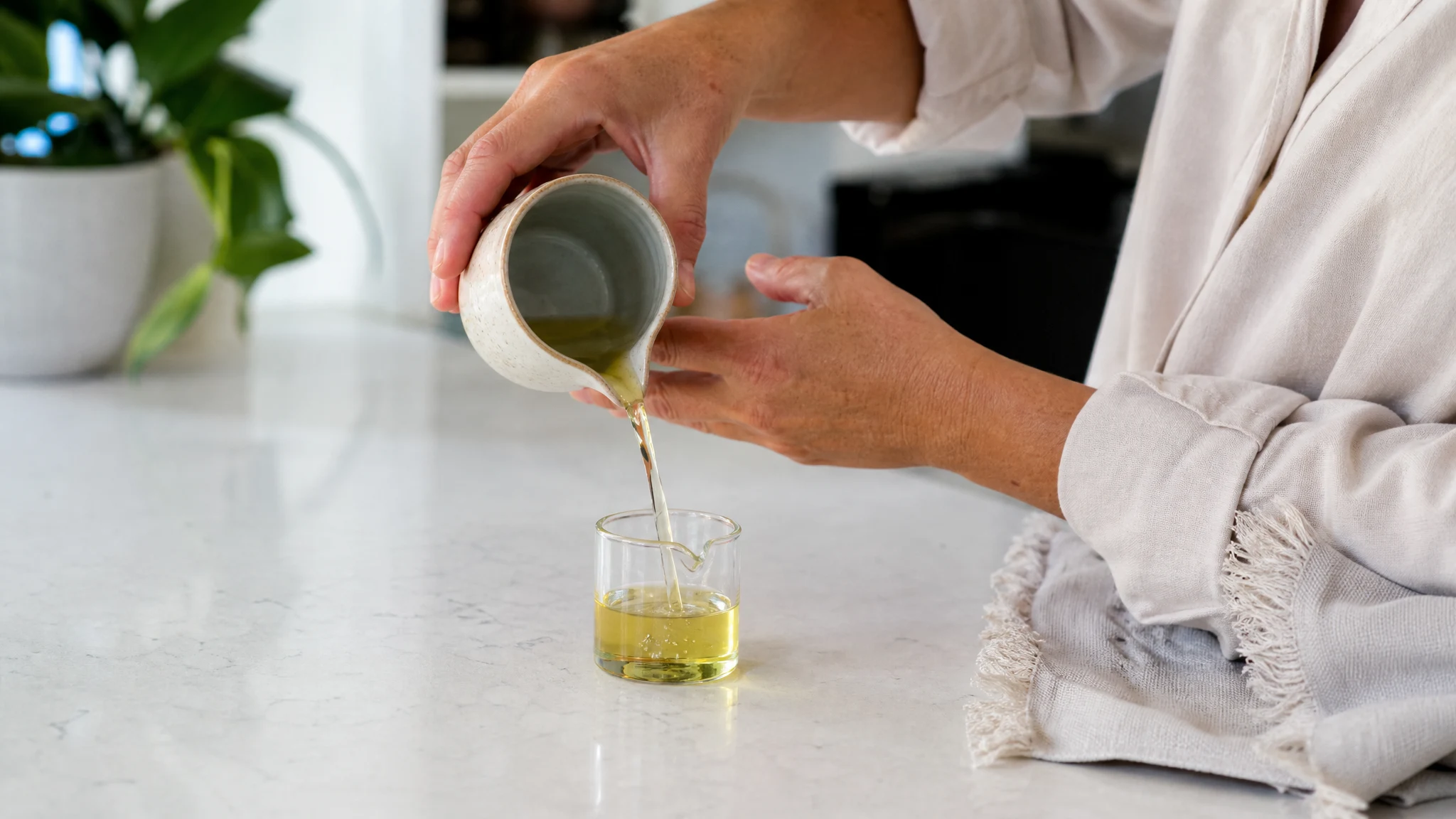
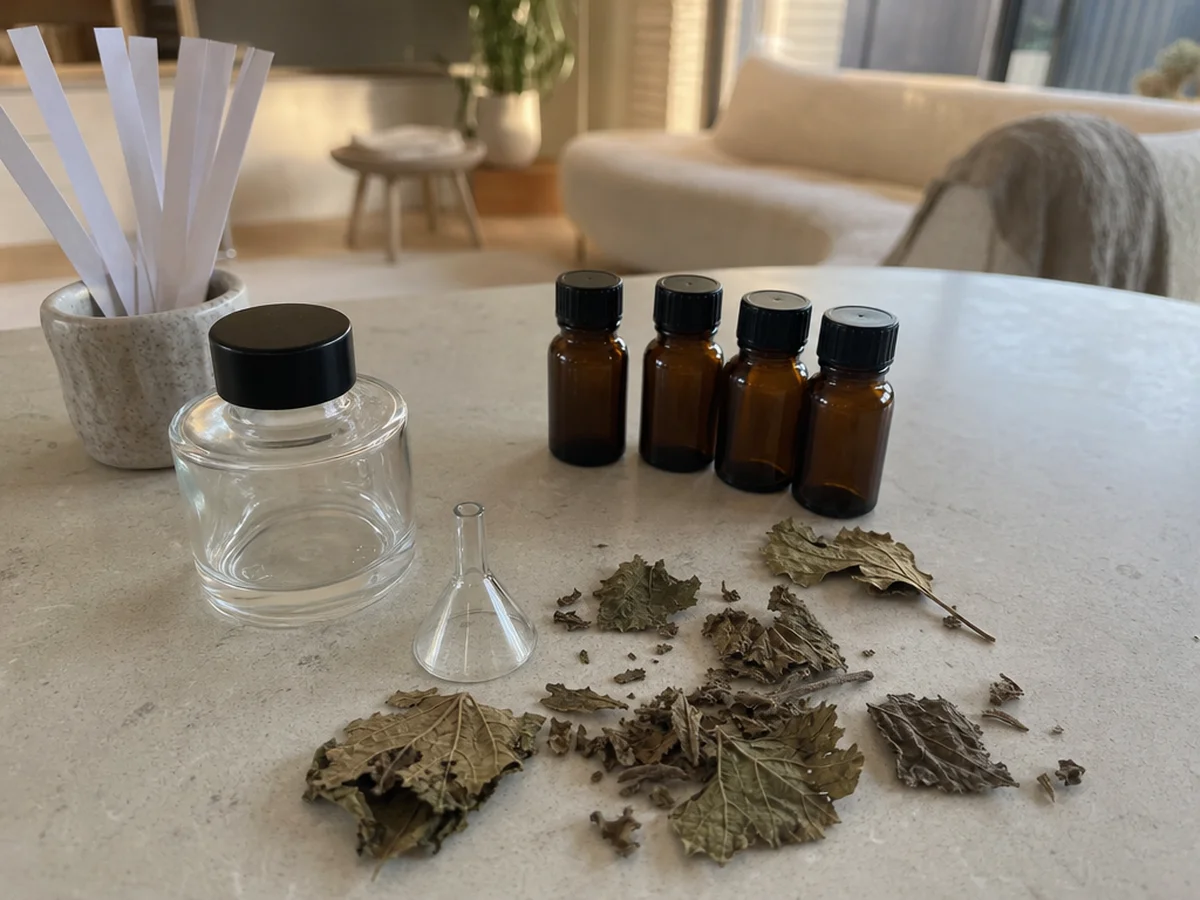
At 2% in a 10 ml roll-on, the total is 0.2 ml of oil, about four drops (using the common 20 drops per ml). A five-oil perfume cannot be built from four drops, so work with stocks. Make a 10% stock of each oil by mixing 1 ml of oil with 9 ml of carrier, then measure the stocks by volume.
| Finished 10 ml roll-on | Combined stocks | Carrier |
|---|---|---|
| 1% total oil | 1 ml | 9 ml |
| 2% total oil | 2 ml | 8 ml |
Now the perfume is a ratio of millilitres. If the 2 ml of combined stock is 1 ml patchouli stock and 1 ml of a lighter oil's stock, patchouli is half of the oil and the roll-on holds 1% patchouli. That is already heavy, because patchouli lingers long after lighter oils fade. Starting with a quarter, 0.5 ml of patchouli stock out of 2 ml, leaves room to add. That proportion is our own suggestion from the arithmetic, not a published standard. It also fits what the plant-resources entry PROSEA says: patchouli oil is almost universally used as a fixing agent in perfumery, mostly in very small dosages, though in Oriental-type perfumes it is often a fundamental note. For ideas on what to put beside it, see our pairing guide.
We sell the patchouli, so carrier oil, alcohol, roll-on bottles and the other essential oils are a trip to a craft or supply shop. Our carrier oil comparison helps with the first of those.
If you prefer an alcohol spray
A spray follows the same percentages. A 30 ml bottle at 1% total oil needs 0.3 ml, about 6 drops; at 2%, about 12. Three practical points apply:
- Stay with oil or alcohol. Essential oils do not mix with water on their own, so a water-based mist needs a solubiliser from a craft supplier.
- Alcohol burns. Mix away from candles, flames and hot plates.
- Ask about the alcohol. Find out from the supplier whether it is denatured and with what.
A spray lands on a wider and less controlled area than a roll-on, and it can reach your eyes and face, so spray the body, away from the face.
Let it rest before you judge it
The most useful tip we can give is to be patient. A new blend often smells sharp and a bit disjointed on the day you make it. Cap the bottle, label it, put it in a drawer, and smell it again after a few days. The oils start to feel like one scent instead of several, and you can decide what it needs. Keep a small notebook with your ratios, because next month you will not remember which version you liked best.
Before you wear it
- Patch test the finished blend on the inner forearm, following the routine in our patch test article.
- Label the bottle with the percentage, the date and each oil. Check the limits of every other oil you add; a citrus partner can set a lower ceiling than patchouli does.
- Test on a scrap of cloth first. Our oil will stain a light surface and does not wash out of pale fabric easily.
- Keep the bottle locked away from children and pets, as Poison Control advises for essential oils, and talk to a physician before use if you are pregnant or nursing.
If you plan to sell it
The FDA does not approve fragrances before they reach the market, and says manufacturers and marketers have a legal responsibility for ensuring their products are safe and properly labelled. A blend given to a friend is one thing and a product for sale is another, so a cosmetic chemist or regulatory adviser is the right person to ask. If you are working at larger scale, our wholesale page explains sample bottles and consultations.
A few millilitres of patchouli goes a very long way in a roll-on, and that is part of its charm: one small, well-measured note that keeps going all day.
Patchouli Essential Oil
Patchouli Essential Oil from our own shop, in sizes from 0.5 oz to bulk.
From $20.99
Shop Now →Sources & Further Reading
- IFRA, 2023. Guidance for the use of IFRA Standards (June 30, 2023; third-party hosted copy).
- Tisserand Institute. Dilution for essential oils.
- Oyen LPA. Pogostemon (PROSEA), Pl@ntUse.
- FDA. Fragrances in Cosmetics.
- Poison Control. Essential oils: Poisonous when misused.