How to Store Patchouli Oil So It Mellows Well
Most essential oils are best used up. Patchouli has a different reputation: it is the oil people tuck away on purpose, expecting a rougher, greener bottle to turn smooth and deep. There is real support for that idea, and a few simple habits give it the best chance.
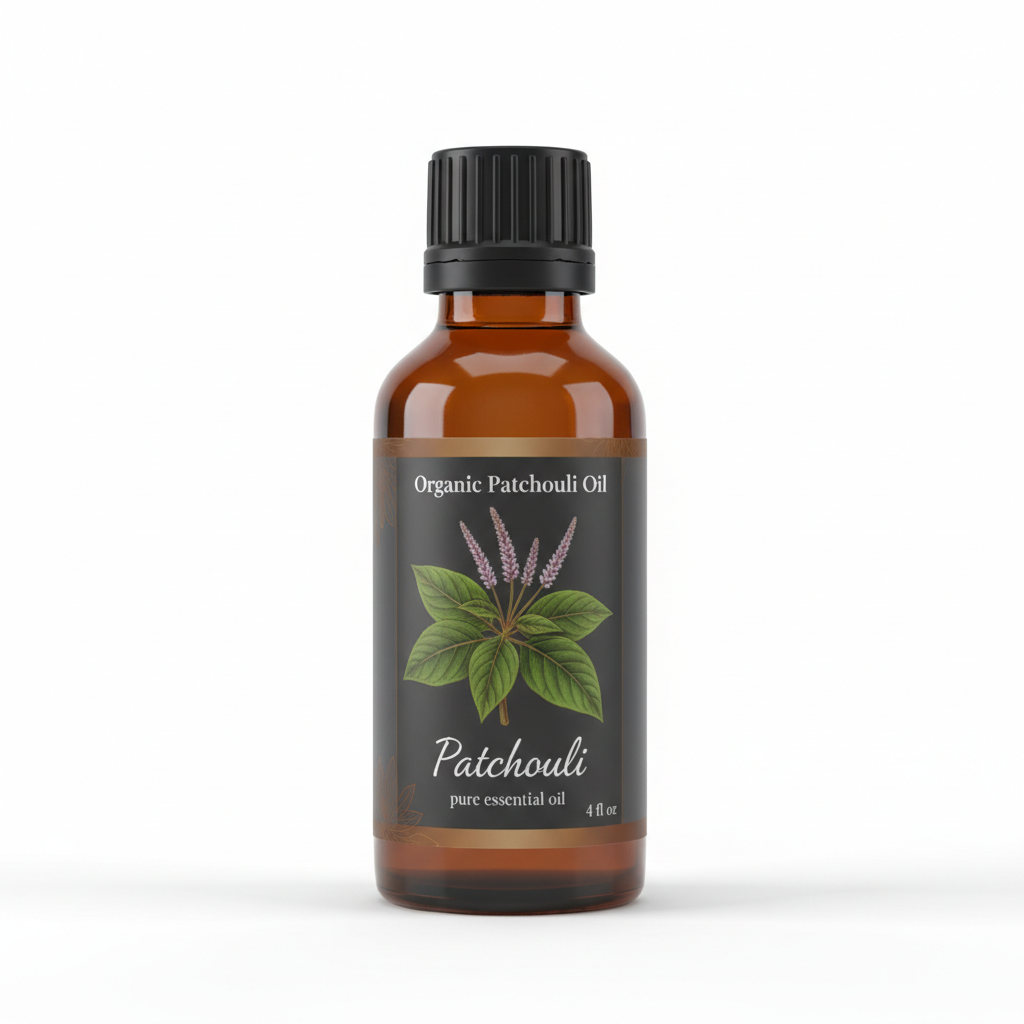
Patchouli Essential Oil
Our own Patchouli Essential Oil, in sizes from 0.5 oz to bulk.
From $20.99
Shop Now →What is said about ageing
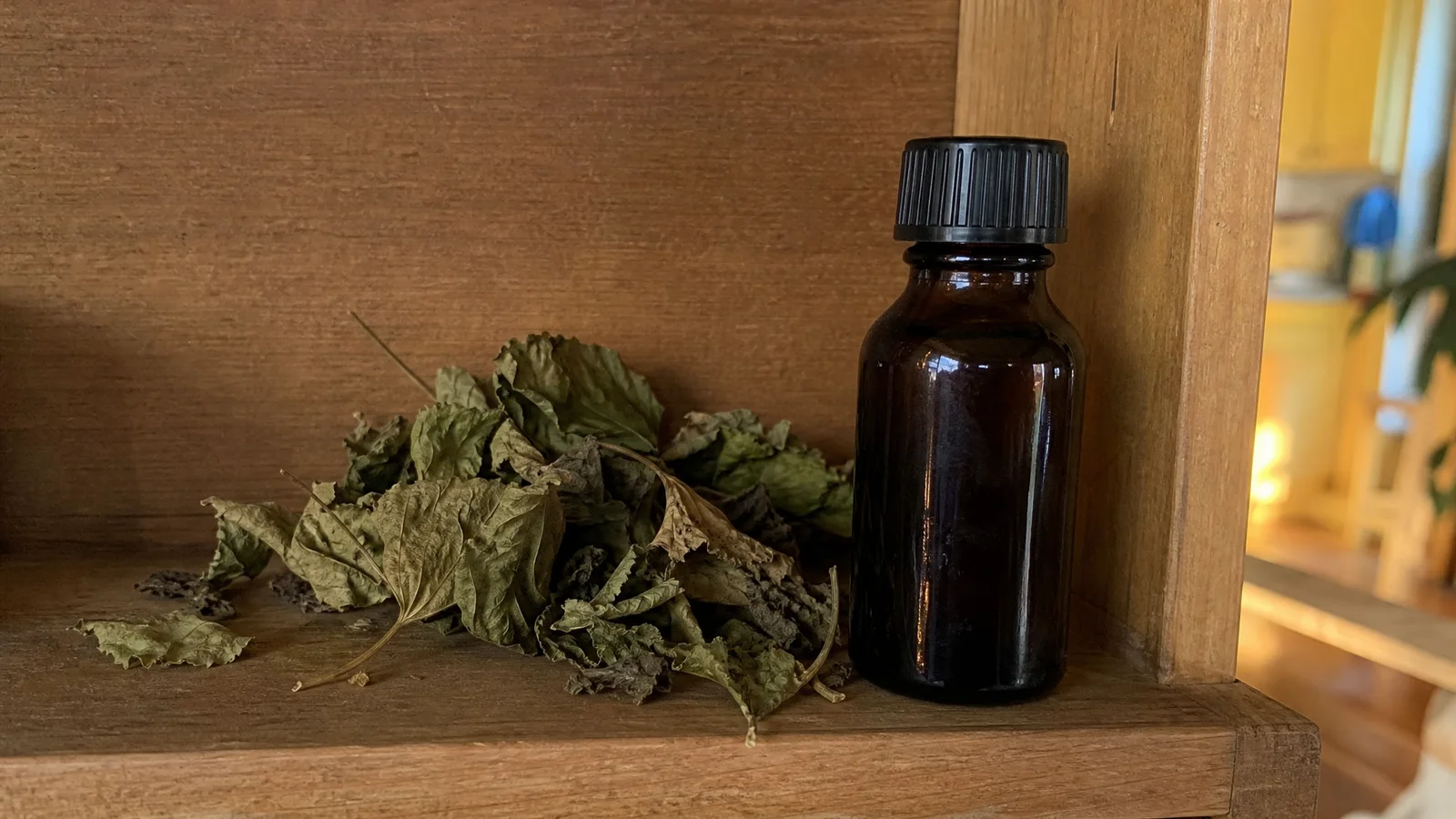
The plant-resources reference PROSEA says that after distillation patchouli oil is stored to mature, and that its quality improves in storage. It adds that patchouli oils improve on ageing, losing the sharp-green or wet-earthy and minty notes. That is a statement about aroma, and it gives no duration. Our own description is similar: fresh patchouli is comparatively rough, and the oil mellows and rounds out with time, growing noticeably smoother after about a year in the bottle. If you are a perfumer or a soap maker, that is a good reason to buy ahead for your next project and let the bottle rest.
Shelf life, in plain terms
For a planning figure you can lean on, Tisserand's retail guidance for patchouli is to keep it in a cool, dry place and use it within 12 months once opened. The European Food Safety Authority's 2025 assessment of a patchouli oil states a shelf life of at least 12 months in tightly closed containers kept cool, dry and out of the light, while noting that no supporting data were provided. So twelve months after opening is a sensible conservative window for anything you plan to put on skin, and the mellowing is a separate, aroma-focused story. It is a good habit to write the date you opened a bottle on the label.
The storage habits that matter
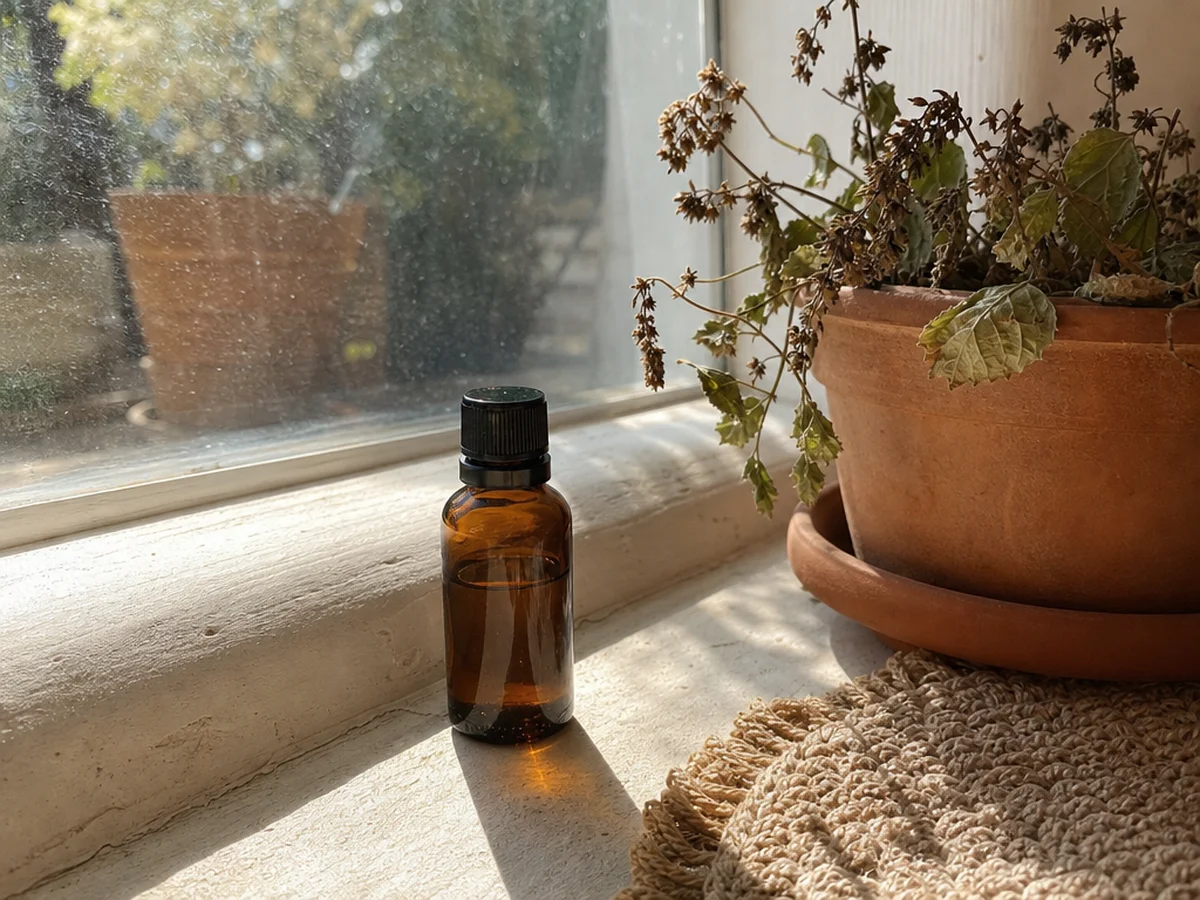
Cool, dark and closed. Our guidance is to keep the bottle in a cool, dark place away from direct sunlight and heat, and the sources above say the same in different words. Not near a stove, a radiator or a sunny sill, and not in a car.
Cap on, every time. A safety data sheet for a different seller's dark patchouli advises keeping the container closed when not in use. It describes another oil, so take it as a general guide.
Decant larger sizes. If you buy in bulk, keep sealed containers cool, dark and tightly closed and decant working amounts into smaller airtight bottles. Our reasoning is simple: a big bottle that is nearly empty holds more air than oil, and a small full bottle leaves less air to sit with the oil. That is common sense about headspace rather than a measured effect.
Wipe the neck. Patchouli lingers on skin and cloth for days and does not wash out of pale cloth easily, so a bottle with oil on its rim will mark whatever it sits on. A small tray helps. If it happens, our smell removal guide has the routine.
Out of reach. Poison Control says essential oils must be locked up, out of the sight and reach of children and pets. That is the habit to build first, and keeping patchouli oil away from children gives the full routine.
Ageing on purpose
Because no measured study of aged patchouli oil turned up, the best method is a comparison of your own. Keep two small bottles of the same oil: fill one nearly to the neck and set it aside, and use the other as your working bottle. Note the opening dates. Smell a drop on a paper strip beside a fresh sample at the start and again at six and twelve months, and write down what you notice before rereading earlier notes. This is a suggestion, not a tested result. Your nose tires quickly with patchouli, so keep each session short.
One caution about interpreting what you smell: a change in aroma is not proof of anything about quality. If a bottle really matters to you, a GC-MS report is the way to see what is inside, and our GC-MS guide explains what to look for. If you need that report for the oil you are buying from us, ask us in writing through the contact page.
Setting up a good spot
The best place for a bottle is usually the most boring one: a closed cupboard or drawer that stays cool through the seasons, away from the stove and the window. Stand the bottle upright on a small tray, and keep the cap on tight every time. If you have more than one bottle, a small label with the date you opened it saves you from guessing months later.
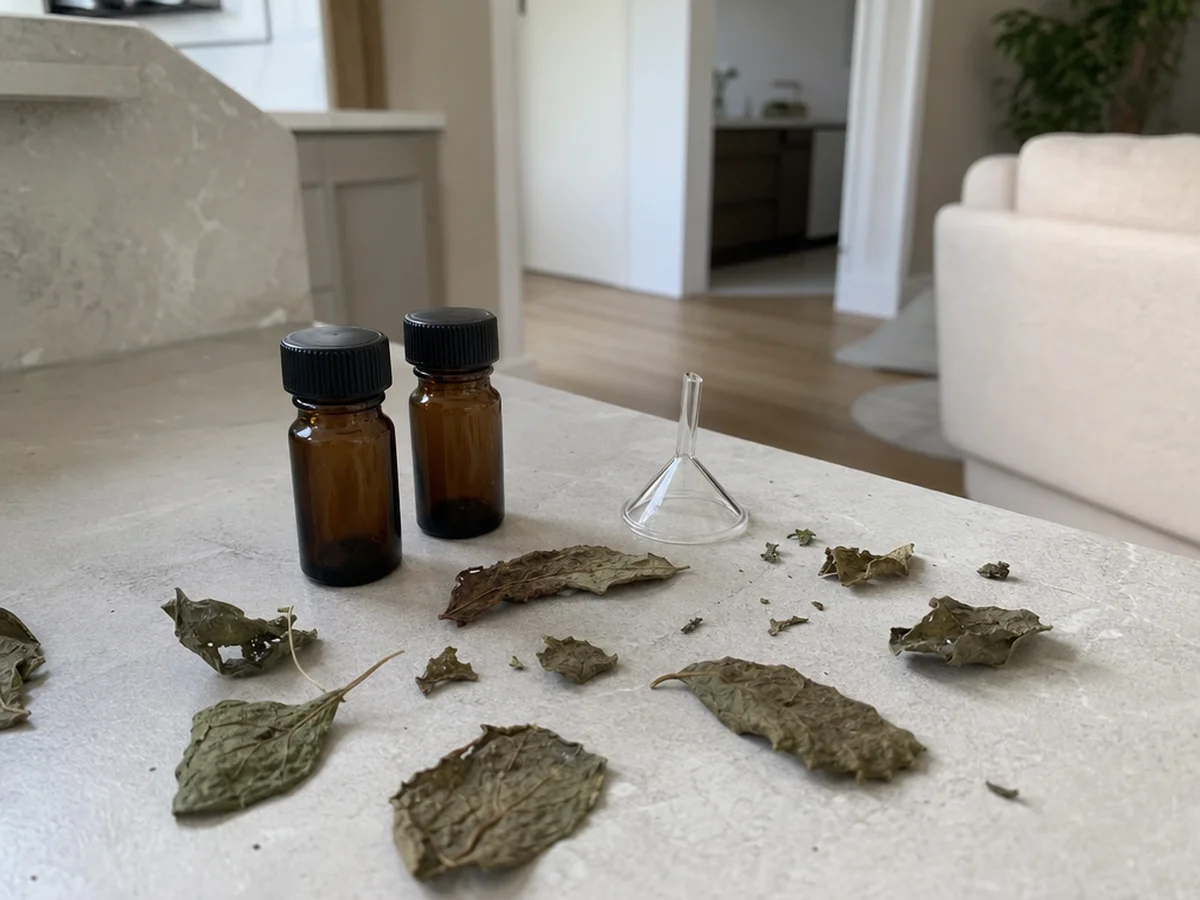
When you take it out to use, let the bottle sit a moment at room temperature before you open it, wipe the neck afterward and put it straight back. It sounds fussy, but it takes a few seconds, and it keeps both the oil and your shelf in good shape.
The nicest part of this routine is the first sniff after a long rest. Patchouli can open up softer and rounder, with the wine-like sweetness more noticeable than before, and that small reward is why so many people keep a bottle tucked away on purpose.
What not to assume
An older bottle that smells mild is not a license to skip dilution. Whatever its age, our guidance is to dilute to 0.5% to 2% in a carrier oil and patch test first. If a bottle has been open a long time and the smell turns sharp or sour in a way that is not mellower, retire it. And size your purchase to your use. A first bottle can be small, because there is nothing to age yet, while a business that will use a larger size within a year can buy ahead and sample first through our wholesale page.
A bottle in a dark cupboard, capped and dated, is a quiet kind of investment. When you finally open it, that rounder, deeper patchouli is the payoff.
Patchouli Essential Oil
Patchouli Essential Oil from our own shop, in sizes from 0.5 oz to bulk.
From $20.99
Shop Now →Sources & Further Reading
- Pogostemon (PROSEA), Pl@ntUse
- Safety and efficacy of a feed additive consisting of an essential oil derived from the leaves of Pogostemon cablin Benth. (patchouli oil) for use in all animal species (FEFANA asbl), EFSA Journal 2025
- Organic Patchouli Essential Oil, Tisserand Aromatherapy
- Essential oils: Poisonous when misused, Poison Control