Patchouli for Moths: Old Lore, and What Really Works
There is an old story that patchouli arrived in Europe tucked among Indian shawls, and that the leaves were there to keep moths away. It is a lovely image, and a piece of it is documented. But if your goal is a wool sweater that comes out of storage without holes, the things that work are less romantic: clean cloth, a sealed bag and a freezer. Patchouli can still have a place in the closet, for what it does best, which is smell wonderful.
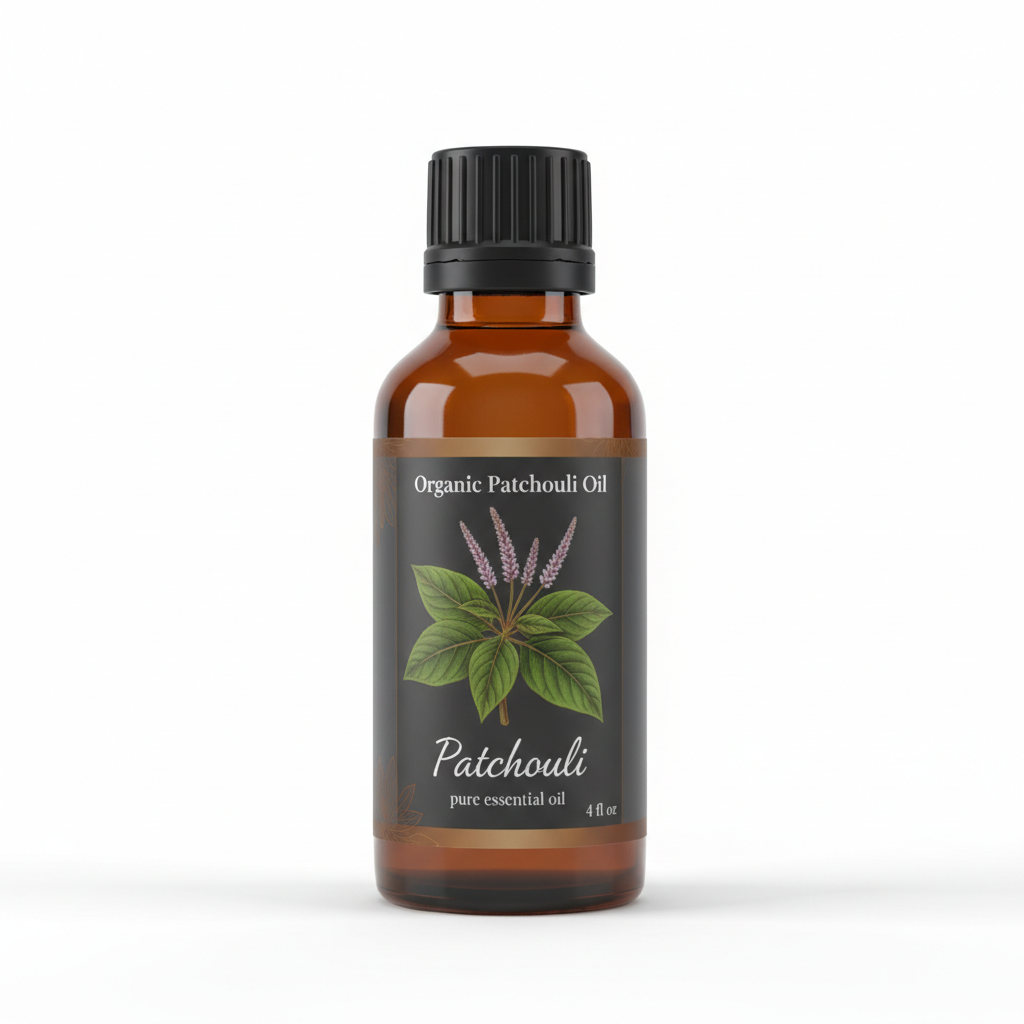
Patchouli Essential Oil
Our own Patchouli Essential Oil, in sizes from 0.5 oz to bulk.
From $20.99
Shop Now →What the story actually rests on
The plant-resources entry for Pogostemon in PROSEA records that the dried leaves of several Pogostemon species are traditionally placed between stored clothing to repel insects and to give a pleasant smell. It also says the fragrance became well known in Europe through imported Indian shawls and clothing, and that the first dried leaves did not reach London until 1844, after which French cloth makers were quick to copy the practice. That is a traditional practice with a real history. What we could not find is a controlled test of patchouli oil on clothes moths, so we treat it as a custom that people have trusted, not as a proven moth treatment.
What protects wool
English Heritage's clothes moth guidance is refreshingly direct. Moths are drawn to wool and especially to fine items like cashmere, and to textiles soiled with food or urine, so the biggest step is simply to clean things before they go into storage. Rutgers Cooperative Extension agrees: garments can be dry cleaned or hot laundered to kill fabric pests. Then seal them. English Heritage recommends plastic bags, ideally vacuum-sealed, or lidded boxes. For items that cannot be washed, freezing is the reliable method; Rutgers suggests wrapping them in plastic and freezing for two weeks, and English Heritage gives a colder, more specific routine, with the item left in its bag afterwards so condensation does not form.
Damage tends to hide in dark places such as creases, under collars, behind lapels and in turn-ups, and moths dislike being disturbed, so brushing and airing garments is a free habit worth having. English Heritage also points out that the natural home of clothes moths is bird and animal nests, so a source in a blocked chimney, an attic eave or wool insulation can be feeding the problem. A scent in the closet will not reach a source outside it. A pheromone trap, which catches males only, will tell you whether you have moths and roughly where.
On repellents, English Heritage says the old mothball chemicals are now banned or not recommended, and names lavender sachets and cedar balls as safer ways to repel adult moths, with a life of three months at most and no effect on larvae inside clothing. Patchouli is not named there. That does not prove the oil does nothing; it means the guidance does not speak to it.
Why we still love it in the closet
Forget moths for a moment and think about the plain pleasure of opening a wardrobe door. A closet that carries a faint trace of something deep and woody feels lived in and looked after. Patchouli suits that job because its aroma is slow: it does not shout when you open the door, it settles into the space. If you have ever opened a drawer holding an old cedar box or a well-loved book, you know the feeling we mean.
A closet tin for the scent
If you love the idea of patchouli among your clothes, it is simple to keep the oil off the cloth. Our patchouli will stain a light surface and does not wash out of pale fabric easily, so we recommend a container rather than putting oil on anything. Treat this as a formulation worked out from that and the sealed-storage advice above, not as a moth treatment.
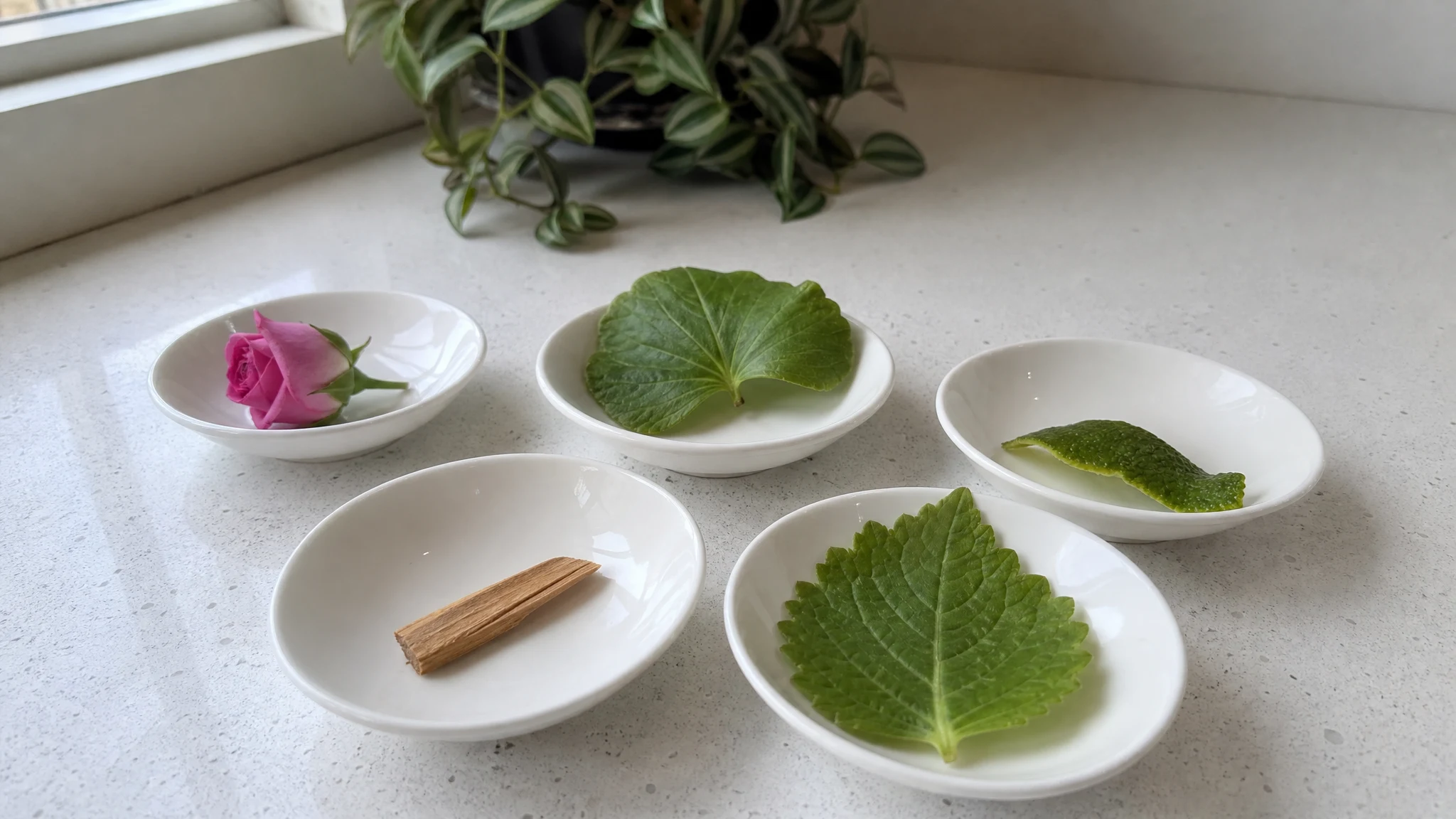
- Put a cotton pad, or a piece of unglazed ceramic or untreated wood, in a small tin or jar with a perforated lid, so oil cannot touch cloth if the tin tips.
- Add three to five drops. At the usual rule of thumb of 20 drops per millilitre, that is 0.15 to 0.25 ml.
- Stand it on the closet shelf beside the clothes, not touching them, and outside any sealed bag. The sealed bag is the protection; scent inside it only taints the wool.
- Leave the tin beside a scrap of pale fabric for a few days first, and check for marks.
- Expect the aroma to fade over weeks and replace it rather than adding more.
Keep the tin where a cat or dog cannot reach. The ASPCA notes that cats are especially sensitive to essential oils and does not recommend using any in areas where pets have access unless they are supervised or your veterinarian approves. Our oil is for aromatic and cosmetic use only, never internal.
A few small habits that help
- Open the tin when you put a season's clothes away and close it again when you take them out, so the scent is used where you want it.
- Smell the bottle before you decide how many drops to use. A deep, earthy oil needs fewer than you think, and a closet is a small space.
- Write the date on the underside of the lid. When the aroma has thinned, you will know how long it took.
For washing a scented item, see our laundry article; to look at what research says about insects more broadly, read our insect evidence review; and for keeping the bottle itself in good shape, our storage article helps.
Clean it, seal it, freeze what you cannot wash, and let the patchouli tin do what it does best: make the closet smell like somewhere you want to open.
Patchouli Essential Oil
Patchouli Essential Oil from our own shop, in sizes from 0.5 oz to bulk.
From $20.99
Shop Now →Sources & Further Reading
- English Heritage. Clothes moths - prevention and control.
- Rutgers Cooperative Extension. Clothes Moths.
- Oyen LPA. Pogostemon (PROSEA), Pl@ntUse.
- ASPCA. Pet Poisons: Be Mindful of these Household Products and Cleaning Agents.