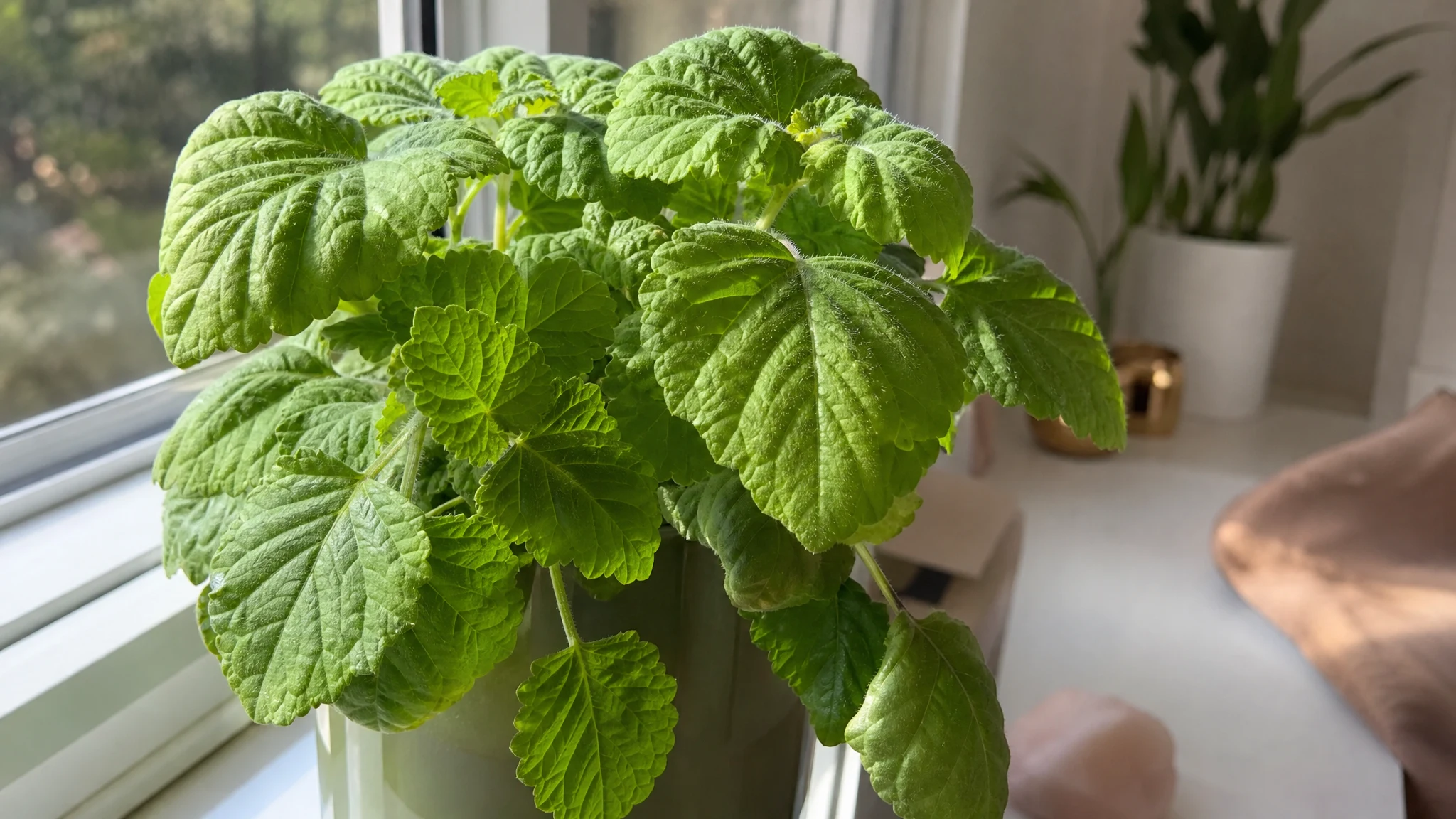
Patchouli Hair Oil: How Many Drops Per Ounce?
Patchouli has a long history as the scent of hair oils and beard balms, and it is easy to see why. It smells deep, earthy and wine-like, with a hint of damp forest floor and aged wood, and it stays put. That staying power is the whole appeal, and it is also the reason a hair oil needs far fewer drops of it than you might expect.
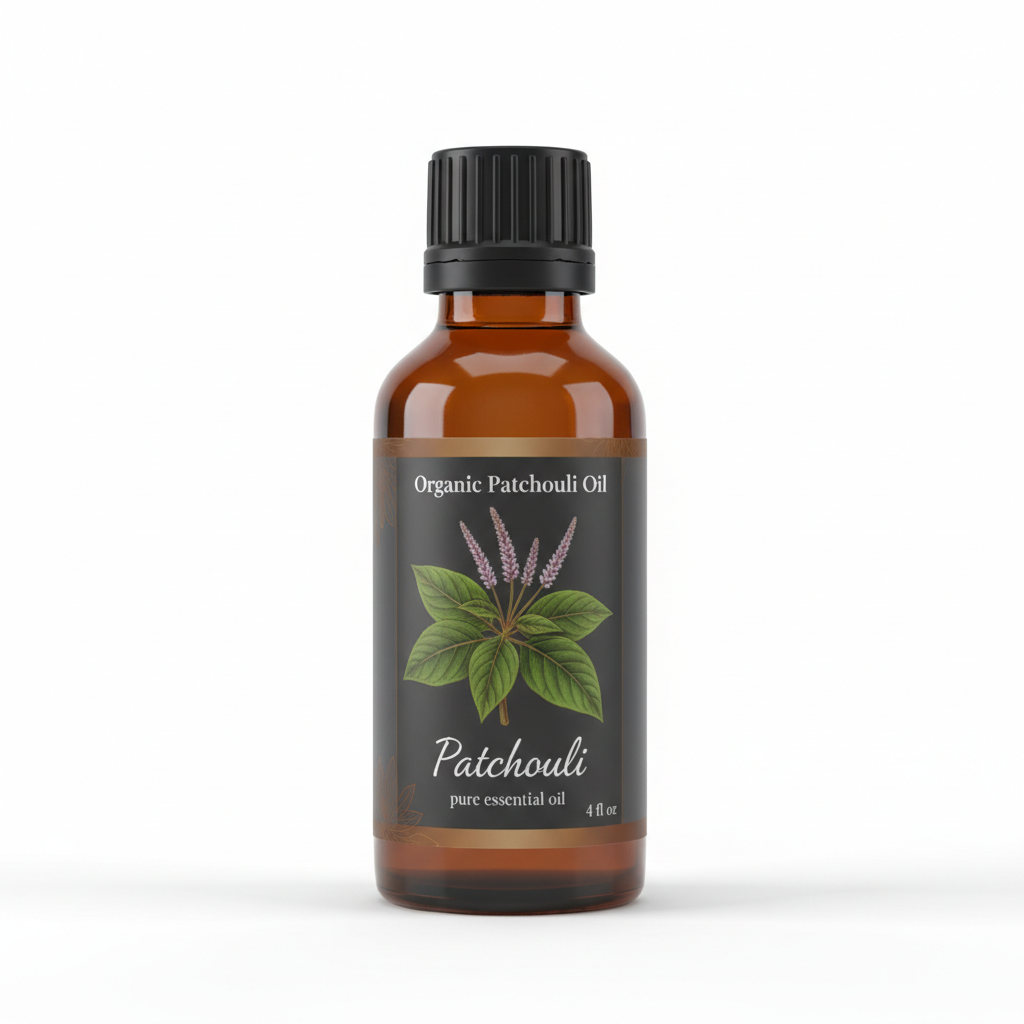
Patchouli Essential Oil
Our own Patchouli Essential Oil, in sizes from 0.5 oz to bulk.
From $20.99
Shop Now →What patchouli brings to the bottle
We describe patchouli as a base note and a natural fixative. In a blend it sits at the bottom of the scent, slow to fade, and it helps lighter aromas hang around longer. That is a perfumer's argument for it, not a clinical one: we make no medical claims about patchouli, and nothing we say about it concerns how hair grows, thickens or sheds. It is a fragrance ingredient, and a very good one.
There is a regulatory reason to keep it that way. The FDA says whether a product counts as a cosmetic or a drug is decided by its intended use, and that claims on a label, in advertising or online can tip a cosmetic into drug territory. It names claims to restore hair growth as an example. So a scented hair oil stays a scented hair oil, and we leave the promises to products that are actually regulated to make them.
Counting drops
Our guidance for skin is to dilute patchouli to 0.5% to 2% in a carrier oil and patch test first. For the scalp we would start at the low end, 0.5% to 1%. Two reasons: the Tisserand Institute's general guidelines run from 0.2% to 1% for sensitive skin and 0.5% to 1.2% for the face, and the European Food Safety Authority's 2025 opinion on patchouli oil describes it as an irritant to skin and eyes and a skin and respiratory sensitiser. Those are general guidelines and a hazard classification for the material assessed, not a limit for any one bottle, but together they point to starting gently and going up only if your skin is happy.
The arithmetic is short. An ounce of carrier oil is about 29.6 ml. At roughly 20 drops per ml (droppers vary, so weigh if you can):
- 0.5% is about 0.15 ml, or 3 drops per ounce.
- 1% is about 0.3 ml, or 6 drops per ounce.
- 2%, the top of our range, is about 0.6 ml, or 12 drops per ounce.
Double those for a two-ounce bottle. This is straight arithmetic rather than a finished recipe, so mix a small amount, patch test on the inner forearm, then try a little at the scalp before you commit to a full bottle. If you have eczema, a reactive scalp or a history of fragrance reactions, ask a dermatologist or allergist first.
Mixing a small bottle
Start with a clean, dry bottle, preferably amber glass. Pour in the carrier first, add your drops, cap it and turn it end over end for a minute. Smell a drop on the back of your hand after a few minutes rather than straight from the bottle, because patchouli opens up slowly. If it seems quiet, resist the urge to add more right away. Give it an hour and smell again, since a base note takes its time to show itself.
Label the bottle with the date and the percentage, and keep a note of the carrier you used. If you like the result, you will want to make it the same way again, and a label saves you guessing.
Practical notes from the oil itself
Patchouli lingers on skin and cloth for days, and it can stain pale fabric and does not wash out of light cloth easily. A hair oil is going to meet towels and pillowcases, so fewer drops is a kindness to your laundry as well as your skin. Keep the oil away from eyes, children and pets, never take it by mouth, and wash it out if the scalp itches or reddens. Carrier oils, droppers and bottles are things you will find at a craft or supply shop; our carrier oil guide walks through the usual choices.
It is easy to overdo a scented oil when the smell is lovely. Think of the first application as a trial: use less than you think, check the scent after an hour, and adjust the next bottle rather than the current one. Patchouli is generous, and one drop too many lingers for days.
Towels, collars and pillowcases
Because the scent travels with the oil, plan for where your hair will rest. Use a dark towel for drying and keep an old pillowcase for days you have oil in your hair. Wash your hands after you have applied it so the scent does not follow you to door handles and steering wheels. A faint trace is the goal.
If thinning is the real question
Everyone sheds hair: the NHS puts normal loss at 50 to 100 hairs a day. It lists pattern baldness, which usually runs in families, as the common permanent cause, and illness, stress, cancer treatment, weight loss and iron deficiency among the temporary ones. If your hair is thinning, coming out in patches or shedding more than usual, a GP is the right first call, because the cause decides what helps. A scented oil is a pleasure, not a substitute for that conversation.
For related reading, see our notes on patchouli and scalp care, the beard oil formulation and the dilution chart.
Used lightly, patchouli gives a hair oil an earthy, grounded character that few other scents can match, and a few drops go a long way.
Patchouli Essential Oil
Patchouli Essential Oil from our own shop, in sizes from 0.5 oz to bulk.
From $20.99
Shop Now →Sources & Further Reading
- NHS. Hair loss. nhs.uk/conditions/hair-loss
- FDA. Is It a Cosmetic, a Drug, or Both? (Or Is It Soap?). fda.gov
- Tisserand Institute. Dilution for essential oils. tisserandinstitute.org/safety/dilution
- EFSA FEEDAP Panel, 2025. Safety and efficacy of a feed additive consisting of an essential oil derived from the leaves of Pogostemon cablin Benth. (patchouli oil) for use in all animal species (FEFANA asbl). EFSA Journal. PMC12004087