How to Patch Test Patchouli Oil at Home, Step by Step
Most of us have patted a new product onto the inside of a wrist and called it tested. With patchouli oil it is worth doing the job a little more carefully, because the oil is strong, it lingers, and a reaction can show up days later rather than minutes. Here is a simple routine that follows what dermatologists recommend, and a clear view of what it can and cannot tell you.
Patchouli Essential Oil
Our own Patchouli Essential Oil, in sizes from 0.5 oz to bulk.
From $20.99
Shop Now →Irritation and allergy are two different stories
An irritant reaction comes from a substance acting directly on skin. It usually scales with strength and contact time and can happen on first use. An allergic reaction involves the immune system, develops after sensitisation, and can be set off by far smaller amounts. The NHS describes contact dermatitis, which covers both, as skin that becomes itchy, blistered, dry and cracked, usually within hours or days of contact. On the surface the two can look the same, which is why a dermatologist, not a seller, is the one to sort out which you have.
It helps to know how the authorities describe patchouli. The European Food Safety Authority's panel, assessing a patchouli oil as an animal feed additive, concluded it should be considered an irritant to skin and eyes and a dermal and respiratory sensitiser. That is a hazard classification for one applicant's oil in a different setting, not a percentage for your body oil, but it is a good reason to patch test carefully and keep your dilution modest. Because sensitisation builds with repeated exposure, a person can pass a first test and still react after weeks of use. That is our reasoning from how sensitisers work, and it explains why we treat a home test as a screen and not as a clearance.
The home test, step by step
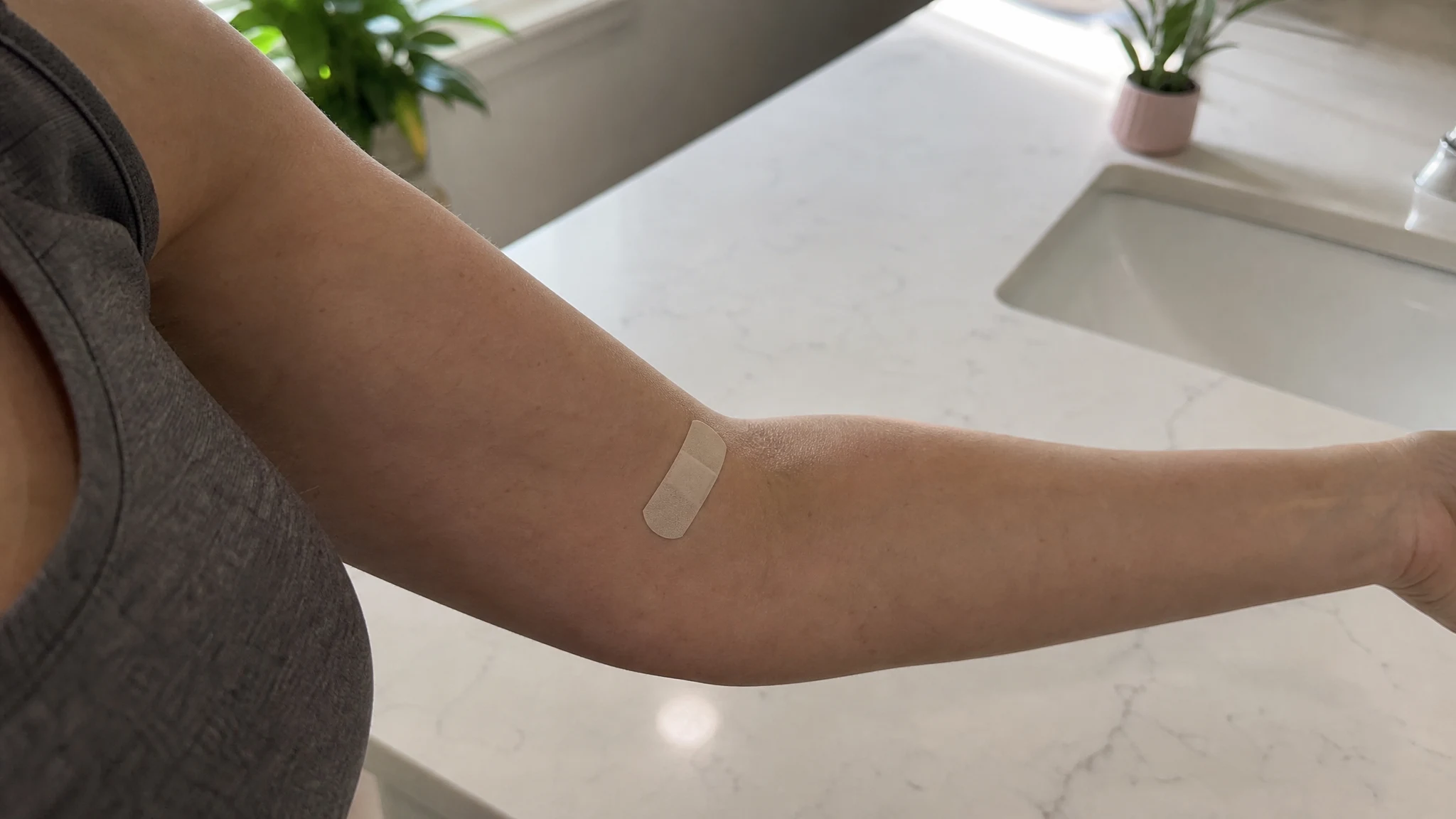
The American Academy of Dermatology gives this advice for testing a new skin care product: apply it to a quarter-sized spot that will not be rubbed or washed away, such as the underside of your arm or the bend of your elbow, using the normal amount, twice a day for seven to ten days. If you see redness, itching or swelling, wash it off gently and stop. If nothing happens, you can go ahead. That page is about skin care in general, so applying it to patchouli blends is our adaptation, and this is how we would do it.
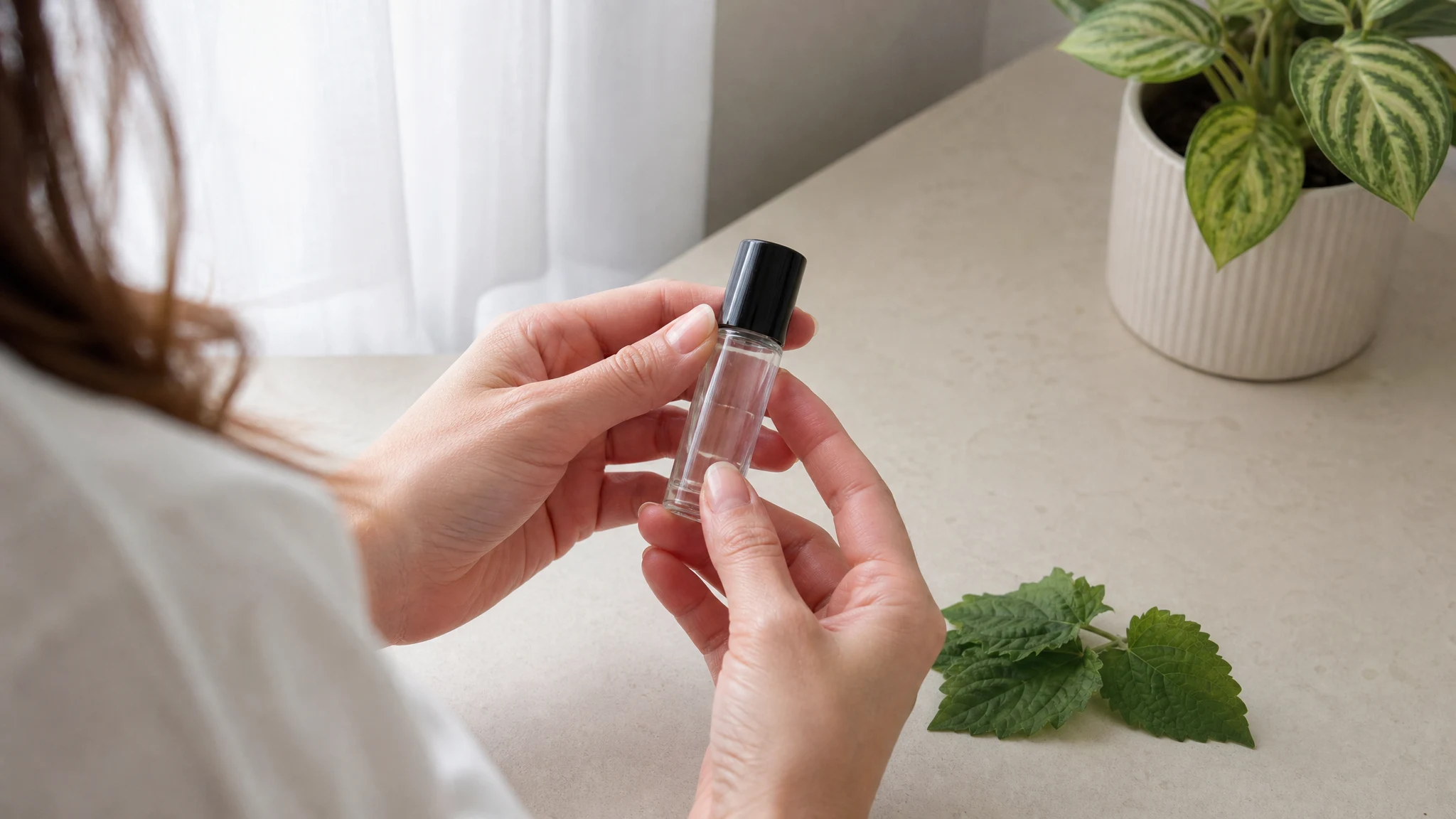
- Make the blend you plan to use, not the neat oil. We sell patchouli undiluted, and our guidance is to dilute to 0.5% to 2% in a carrier oil. For leave-on skin we would start at 0.5% to 1%. In a 1 oz (about 30 ml) bottle, 1% works out to roughly 6 drops, using the rule of thumb of 20 drops per millilitre. A drop count can easily be off, so weighing is better if you have a scale. Testing the neat oil is not a patch test; it is exposing skin to the concentrate.
- Label it with the date and the percentage.
- Apply a quarter-sized amount to a spot on the inner arm or elbow bend where it will stay put.
- Repeat twice a day for seven to ten days, looking at the spot each time.
- Stop at the first sign of redness, itching, swelling or stinging, and wash the area with soap and water, as Poison Control advises.
Keep the blend and the bottle away from the eyes. If you have eczema, asthma, a history of rashes from perfume or scented products, or you have reacted to another essential oil, ask a dermatologist before you try this at all.
Making it easy to follow through
Seven to ten days is a long time to remember a little spot on your arm, so make it routine. Put the labelled bottle next to your toothbrush or by the kettle, pick the same two moments each day, and look at the spot in good light. A note on your phone with the date you started helps too. If you wear a long sleeve over the spot, make sure the fabric is not rubbing it, since friction can look like a reaction.
What a clinic test does differently
A dermatologist's patch test is a different exercise. Patches carrying allergens go on the back and stay for 48 hours, they must not get wet or loosen, and you come back to have them removed and read, with a follow-up visit days later because allergic reactions can take time to appear. A clinic uses standardised materials under controlled conditions with a trained reader. A few days on the forearm is a useful screen, but it cannot tell you what is behind a rash you already have. For that, an allergist or dermatologist is the right person.
When to stop and when to get help
- Redness, itching, swelling or blistering at the spot: wash it off, stop, and do not retest in the same place.
- A reaction that is severe or does not settle: see a dermatologist or your GP.
- Any reaction that comes with difficulty breathing is an emergency; call your local emergency number.
It is also worth repeating the test with a fresh blend if a bottle has been open for many months, or if you change the carrier or add another oil. For the dilution maths at different batch sizes, see our dilution guide, and for the bigger picture of using the oil on skin, our skin article. If you plan to blend patchouli with other oils, the pairing guide shows how the total shares out.
Patchouli rewards patience, in the bottle and on the arm. A week of quiet checking before you commit is a small price for being able to enjoy it afterwards.
Patchouli Essential Oil
Patchouli Essential Oil from our own shop, in sizes from 0.5 oz to bulk.
From $20.99
Shop Now →Sources & Further Reading
- American Academy of Dermatology. How to test skin care products.
- American Academy of Dermatology. Patch testing can find what's causing your rash.
- NHS. Contact dermatitis.
- Poison Control. Essential oils: Poisonous when misused.
- EFSA FEEDAP Panel, 2025. Safety and efficacy of a feed additive consisting of an essential oil derived from the leaves of Pogostemon cablin Benth. (patchouli oil) for use in all animal species (FEFANA asbl).