Patchouli Oil FAQ: Straight Answers to Common Questions
Patchouli is an oil people tend to have opinions about before they own a bottle, so questions arrive early. Here are the ones that matter most, answered the way we would at the counter. Where a longer article exists, we point you to it.
Patchouli Essential Oil
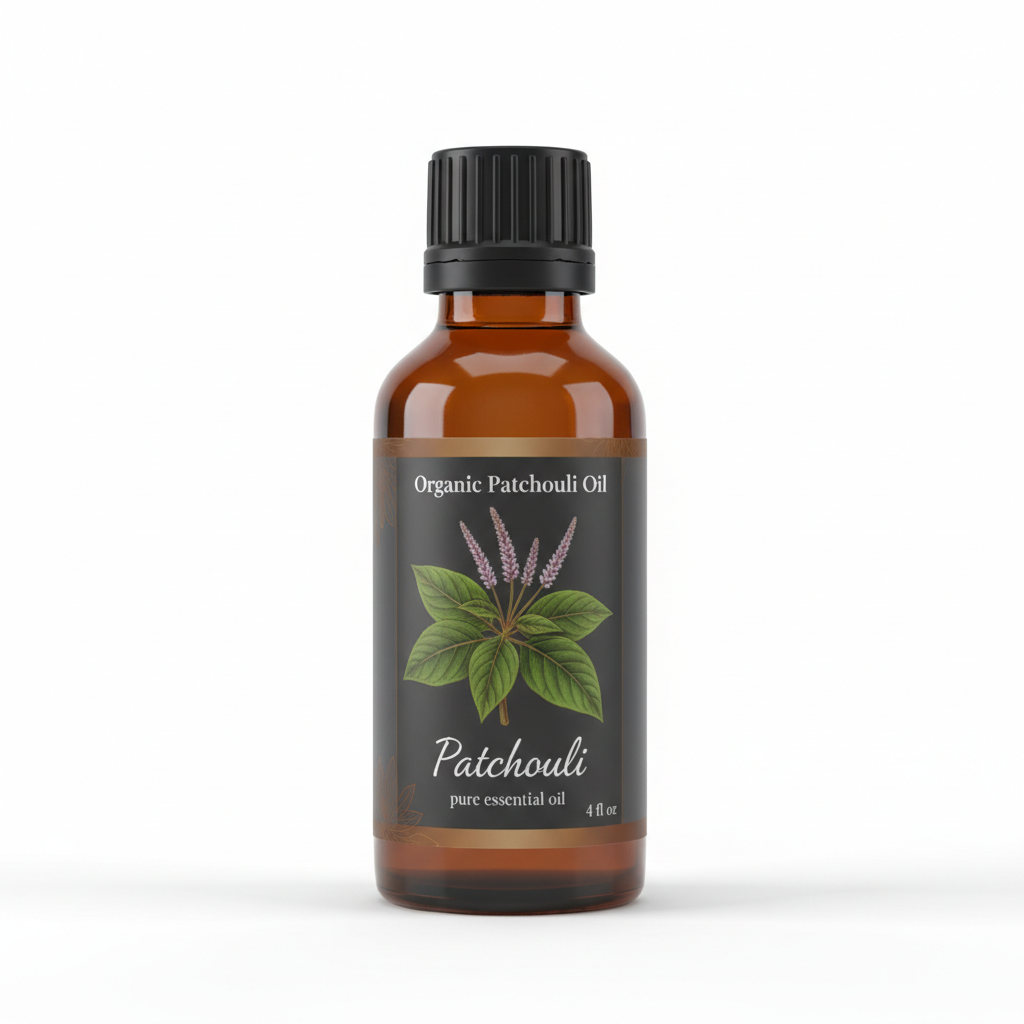
Our own Patchouli Essential Oil, in sizes from 0.5 oz to bulk.
From $20.99
Shop Now →What is it, and how is it made?
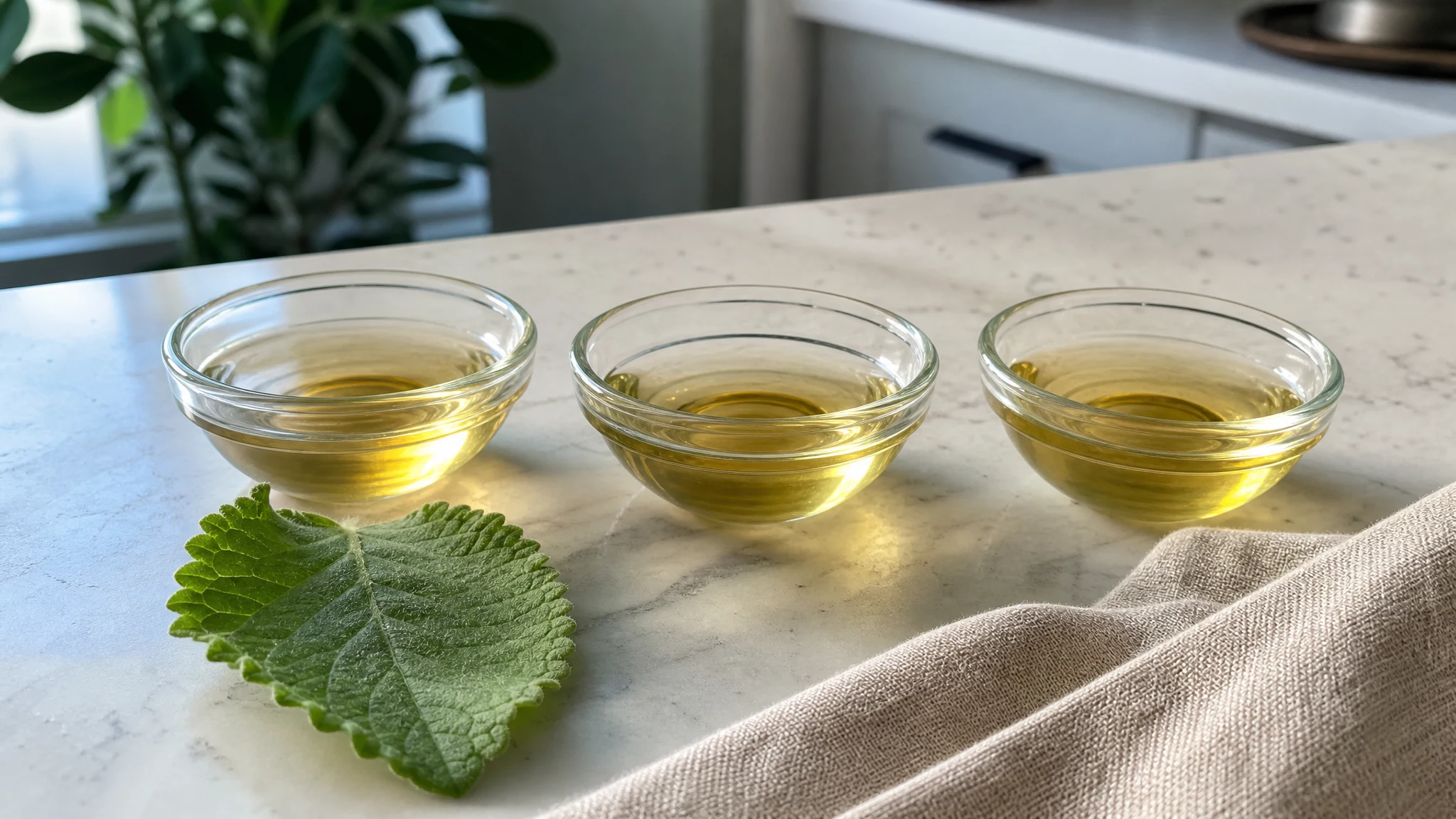
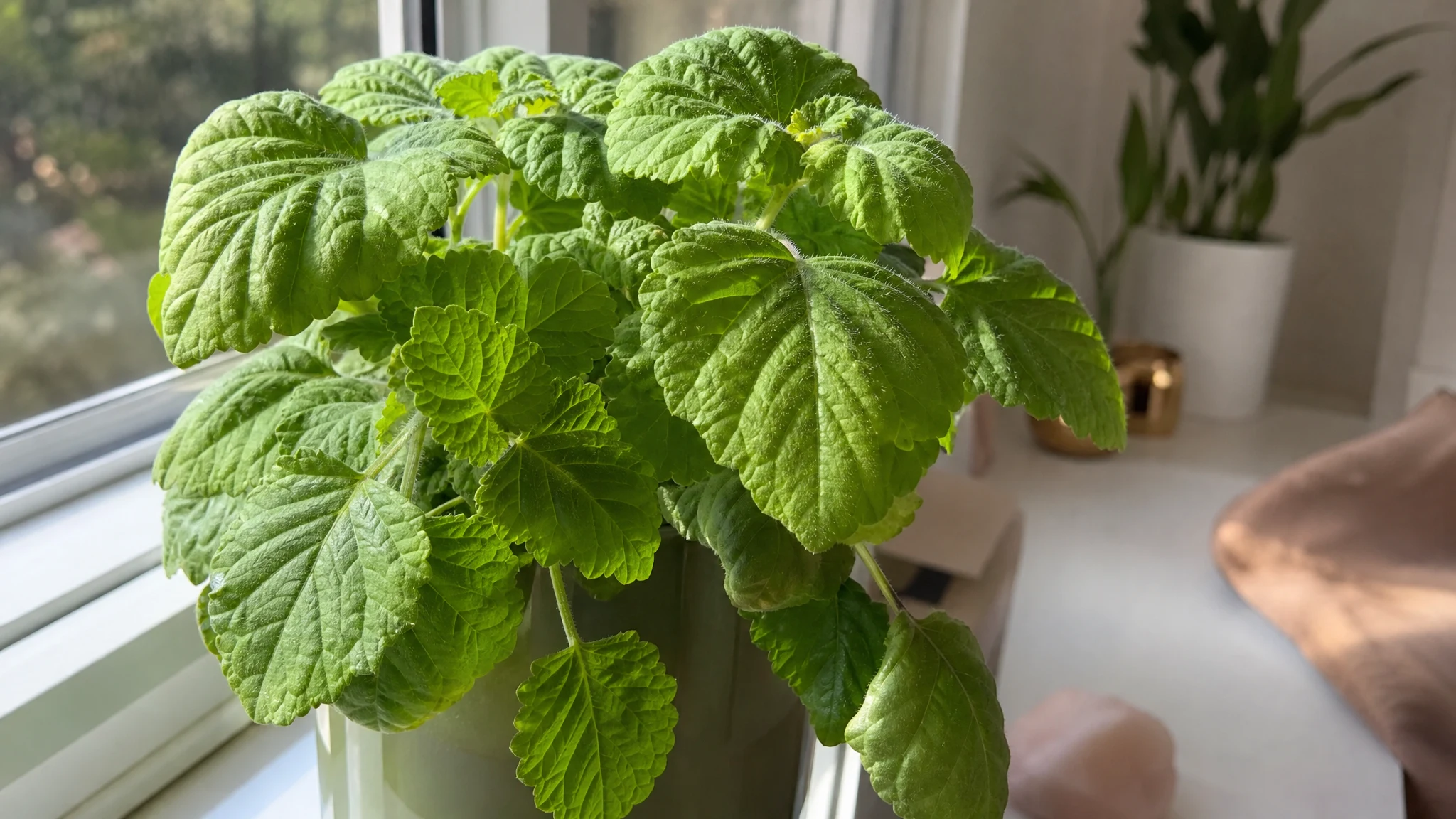
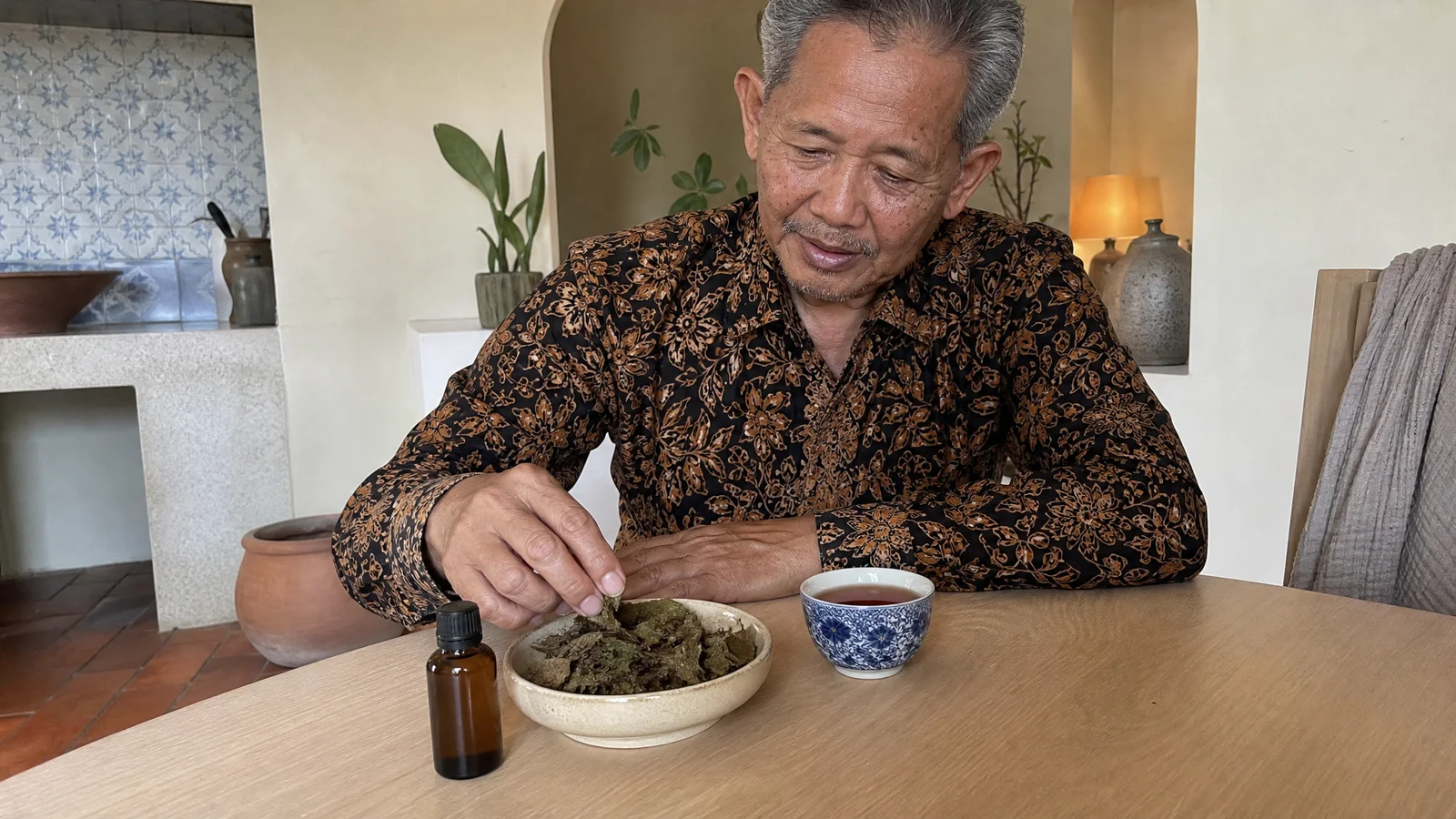
Patchouli essential oil comes from the leaves of Pogostemon cablin. The oil we sell is steam-distilled from shade-dried, lightly fermented leaves. Reference sources describe the same basic path: leaves are dried, often cured, and then steamed for hours. Our article on how patchouli oil is made follows each step.
If you have never met patchouli, here is what to expect. Open the bottle and the first thing you notice is a dark, rich aroma that can feel almost wine-like, with a hint of cocoa in the background. It is not a bright scent and it is not a quick one. It unfolds slowly, which is part of its charm, and why people who love it tend to keep a bottle for years.
Why does a little go so far?
Patchouli is a base note and a natural fixative, and perfumers have long used it that way. A plant-resources reference notes that it is almost universally used as a fixing agent and mostly in very small doses. A drop too many lingers on skin and cloth for days, so start with less than you think you need. You cannot take a drop back out of a scarf.
How do I smell it properly?
Resist the urge to sniff straight from the neck of the bottle. Put a single drop on a paper strip or a cotton pad, wave it gently, and smell it after a minute, then again after ten minutes and an hour. The lighter edges drop away and the deep, woody heart stays. That slow change is what you are really choosing when you choose a patchouli.
Does every patchouli oil smell the same?
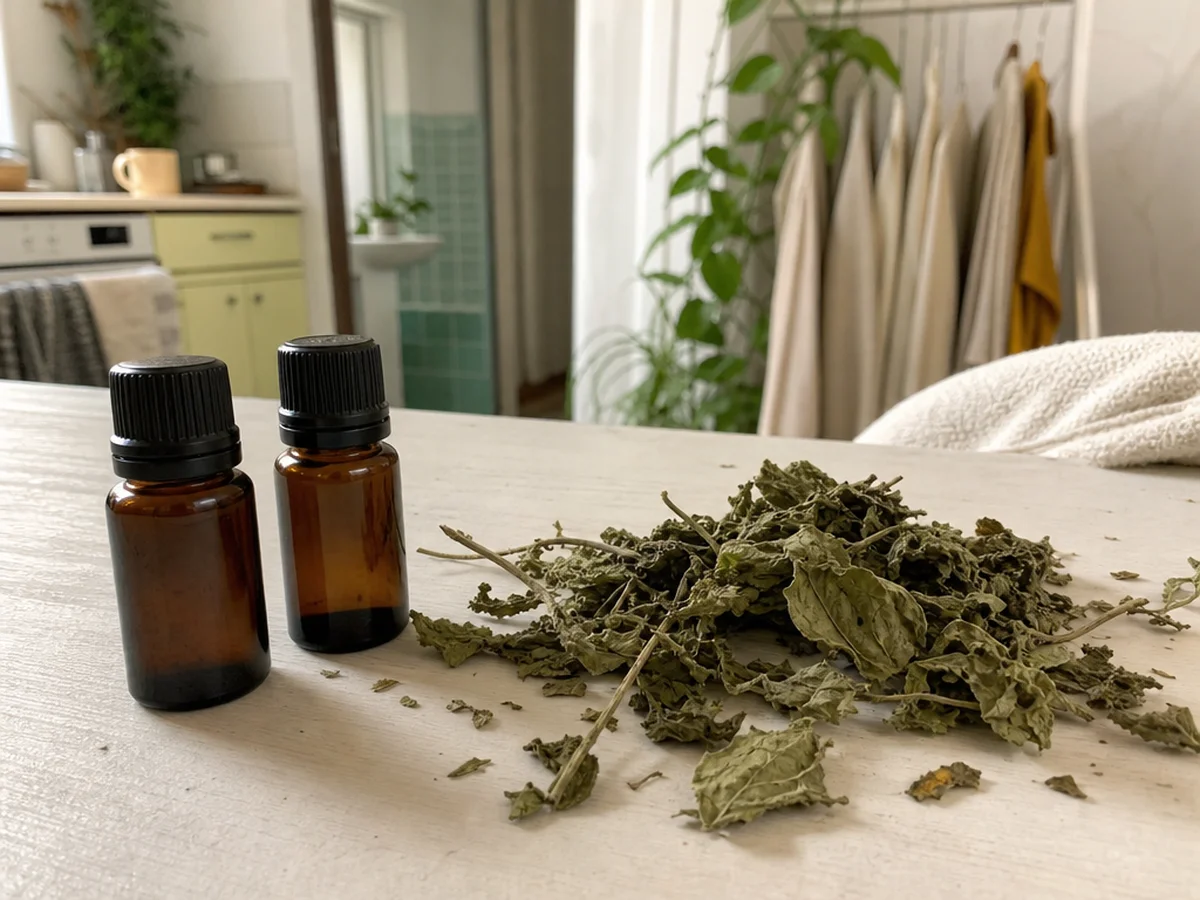
No. A review of the plant describes two chemotypes, one rich in pogostone and one rich in patchouli alcohol, and growing region, harvest and process all play a part. Even oils that meet the same specification will smell a little different from one maker to the next. Ours is deep, earthy and wine-like, with notes of damp forest floor and aged wood. If you want to read a lab report yourself, our GC-MS guide shows what to look for.
What does the Certificate of Analysis show?
The Certificate of Analysis we publish covers one batch. It lists the botanical name, the leaf as the part used, steam distillation, a batch number and a best-by date, notes that appearance and smell comply, and prints the standard ranges for density, refractive index and optical rotation. If you need GC-MS or an adulterant screen for your work, ask us in writing through the contact page before ordering.
Is it organic?
The product is named Organic Patchouli Oil, and we describe the leaf as organically grown. If you need organic status documented for a label or a buyer, ask us in writing for the certifier name, certificate number and scope, and confirm them with the certifier before you rely on them.
How much goes on skin?
Our guidance is to dilute to 0.5% to 2% in a carrier oil and patch test first. In practice we would begin at the low end. The Tisserand Institute gives general guidelines of 0.2% to 1% for sensitive or impaired skin, 0.5% to 1.2% for facial products and 1% to 3% for body oils, with the note that there may be exceptions in particular cases. For one ounce of carrier, 0.5% to 2% works out to roughly 3 to 12 drops at 20 drops per milliliter, and weighing is more accurate than counting. Our dilution chart covers other batch sizes.
Can it be swallowed?
No. It is for aromatic and cosmetic use only. If someone swallows essential oil, call Poison Control at 1-800-222-1222. The reasons are in why we say never to swallow patchouli oil.
What about children, pets and pregnancy?
Poison Control advises that bottles of essential oil be locked up, out of sight and reach of children and pets, which is the habit we recommend. For pregnancy, our disclaimer asks readers who are pregnant or nursing to talk to a physician first, and the articles on pregnancy and pets explain what the authorities say.
How should I store it, and will it stain?
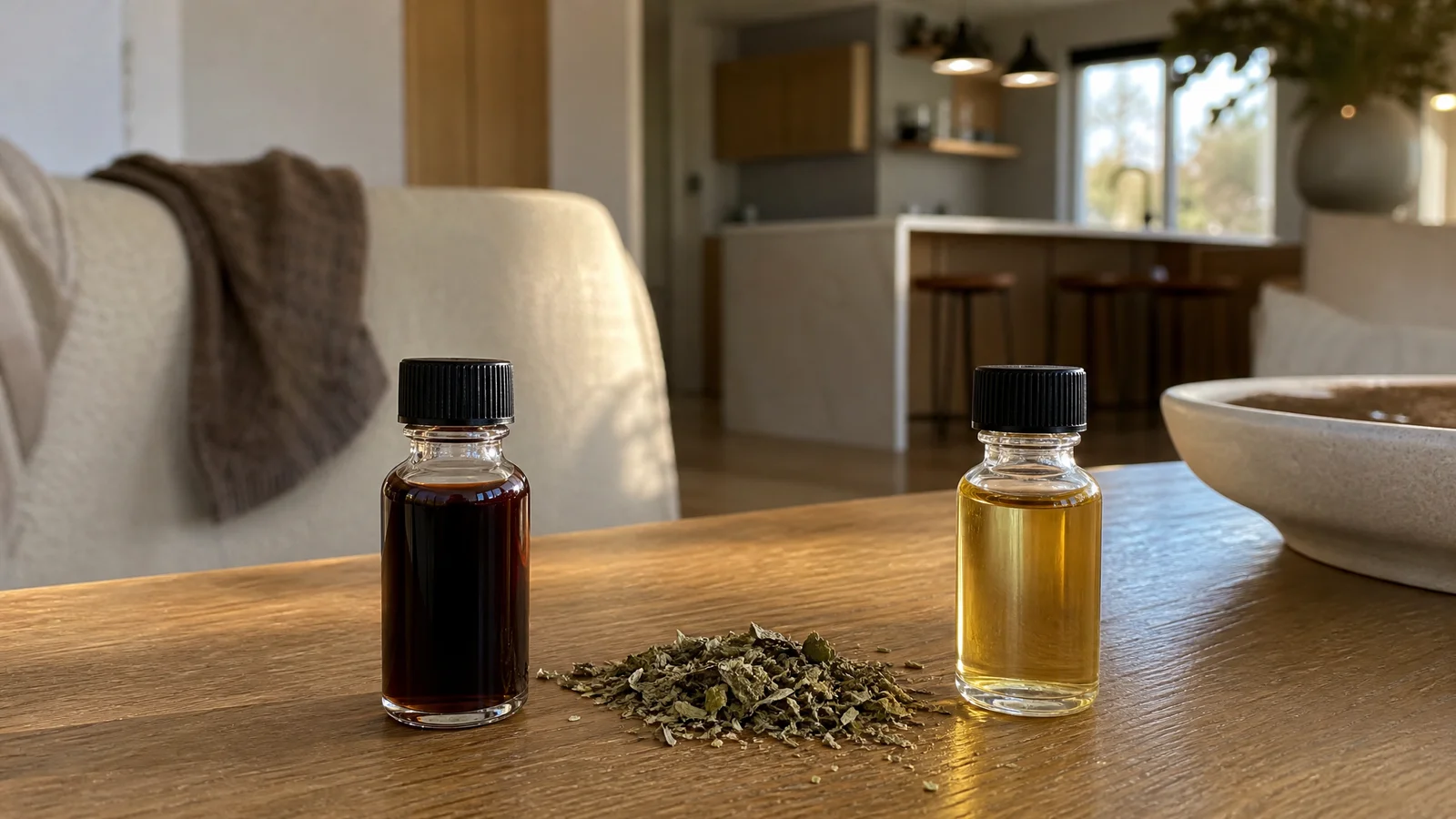
Keep it in a cool, dark place, away from direct sun and heat, with the cap on. The oil is naturally dark reddish-brown and can stain a light surface, and it does not wash out of pale cloth easily, so wipe the neck of the bottle and stand it on a tray. Our guide to removing patchouli smell covers what to do after a spill, and the plant-resources reference notes that the oil improves as it matures.
Does it do anything for sleep, mood or skin problems?
We sell it for its aroma and as a cosmetic ingredient, and we make no medical claims. Its value is as a base note, a perfumer's argument rather than a clinical one. For a health concern, a physician, pharmacist or dermatologist is the right person to ask.
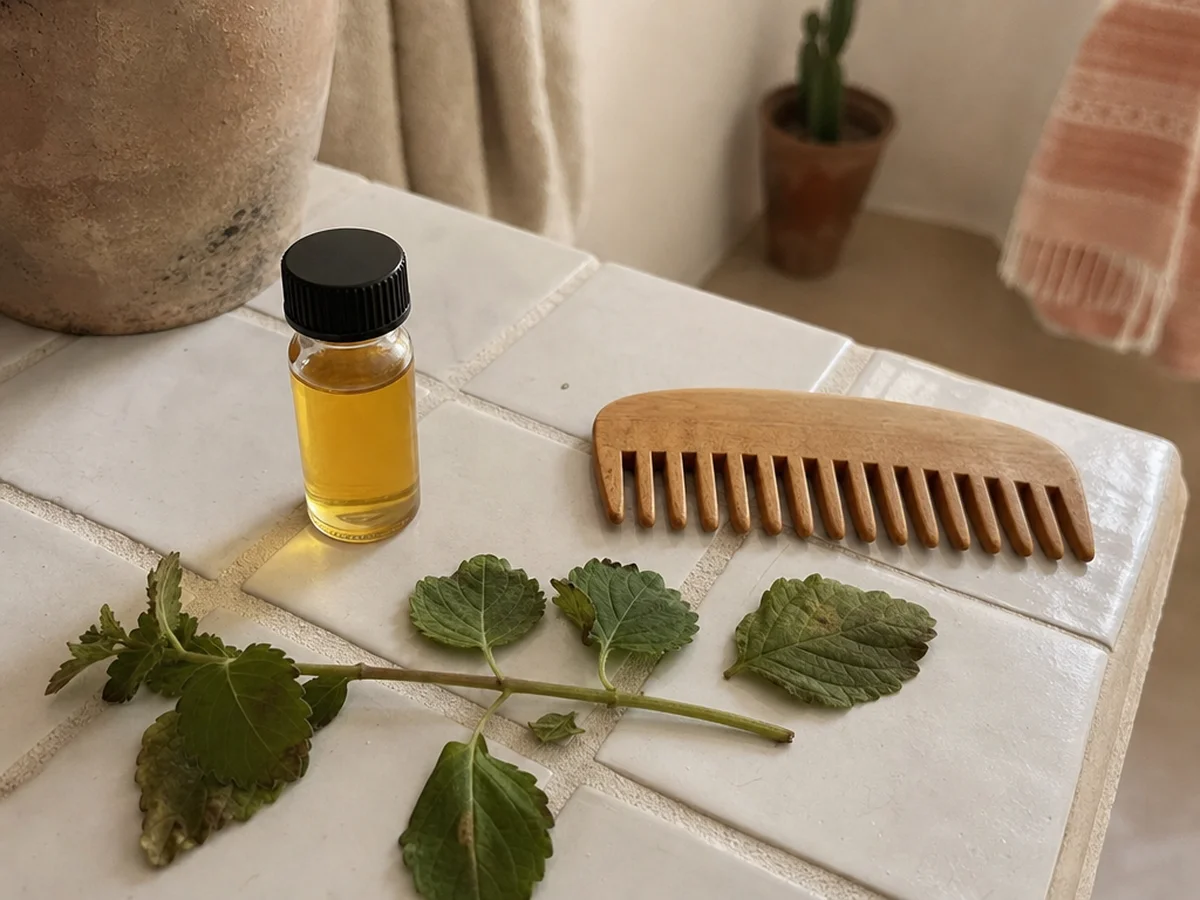
A small tip we like to share
Keep a dark cloth or a small tray under the bottle when you pour. Patchouli is the kind of oil you want to handle with care, because it clings to fingers, caps and surfaces. Wipe the neck after every use and you will find it much easier to enjoy.
If your question is not here, write to us through the contact page. We like talking about patchouli.
Patchouli Essential Oil
Patchouli Essential Oil from our own shop, in sizes from 0.5 oz to bulk.
From $20.99
Shop Now →Sources & Further Reading
- Safety and efficacy of a feed additive consisting of an essential oil derived from the leaves of Pogostemon cablin Benth. (patchouli oil) for use in all animal species (FEFANA asbl), EFSA Journal 2025
- Pogostemon (PROSEA), Pl@ntUse
- A Comprehensive Review on the Phytochemical Constituents and Pharmacological Activities of Pogostemon cablin Benth.: An Aromatic Medicinal Plant of Industrial Importance, Molecules 2015
- Dilution for essential oils, Tisserand Institute
- Essential oils: Poisonous when misused, Poison Control