Can You Swallow Patchouli Oil? Why We Say Never
Every so often someone finds patchouli in a US food regulation and wonders whether the bottle on their shelf is edible. It is a fair thing to wonder, and our answer is still no: our oil is an aromatic and cosmetic oil, and we say plainly on the label and in the shop never to take it internally. The interesting part is why the regulation does not change that.
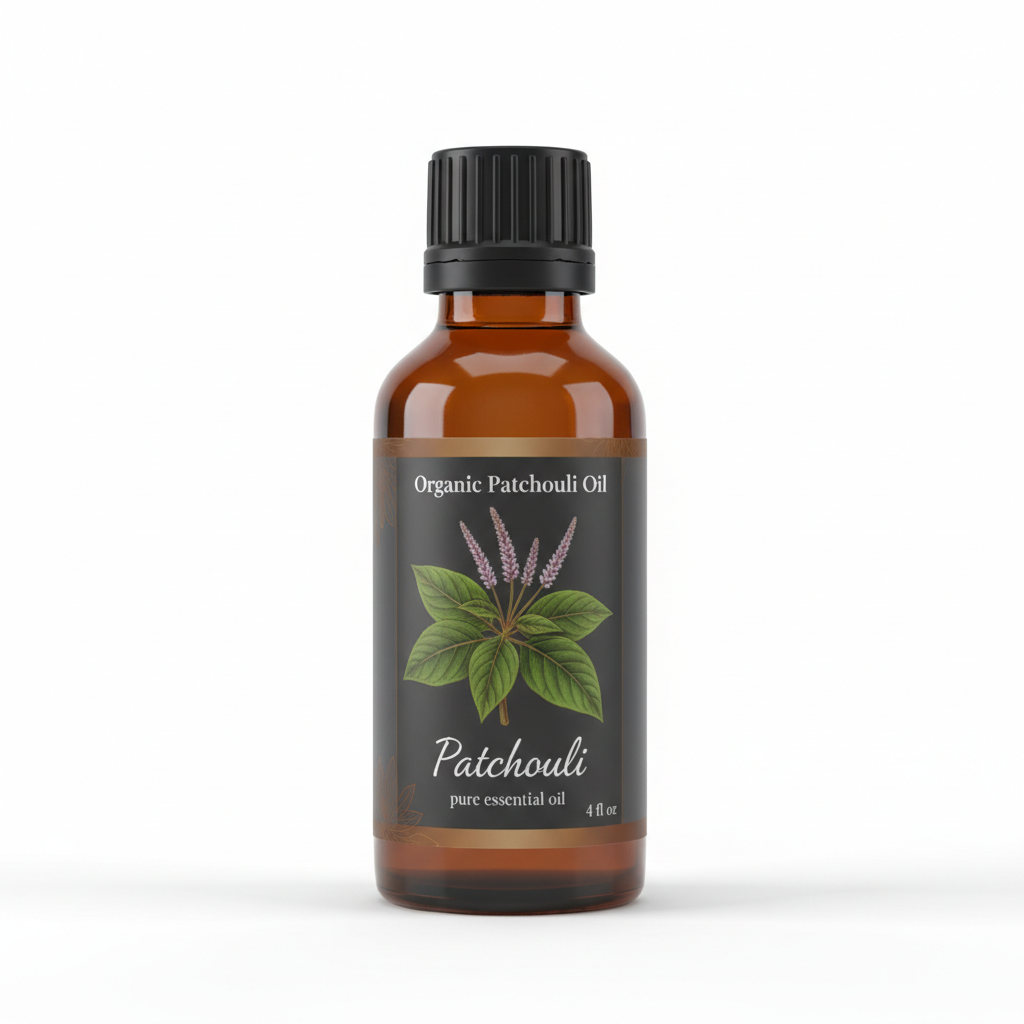
Patchouli Essential Oil
Our own Patchouli Essential Oil, in sizes from 0.5 oz to bulk.
From $20.99
Shop Now →What the flavoring list actually is
Two parts of the US Code of Federal Regulations get mixed up here. One, 21 CFR 182.20, is the list of essential oils, oleoresins and natural extractives that are generally recognized as safe. Patchouli is not on it. The other, 21 CFR 172.510, covers natural flavoring substances used in food, and there "Patchouly" (Pogostemon cablin) does appear with no limitation noted beside it.
That second listing is about what a flavor house may put into a food product, in the tiny amounts a flavorist works with. It does not describe a retail bottle of concentrated oil, it names no amount to swallow, and it says nothing about drinking the oil neat. A flavoring ingredient in a cake is a different thing from a dropperful of undiluted base-note oil, and our bottle carries an external-use label because of the second one.
How much a single drop holds
A little arithmetic makes the point. Dropper sizes vary, but a common rule of thumb is about 20 drops to a milliliter, so a drop is roughly 0.05 ml. The Certificate of Analysis we publish lists a stated standard range for relative density of 0.950 to 0.975, which puts a drop at around 48 milligrams of oil. A teaspoon holds about 5 ml, or roughly 100 drops. Those are estimates for illustration, not measurements of our batch, but they show the scale: patchouli oil is the distilled essence of a large mass of leaf, packed into very little volume.
It also helps to know how the oil is made. Steam distillation gathers the aromatic fraction of a great deal of leaf into a small amount of oil (we walk through the process in how patchouli oil is made), so an infusion of leaves and a bottle of oil are quite different materials, and one is not a stronger version of the other.
What poison centers say about swallowed essential oils
Poison Control, the US poison-center service, notes that many essential oils can cause rashes on skin and that some can be poisonous if absorbed through the skin or swallowed. It also points out that aspirating an essential oil, which happens when someone chokes and some oil reaches the lungs, can cause pneumonia. Its case reports involve camphor and lavender rather than patchouli, so they show the range of outcomes for swallowed concentrates, not a figure for ours.
Closer to home for patchouli, the European Food Safety Authority reviewed a patchouli oil as an animal-feed additive in 2025. Its panel concluded the oil should be considered an irritant to skin and eyes and a dermal and respiratory sensitiser, and added that any exposure is considered a risk. That is why we pair every mention of skin use with dilution and a patch test, and why we do not describe the oil for anything but its aroma and external cosmetic use. Even Tisserand, a well-known consumer aromatherapy brand, labels its patchouli oil for external use only, with the instruction to call a poison center right away if it is swallowed.
If a bottle has been swallowed
In the United States, call the Poison Help line at 1-800-222-1222. It is a free, confidential service and it is the right first call, ahead of any home remedy. Keep the bottle on hand so you can read out the ingredient line and say roughly how much is missing. Because oil that reaches the lungs is a concern, do not try to make anyone vomit unless the poison center tells you to. Trouble breathing is an emergency, so call emergency services. For anything less urgent, a pharmacist or physician is the person to ask. We sell an external oil, and we cannot advise on swallowing it.
Smell it, do not taste it
The pleasure of patchouli is entirely in the nose. Hold a paper blotter a few centimetres away and the deep, earthy, wine-like note does all the work, with the scent of damp forest floor underneath. There is simply no reason to bring it near your mouth, and a good habit is to treat the bottle the way you would treat any craft supply: useful, interesting and kept well away from the kitchen.
A tidy setup helps. Keep it on a shelf with your other craft or cosmetic materials, not beside the spices or the tea. Labels can rub off over time, so if you decant into a smaller bottle, label that one clearly with the name and the words "not for internal use."
Keeping the question from coming up
Most accidents with oils happen because a bottle is left out, so the habit that matters is capping it and putting it back after every use, on a shelf small hands cannot reach. We cover that in more detail in keeping patchouli oil away from children, and the skin side of things, including how much oil goes into a carrier, lives in our dilution chart.
Patchouli rewards patience and a light hand. Enjoy it as a deep, earthy, wine-like scent on a cotton ball, in a diluted blend or in a cosmetic recipe, and keep it out of the kitchen.
Patchouli Essential Oil
Patchouli Essential Oil from our own shop, in sizes from 0.5 oz to bulk.
From $20.99
Shop Now →Sources & Further Reading
- 21 CFR 182.20 - Essential oils, oleoresins (solvent-free), and natural extractives (including distillates), Cornell Legal Information Institute
- 21 CFR 172.510 - Natural flavoring substances and natural substances used in conjunction with flavors, Cornell Legal Information Institute
- Essential oils: Poisonous when misused, Poison Control
- Safety and efficacy of a feed additive consisting of an essential oil derived from the leaves of Pogostemon cablin Benth. (patchouli oil) for use in all animal species (FEFANA asbl), EFSA Journal 2025
- Organic Patchouli Essential Oil, Tisserand Aromatherapy