Indonesian vs Indian Patchouli: Does Origin Matter?
Ask around about patchouli and someone will tell you Indonesian is the real thing and Indian is second best. It is a neat story, and half of it has a solid footing: Indonesia really is where most of the world's patchouli oil has come from. The other half, that a country name guarantees the character of the oil, is where the label starts doing more work than it can.
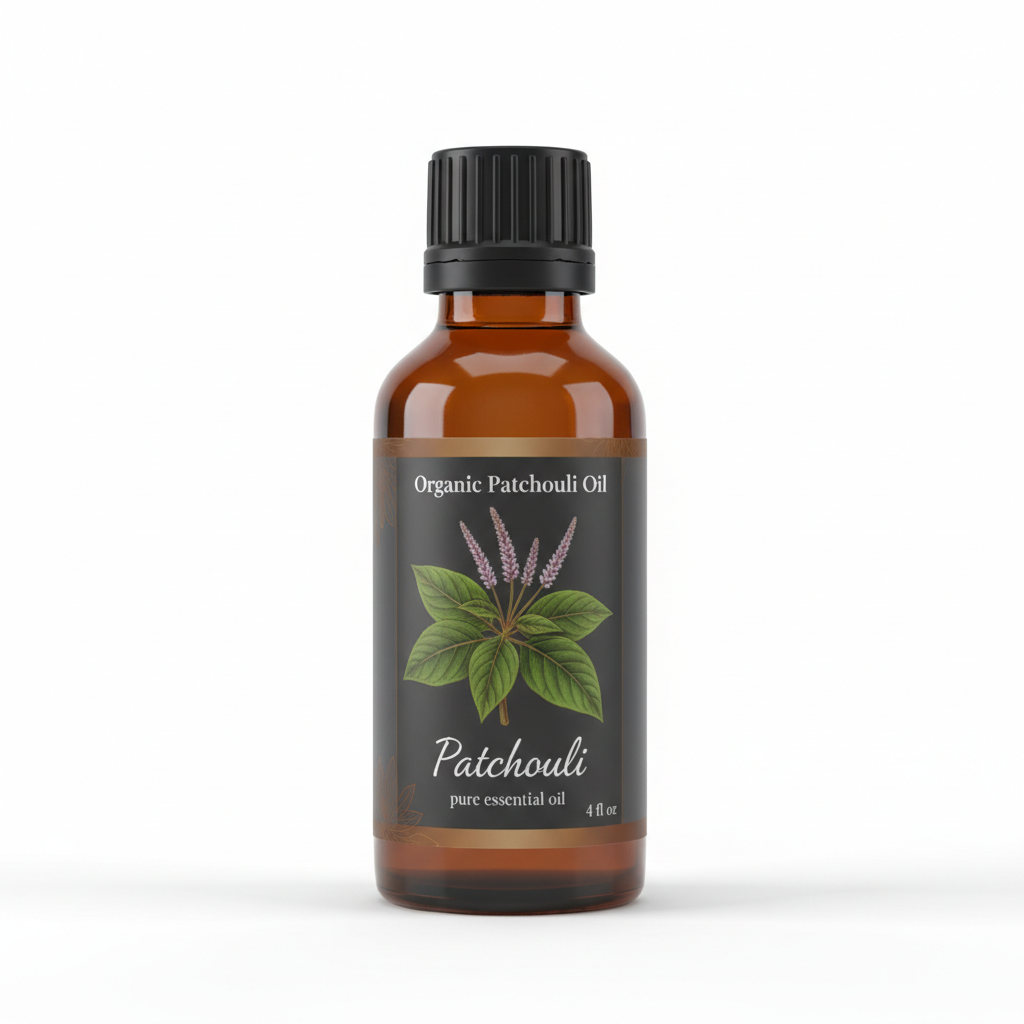
Patchouli Essential Oil
Our own Patchouli Essential Oil, in sizes from 0.5 oz to bulk.
From $20.99
Shop Now →Why "Indonesian" is the default
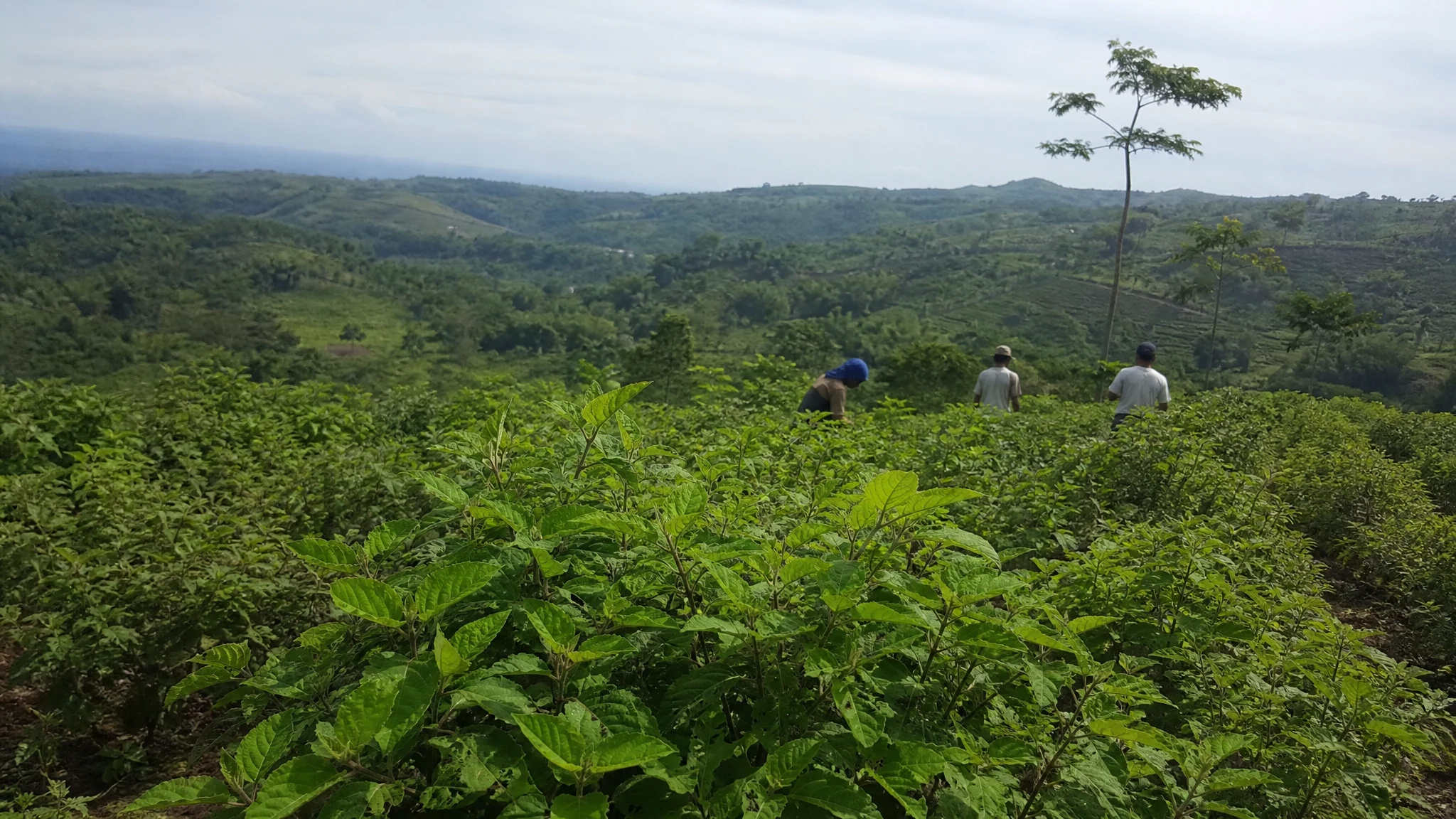
The plant-resources handbook PROSEA, working from mid-1990s figures, says over 80% of annual world production came from Sumatra, where patchouli was grown on more than 18,000 hectares (Pogostemon (PROSEA), Pl@ntUse). That is old data, and the picture will have shifted, but it explains why Indonesian oil is the benchmark most buyers carry in their heads. When most of the oil in the world comes from one place, "patchouli" and "Indonesian patchouli" blur together.
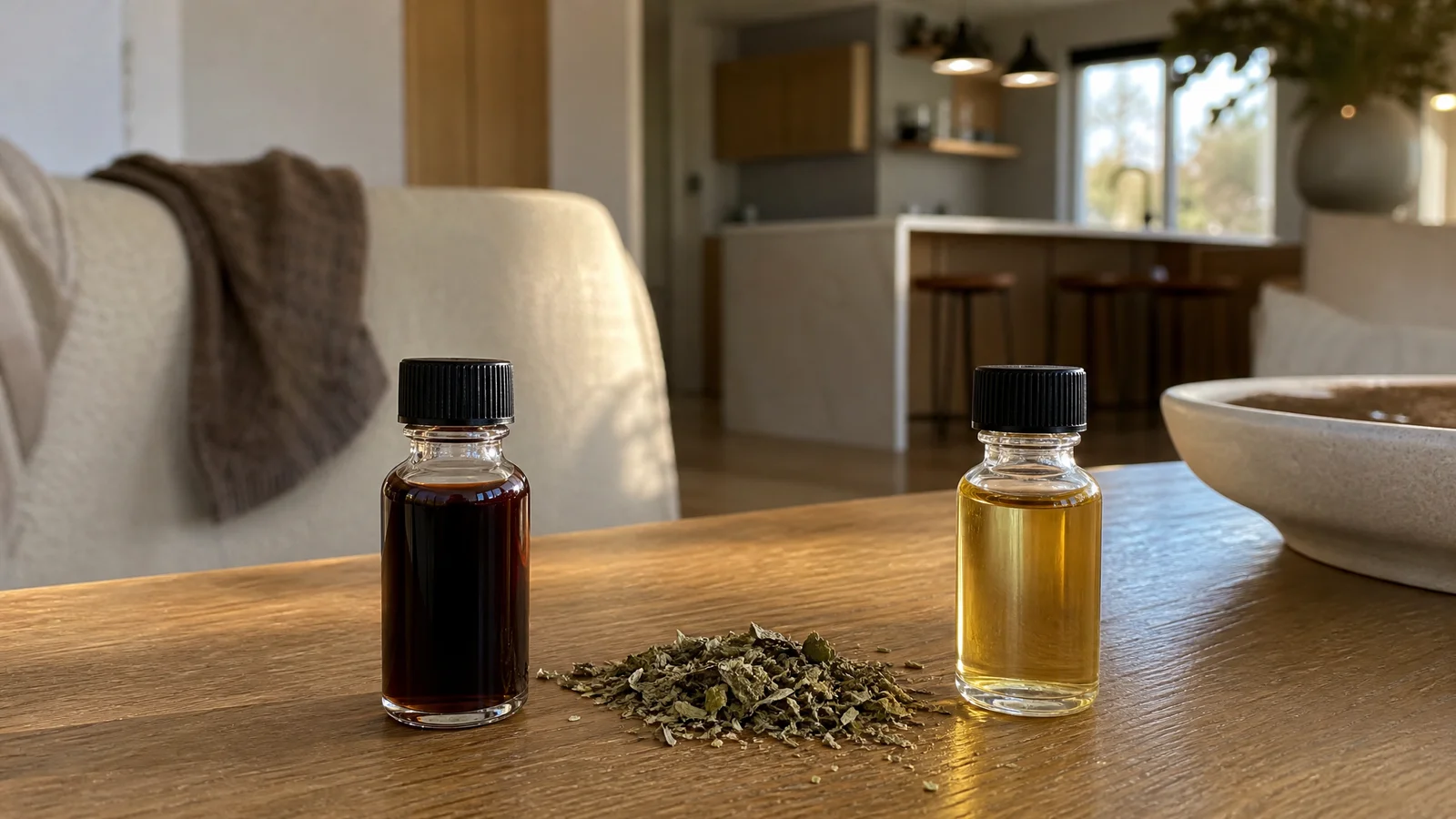
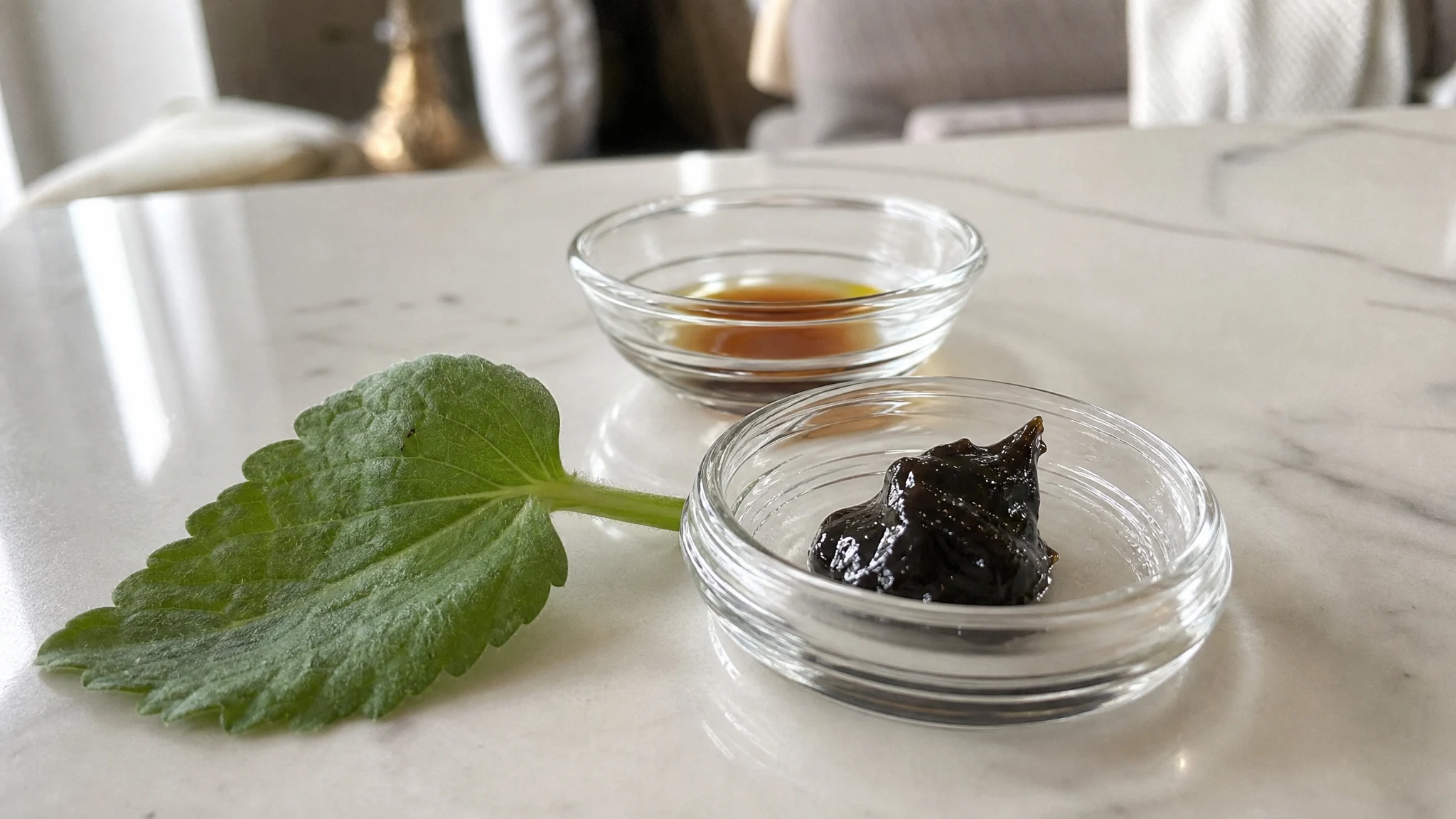
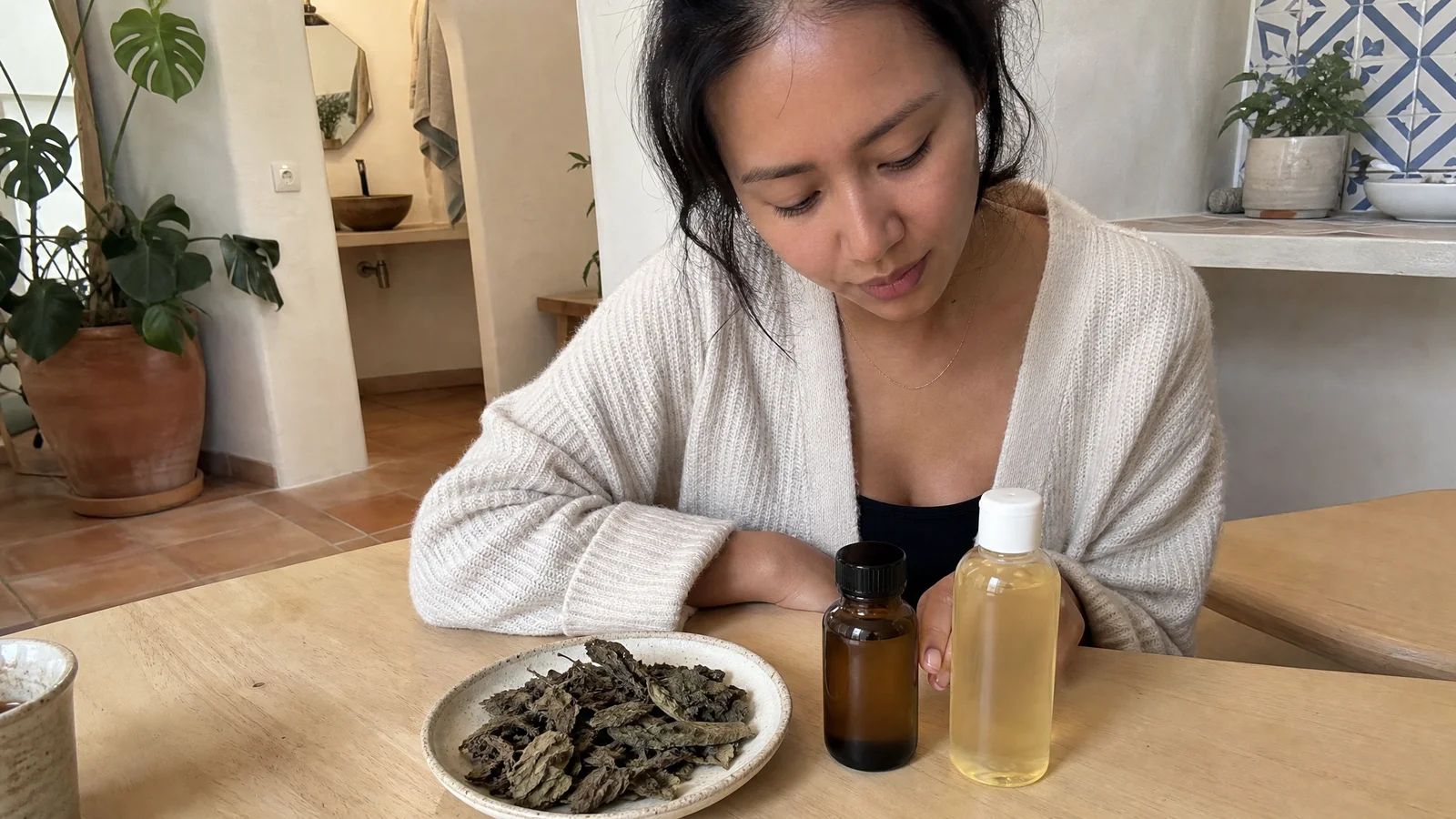
The same handbook describes the typical Indonesian-distilled oil as a dark orange or brownish, viscous liquid, while oil distilled in Europe or the United States is paler, orange or amber. So the country on a label often stands in for something you can see in the bottle. What it stands in for is how and where the oil was distilled, which is a good deal more specific than a flag.
Think of it the way you would think of coffee or tea: the country is the start of the conversation, and the details of the harvest and the handling fill in the rest. It is fun to learn the vocabulary, and a country name on a bottle is a good reason to ask a question.
Where India fits
India grows patchouli, but the supply picture runs the other way from Indonesia's. A 2023 analysis of Indian government trade data from 2001 to 2022 found that imports of patchouli oil grew faster than exports, named Indonesia, Singapore, Spain and Switzerland among the main import sources, and recommended expanding cultivation to reduce reliance on imports (Export-Import Performance of Patchouli Oil in India: Growth and Instability Analysis, Asian Journal of Agricultural Extension, Economics and Sociology, 2023). PROSEA, for its part, says only small quantities were produced in India for local use. In other words, India is a buyer of patchouli oil as much as a producer, and a bottle labelled Indian is a smaller slice of the market than the comparison suggests.
PROSEA also notes that India has named several introduced cultivars of Pogostemon cablin after where they came from. Two of them, 'Java' and 'Singapore', are described as high-yielding but producing oil of inferior quality. That is a useful reminder that the plant variety travels across borders, so a variety name and a country name are different pieces of information.
What really shapes the smell
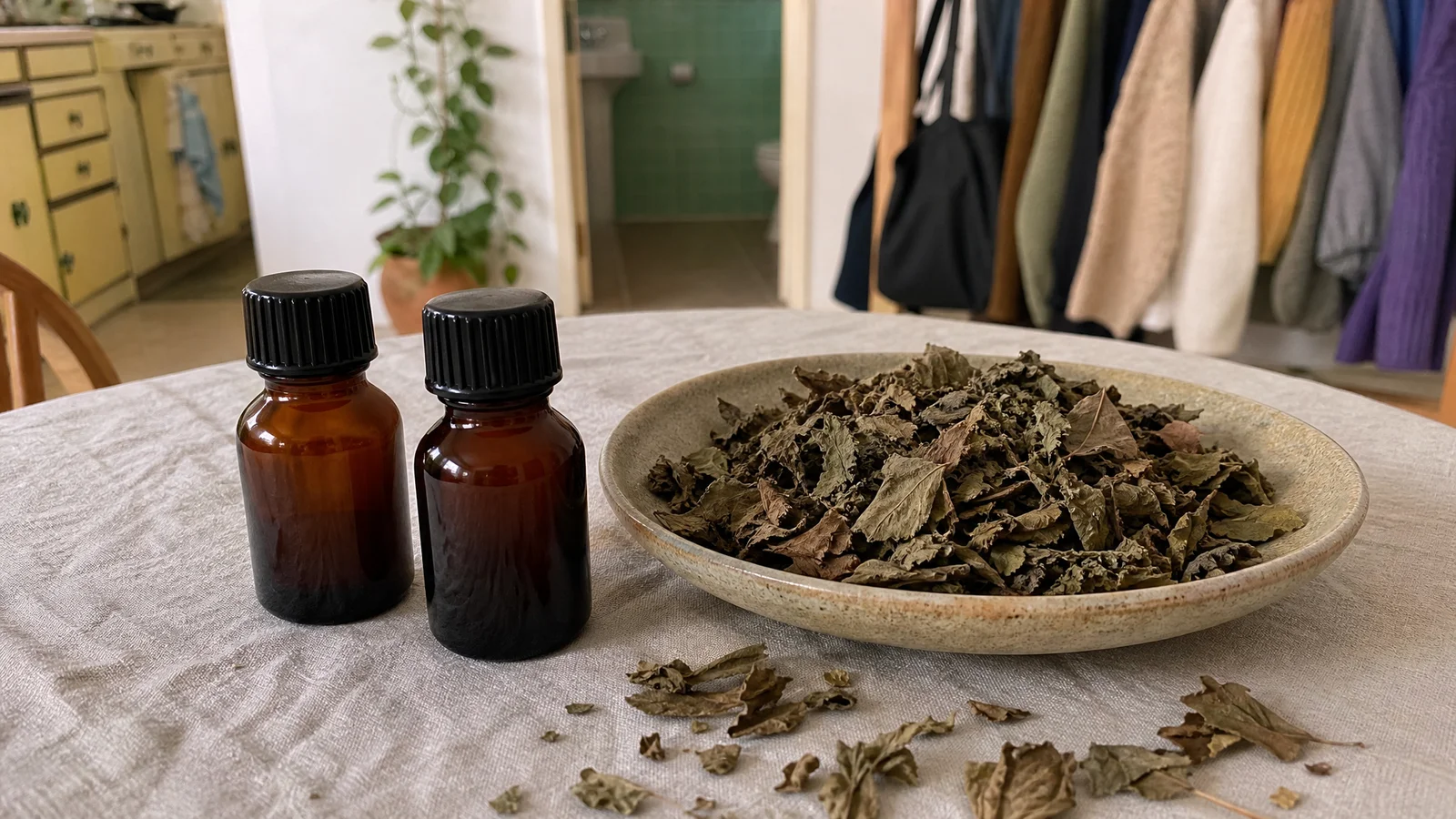
Patchouli is a crop with a lot of craft after harvest. The leaves are dried, ideally in the shade with good ventilation, then often lightly fermented before they go in the still. PROSEA is blunt about the sensitivity of that step: over-fermentation gives a mouldy note and under-fermentation reduces the yield of oil. Sun-drying is common, but it can leave the leaf over-dried and brittle. After distillation the oil is stored to mature, and the handbook says both types of patchouli oil improve with age, losing sharp-green, wet-earthy and minty notes.
Put those together and you can see why two lots from the same island can differ more than lots from different countries. Cutting time, drying, curing, still and storage all leave their mark. Composition varies too: a review of the plant's chemistry describes two chemotypes, one rich in patchouli alcohol and one in pogostone, and reports patchouli alcohol anywhere from about 32% to about 38% in the leaf oils it cites from China and Vietnam (A Comprehensive Review on the Phytochemical Constituents and Pharmacological Activities of Pogostemon cablin Benth.: An Aromatic Medicinal Plant of Industrial Importance, Molecules, 2015). Those are single samples, so they say nothing about which country is better, only that the range is real.
A smelling exercise worth trying
If you have two patchouli oils, put a drop of each on its own paper strip and label them with letters rather than names. Smell them straight away, again after an hour and again the next day, writing down colour, first impression and how each one fades. Only then look at which is which. It is a humbling and enjoyable test, because your nose may disagree with the label you expected to love.
Questions worth asking instead
If a seller names a country, that is a fine start, and it is worth asking a few follow-ups. Was the leaf dried in shade or sun? How long has the oil rested since distillation? Can you see a batch analysis with the method named? PROSEA also warns that essential oils from other plants are sometimes sold as patchouli and that high-boiling solvents such as benzyl benzoate and propylene glycol are used as extenders, which is why a report on the actual batch tells you more than a flag does. Our guide to reading a GC-MS report shows what to look for, and the post on reading a patchouli oil label covers the other words that appear next to the country.
We sell a steam-distilled patchouli leaf oil, and the Certificate of Analysis we publish for one batch lists its botanical name, the plant part and the extraction method. If you need more than that, such as GC-MS data for your own formulation, ask us in writing through our contact page before you order and keep the answer on file. Origin is a good opening question. It just works best as the first of several.
Patchouli Essential Oil
Patchouli Essential Oil from our own shop, in sizes from 0.5 oz to bulk.
From $20.99
Shop Now →Sources & Further Reading
- Pogostemon (PROSEA), Pl@ntUse
- Export-Import Performance of Patchouli Oil in India: Growth and Instability Analysis, EconPapers
- A Comprehensive Review on the Phytochemical Constituents and Pharmacological Activities of Pogostemon cablin Benth.: An Aromatic Medicinal Plant of Industrial Importance, Molecules, 2015