Buying Patchouli Oil: What to Ask Before You Order
Most advice on buying patchouli oil boils down to "make sure it is genuine", which is true and not very useful. A better first question is what you are going to do with it. A perfumer, a soap maker and someone with a diffuser on the bookshelf want different things from the same bottle, and each is let down in a different way.
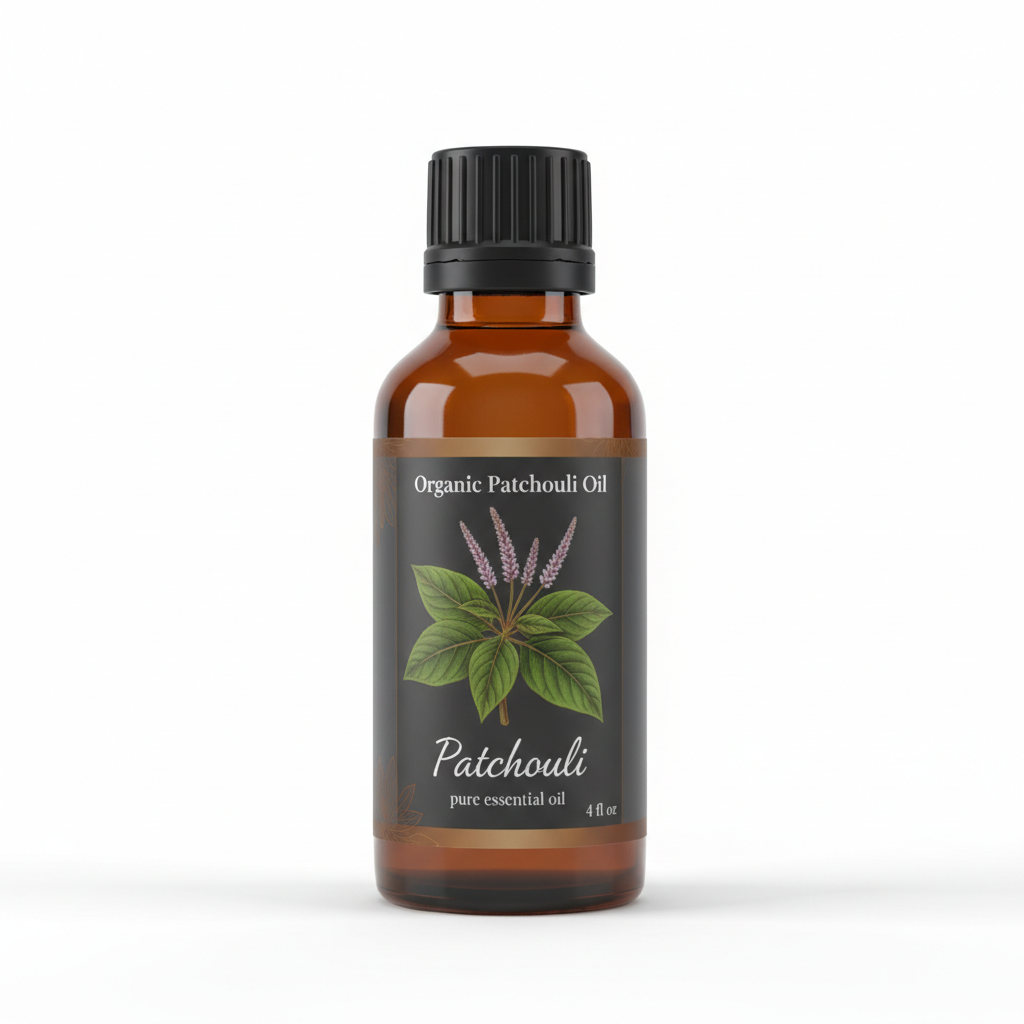
Patchouli Essential Oil
Our own Patchouli Essential Oil, in sizes from 0.5 oz to bulk.
From $20.99
Shop Now →Start with the job
Perfume. You care most about whether anything has been added and whether there is an off note that only shows up once the blend is built. Ask for a batch analysis that names the method, and smell the oil on a blotter over several days. Patchouli changes as it dries down, and PROSEA calls it a fundamental note in Oriental-type perfumes, used in very small doses (Pogostemon (PROSEA), Pl@ntUse).
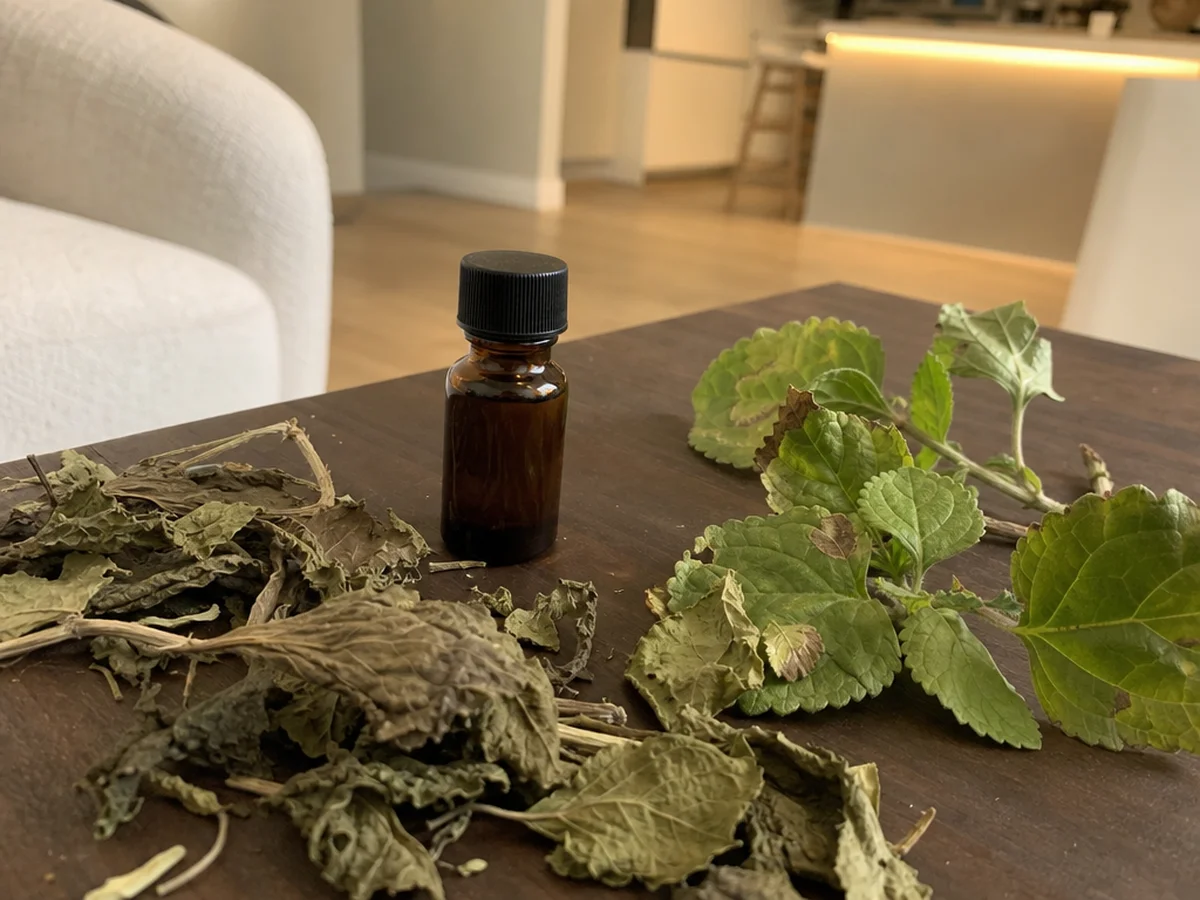
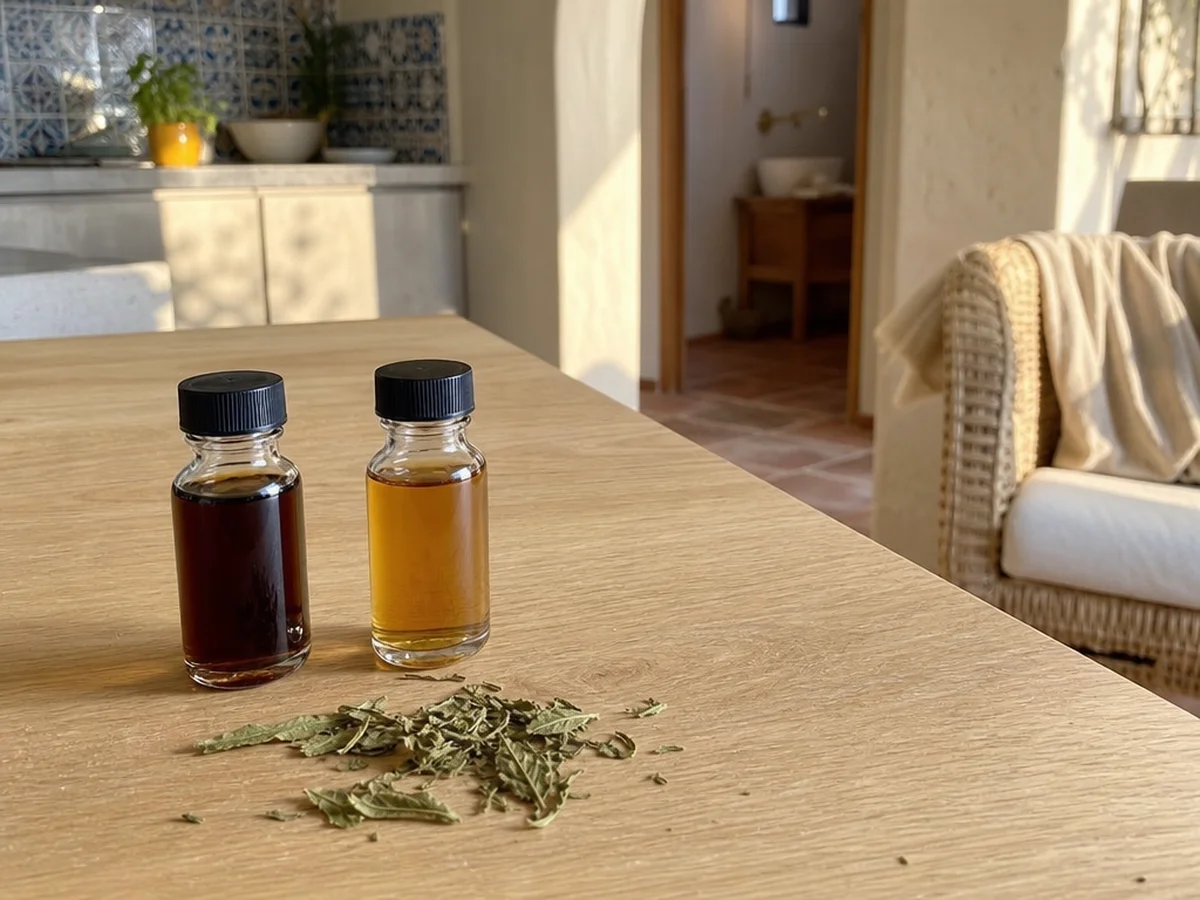
Soap and candles. You care about consistency from one lot to the next, and about colour. PROSEA lists the steps that move the oil's character: drying, curing, a long distillation, a rest afterwards. Each varies by producer and season, so ask whether the next lot will match the one you sampled. The oil is also naturally dark reddish-brown, so a light soap or candle may shift toward tan or amber. We suggest trying a small batch before a big one.
Skin products. The question is how to dilute responsibly and how to label it. We recommend 0.5% to 2% in a carrier oil with a patch test first, and we start at the low end. The Tisserand Institute's general guidelines run from 0.2% to 1% for sensitive skin, 0.5% to 1.2% for facial products and deodorants and 1% to 3% for body oils (Dilution for essential oils, Tisserand Institute). For more, see our dilution chart.
A diffuser at home. Buy the smallest size. Patchouli is concentrated and a little goes a long way, which is the best argument against a bulk jug for casual use.
Let your nose have a say
Whatever the job, put a drop on a paper strip and come back to it. Smell it straight away, again after ten minutes, again after an hour, and once more the next morning. Patchouli often opens a little rough and sharp, then settles into the damp-wood, wine-like depth people love. If the strip still smells thin or harsh the next day, that is useful to know before you commit to a larger quantity.
Jot down a few words each time you sniff. Patchouli is so persistent that your nose tires quickly, and notes are far more reliable than memory when you are comparing two oils side by side.
Reading a data sheet
Density, refractive index and optical rotation look decisive, and they are easy to misread. The same three rows appear in three kinds of document. A standard gives ranges: PROSEA quotes the 1978 ISO figures of a relative density of 0.955 to 0.983, a refractive index of 1.505 to 1.512 and an optical rotation of -66 to -40 degrees. ISO's catalogue lists ISO 3757:2002 as the current edition, reviewed and confirmed in 2023 (ISO 3757:2002 - Oil of patchouli (Pogostemon cablin (Blanco) Benth.)). The EFSA panel reports measured values for five batches of one oil: density 0.961 to 0.964, refractive index 1.508 to 1.509 and rotation of -49 degrees (Safety and efficacy of a feed additive consisting of an essential oil derived from the leaves of Pogostemon cablin Benth. (patchouli oil) for use in all animal species (FEFANA asbl), EFSA FEEDAP Panel, 2025). The Certificate of Analysis we publish for one batch lists stated standard ranges of 0.950 to 0.975, 1.505 to 1.515 and -38 to -55 degrees.
The lesson is to ask what a number is. A range quotes a standard, and a figure for your batch reports a result. Both are useful, and they are not the same thing. If you need GC-MS data for a formulation, ask us in writing through our contact page before you order and keep the reply with your records.
Physical numbers also cannot show whether something was added. A case study running low-field NMR on 75 genuine patchouli oils, 10 commercial oils and 17 adulterants found 14 adulterants easy to spot, gurjun and copaiba balsams difficult and one undetected (Is Low-field NMR a Complementary Tool to GC-MS in Quality Control of Essential Oils? A Case Study: Patchouli Essential Oil, Planta Medica, 2018). Method matters as much as the report, which is why our post on checking a patchouli oil before you pay covers the questions to ask.
How much to order
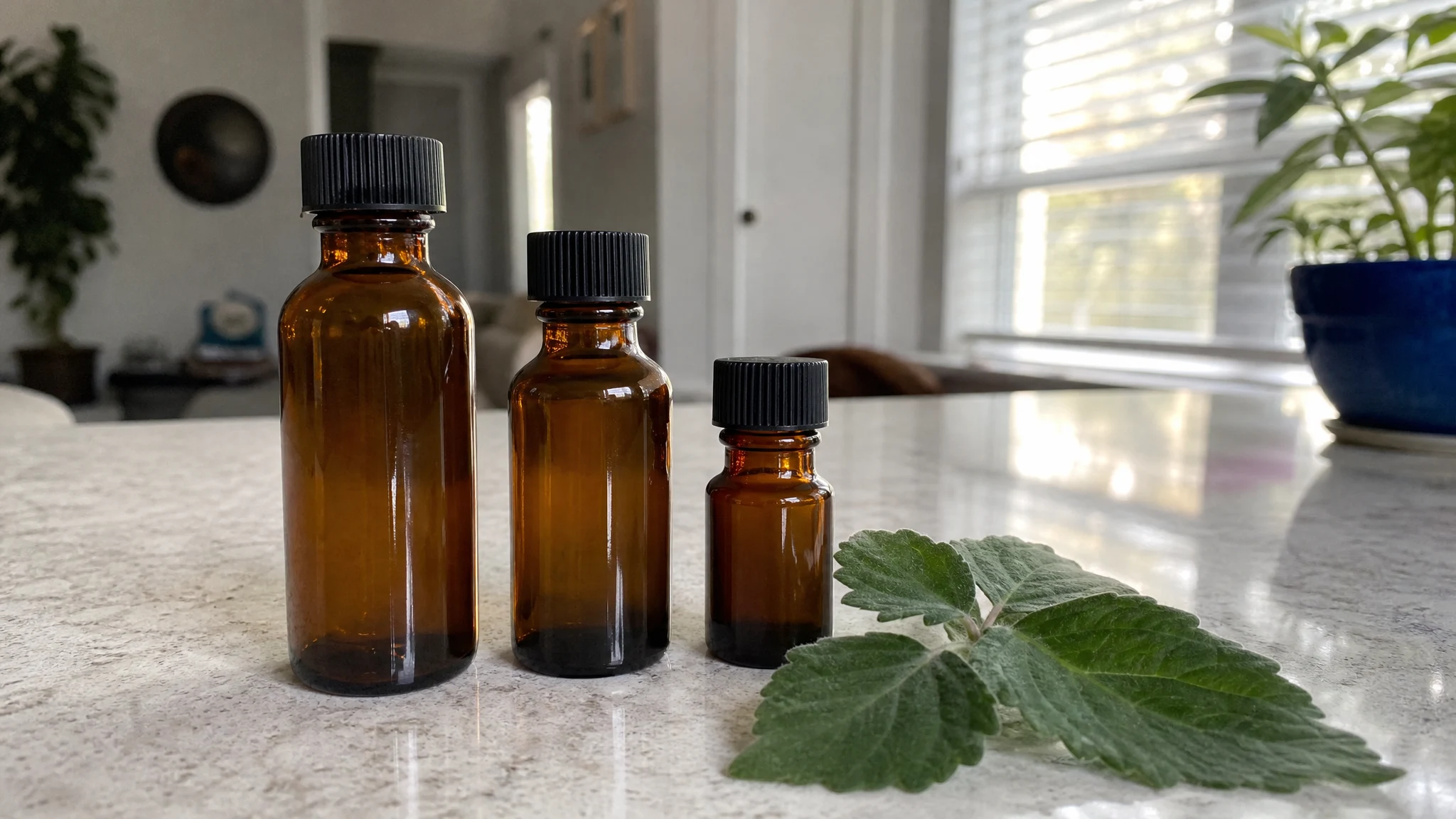
This is arithmetic, not a recipe: an ounce is 29.57 ml, and we use 20 drops to the millilitre as a rough rule, though droppers vary. A 1% blend needs 1 ml of oil per 100 ml of finished product, so a 0.5 oz bottle, about 14.8 ml, covers roughly 1.5 litres at 1%. Most home users will finish a small bottle long before they feel the need for a large one, and our sizes run from 0.5 oz up, with larger quantities available for makers; see our bulk page for how that works.
Get the answers in writing, match the oil to the job, and buy the smallest quantity that lets you test before you commit.
If you are scaling up, we would still begin with a small first order. Its job is to teach you how the oil behaves in your own recipe, with your own wax, soap or carrier, and the stock room can wait until you know.
Patchouli Essential Oil
Patchouli Essential Oil from our own shop, in sizes from 0.5 oz to bulk.
From $20.99
Shop Now →Sources & Further Reading
- Pogostemon (PROSEA), Pl@ntUse
- ISO 3757:2002 - Oil of patchouli (Pogostemon cablin (Blanco) Benth.), International Organization for Standardization
- Safety and efficacy of a feed additive consisting of an essential oil derived from the leaves of Pogostemon cablin Benth. (patchouli oil) for use in all animal species (FEFANA asbl), EFSA FEEDAP Panel, 2025
- Is Low-field NMR a Complementary Tool to GC-MS in Quality Control of Essential Oils? A Case Study: Patchouli Essential Oil
- Dilution for essential oils, Tisserand Institute