Best Carrier Oils for Patchouli: Jojoba, Almond, Coconut
A drop of patchouli will outlast almost everything you mix it with. The oil is deep, steady and slow to change, and the carrier oil that carries it is the part of the bottle that goes off first. So when we help someone choose a carrier for patchouli, the first question is how long the finished blend will sit on a shelf, and the second is who might touch it. How it feels comes third.
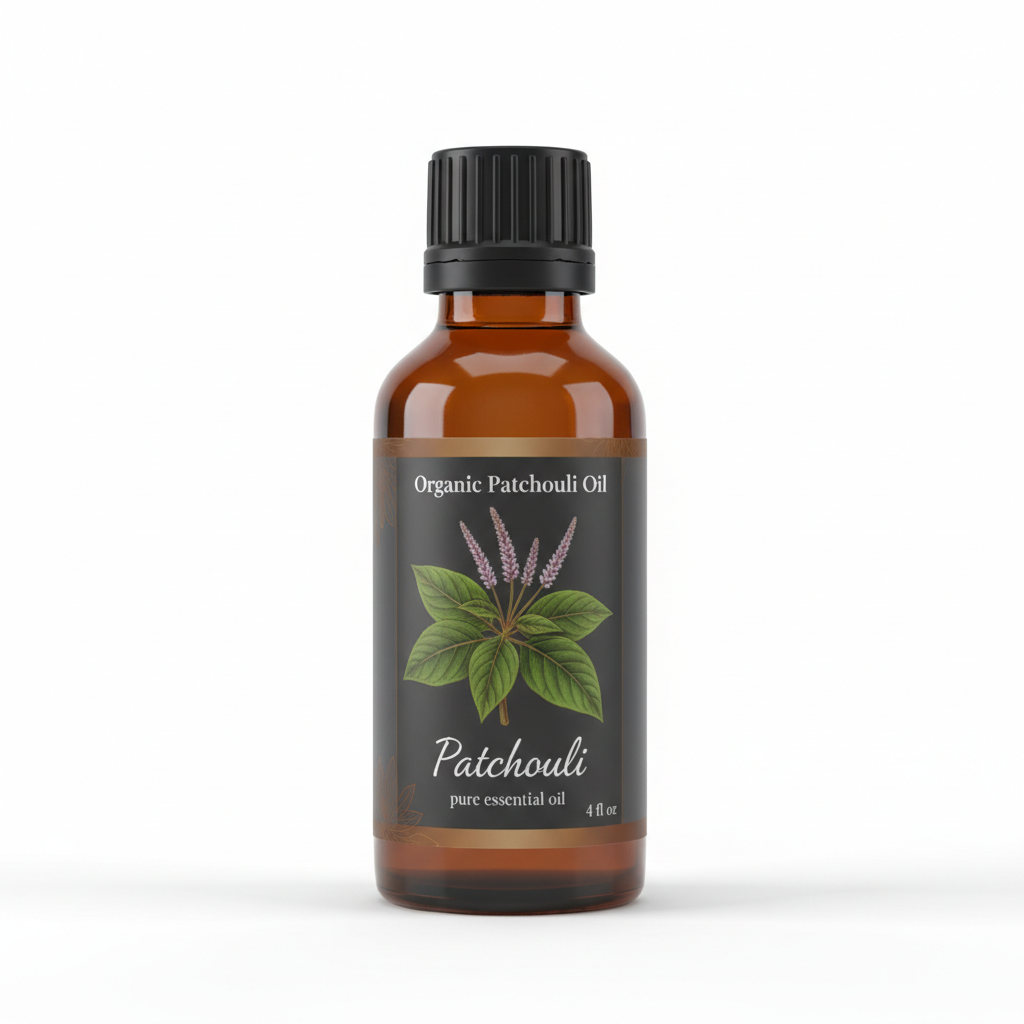
Patchouli Essential Oil
Our own Patchouli Essential Oil, in sizes from 0.5 oz to bulk.
From $20.99
Shop Now →We sell patchouli oil neat and do not sell carriers, so you will find the options below at a craft shop, pharmacy or grocery. Here is how we would choose.
Jojoba: the long-keeping choice
Jojoba is technically a liquid wax and not a triglyceride oil. A 2021 review of its chemistry puts the wax at about 98% of the oil, mainly wax esters, with small amounts of free fatty acids, alcohols and hydrocarbons. With no triglyceride backbone to oxidise in the usual way, we expect jojoba to keep well, and it is the reason we reach for it first when a roll-on or blend will sit in a drawer for months. That is our reasoning from its chemistry, not a measurement the review reports, so ask the supplier for a best-by date and a lot number.
Sweet almond: a classic for body oils
Sweet almond oil is a triglyceride oil, mostly oleic and linoleic acid. A 2021 Moroccan study of four almond cultivars reported oleic acid at 56.6% to 64.0% and linoleic at 24.6% to 29.8%, with low acidity and peroxide values in all four. It feels familiar and soft, and it is a happy match for a body oil you will use up in a few weeks. It is also a tree nut oil. The FDA lists tree nuts among the major food allergens and names almonds as an example, and whether skin contact matters for an allergic person is a question for their allergist. If the blend might be handed to someone else, a gift for instance, jojoba or fractionated coconut keeps the question from coming up at all.
Fractionated coconut: light and steady
Fractionated coconut oil is the medium-chain fraction of coconut oil, rich in caprylic (C8) and capric (C10) fatty acids according to a 2016 review. It feels light and absorbs without a heavy film. From basic chemistry, saturated chains have little for oxygen to react with, so we expect it to keep well, though that is reasoning and not a result from the review. Ask for a best-by date, as you would with any carrier.
Let your hands help you decide
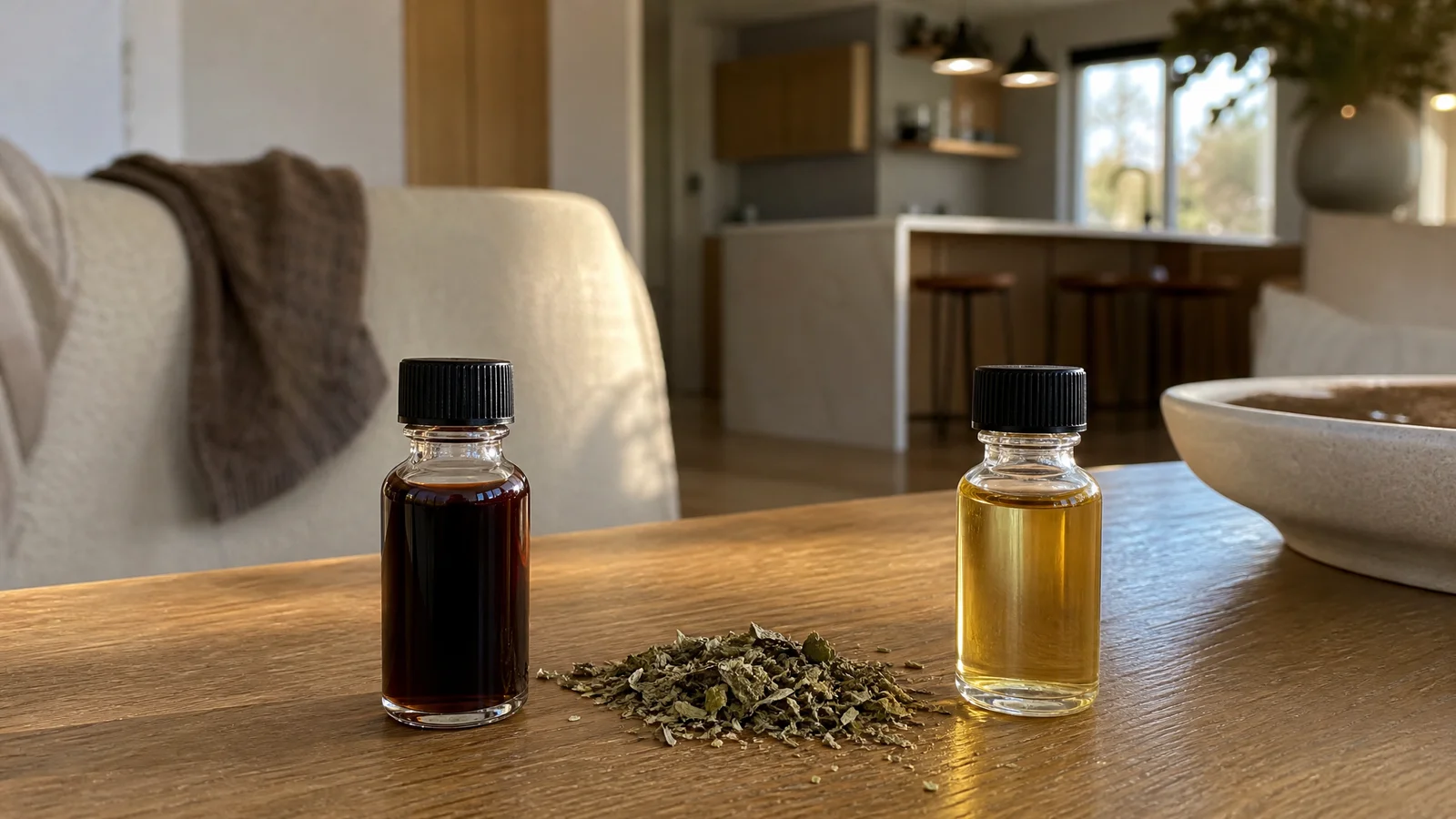
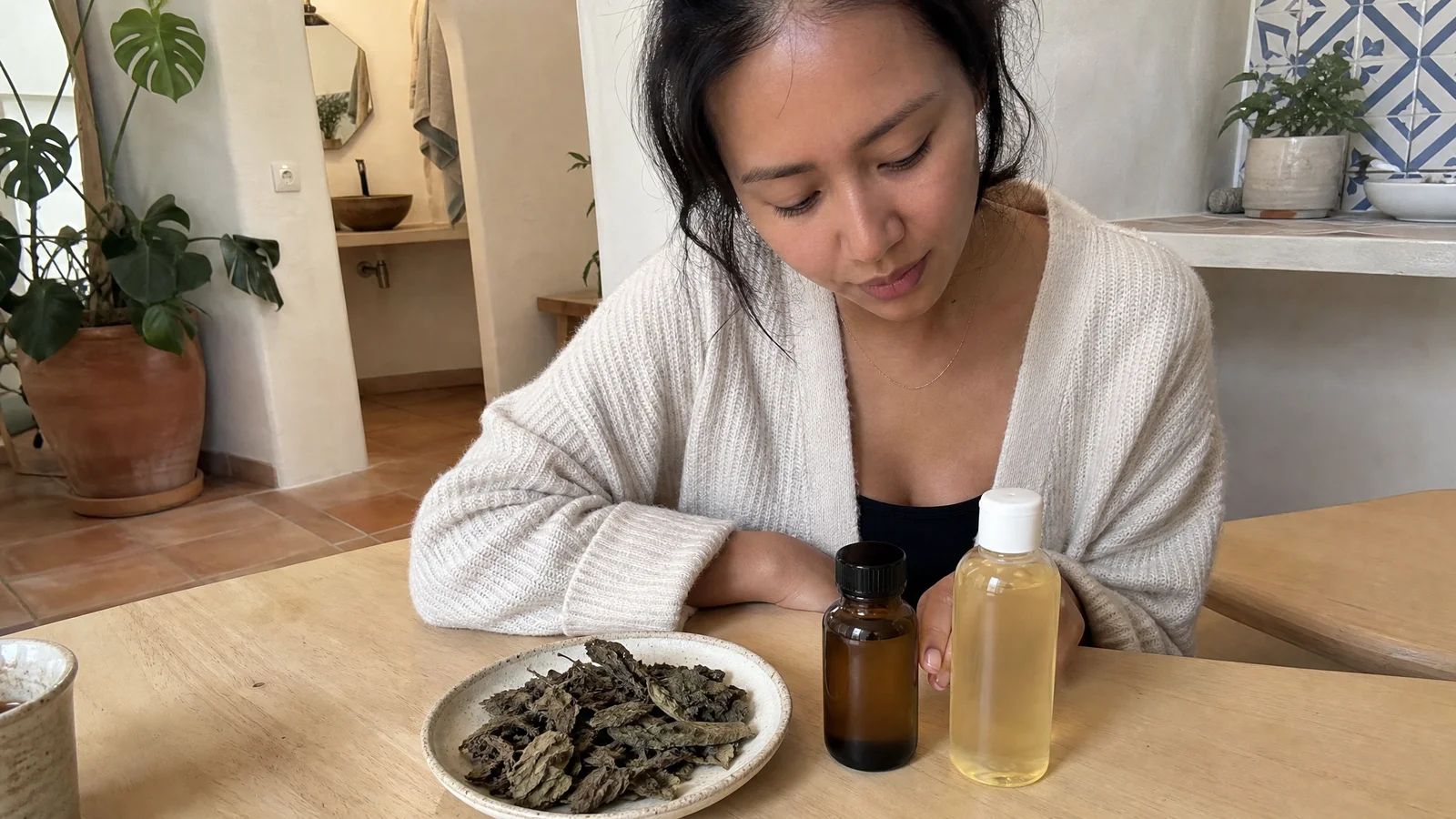
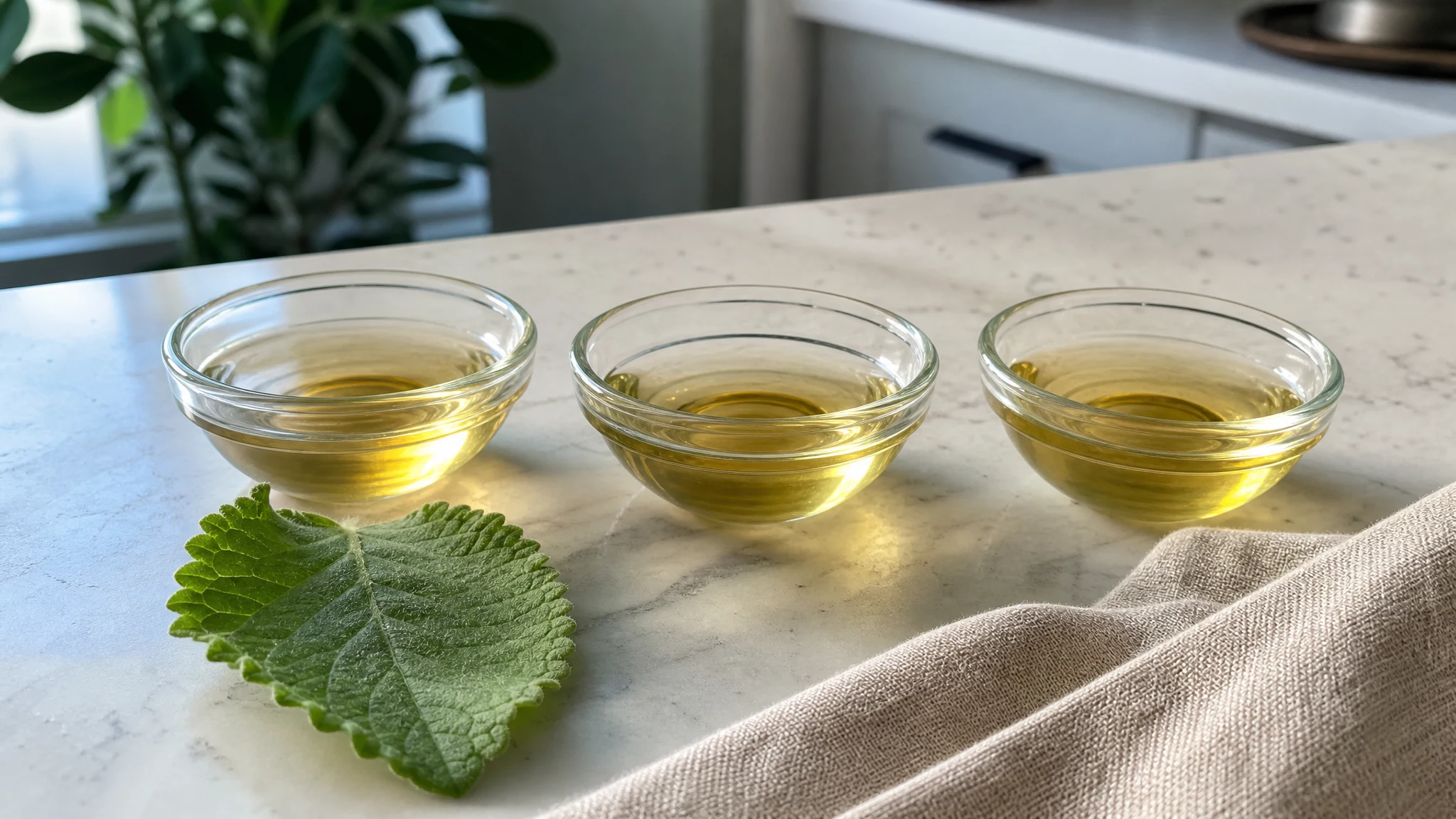
Before you commit to a big bottle of carrier, put a small drop of each candidate on the back of your hand and rub it in. You will notice quickly how each one feels: jojoba tends to slip in smoothly with a silky finish, sweet almond feels a little richer and softer, and fractionated coconut feels very light. None of those is better, and it is a matter of which one you will actually enjoy using. A blend you like the feel of is a blend you will finish.
Matching the carrier to the job
- Roll-on kept for months: jojoba first, fractionated coconut second.
- Body oil used up in weeks: sweet almond is lovely if no nut allergy is involved, otherwise either of the others.
- Beard oil: any of the three, kept at the low end of the range. Our beard oil recipe covers the numbers.
- Perfume oils: jojoba is our pick for a blend that will sit for a while; see our home perfume guide.
How much patchouli goes in
We recommend diluting patchouli to 0.5% to 2% in a carrier oil and patch testing first on a small area. For anything left on skin, we would start at the low end, 0.5% to 1%. The European Food Safety Authority describes the patchouli oil it assessed as an irritant to skin and eyes and a dermal and respiratory sensitiser, which is an opinion on a feed additive and not a cosmetic limit, but it is a good reason to begin gently. Someone with reactive skin or a fragrance allergy should speak to a dermatologist or allergist first.
The arithmetic, at about 20 drops per ml and 1 oz = 29.57 ml (so roughly 590 drops of carrier), is below. Droppers vary, so treat the counts as approximate and weigh when it matters.
| Dilution | Per 1 oz carrier | Per 10 ml roller bottle |
|---|---|---|
| 0.5% | about 3 drops | about 1 drop |
| 1% | about 6 drops | about 2 drops |
| 2% | about 12 drops | about 4 drops |
Our dilution chart goes further, and our patch testing article explains the test.
Whatever you choose, write the carrier, the percentage and the date on the bottle. Patchouli is a long-lasting scent, and when you come back to a blend months later you will want to know exactly what went into it.
What to ask a carrier seller
- Is it crude, refined or deodorised, and what are the lot number and best-by date?
- Can they share a peroxide value and fatty-acid profile for your lot?
- Does the label name the botanical source, so you can tell a tree nut from a seed?
Keep any finished blend well away from children and pets, and never use it internally. Poison Control advises locking essential oils away, and the number to call if one is swallowed is 1-800-222-1222.
A good carrier lets patchouli do what it does best, which is to linger quietly in the background of whatever you are making.
Patchouli Essential Oil
Patchouli Essential Oil from our own shop, in sizes from 0.5 oz to bulk.
From $20.99
Shop Now →Sources & Further Reading
- Jojoba Oil: An Updated Comprehensive Review on Chemistry, Pharmaceutical Uses, and Toxicity. Polymers, 2021. pmc.ncbi.nlm.nih.gov/articles/PMC8197201
- Characterization of Sweet Almond Oil Content of Four European Cultivars (Ferragnes, Ferraduel, Fournat, and Marcona) Recently Introduced in Morocco. Scientifica, 2021. pmc.ncbi.nlm.nih.gov/articles/PMC8421184
- Lauric acid-rich medium-chain triglycerides can substitute for other oils in cooking applications and may have limited pathogenicity. Open Heart, 2016. pmc.ncbi.nlm.nih.gov/articles/PMC4975867
- Food Allergies | FDA. fda.gov/food/nutrition-food-labeling-and-critical-foods/food-allergies
- Safety and efficacy of a feed additive consisting of an essential oil derived from the leaves of Pogostemon cablin Benth. (patchouli oil) for use in all animal species (FEFANA asbl). EFSA Journal, 2025. pmc.ncbi.nlm.nih.gov/articles/PMC12004087
- Essential oils: Poisonous when misused | Poison Control. poison.org/articles/essential-oils