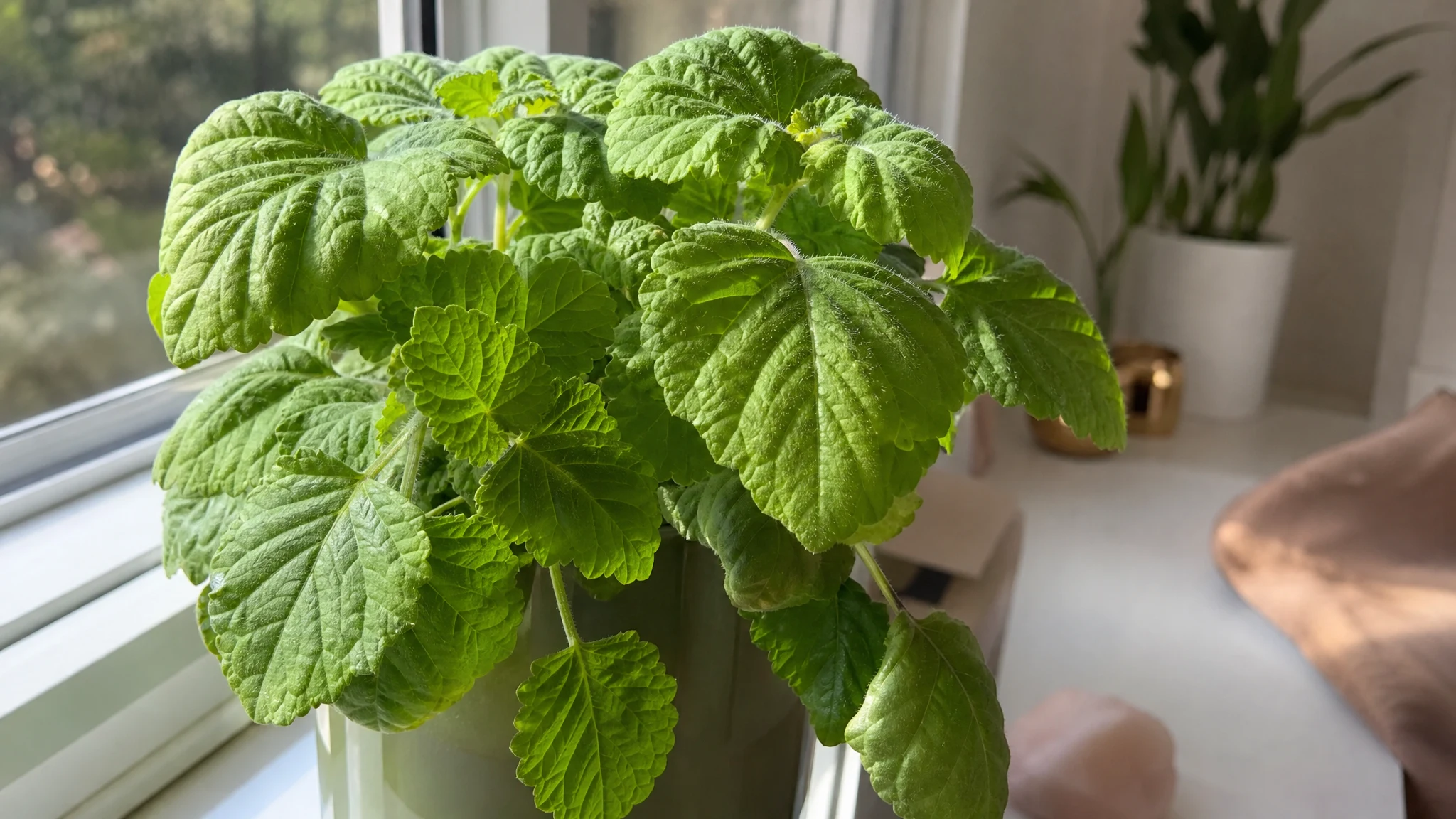
Patchouli Oil and Children: Storage Comes First
When people ask about patchouli oil and children, they usually start with diffusers. We would start somewhere less glamorous: the shelf. A concentrated oil in a small bottle is exactly the kind of thing a curious child can reach, so where it lives and whether the cap is on decide more than any other choice.
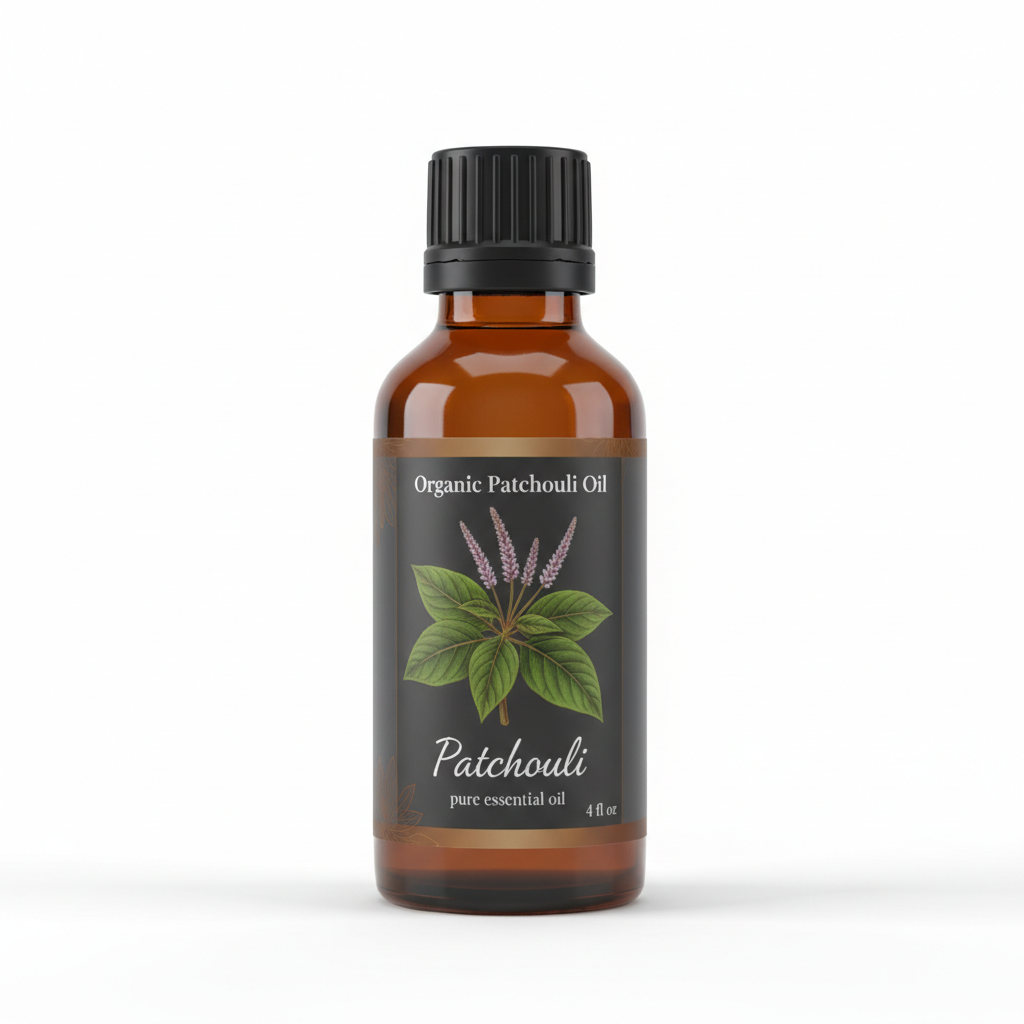
Patchouli Essential Oil
Our own Patchouli Essential Oil, in sizes from 0.5 oz to bulk.
From $20.99
Shop Now →What Poison Control says
The US poison-center service Poison Control calls misuse of essential oils a cause of serious poisoning and says that, if you have young children, you might consider discarding bottles safely. Otherwise, it says, they must be locked up, out of the sight and reach of children and pets. It adds that children have thin skin and immature livers, which might make them more susceptible to toxic effects than adults, and it notes that oil inhaled while swallowing can cause pneumonia.
Its case reports are about camphor and lavender, not patchouli, and they are single cases. We mention them because they show what a swallowed concentrate can do to a toddler, which is the whole reason for the storage advice. We cannot point you to a patchouli-specific number for children, and we will not invent one, which is why this page has no children's dilution table.
Diffusers, skin and babies
It is natural to focus on the diffuser, but a diffuser is a small part of the picture, and no authority we read gives a patchouli figure for children at any age. That is another reason the shelf matters more than the settings.
What we recommend
Tisserand, a consumer aromatherapy brand, tells users not to use its patchouli on children under 3 and to keep it out of reach of children. We take the same line for our oil: please do not apply it to a young child's skin, and do not diffuse it in the room of a baby or toddler. The European Food Safety Authority's 2025 assessment of a patchouli oil, which classed it as an irritant to skin and eyes and a dermal and respiratory sensitiser, is not about children specifically, but it is one more reason to leave experimenting on a child's skin out of the picture. For anything you are unsure about, a pediatrician is the right person to ask.
A storage routine that works
- High or locked, cap on. This is the first step and the one that matters most. Our own guidance is also to keep the bottle in a cool, dark place, so a closed cupboard high up does both jobs.
- Put it back every time. Most accidents happen when a bottle is left on a counter between uses, so make returning it part of the task.
- Never decant into a drink or syrup bottle. A look-alike container is how an oil ends up in the wrong mouth. Use a small, clearly labelled bottle with a proper cap.
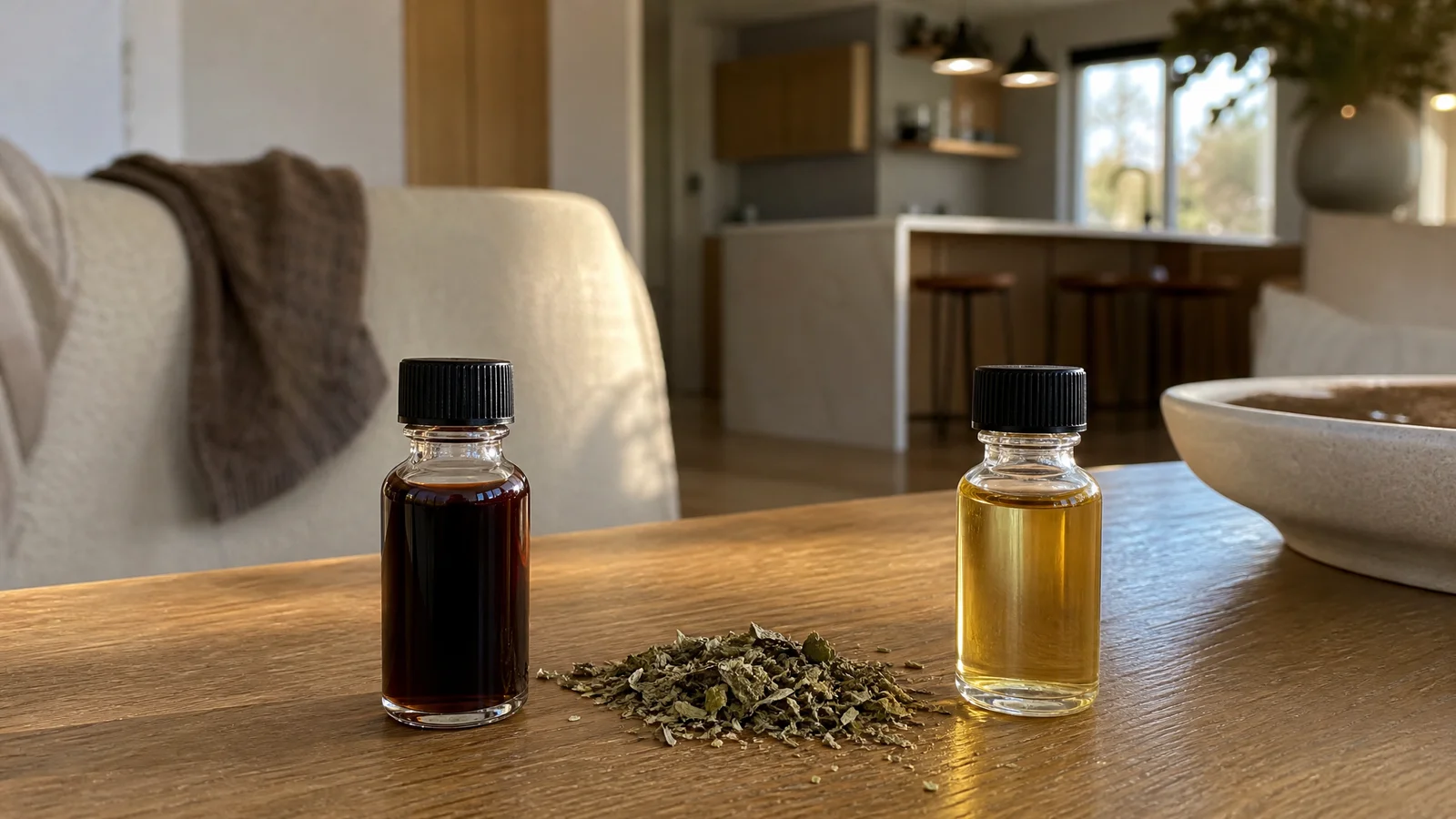
- Know your size. A 0.5 oz bottle holds roughly 15 ml, which is a lot of oil for a small body. Whatever cap is on the bottle, treat the high shelf as the real safeguard.
- Bulk lives with the workshop. Larger sizes belong where only the people handling them can enter.
Making the habit stick
Storage works best when everyone in the house follows the same routine. Tell older children, relatives and anyone who helps with childcare where the bottle lives and why. When guests visit, remember that bags and coat pockets are within easy reach, so keep your own oils out of them and ask visitors to do the same. A small, dark bottle can look quite ordinary to a curious child, and patchouli has a strong, distinctive smell that can draw a nose in.
Build the routine into the task. Cap it, wipe the neck, put it back, and only then move on to whatever you were making. If you are interrupted mid-blend, close the bottle before you answer the door. It sounds fussy, but a habit you do without thinking is the one that protects a household on a busy day.
The same goes for travel. Pack the bottle in a sealed bag and unpack it straight onto its shelf when you arrive.
When you finish a project, take a second to look around the work area. Is anything open? Are there drips on the table? A quick scan before you walk away is a very cheap piece of insurance, and it only takes a few seconds.
If a child gets into it
In the United States, call the Poison Help line at 1-800-222-1222. It is free, confidential and open around the clock. Have the bottle with you so you can read the label. If the oil is on skin and a rash appears, Poison Control advises stopping use and washing it off gently with soap and water. Trouble breathing is an emergency, so call emergency services. Do not try to make a child vomit unless the poison center says to.
Our swallowing explainer goes through what the poison-center guidance says in more detail, and the pets article covers the other household members who can reach a bottle. For adult skin use, our dilution chart has the arithmetic, and it deliberately has no row for children.
The easiest rule to remember is the shortest one: close it, put it up high, and keep patchouli an adult pleasure.
Patchouli Essential Oil
Patchouli Essential Oil from our own shop, in sizes from 0.5 oz to bulk.
From $20.99
Shop Now →Sources & Further Reading
- Essential oils: Poisonous when misused, Poison Control
- Organic Patchouli Essential Oil, Tisserand Aromatherapy
- Safety and efficacy of a feed additive consisting of an essential oil derived from the leaves of Pogostemon cablin Benth. (patchouli oil) for use in all animal species (FEFANA asbl), EFSA Journal 2025