Dark vs Light Patchouli Oil: Does Colour Matter?
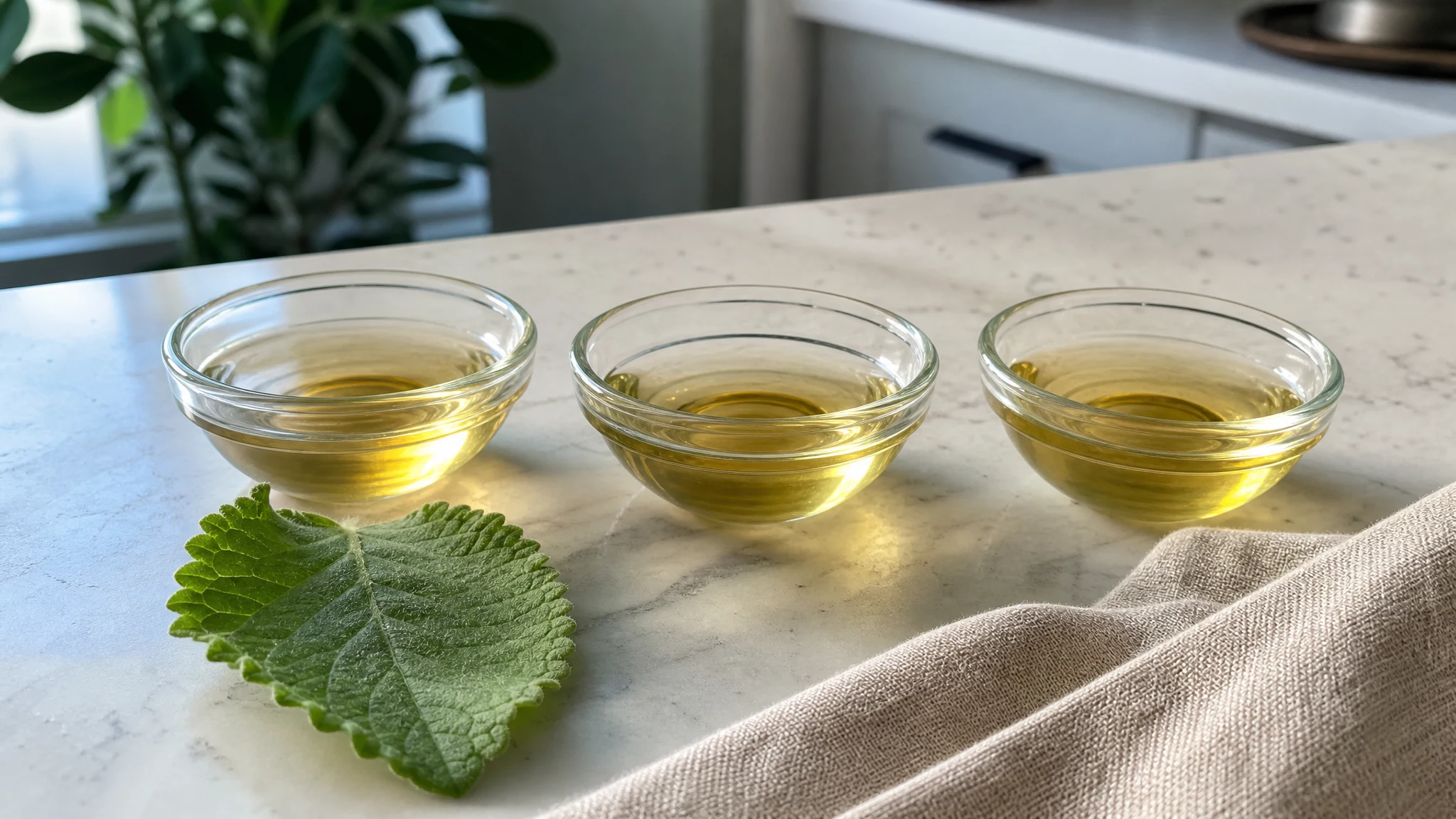
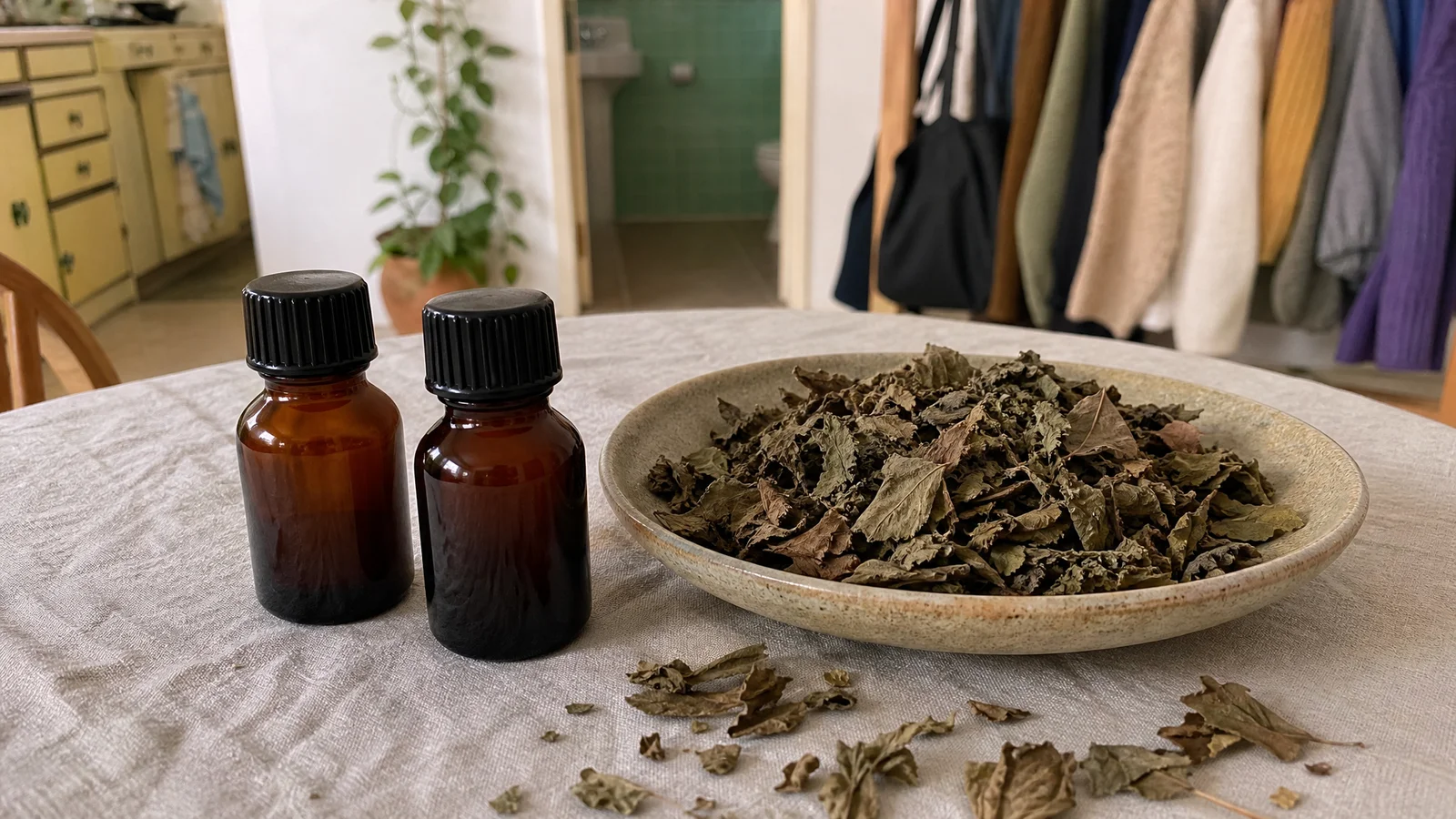
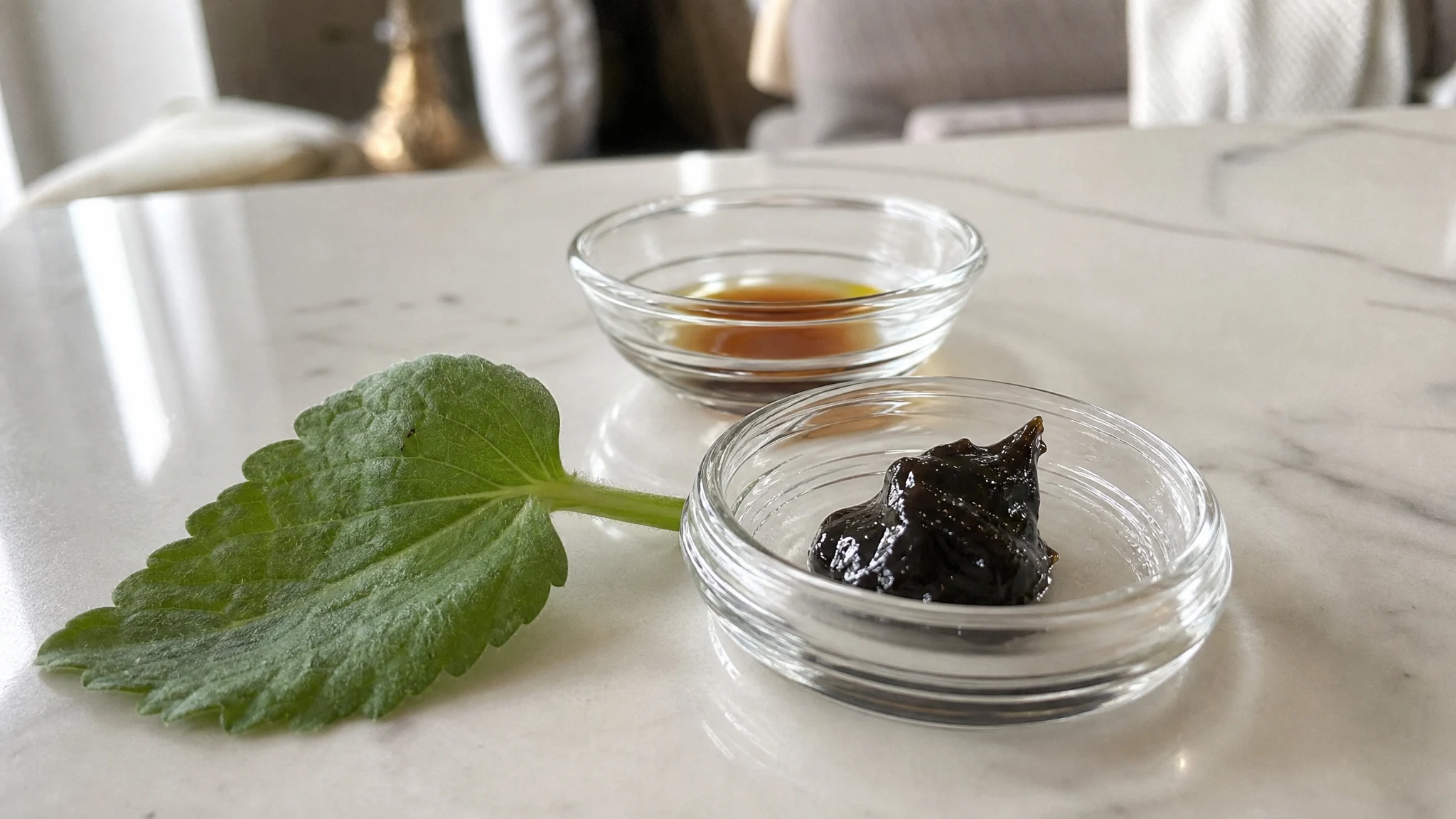
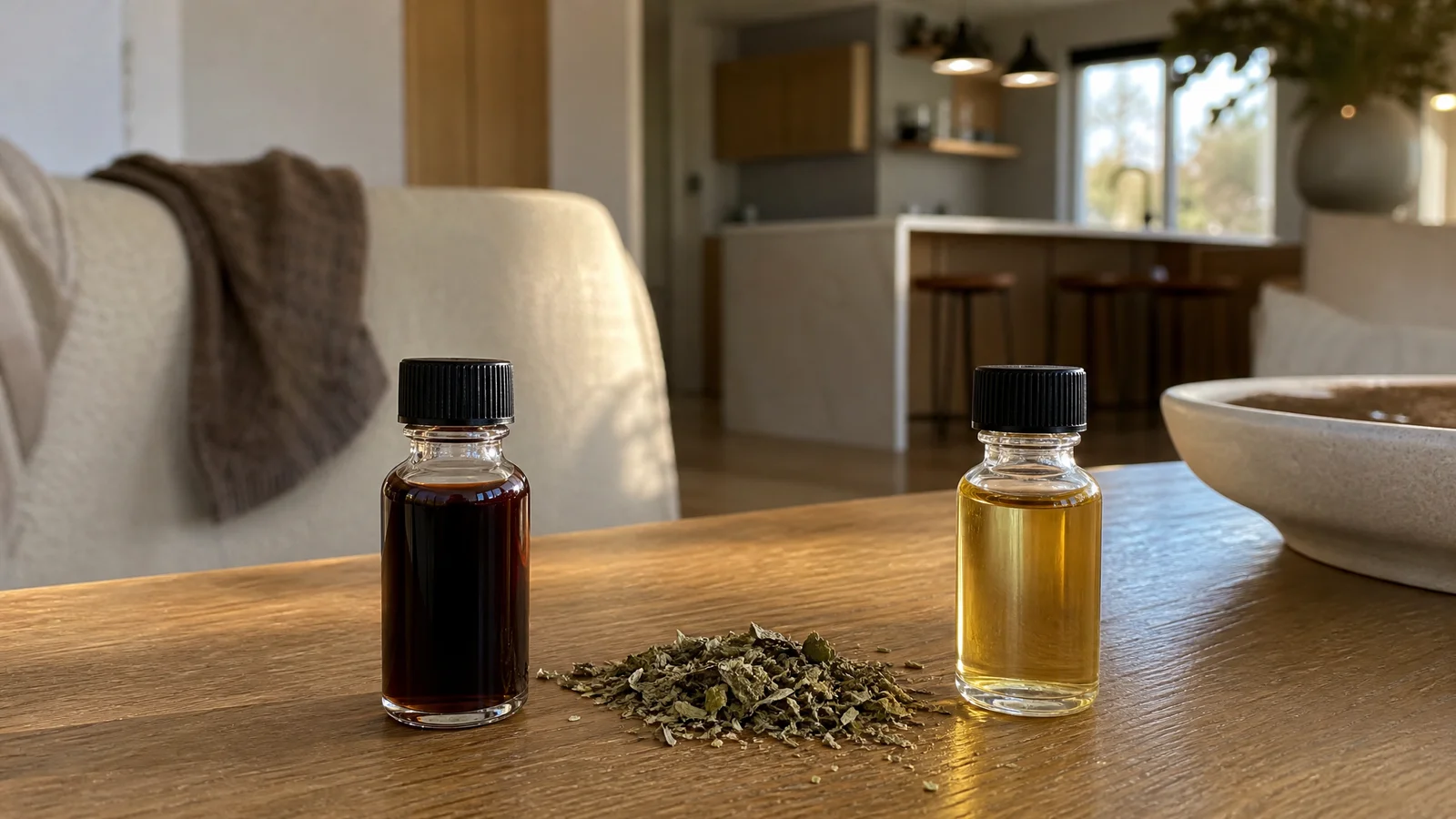
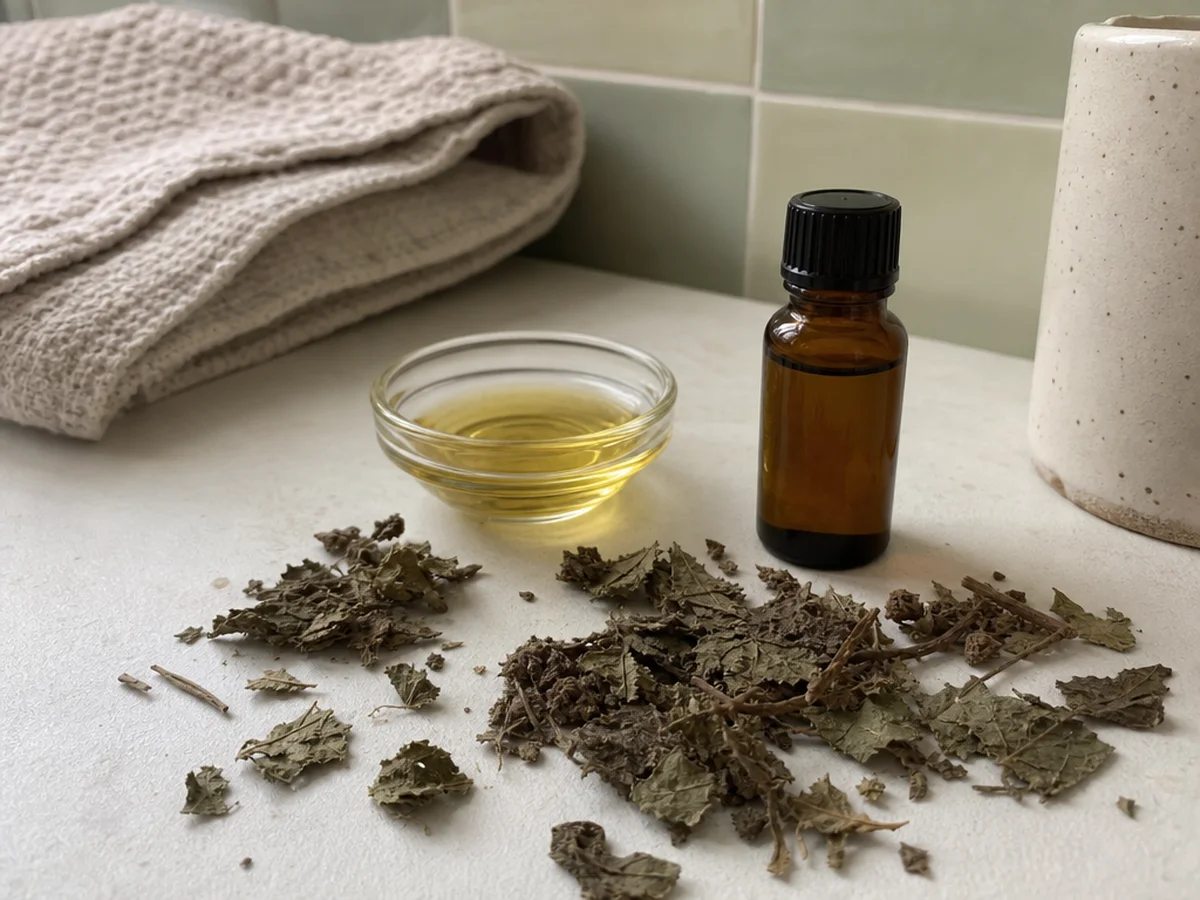
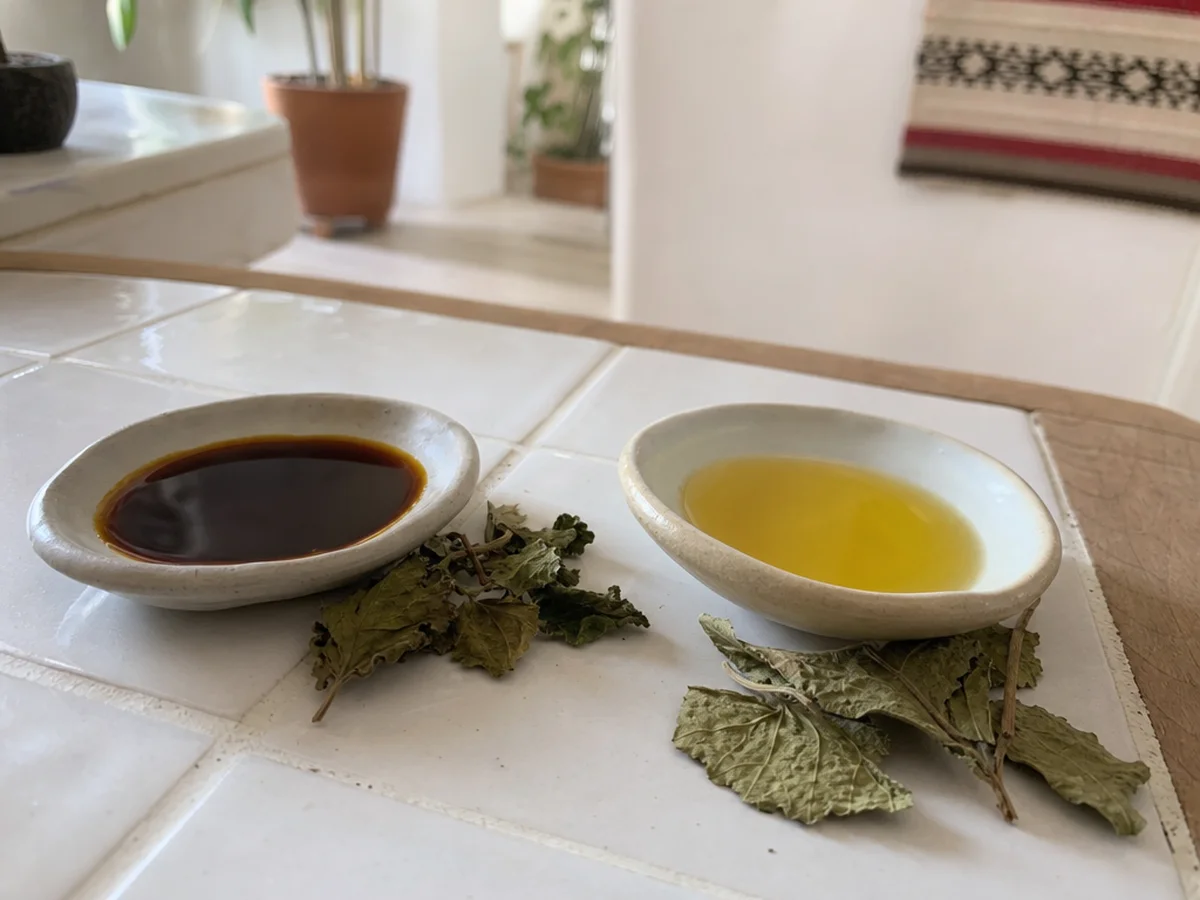
Hold a bottle of patchouli oil up to a window and the first thing you notice is the colour. Some are a deep reddish brown, nearly opaque, and some are a clear amber. Sellers have names for both, dark and light, and the folklore says the dark one sat in iron. There is something to that, though colour turns out to be a less reliable guide than it looks.
Patchouli Essential Oil
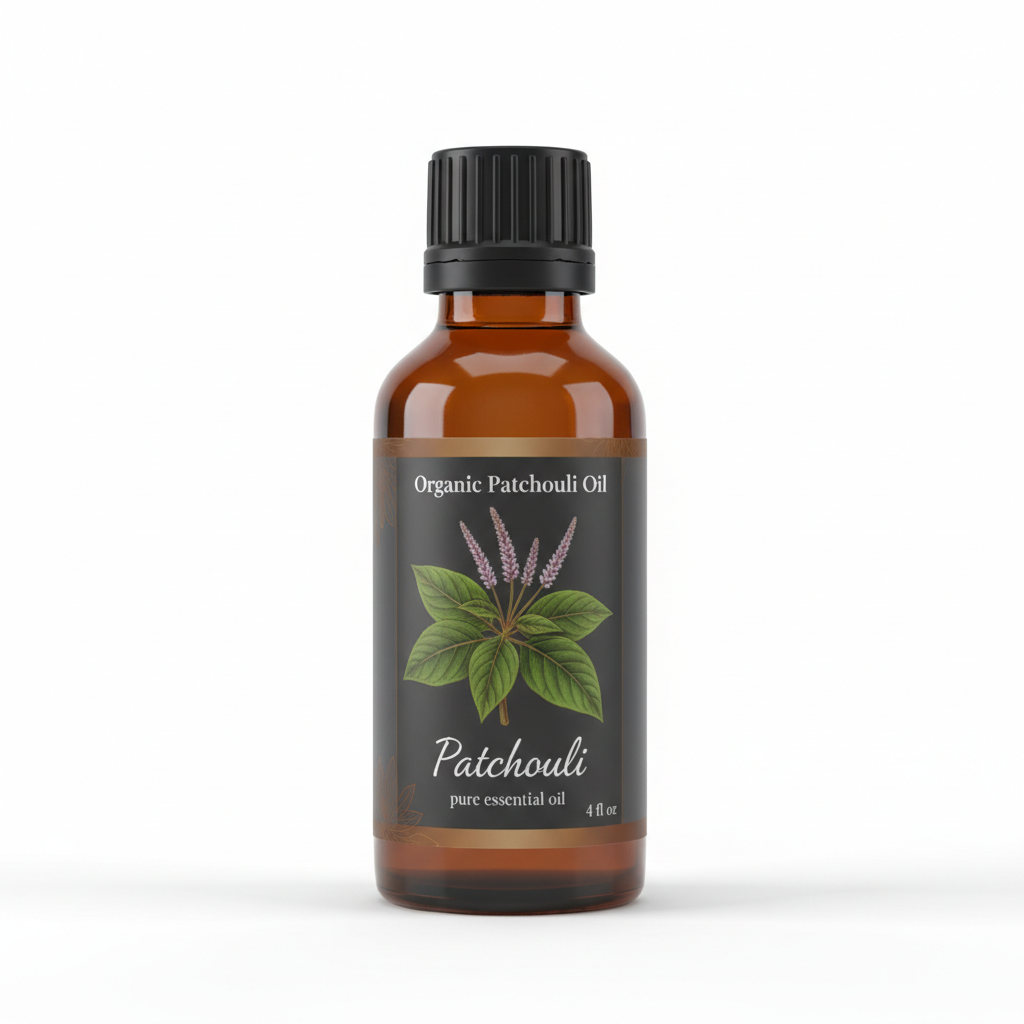
Our own Patchouli Essential Oil, in sizes from 0.5 oz to bulk.
From $20.99
Shop Now →Colour varies inside normal patchouli
The European Food Safety Authority describes the patchouli oil it assessed as a yellow to reddish-brown liquid with a leafy, humic odour (Safety and efficacy of a feed additive consisting of an essential oil derived from the leaves of Pogostemon cablin Benth. (patchouli oil) for use in all animal species (FEFANA asbl), EFSA FEEDAP Panel, 2025). So the whole range from pale amber to brown sits inside genuine oil. Place matters too: PROSEA describes Indonesian-distilled oil as dark orange or brownish and viscous, and oil distilled in Europe or the United States as pale orange or amber (Pogostemon (PROSEA), Pl@ntUse). That entry does not say why, and it does not mention the still material.
The iron explanation
An Indonesian chemical engineering paper on purifying patchouli oil with lime juice opens with the mechanism. Most refiners there are made of ferrous metal, the hot steam carries dissolved oxygen that rusts iron, and the rust dissolves into the oil, giving a darker product with a weaker aroma (POTENSI JUS JERUK NIPIS (CITRUS AURANTIFOLIA) SEBAGAI BAHAN PENGKELAT DALAM PROSES PEMURNIAN MINYAK NILAM (PATCHOULI OIL) DENGAN METODE KOMPLEKSOMETRI, Jurnal Teknologi Kimia dan Industri, 2013). That is the clearest account of why a dark patchouli can owe some of its shade to metal.
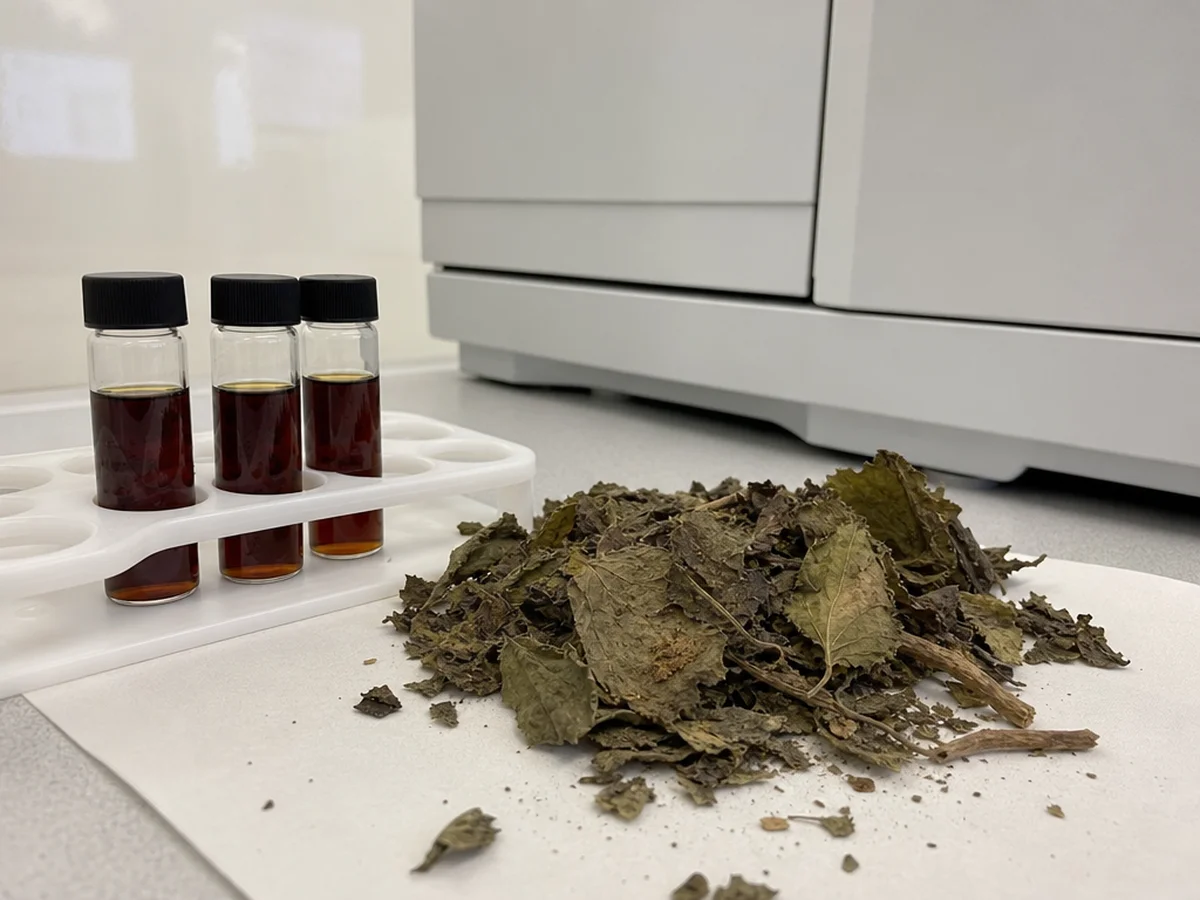
A US botanicals seller sells a light patchouli it describes as distilled in stainless steel and free of iron coloration, with an aroma it calls lighter and clearer than its dark oil, and it adds that patchouli is often distilled in metal stills to get the warm dark colour (Patchouli, Light EO, Eden Botanicals). That is a seller describing its own catalogue, so read it as one trade view. Together the two sources tell a consistent story: dark can be partly iron, and some buyers like it that way.
What colour cannot tell you
Colour is a sign of the equipment and the buyer's taste, and it leaves out the things that shape the oil most.
- Leaf handling. PROSEA says over-fermentation gives a mouldy note and under-fermentation reduces yield, and that drying in shade is preferable. A well-cured leaf and a poorly cured leaf can both end up in any colour of oil.
- Adulteration. The same entry lists benzyl benzoate and propylene glycol as extenders and other plants' oils sold as patchouli. Shade will not separate a stretched oil from an unstretched one. A batch report will, within its method's limits, and our guide to reading GC-MS explains it.
- Age. PROSEA says patchouli oil is stored to mature and that the sharp-green and wet-earthy notes fall away with time. A fresh pale oil and a rested dark oil are not a fair dark-versus-light comparison.
What you may notice holding the bottle
Tilt a bottle slowly and watch the oil run down the glass. A deep reddish-brown patchouli tends to look thick and coats the inside of the bottle in a slow, dark film, while a lighter oil looks more like a clear amber. Put a drop on a white paper strip and you will see the colour spread at the edge, usually darker at the center.
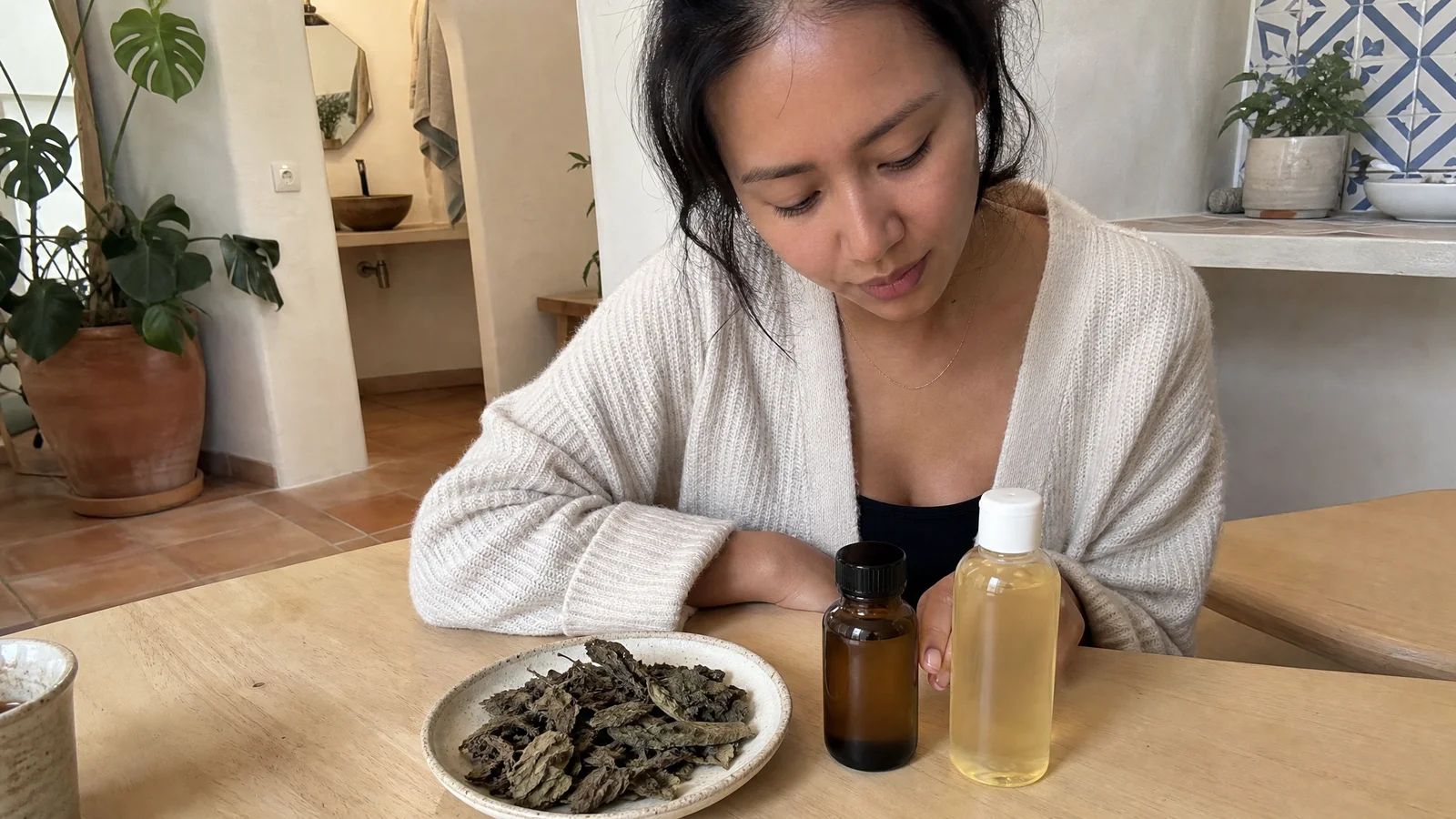
Then smell the strip over an afternoon. Colour is the part your eyes get first, and the smell is the part that matters to your project. We find it helps to decide what you want the scent to do, and only then to look at the shade.
Choosing by job
Colour matters most when it ends up somewhere you can see it. A clear room spray, a pale soap or a light candle will take on some tint from a dark oil. Patchouli oil is naturally dark reddish-brown and can shift a light soap or candle toward tan or amber, so we suggest a small test batch first. The oil can also mark pale cloth, and it does not wash out of it easily, so keep it away from fabrics you care about. For a dark soap, a deep perfume base or a diffuser blend, shade rarely matters at all.
That is also a good reason to let colour be one question among several. The post on storing patchouli oil covers how it changes in the bottle, and the one about getting patchouli out of clothes and rooms is worth a look if you work with a deeper oil.
Our recommendation is simple: choose the oil by how it smells to you and how it behaves in your project, and treat colour as one clue among several. A dark bottle you love is a good bottle, and so is a pale one.
We sell a steam-distilled patchouli leaf oil, and the Certificate of Analysis we publish for one batch lists its appearance as yellow liquid, complying. If shade matters to your project, ask us in writing through the contact page and we will tell you what we can, and nothing more than that.
Patchouli Essential Oil
Patchouli Essential Oil from our own shop, in sizes from 0.5 oz to bulk.
From $20.99
Shop Now →Sources & Further Reading
- Safety and efficacy of a feed additive consisting of an essential oil derived from the leaves of Pogostemon cablin Benth. (patchouli oil) for use in all animal species (FEFANA asbl), EFSA FEEDAP Panel, 2025
- Pogostemon (PROSEA), Pl@ntUse
- POTENSI JUS JERUK NIPIS (CITRUS AURANTIFOLIA) SEBAGAI BAHAN PENGKELAT DALAM PROSES PEMURNIAN MINYAK NILAM (PATCHOULI OIL) DENGAN METODE KOMPLEKSOMETRI, Jurnal Teknologi Kimia dan Industri, 2013
- Patchouli, Light EO, Eden Botanicals