How to Read a Patchouli GC-MS Report
A good certificate of analysis for patchouli oil should tell you what was measured, how, and what came out. A GC-MS report goes further and shows you the oil's composition, peak by peak. Once you know how to read them, they are the quickest way to judge how well a seller has documented an oil.
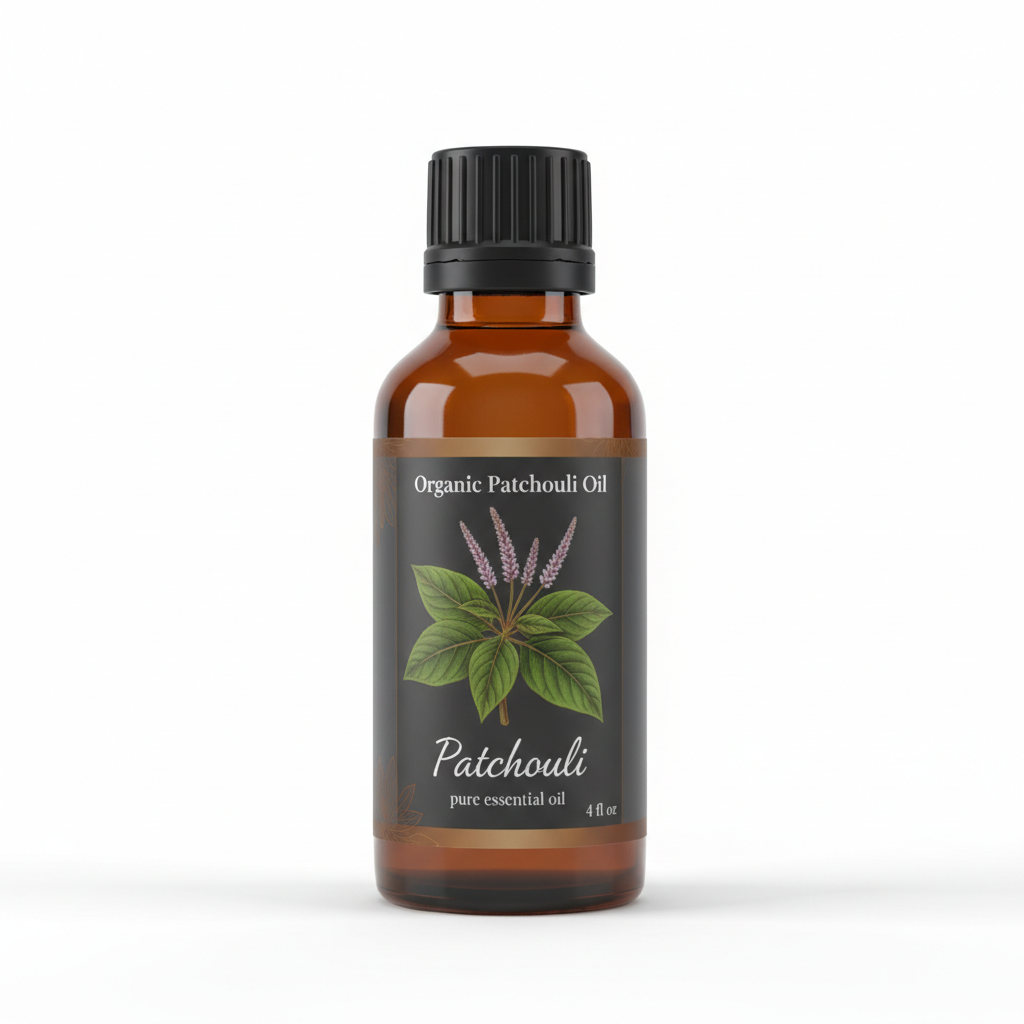
Patchouli Essential Oil
Our own Patchouli Essential Oil, in sizes from 0.5 oz to bulk.
From $20.99
Shop Now →Three documents, three jobs
A certificate of analysis (COA) lists the tests run on one named batch, the method behind each and the result. A GC-MS report is a peak table: each compound found, and its share of the total signal. A safety data sheet covers hazards and handling and is not a quality test at all.
The certificate we have
The Certificate of Analysis for our oil, at /docs/organicpatchoulioil-coa.pdf, covers one batch. It names the product, the botanical name Pogostemon cablin, the part used (leaf), steam distillation as the extraction method, a batch number and a best-by date. Appearance and smell are marked "Complies" against stated standards (a yellow liquid; woody, earthy, smoky). It also lists stated standard ranges for relative density (0.950 to 0.975 at 20 C), refractive index (1.505 to 1.515) and optical rotation (-38 to -55 degrees). If you need GC-MS data for your own purposes, ask us in writing through the contact page before ordering and get the answer in writing.
What real patchouli oil looks like on paper
A 2025 European Food Safety Authority opinion measured five batches of one applicant's patchouli oil. Density came in at 0.961 to 0.964, refractive index at 1.508 to 1.509 and optical rotation at -49. GC-MS gave patchoulol (patchouli alcohol) at a mean of 34.01% of peak area, with alpha-bulnesene at 16.88%, 1(5),11-guaiadiene at 15.17% and beta-caryophyllene at 3.70%. Those four compounds together made up about 70% of the area.
The same opinion shows how methods matter: one batch run by GC-FID read 29.64% patchoulol against the 34% GC-MS mean. So the technique belongs next to the number. These figures describe one oil, though. Natural oils vary with plant chemotype, harvest and distillation, so use them as context for a conversation, not as a pass mark.
The reading order we suggest
- Match the sample. The batch number and product name should match the bottle you will receive.
- Note the units. Percent area is a share of detector signal, not weight.
- Look at the total. If the identified peaks add up to far less than 100%, ask what the rest is.
- Compare the markers. Patchoulol, alpha-bulnesene and guaiadienes should all be present in sensible proportions.
- Ask what was screened for. A report should say which adulterants were looked for, and how.
Why one number is not enough
The plant reference PROSEA lists the usual ways patchouli oil gets stretched: leaves from other plants, synthetic substitutes and high-boiling extenders such as benzyl benzoate and propylene glycol. A little arithmetic shows why a single headline figure can mislead. If an oil sits at the top of EFSA's patchoulol specification, 34%, adding a fraction x of an extender with no patchoulol gives 34 times (1 - x). It reaches the 27% floor at about 20% extender, so a 10% addition would still read around 30.6%, comfortably in range. That is our own calculation, but it is why the whole peak table matters more than any single line.
A 2018 study (Krause and colleagues) tested low-field NMR against GC-MS on 75 genuine patchouli oils, commercial samples and 17 adulterants. NMR spotted 14 of the 17 easily, found gurjun and copaiba balsams difficult, and missed one; the authors call it complementary to GC-MS rather than a replacement.
Pairing the paper with your nose
A report tells you what is in the oil; your nose tells you whether you like it. Once you have the paper in hand, open the bottle and compare. Patchouli should smell deep, earthy and woody, with damp forest floor and aged wood. Smell it from a paper strip, give it a minute, and come back to it twice more. If the oil smells nothing like you expected, make a note and take your questions back to the seller in writing. The paper and the aroma are two halves of one picture.
A simple filing habit
Keep one folder, paper or digital, for each oil you buy. Put in the report, the batch number and the date the bottle arrived, and copy the batch number onto the bottle label. When you reorder, ask whether the batch has changed, because paperwork for one batch says nothing about the next. A tidy file also makes it much easier to answer a question from a customer or an inspector later.
It is a good habit to read a report twice, once for the numbers and once for what is missing. Put it beside the bottle, check the names match, and take your time. Nobody expects you to become a chemist overnight, and a few careful questions will serve you better than any amount of jargon.
Five questions to put in writing
Does the report cover the lot I will receive? Who ran it, when, and by which method? Can I see the full peak table with the total identified? Which adulterants were screened, and what were the results? Are the physical constants measured values or stated standards? Clear answers are a good sign.
For more checks, see our guides to quality checks before you buy, reading a label and patchoulol and the chemistry of the oil.
Ask your questions in writing, keep the answers, and you will know a great deal more than the label can tell you.
Patchouli Essential Oil
Patchouli Essential Oil from our own shop, in sizes from 0.5 oz to bulk.
From $20.99
Shop Now →Sources & Further Reading
- EFSA FEEDAP Panel, 2025. Safety and efficacy of a feed additive consisting of an essential oil derived from the leaves of Pogostemon cablin Benth. (patchouli oil) for use in all animal species (FEFANA asbl). EFSA Journal. PMC12004087
- Pogostemon (PROSEA) - Pl@ntUse. plantuse.plantnet.org
- Krause et al., 2018. 64. Is Low-field NMR a Complementary Tool to GC-MS in Quality Control of Essential Oils? A Case Study: Patchouli Essential Oil - Magritek. magritek.com/?p=8538
- ISO 3757:2002 - Oil of patchouli (Pogostemon cablin (Blanco) Benth.). committee.iso.org/standard/32035