Is Patchouli Sustainable? Farms, Firewood and Questions
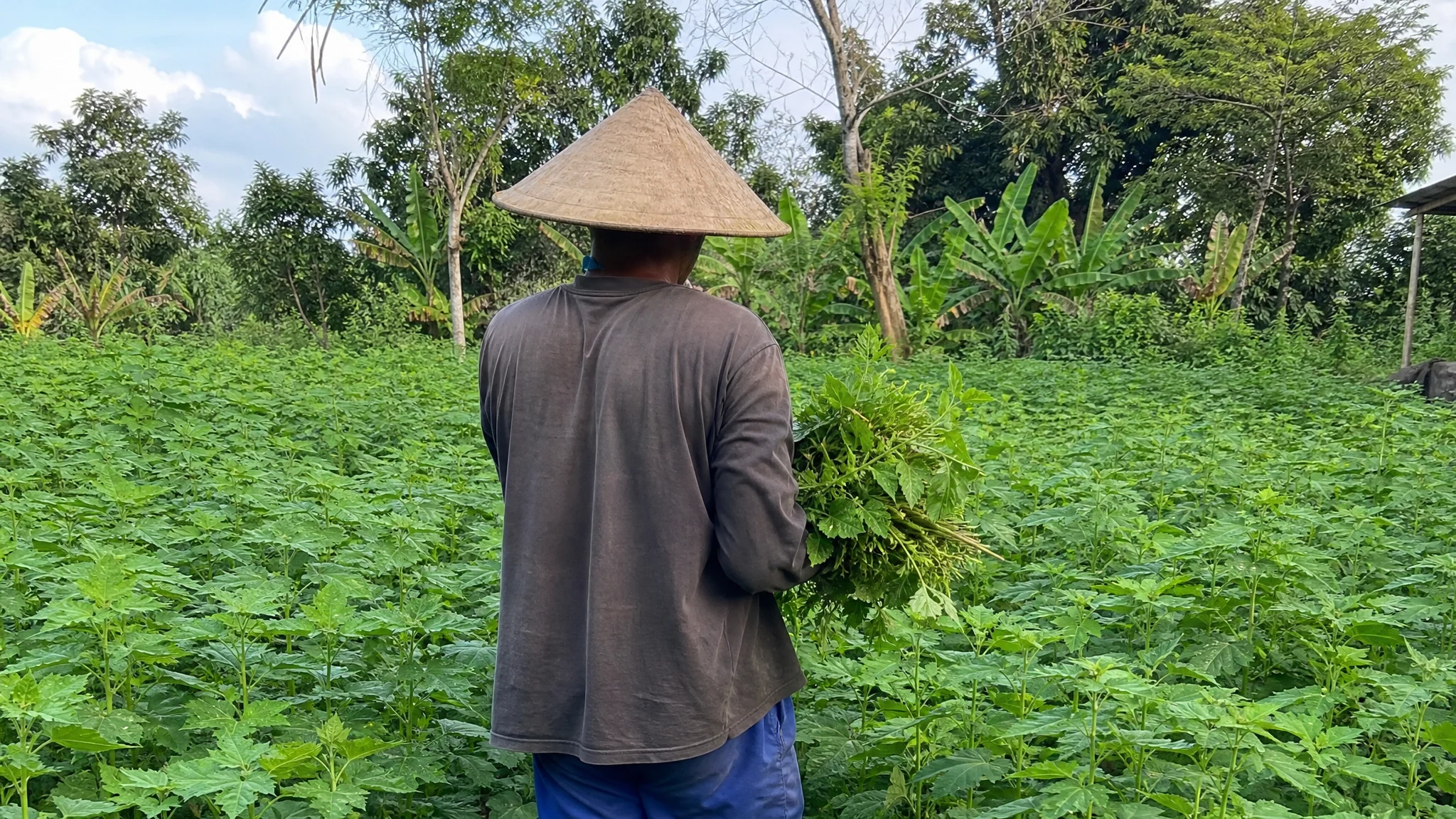
Patchouli has a habit of moving. Over the years the main growing areas in Indonesia have shifted from Aceh to Java, then to South Sulawesi and now North Sulawesi, and that wandering map is the best way into the question of what "sustainable patchouli" really means. It is a crop with a lot riding on small farms, small stills and a lot of firewood.
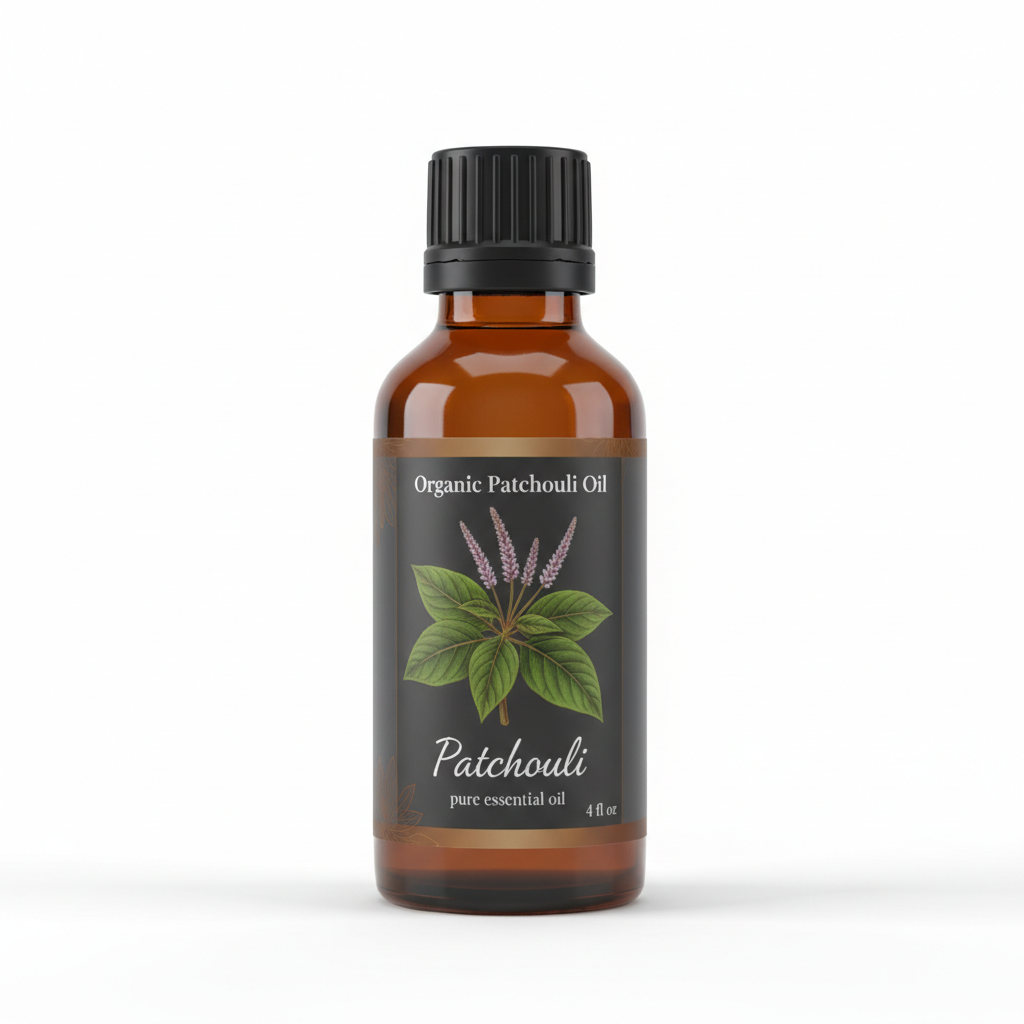
Patchouli Essential Oil
Our own Patchouli Essential Oil, in sizes from 0.5 oz to bulk.
From $20.99
Shop Now →A crop that lives on small plots
One 2026 paper on the patchouli agroindustry opens with the statement that Indonesia makes over 95% of the world's nilam oil, which is the local name for it (ANALYSIS AND DESIGN OF A SUSTAINABLE SMART PATCHOULI AGROINDUSTRY DEVELOPMENT SYSTEM). So when a bottle says patchouli, the farm behind it is almost certainly a smallholding in one country, and the same paper points to low productivity, uneven quality and old distillation equipment as the sector's recurring challenges. Its suggested fix is village cooperatives that collect oil and give farmers more bargaining power with intermediaries.
The movement of the crop has a reason. The fragrance house dsm-firmenich, describing its own patchouli project, names climate variability, soil fatigue and price swings as the pressures that keep pushing production to new regions (Patchouli Indonesia : Building a Responsible and Climate Resilient Value Chain). A greenhouse pot study from Hainan University points the same way: soil grown with patchouli for one, two or three years in a row showed shifts in pH, potassium and bacterial diversity compared with fresh soil (Continuous Cropping of Patchouli Alleviate Soil Properties, Enzyme Activities, and Bacterial Community Structures.). It was a single-season pot experiment rather than a field trial, so we read it as a hint about why rotation and soil care matter, not as a measure of any particular farm.
Where the firewood goes
Steam distillation needs heat, and in village stills the heat often comes from wood. That is why both company projects we have read single out fuel. Givaudan, working with the NGO Swisscontact in Sulawesi, reports training for roughly 1,000 producer households and more than 320 distillation operators, with plans to renovate small stills to use less firewood (Print Page | Givaudan). dsm-firmenich distributed 20,000 tree seedlings in the first phase of its project so that farmers could grow future fuel, supports 300 farmers in three villages, and buys at a guaranteed floor price with sourcing verified under the UEBT standard.
These pages are company descriptions rather than independent audits, and they give counts of people trained rather than measured results. They are still useful, because they show what a serious program looks like: fuel efficiency, tree planting, price stability and traceability, all in one package. If a seller's sustainability story mentions none of these, it is worth a follow-up question.
What a certificate tells you
Certification schemes each answer a different question. UEBT, for example, covers biodiversity, sustainable use of the plant and fair treatment of the people who grow or collect it, checked through independent audits with traceability back to the area where the ingredient is grown (Union for Ethical BioTrade (UEBT) | Preferred by Nature). Organic certification is a different thing again: it concerns how a crop was grown and handled, not wages or distillation fuel, and our organic label guide shows how to check one. Two schemes can both be real and both be silent on what you actually care about, so it helps to know which question each one answers.
A logo on a bottle is not the same as a certificate. A certificate has a holder, a scope, a number and an expiry date, and the scope can cover a company's other ingredients rather than the one in your hand.
Why we think small questions matter
We are a small business ourselves, and we like it when a customer asks where something comes from. Good questions are not an accusation. They are how a shared understanding gets built between the person making a thing and the person using it. When you ask a supplier about fuel, floor prices or paperwork, you are helping to show that these details matter to buyers.
It also helps to keep your expectations kind. A crop that is grown on small plots and distilled in village stills will not have the tidy, uniform paperwork of a factory product, and that is not automatically a bad sign. What matters is that the seller can answer plainly, in writing, and will say so when they do not know.
Questions worth putting to any supplier
- Where was the leaf grown, and can the supplier say so in writing?
- Is any sustainability or fair-sourcing claim backed by a named scheme, certificate number and scope?
- What fuel do the stills use, and is there anything in place to reduce it?
- Does the farmer see a floor price or a share of price rises, or only the market of the day?
- Is the paperwork for this batch available, not just for the supplier in general?
Those are fair questions for us too. We sell a steam-distilled patchouli leaf oil and describe it as organically grown. We do not attach a grower name, an origin or a certification claim to it here, so if any of these matter to your purchase, write to us through the contact page before ordering and get the answer in writing. For buyers weighing cost against all this, what sits behind a patchouli oil price is a good companion read.
A slow, curious approach tends to serve patchouli well: the oil itself rewards patience, and so does the crop.
Patchouli Essential Oil
Patchouli Essential Oil from our own shop, in sizes from 0.5 oz to bulk.
From $20.99
Shop Now →Sources & Further Reading
- ANALYSIS AND DESIGN OF A SUSTAINABLE SMART PATCHOULI AGROINDUSTRY DEVELOPMENT SYSTEM, Jurnal Teknologi Industri Pertanian, 2026
- Patchouli Indonesia : Building a Responsible and Climate Resilient Value Chain, dsm-firmenich
- Print Page | Givaudan: Indonesia: Securing a sustainable patchouli oil supply
- Continuous Cropping of Patchouli Alleviate Soil Properties, Enzyme Activities, and Bacterial Community Structures., Plants, 2024
- Union for Ethical BioTrade (UEBT) | Preferred by Nature