Patchouli Blends for Autumn and Winter Diffusers
When the first cold evening arrives and the windows stay shut, patchouli suddenly makes sense. It is a heavy, dark, base-note oil, with an earthy, wine-like depth and a hint of damp forest floor and aged wood, and that is exactly the character that reads as cozy when you are indoors. Here is how we would build with it for the cold months, and the one habit that makes a closed-window room more pleasant.
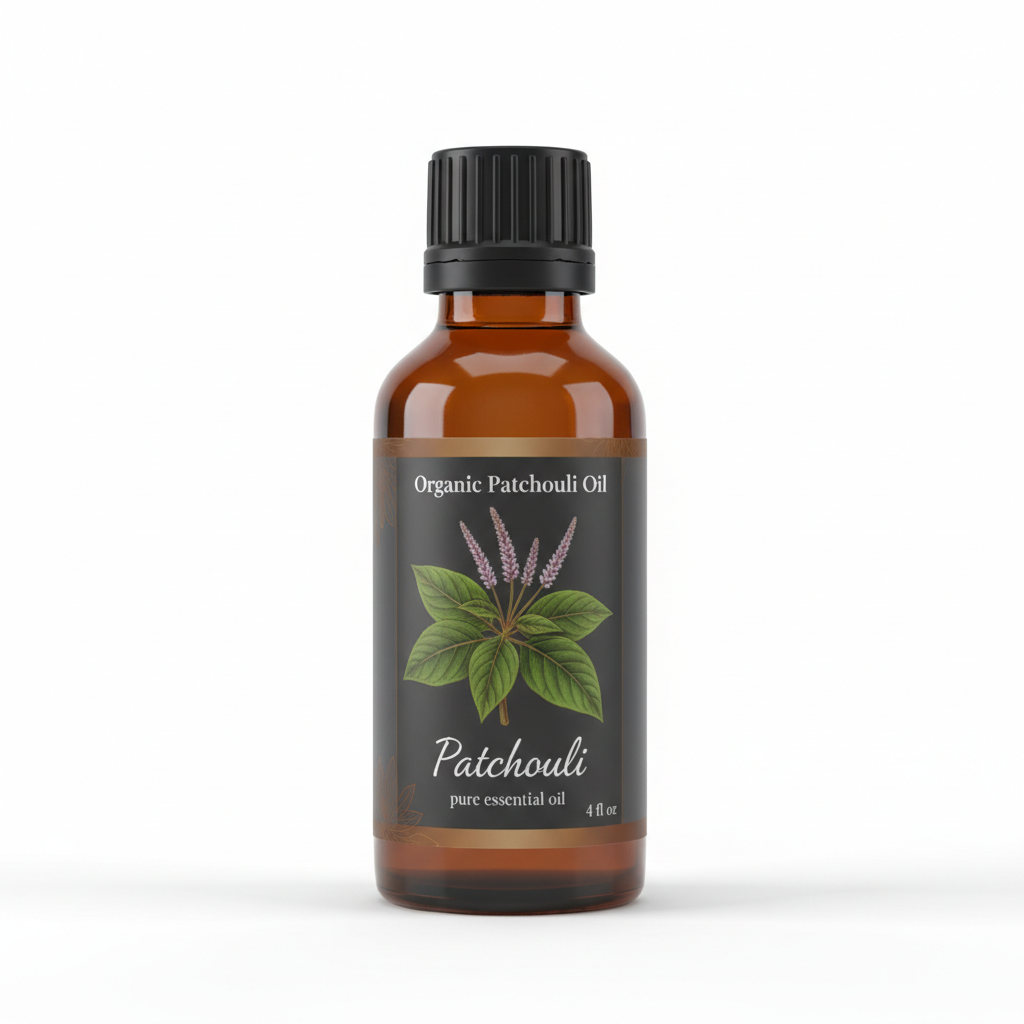
Patchouli Essential Oil
Our own Patchouli Essential Oil, in sizes from 0.5 oz to bulk.
From $20.99
Shop Now →Why patchouli suits the season
Perfumers call patchouli a base note because it lingers after brighter oils have faded, and Tisserand describes the scent as a rich, earthy aroma with sweet woody and floral notes that deepen into a smoky warmth (Organic Patchouli Essential Oil | Tisserand Aromatherapy). We would add that it is a natural fixative: a little patchouli holds the lighter oils in a blend in place for longer. In autumn that means a small share of patchouli can give a whole blend a warm, slightly smoky backbone, and the rest of the blend can be made of whatever else you like.
That small share is the trick. Patchouli is strong, and one drop too many lingers on skin and cloth for days. In a diffuser the same idea applies: start with a couple of drops and let it be the bass line, not the whole song.
Three diffuser blends worked out in drops
Tisserand suggests 6 to 8 drops of patchouli in a diffuser, and lists bergamot, geranium and lavender among its blend partners. Reasoning from that, we treat 6 drops as the total for the whole blend, patchouli included, rather than 6 drops per oil. These are formulations worked out from that guidance and simple arithmetic, so adjust the numbers to your diffuser's size:
- Woodsmoke evening: 2 patchouli, 3 cedarwood, 1 bergamot. Dark and dry, with a bright flicker at the top.
- Dusk garden: 2 patchouli, 3 geranium, 1 bergamot. Floral and earthy together, closer to a rose garden after rain.
- Soft blanket: 2 patchouli, 4 lavender. The earth anchors the lavender and the lavender softens the earth. For the skin version of this pairing, see our patchouli and lavender blend.
We sell the patchouli only, so the cedarwood, bergamot, geranium and lavender come from an aromatherapy supplier who prints the botanical name on the bottle. Our pairing guide goes through what else works with patchouli and what to look for on those labels.
Setting the scene
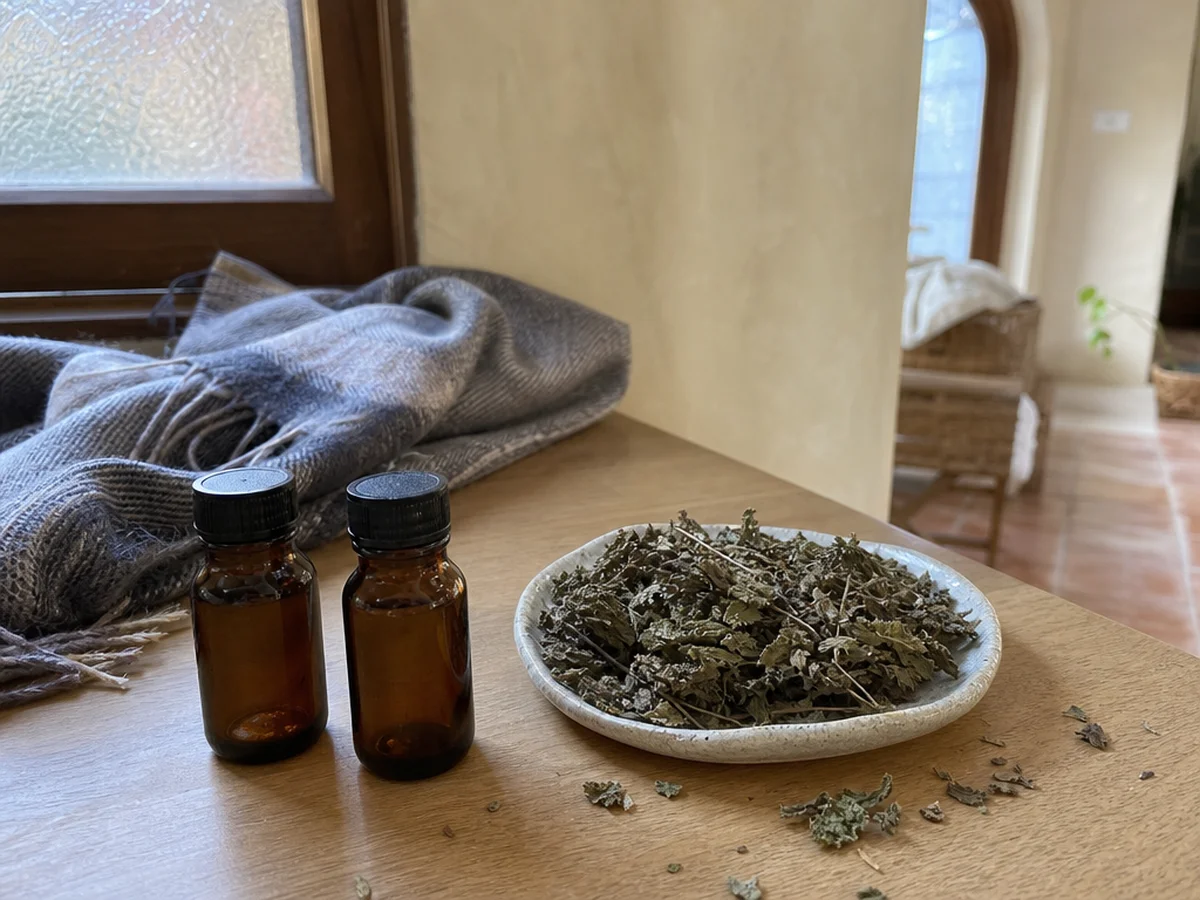
A blend works best when the rest of the room agrees with it. Think of the first cold evening: the kettle on, a blanket within reach, the windows closed against the dark. Start the diffuser a little before you sit down, so the scent is gently present when you arrive instead of arriving all at once. After half an hour, open a window for a minute to refresh the air, and notice how much more clearly you can pick out the cedarwood or lavender when your nose has had a short rest.
If you are trying a new blend, make it once with the lowest number of drops. Patchouli is happy to be turned up next time, and much harder to turn down once it has filled the room.
A better winter diffuser habit
Studies of diffusers, none of which used patchouli, point to a few easy habits. A chamber study found that filling an ultrasonic diffuser with tap water instead of deionised water raised fine-particle emissions about fivefold in one test (Volatile organic compound and particulate matter emissions from an ultrasonic essential oil diffuser.). Two-week office monitoring found terpene levels peak right after a diffuser is switched on and then drop (Time-dependent emission characteristics of terpenes from an essential oil diffuser and indoor exposure assessment using a wearable passive sampler.). Put together, these suggest a gentle routine: use distilled or deionised water, run it in short sessions, crack a window when you can, and skip the all-night session. A short burst gets you the full aroma with the least oil.
If you only want a little scent for an hour, a drop on a cotton pad set on a shelf, away from fabrics you care about, uses even less oil. That is a practical suggestion rather than a research finding.
Who should sit this one out
Keep the bottle locked away from children and pets, as Poison Control advises (Essential oils: Poisonous when misused | Poison Control). Tisserand also says not to use patchouli on children under 3. Rooms where babies, pets or anyone with breathing difficulties spend time are better left unscented, and our pet article and our children article give the details. If you are pregnant or have a respiratory condition, check with your physician before you diffuse anything.
Candles and incense
Flame is the other cold-weather habit. Wax limits how much fragrance a candle can hold, which our candle article works through, and incense adds smoke on top of scent, which is why our incense and room mist article keeps it brief. For an easy evening, a diffuser on a short timer is the gentlest way to bring patchouli indoors.
Keep a note of the blends you reach for most, with the drops written beside each one. By the end of the season you will have a small personal collection of autumn recipes that suit your own room and your own nose.
Patchouli rewards a light hand, and a few well-chosen drops are enough to make a room feel like autumn.
Patchouli Essential Oil
Patchouli Essential Oil from our own shop, in sizes from 0.5 oz to bulk.
From $20.99
Shop Now →Sources & Further Reading
- Organic Patchouli Essential Oil | Tisserand Aromatherapy
- Volatile organic compound and particulate matter emissions from an ultrasonic essential oil diffuser. Indoor Air, 2021
- Time-dependent emission characteristics of terpenes from an essential oil diffuser and indoor exposure assessment using a wearable passive sampler. Journal of Environmental Science and Health, Part A, 2026
- Essential oils: Poisonous when misused | Poison Control