Patchouli Room Mist: How to Make One, and Why Not Incense
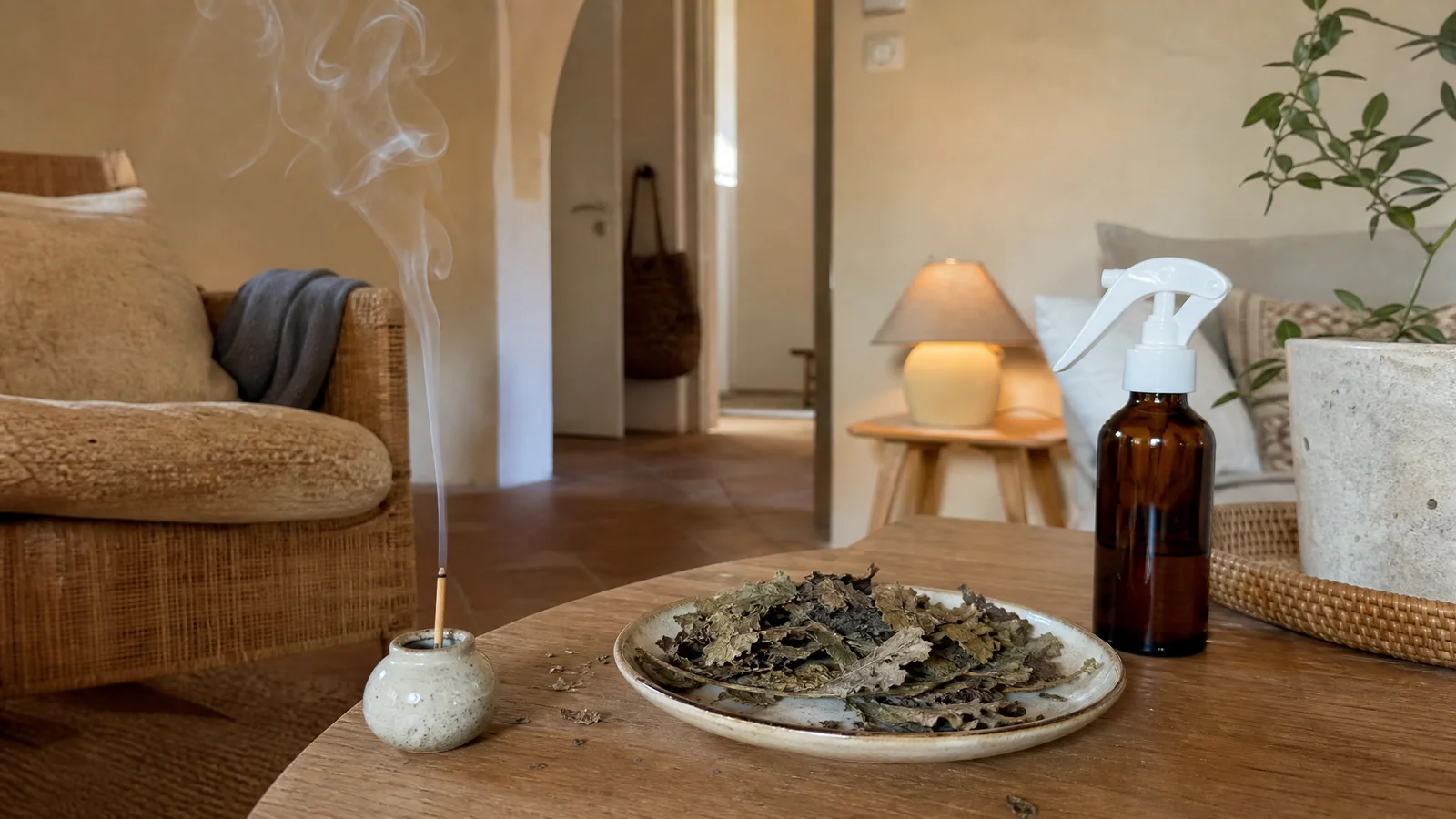
The old advice for incense was to burn it until the room was full of scent. For patchouli, we would rather fill a room with a mist, and keep incense for the occasional short, ventilated moment. A mist is just oil dissolved in a solvent, and the only real cautions are a stain and a flammable liquid. Smoke is a different matter, and it is worth understanding before you light anything.
Patchouli Essential Oil
Our own Patchouli Essential Oil, in sizes from 0.5 oz to bulk.
From $20.99
Shop Now →What incense smoke adds to a room
A 2026 perspective article in Frontiers in Allergy on incense and candle smoke reports that incense gives off roughly 45 mg of particulate matter per gram burned, against about 10 mg per gram for cigarette smoke, and that temple measurements found indoor particles at 626 µg/m³ against 121 µg/m³ outside. It lists carbon monoxide, benzene, acrolein, fine particles and trace metals among the emissions. The authors are open that most of the health evidence is cross-sectional and cannot show cause, and their practical advice is gentle: ventilate, shorten the burn, and keep smoke away from sleeping areas, children, older adults and anyone with a respiratory condition (Lam, Nejat and Lee-Wong, 2026).
A burning cone is mostly its base and binder, with the oil adding the scent. We do not sell either, and have no source for a safe ratio, so we do not give a cone recipe. IFRA files incense sticks under Category 12, products not intended for direct skin contact (IFRA, Guidance for the use of IFRA Standards, 51st Amendment, third-party mirror); that sorts products by skin exposure and does not speak to breathing the smoke. If you do burn incense, keep the window open and the session short, and never leave it unattended.
The mist: a solvent choice
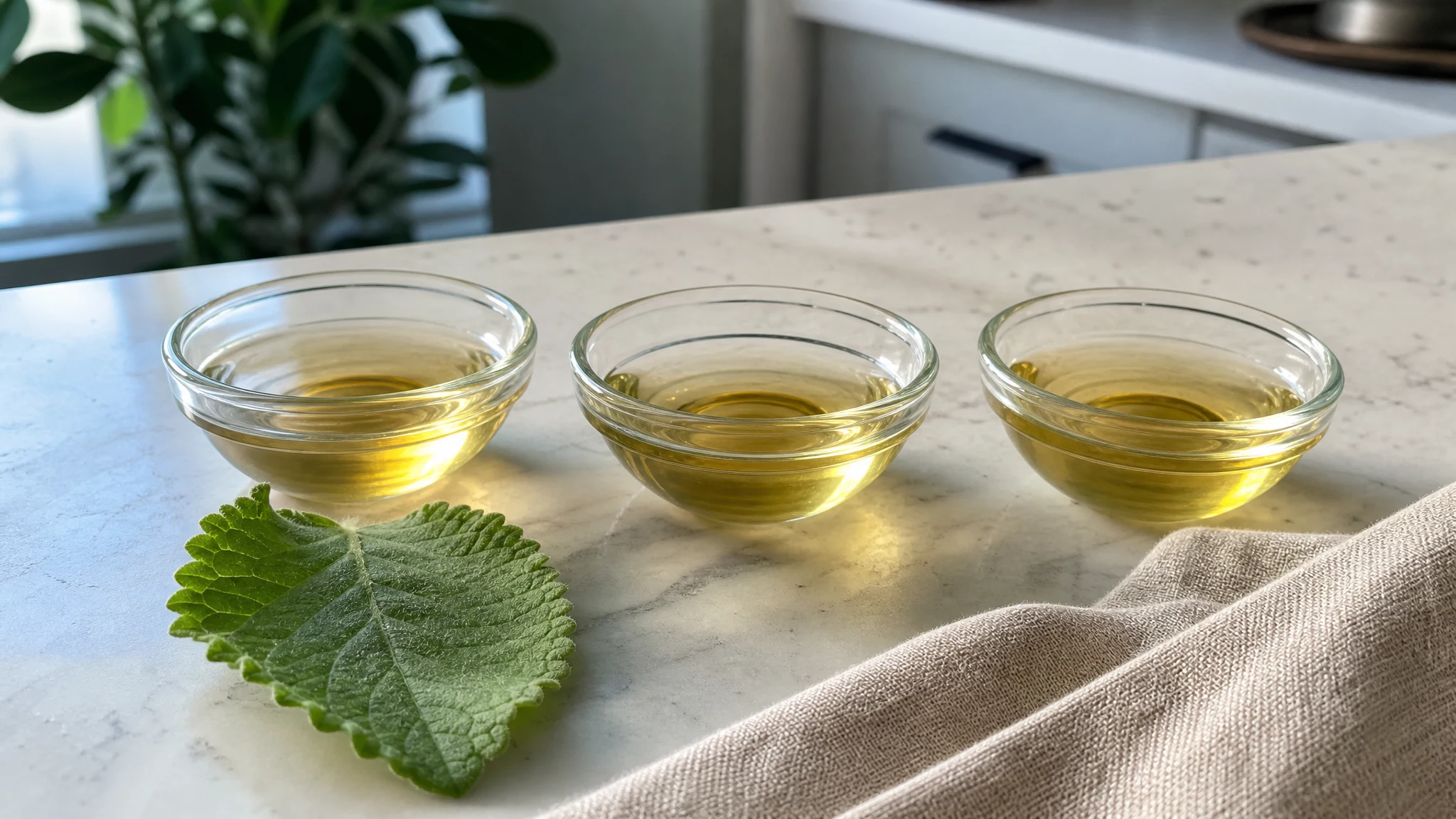
Essential oils dissolve in alcohol and not in water. Poison Control describes the liquid in a reed diffuser as essential oil dissolved in isopropyl (rubbing) alcohol (Poison Control, Essential oils: Poisonous when misused). That is why oil shaken into plain water separates and leaves beads on the bottle and on whatever it lands on. So the choice for a mist is a solvent:
- Alcohol only. The oil dissolves and there is no water to worry about. Alcohol is flammable, though. Ethanol's closed-cup flash point is about 12 to 14 °C (National Library of Medicine, PubChem: Ethanol (CID 702), Flash Point), so never use the mist near a candle, a stove, lit incense or a heater.
- Alcohol and water. Dissolve the oil in the alcohol first, then add the water slowly. If it turns cloudy, add alcohol or use less oil. Whether a water-containing mist needs a preservative is a question for a cosmetic chemist, so make small amounts, date the bottle, and discard it if it looks or smells different.
For the arithmetic, a 100 ml bottle at 0.5% oil by volume holds 0.5 ml of patchouli, about 10 drops at roughly 20 drops per ml. That is our own suggested starting point, and it matches the cleaning spray we describe in our cleaning spray article, for the same reason: the oil lingers. Our 0.5% to 2% guidance is for skin in a carrier oil, not sprays. IFRA places manual air-freshener sprays in Category 10B, a leave-on category since spray can reach skin, so point the nozzle away from faces.
Keeping it pleasant
- Stains. Patchouli oil is naturally dark reddish-brown, and it stains a light surface and does not wash out of pale cloth easily. Spray into the air, away from sofas, curtains and bedding, and try a hidden spot first.
- Strength. One drop too many lingers for days. If a room ends up too fragrant, this article covers clearing it.
- Pets and children. Poison Control says essential oils should be locked up, out of sight and reach of children and pets, and pets share the room you spray. Our articles on pets and children go through this.
- Breathing. The European Food Safety Authority classes the patchouli oil it assessed as a respiratory sensitiser, so skip a mist if anyone at home has asthma or reacts to fragrance, and ask a physician if unsure.
Setting the scene
Think of a mist as a quick gesture, not a fog. One or two sprays at arm's length in the middle of a room, then walk away and come back in a few minutes. Patchouli opens slowly: the first thing you'll notice is the alcohol lifting off, then the dark, earthy, wine-like note settles in, with something like damp forest floor underneath. If all you can smell is alcohol, give it a little time before you add more.
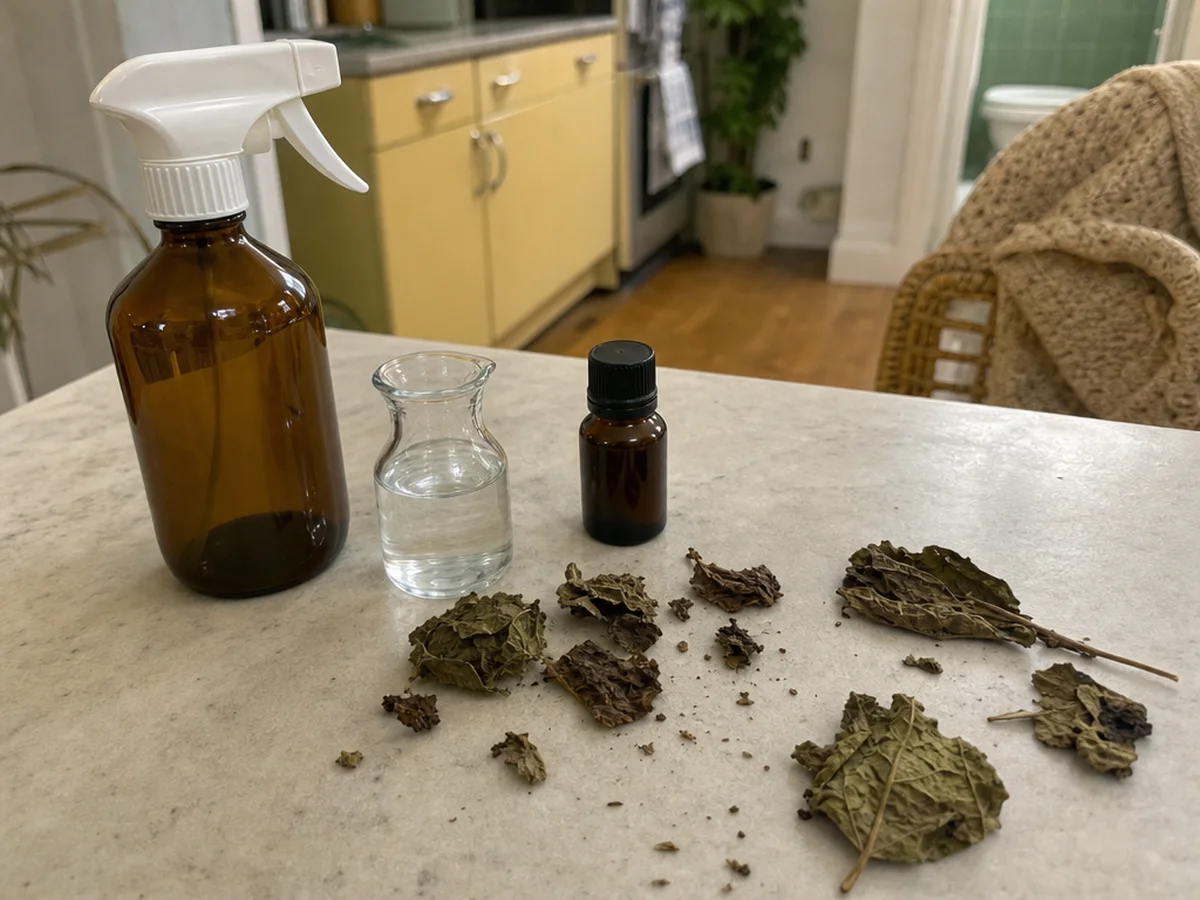
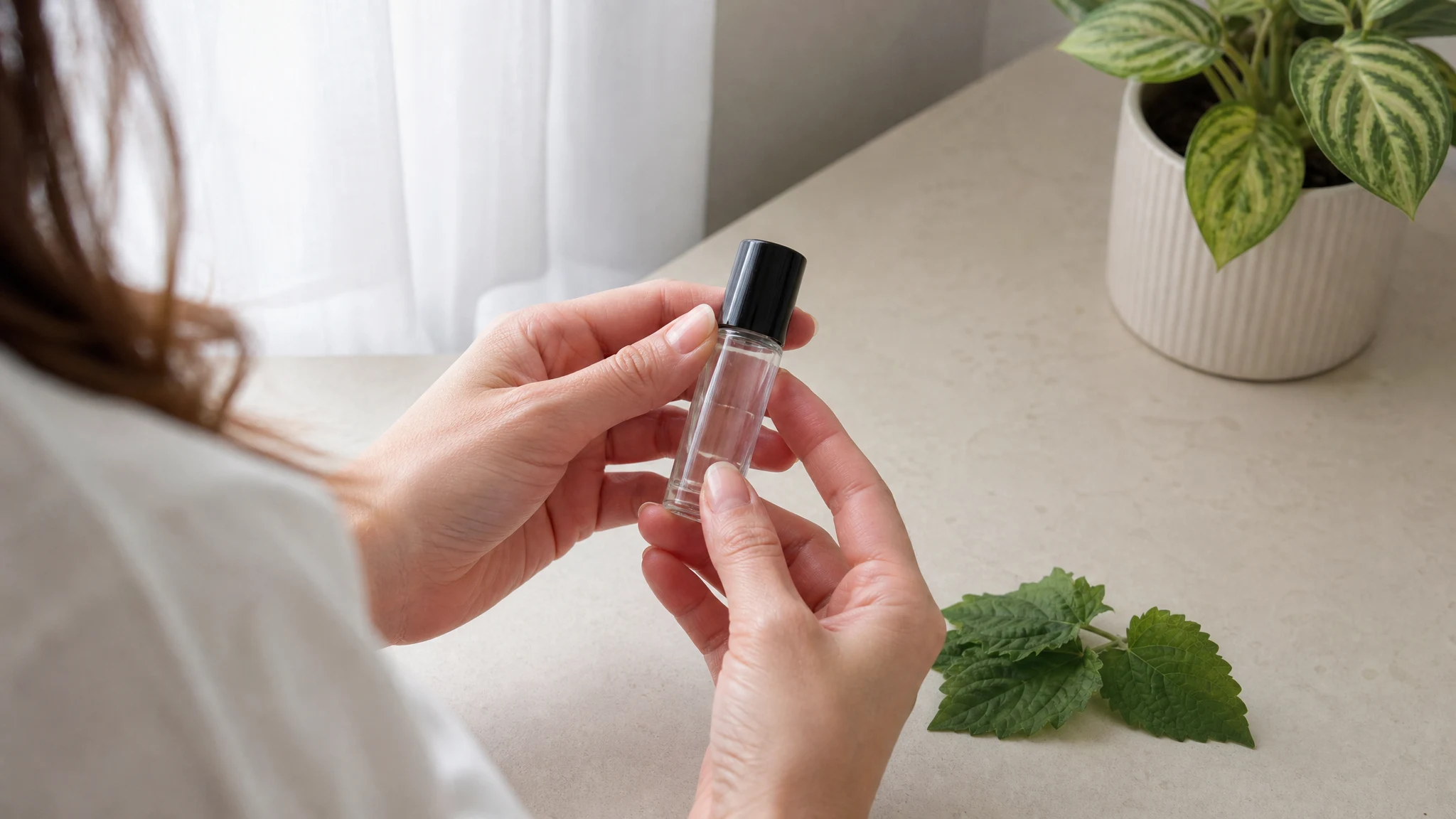
A small, clean bottle with a fine-mist cap is the nicest tool for the job. Label it with the date and the strength, and keep it somewhere cool and dark with the cap on, the same way you would keep the oil. A hallway, an entryway or the area around a closet door suits a heavy base note well, because those are places where a scent can sit quietly without competing with dinner or fresh laundry.
One more small habit we recommend: do your first spray in the evening or on a day you are not rushing, so you can notice how it changes over an hour. Patchouli is a slow scent, and it rewards a relaxed nose.
Where to find the rest
We sell the oil. Alcohol, bottles and spray caps come from a pharmacy, a craft or supply shop or a hardware store, and any incense base comes from an incense supplier. If a flame is what you want, our candle article covers wax and wick limits, though a flame and a spirit-based mist should never share a room.
Start with a small bottle at 0.5%, hold it at arm's length when you judge the strength, and let the room do the rest. Our shop lists the sizes we sell, and for larger batches there are bulk sizes, with our guide to buying patchouli essential oil in bulk covering what to check first.
Patchouli Essential Oil
Patchouli Essential Oil from our own shop, in sizes from 0.5 oz to bulk.
From $20.99
Shop Now →Sources & Further Reading
- Lam G, Nejat C, Lee-Wong MF, 2026. Cultural sensitivity and patient-centered care regarding incense and candle smoke emissions. Front Allergy. PMC13176265
- IFRA, 2023. Guidance for the use of IFRA Standards, 51st Amendment (third-party mirror). IFRA guidance mirror
- Poison Control. Essential oils: Poisonous when misused. poison.org/articles/essential-oils
- National Library of Medicine. PubChem: Ethanol (CID 702), Flash Point. pubchem.ncbi.nlm.nih.gov
- EFSA FEEDAP Panel, 2025. Safety and efficacy of a feed additive consisting of an essential oil derived from the leaves of Pogostemon cablin Benth. (patchouli oil) for use in all animal species (FEFANA asbl). EFSA J. PMC12004087