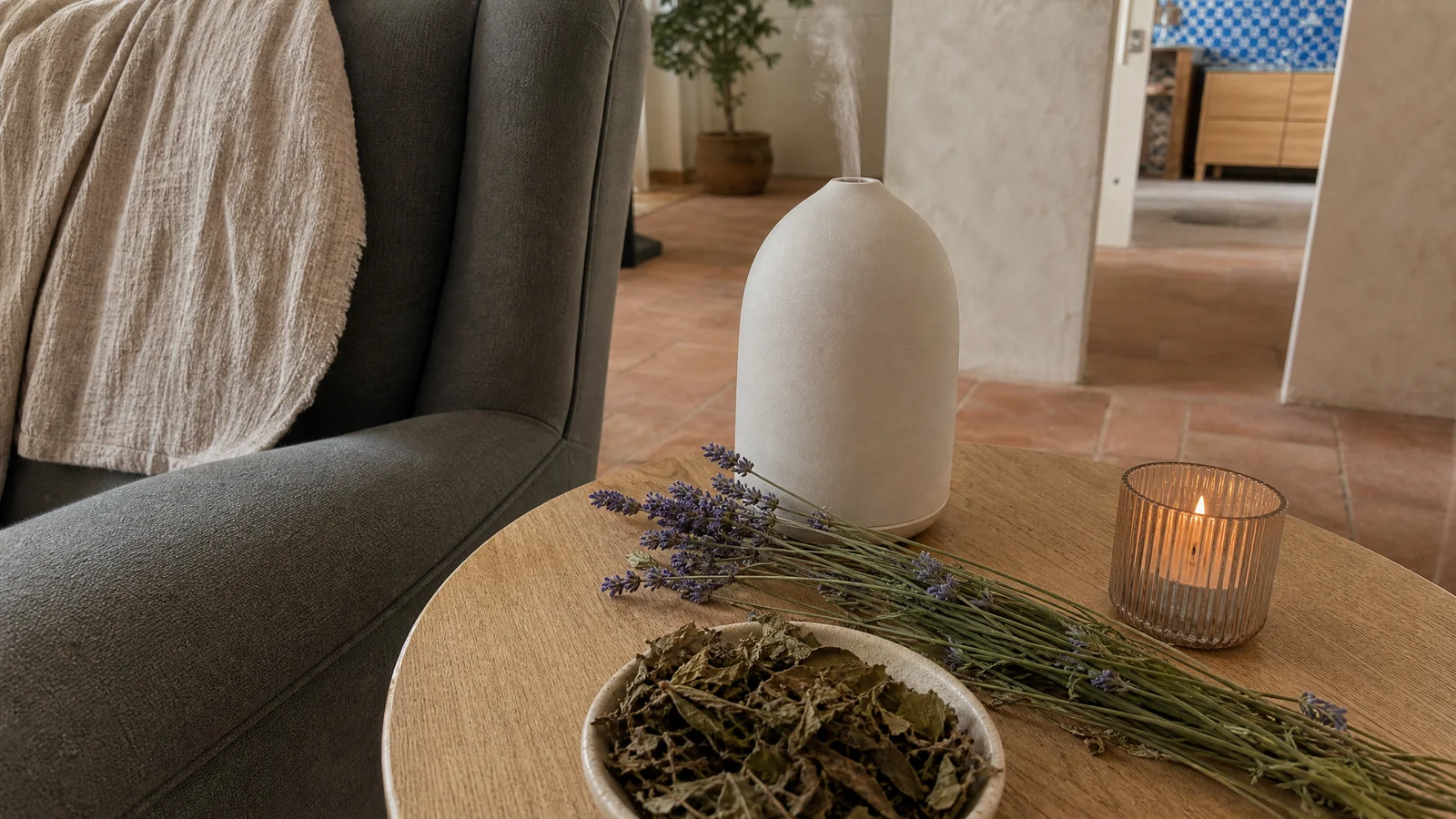
Patchouli and Lavender Body Oil: A Recipe in Drops
Lavender is green, floral and bright. Patchouli is dark, earthy and slow. Put them together and each one fills in what the other lacks: the lavender lifts the patchouli out of the soil, and the patchouli gives the lavender a deep place to rest. Tisserand lists lavender among patchouli's blend partners, and the pairing is easy to build once you know one rule about the maths.
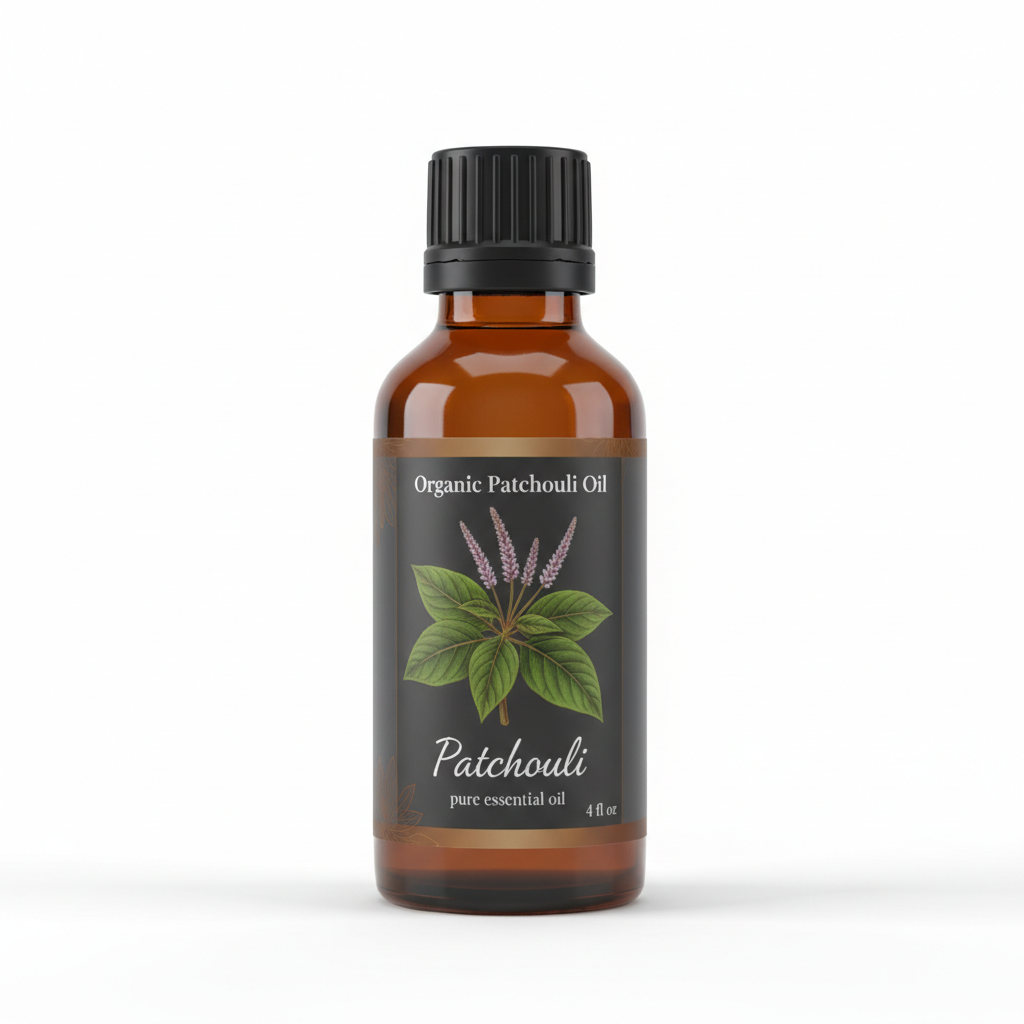
Patchouli Essential Oil
Our own Patchouli Essential Oil, in sizes from 0.5 oz to bulk.
From $20.99
Shop Now →Count both oils together
The Tisserand Institute's dilution guidelines give 0.2% to 1% for sensitive or impaired skin, 0.5% to 1.2% for facial cosmetics and deodorants, 1% to 3% for body oils and lotions, and 2% to 4% for bath and wash-off products (Dilution for essential oils). The page has no separate rule for blends, so we apply the percentage to the total of all essential oils in the bottle, not to each oil separately. Our own dilution guidance for patchouli is 0.5% to 2% in a carrier oil with a patch test first, and for a blend we start near the low end.
That matters because the published per-oil figures are given one oil at a time. Tisserand's pages for both patchouli and lavender say up to 5 drops per 10 ml of blending oil for massage and 2 drops per 10 ml for a facial blend (Organic Patchouli Essential Oil | Tisserand Aromatherapy; Organic Lavender Essential Oil | Tisserand Aromatherapy). Use both at full strength and the skin sees the sum. So pick the total first, then split it.
The body oil in drops
Take a 30 ml bottle of carrier oil (an ounce is 29.57 ml). At the usual rule of thumb of about 20 drops to a milliliter, which varies with the dropper, 1% of 30 ml works out to about 6 drops of essential oil in total. A milligram scale is more precise if you have one.
| Total essential oil | Drops in 30 ml | Split, 1 patchouli : 2 lavender |
|---|---|---|
| 0.5% | about 3 | 1 patchouli, 2 lavender |
| 1% | about 6 | 2 patchouli, 4 lavender |
| 2% | about 12 | 4 patchouli, 8 lavender |
Our recommendation is the middle row. It sits inside the Tisserand ranges for sensitive skin, facial products and body oils, so you can use the same bottle across the board. The 2% row is for body use only, since it is above the facial range. This is a formulation worked out from the guidance and arithmetic above.
Why one part patchouli to two of lavender? Patchouli is a base note and a natural fixative, so a small share goes a long way. Start with the smaller share and move it up in a second bottle if you want more earth. The carrier is the other half of the decision, and our carrier oil comparison walks through jojoba, almond and coconut. Patch test first, as our patch test article explains.
What the blend smells like
Leave the finished bottle for a day before you judge it, because the oils need time to get acquainted. When you open it, you will probably notice the lavender first, bright and green, and then the patchouli arriving underneath, dark and woody, with that damp forest floor character. If you want the blend earthier, make your next bottle with a slightly larger patchouli share. If it feels too heavy, nudge the lavender up. Writing the split on the label turns each bottle into a small experiment you can learn from.
A diffuser version
Tisserand suggests 6 to 8 drops of either oil in a diffuser. Treating that as a ceiling for the whole blend, 2 patchouli and 4 lavender comes to 6 drops. For evening use with the windows shut, short sessions and a cracked window are kinder to the room, and our autumn blends article covers why.
Making and keeping it
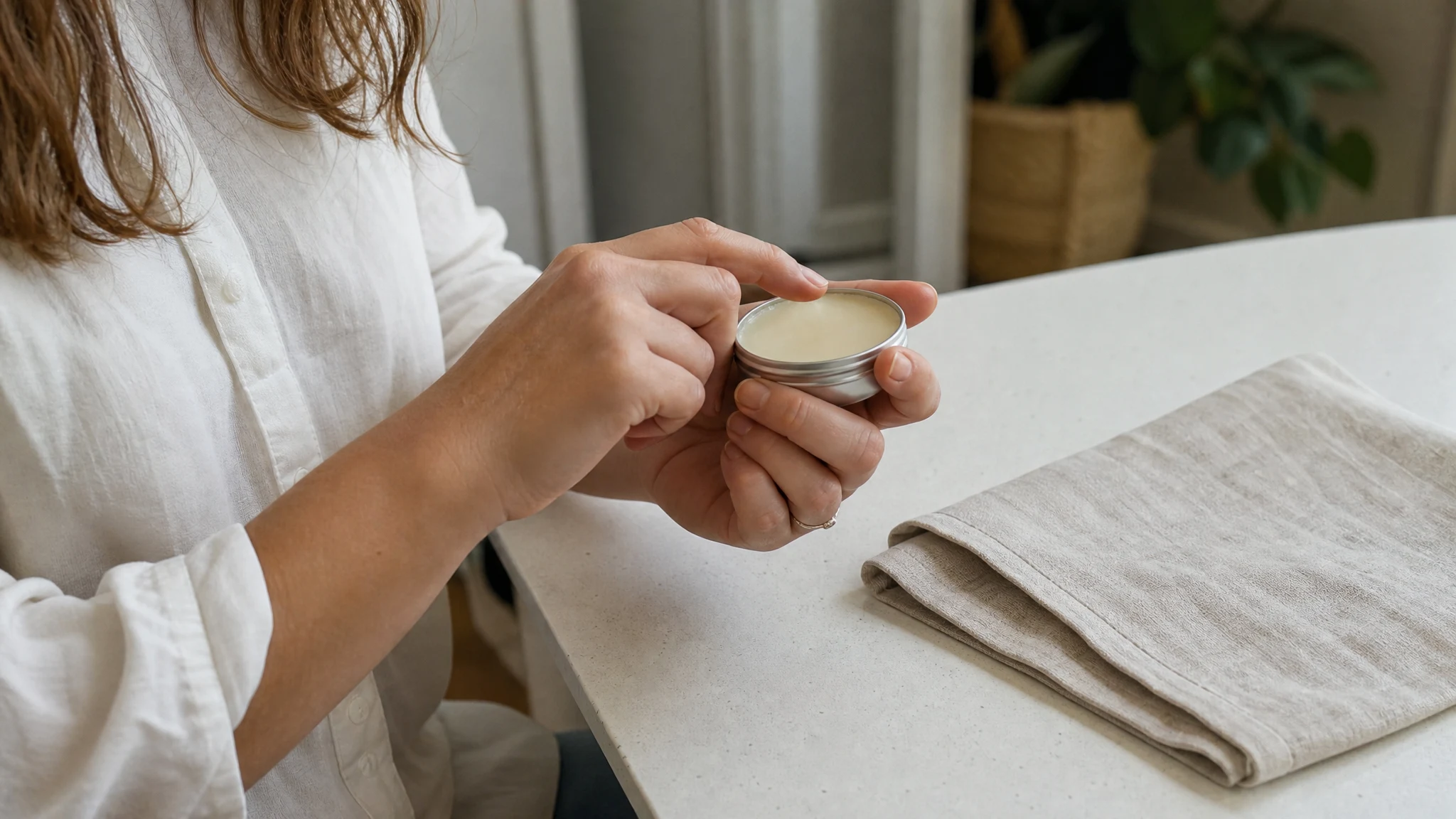
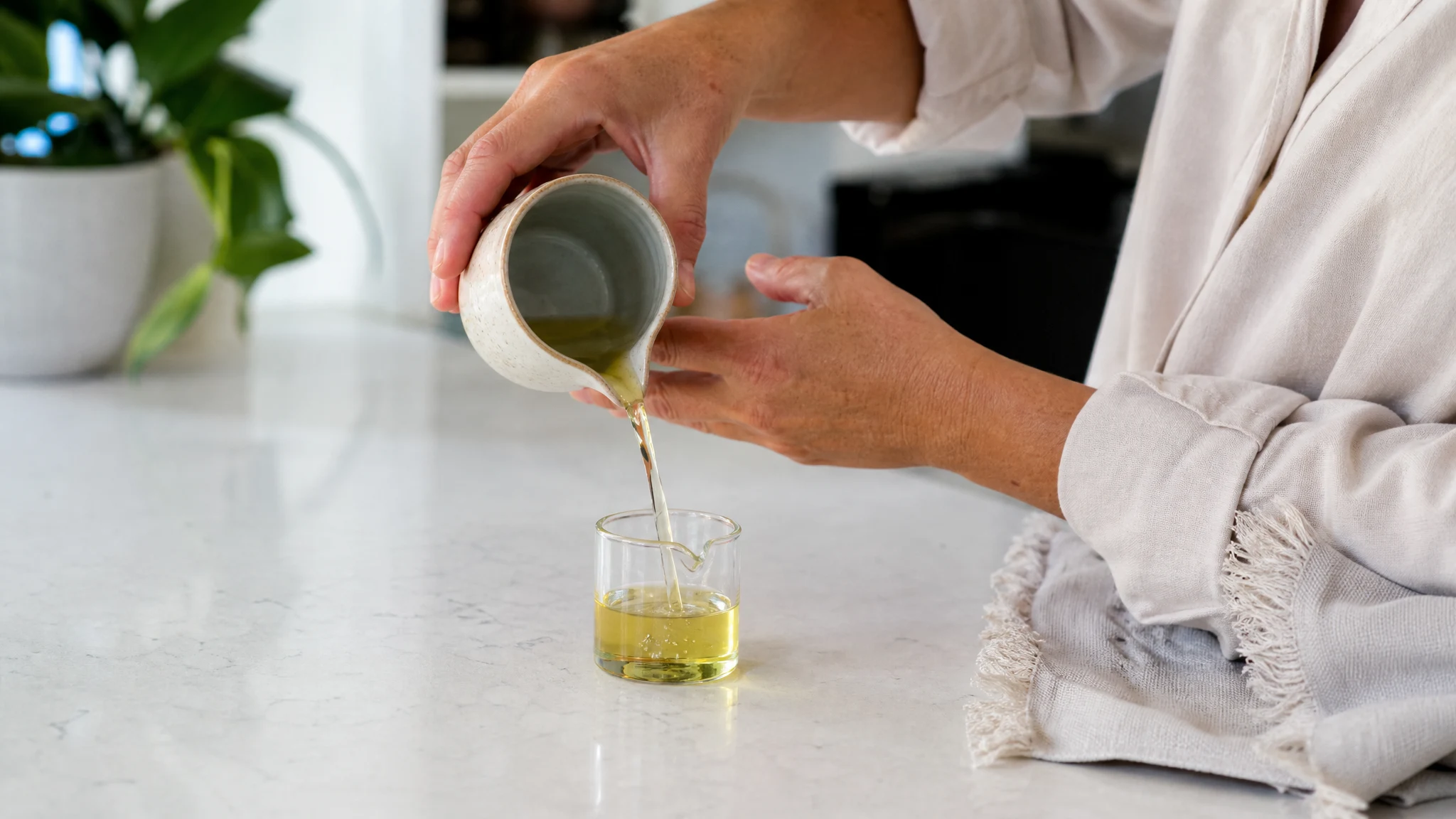
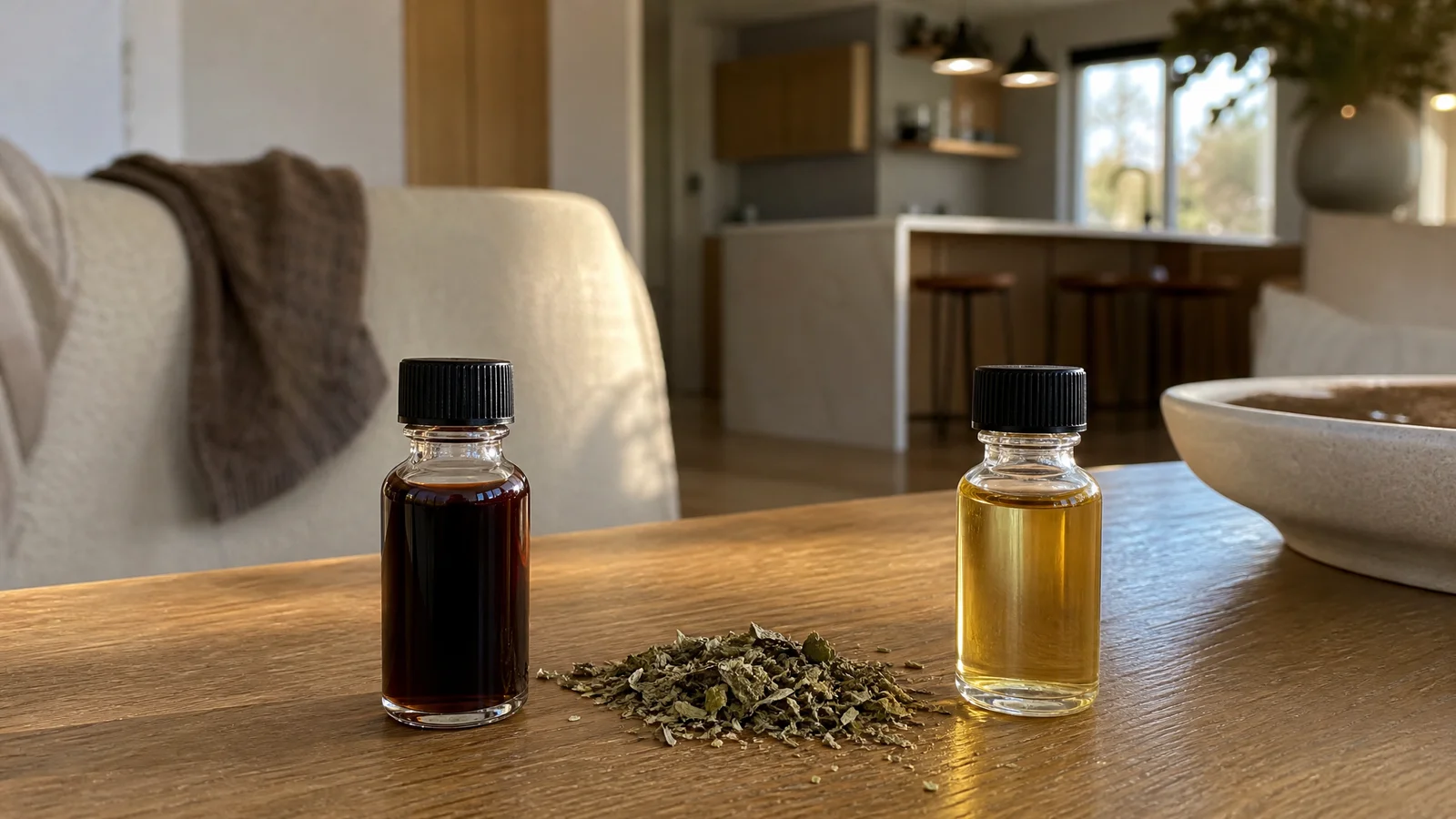
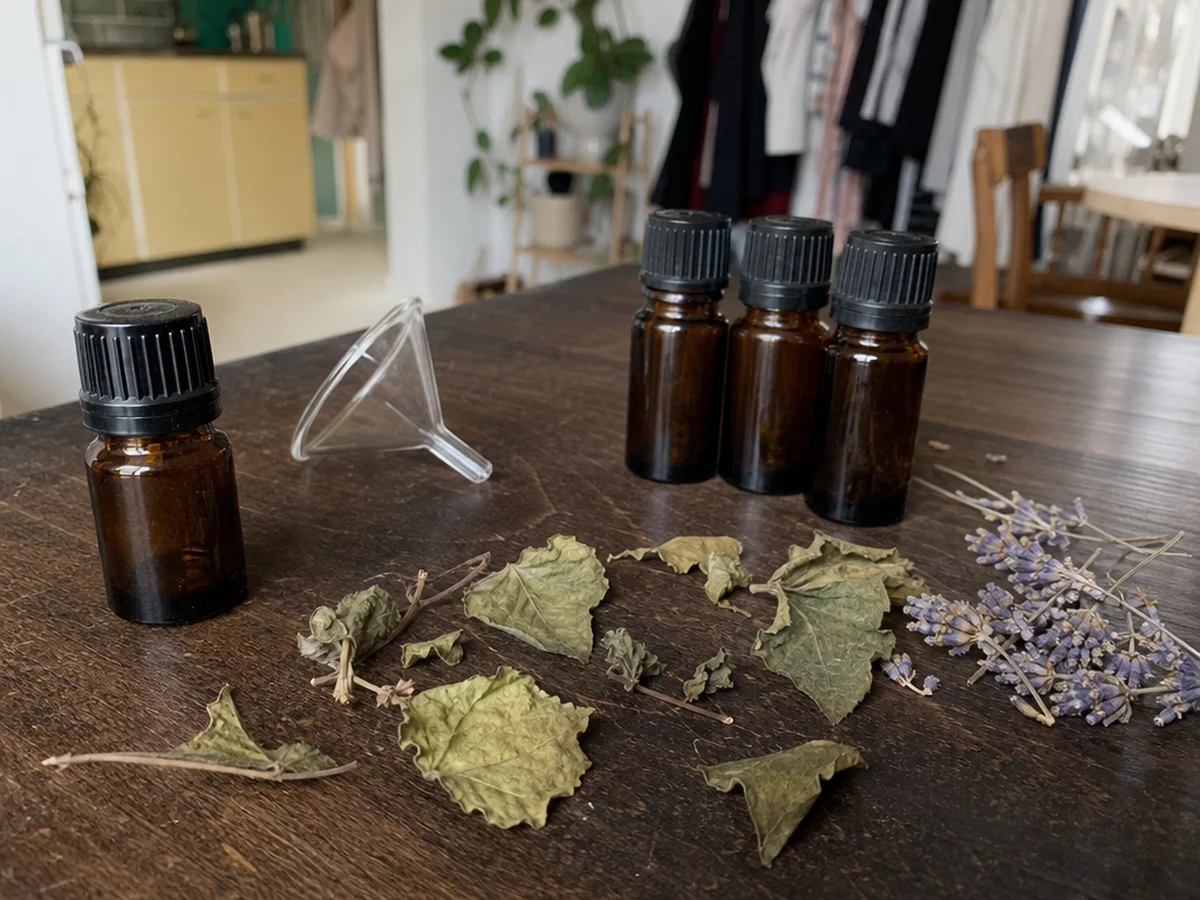
Measure the carrier into a clean amber glass bottle first, add the essential oils, cap it and turn the bottle end over end for a minute. Label it with the date, the total percentage and the name of each oil. Both Tisserand pages say to keep the oils in a cool, dry place and use them within 12 months of opening, and we would apply the same to the finished blend. Patchouli stains light surfaces and does not wash easily out of pale cloth, so a dab on your hand is plenty.
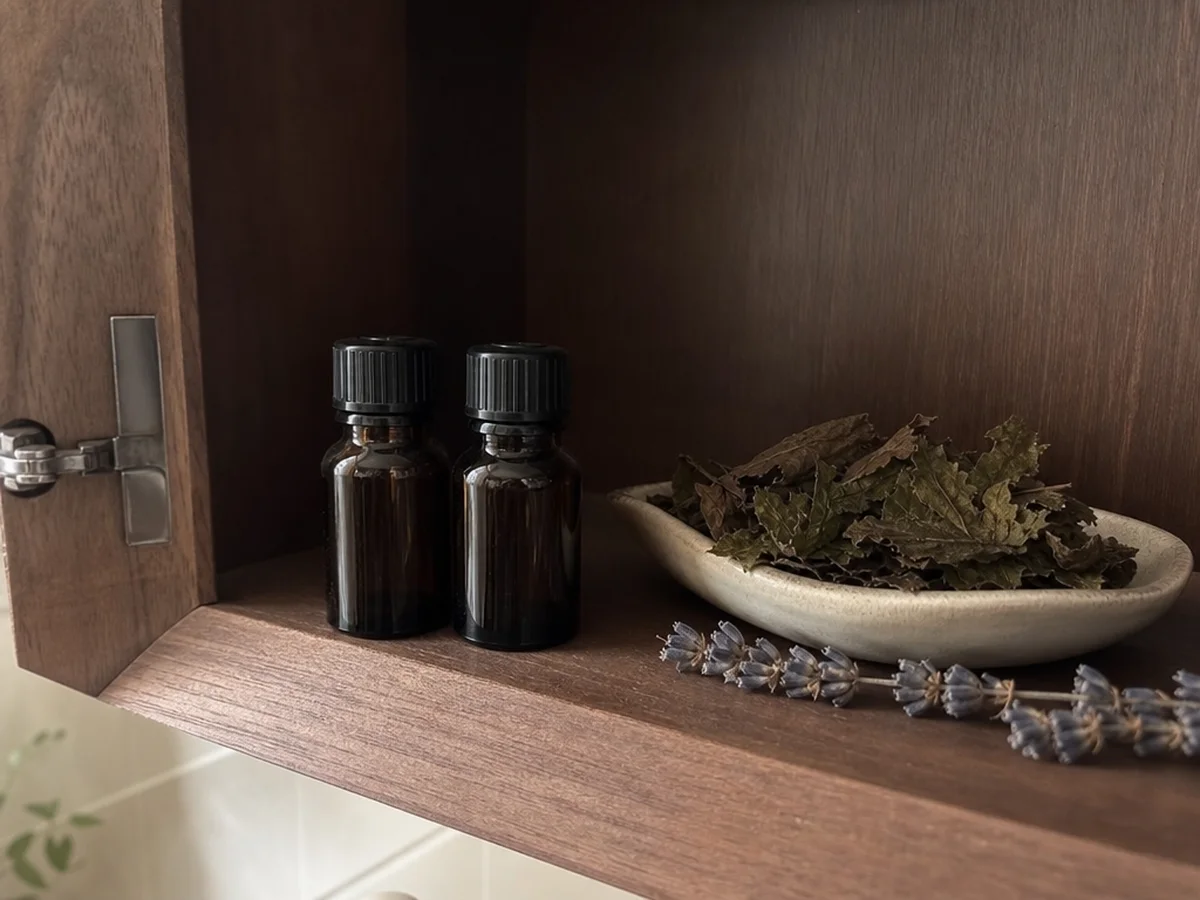
We sell the patchouli. The lavender, carrier oil and bottle come from an aromatherapy supplier, a grocery or craft store and a container supplier, and it is worth choosing a lavender whose label shows the botanical name.
It is a nice gift to make for an adult friend, if you label it clearly with the date and the total percentage, and mention that it is not for children. A little brown glass bottle with a handwritten tag looks good on any shelf.
A word on children
This is a blend for adults. Tisserand says not to use either oil on children under 3. A 2007 report in the New England Journal of Medicine described three boys who developed breast enlargement during repeated skin use of products containing lavender and tea tree oils, which resolved after the products were stopped, and lab tests found hormone-like activity in both oils (Prepubertal gynecomastia linked to lavender and tea tree oils.). Three cases cannot give a rate, and tea tree was involved too, but it is enough reason to leave this blend off children and ask a pediatrician.
Two oils, six drops and a little patience is all a good evening body oil needs.
Patchouli Essential Oil
Patchouli Essential Oil from our own shop, in sizes from 0.5 oz to bulk.
From $20.99
Shop Now →Sources & Further Reading
- Dilution for essential oils, Tisserand Institute
- Organic Patchouli Essential Oil | Tisserand Aromatherapy
- Organic Lavender Essential Oil | 100% Pure | Tisserand Aromatherapy
- Prepubertal gynecomastia linked to lavender and tea tree oils. New England Journal of Medicine, 2007