Organic Patchouli Oil: What the Certificate Tells You
Put "organic" on a patchouli bottle and it sounds like the whole story. It is a real and useful word, but it answers one question: how was the plant grown and handled? It does not answer how the oil smells, whether it has been stretched, or how it was distilled. Knowing which question the certificate answers makes it much easier to decide whether it matters for what you are doing.
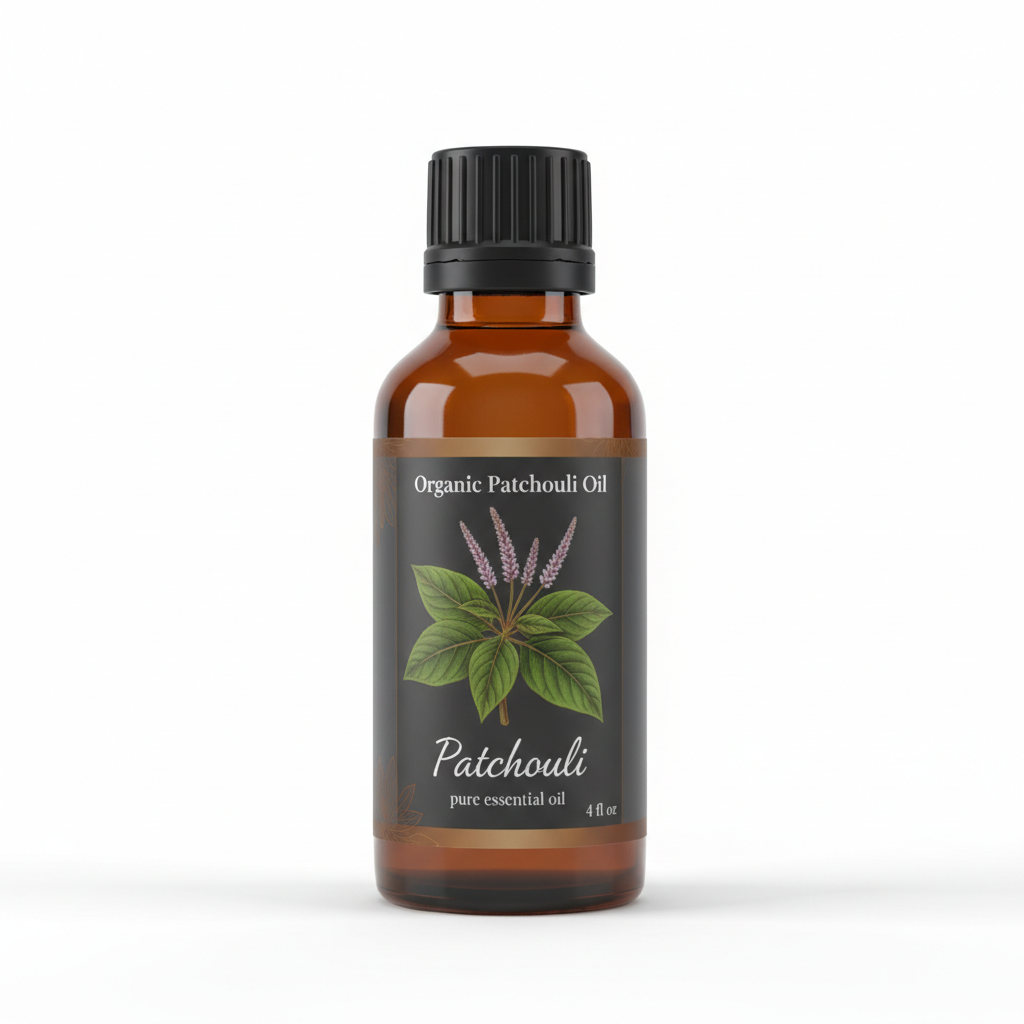
Patchouli Essential Oil
Our own Patchouli Essential Oil, in sizes from 0.5 oz to bulk.
From $20.99
Shop Now →What a certificate actually records
The US federal rules define organic production as a system managed in accordance with the national organic regulations, and they tie it to a written plan agreed between an operation and its certifying agent (7 CFR 205.2 - Terms defined., e-CFR). A certificate therefore belongs to a particular operation, covers a defined scope and names a certifier. That makes it a document you can ask for and check, which is its great strength. The definitions in that section also refer to agricultural products marketed for human or livestock consumption, so how the federal label applies to an oil sold for aroma and skin use is a question for the seller to answer in writing, rather than something to assume.
The USDA publishes a search tool, the Organic Integrity Database, where certified operations can be looked up. If a seller gives you a certifier name and certificate number, that is where you confirm them.
What shapes the oil in the bottle
Here the certificate is silent, and the plant literature fills in the picture. A review of Pogostemon cablin describes two chemotypes, so the variety matters, and reports leaf oil yields from one Chinese harvest of 0.8%, 0.7% and 0.6% across June, July and August, with the most patchouli alcohol in June (A Comprehensive Review on the Phytochemical Constituents and Pharmacological Activities of Pogostemon cablin Benth.: An Aromatic Medicinal Plant of Industrial Importance, Molecules, 2015). The review does not address organic cultivation, so it cannot tell us whether farming system moves any of those numbers.
The handling steps matter at least as much. PROSEA describes shade drying, a light fermentation that has to be judged (over-fermented leaf gives a mouldy note, under-fermented leaf gives less oil), long distillation of a packed charge, and a rest after distillation during which the oil improves (Pogostemon (PROSEA), Pl@ntUse). None of that is an organic or conventional variable. A certified farm can send leaf to a still that makes an ordinary oil, and a conventional one can supply a very good still. So the honest answer to "is organic patchouli better?" is that we have not seen a head-to-head comparison measuring aroma or composition, and the sources we read do not claim one.
It helps to decide up front which question you are trying to answer. If you are asking how the crop was grown, the certificate is the document. If you are asking what the oil smells like or whether it has been stretched, look elsewhere. Matching the question to the document saves a lot of confusion.
When the certificate is the right document
- You care how the crop was grown. Fewer farm inputs and the soil they touch are exactly what organic standards address. Our post on sustainable patchouli looks at the other questions around the crop.
- You will make an organic claim of your own. If you sell a finished product, your ingredient supplier has to be able to give you the paperwork. Ask for the certifier, the certificate number and the scope.
- It is simply your preference. That is a perfectly good reason, as long as you have seen the document.
Reading the paperwork like a shopper
When a seller sends you an organic certificate, a few plain checks go a long way:
- Does it name the certifier and give a certificate number?
- Does the scope mention the kind of product you are actually ordering?
- Is the certificate current, and does the name on it match the seller or the producer you were told about?
None of these needs expert knowledge, only a calm read and a minute or two with the database. We think a seller who sends the paperwork cheerfully is a seller worth keeping, and one who goes quiet when asked is giving you an answer of its own.
When another document does the job
If your worry is authenticity, a certificate will not settle it, because PROSEA notes that oils from other plants are sold as patchouli and that extenders such as benzyl benzoate and propylene glycol turn up. A batch GC-MS report is the tool for that, and our GC-MS guide explains how to read one. If your worry is skin, the EFSA panel's 2025 opinion on the patchouli oil it assessed describes it as an irritant to skin and eyes and a dermal and respiratory sensitiser (Safety and efficacy of a feed additive consisting of an essential oil derived from the leaves of Pogostemon cablin Benth. (patchouli oil) for use in all animal species (FEFANA asbl), EFSA FEEDAP Panel, 2025). That applies regardless of how the leaf was grown, so dilution and a patch test are the sensible habits for any patchouli oil. See our label decoder for how organic wording is used on essential oil labels.
Our oil is sold as an organic patchouli oil and we describe the leaf as organically grown. If your product depends on documented organic status, ask us in writing through the contact page for the certifier name, certificate number and scope, and look them up in the database yourself. That is the same routine we would suggest for any supplier, and it takes about five minutes.
Patchouli Essential Oil
Patchouli Essential Oil from our own shop, in sizes from 0.5 oz to bulk.
From $20.99
Shop Now →Sources & Further Reading
- 7 CFR 205.2 - Terms defined., Legal Information Institute
- Organic Integrity Database, USDA Agricultural Marketing Service
- A Comprehensive Review on the Phytochemical Constituents and Pharmacological Activities of Pogostemon cablin Benth.: An Aromatic Medicinal Plant of Industrial Importance, Molecules, 2015
- Pogostemon (PROSEA), Pl@ntUse
- Safety and efficacy of a feed additive consisting of an essential oil derived from the leaves of Pogostemon cablin Benth. (patchouli oil) for use in all animal species (FEFANA asbl), EFSA FEEDAP Panel, 2025