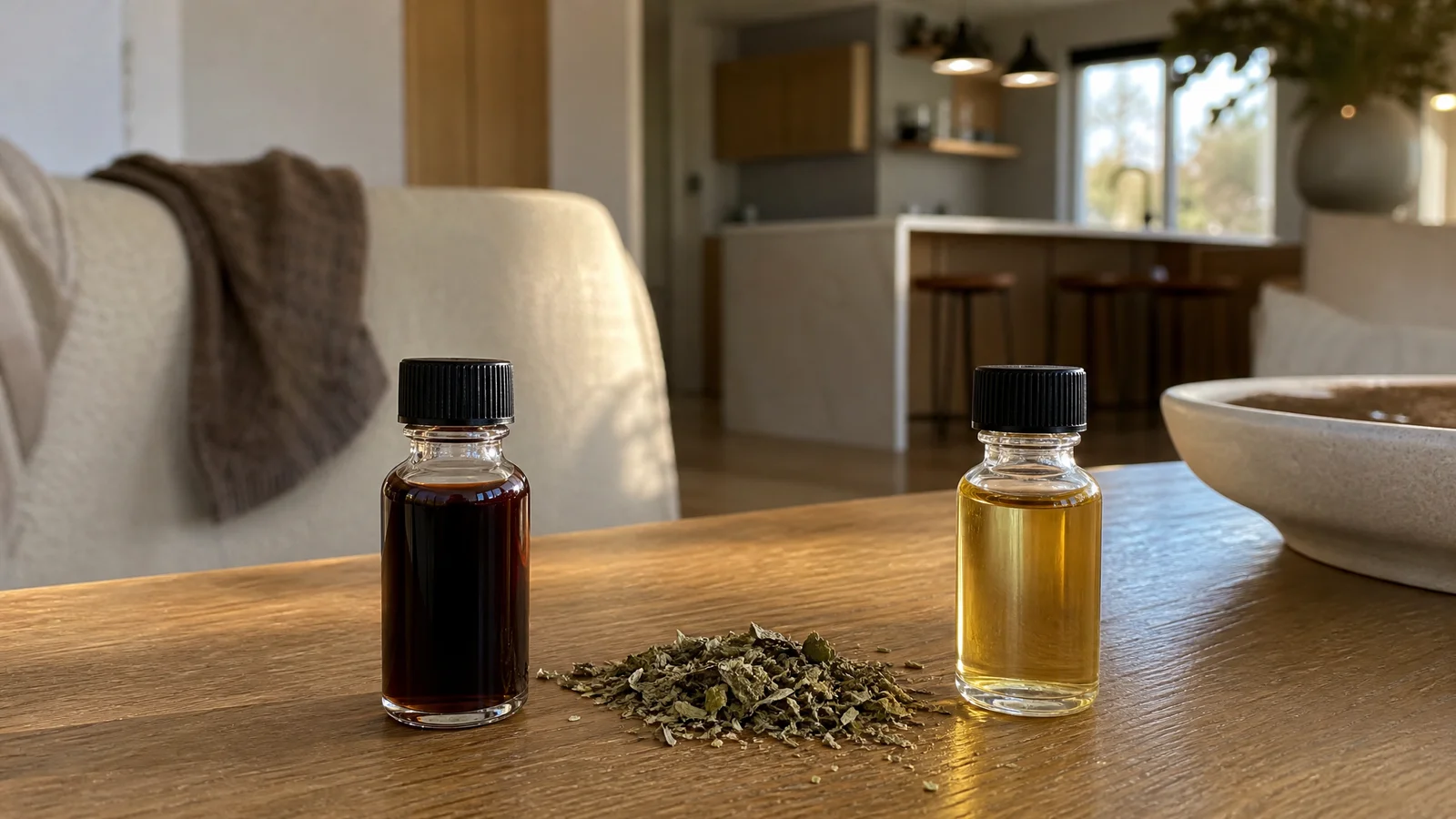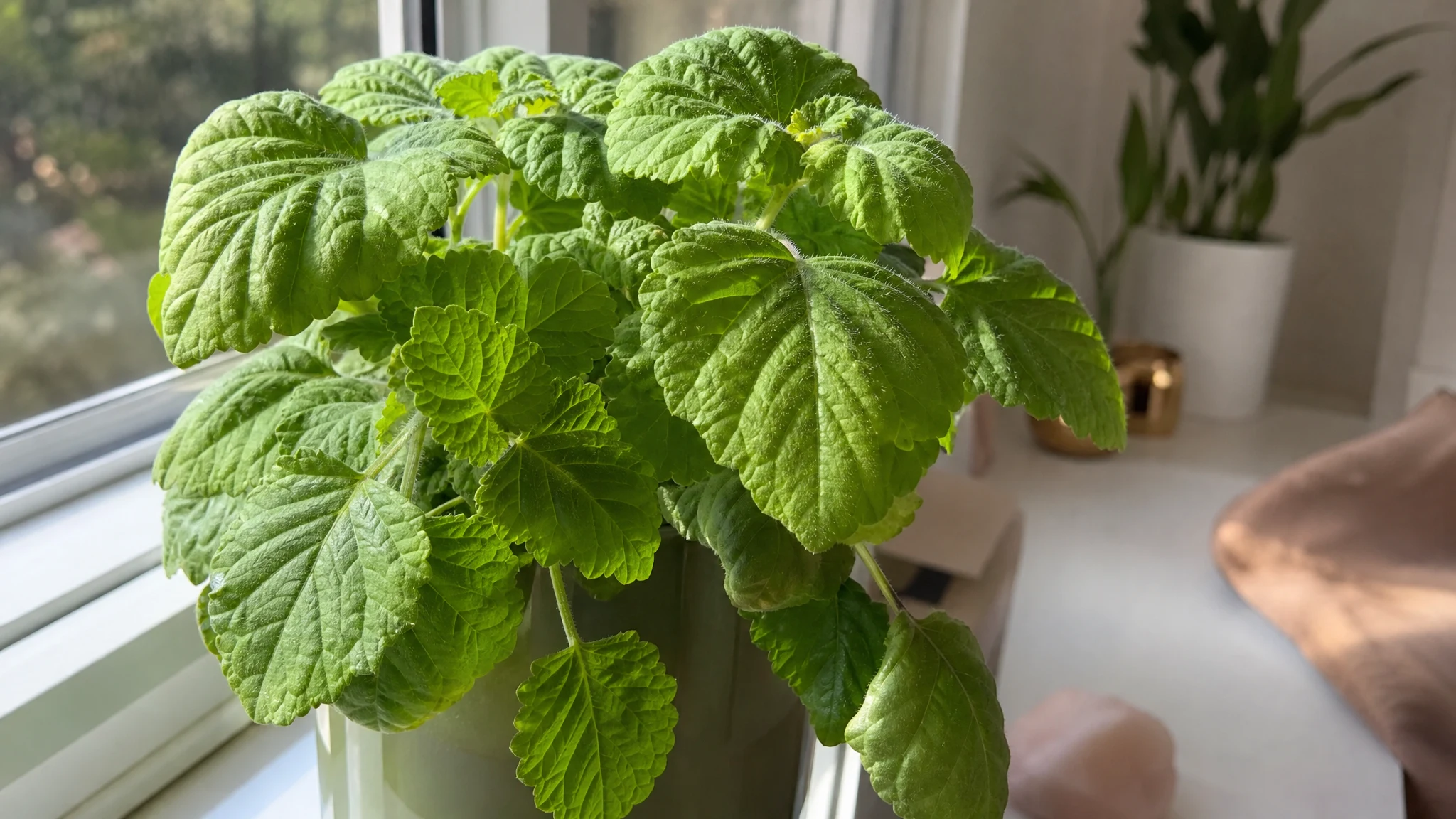
How to Use Patchouli Oil Without Overdoing It
The easiest way to go wrong with patchouli oil is to use too much of it. It is a heavy base note, and one drop too many lingers on skin and cloth for days. It will also stain a light surface and does not wash out of pale fabric easily. Good news is that a small amount does a great deal, so the whole art is learning to start low.
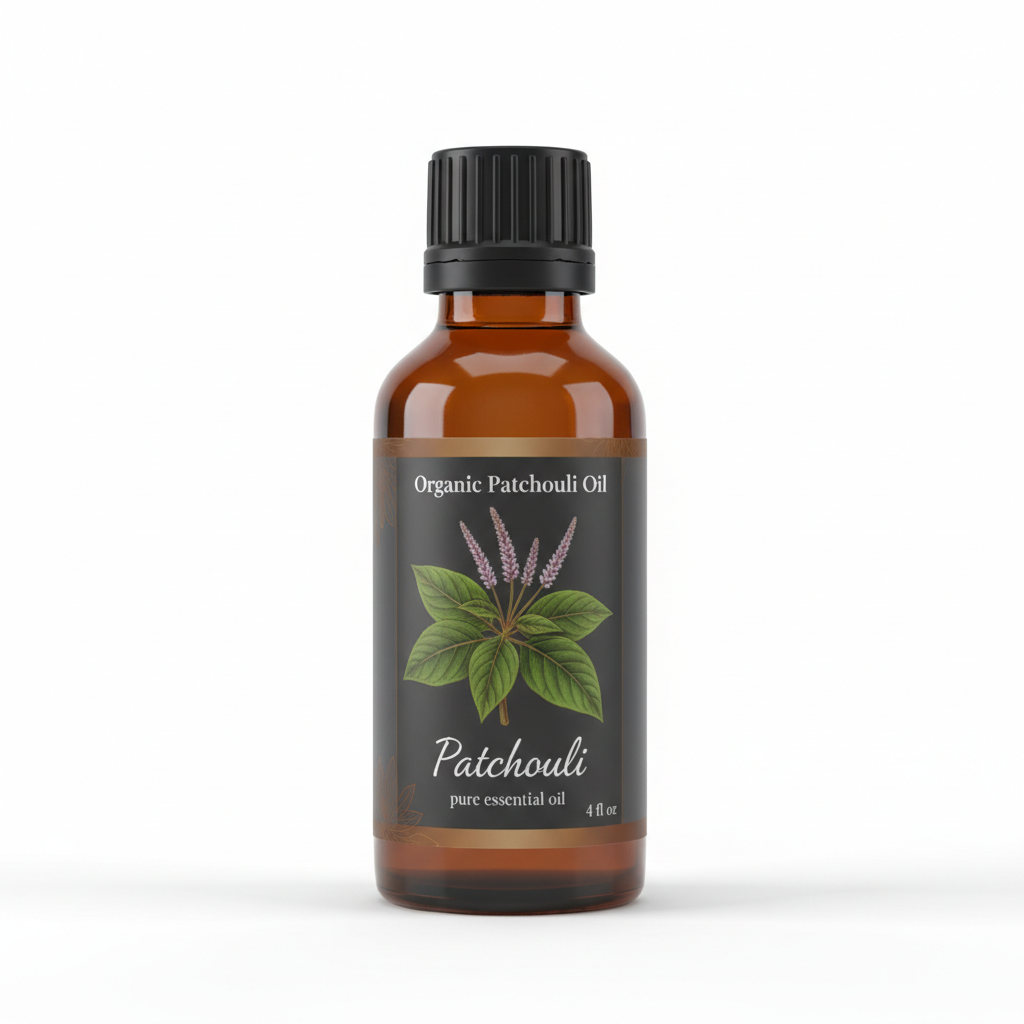
Patchouli Essential Oil
Our own Patchouli Essential Oil, in sizes from 0.5 oz to bulk.
From $20.99
Shop Now →Work out the dose first
We sell the oil neat, so the dilution is yours to work out. Our guidance for skin is to dilute to 0.5% to 2% in a carrier oil, patch test first, keep it away from eyes, children and pets, and never take it internally. The Tisserand Institute's general guidelines run from 0.2% to 1% for sensitive skin up to 1% to 3% for body oils and lotions (Dilution for essential oils, Tisserand Institute). We could not find a published maximum for patchouli on its own, and the EFSA panel considers the oil it assessed an irritant to skin and eyes and a dermal and respiratory sensitiser (Safety and efficacy of a feed additive consisting of an essential oil derived from the leaves of Pogostemon cablin Benth. (patchouli oil) for use in all animal species (FEFANA asbl), EFSA FEEDAP Panel, 2025), so we begin at 0.5% for anything that stays on skin and treat 2% as a ceiling, not a target.
The arithmetic, at a rough 20 drops per ml (droppers vary): 0.5% of 1 oz (29.57 ml) of carrier is about 0.15 ml, roughly 3 drops; 1% is about 6 drops; 2% is about 12. Our dilution chart has the whole table. These are suggestions from arithmetic, not a prescription.
Start with the smell test
Before you put patchouli in anything, open the bottle and smell it on a paper blotter. Come back after a few minutes and again later in the day. You'll notice that it keeps changing, starting earthy and a little rough, then settling into something deeper and sweeter. Knowing how it behaves on its own makes it much easier to judge how much a blend can take.

In a diffuser or on a cloth
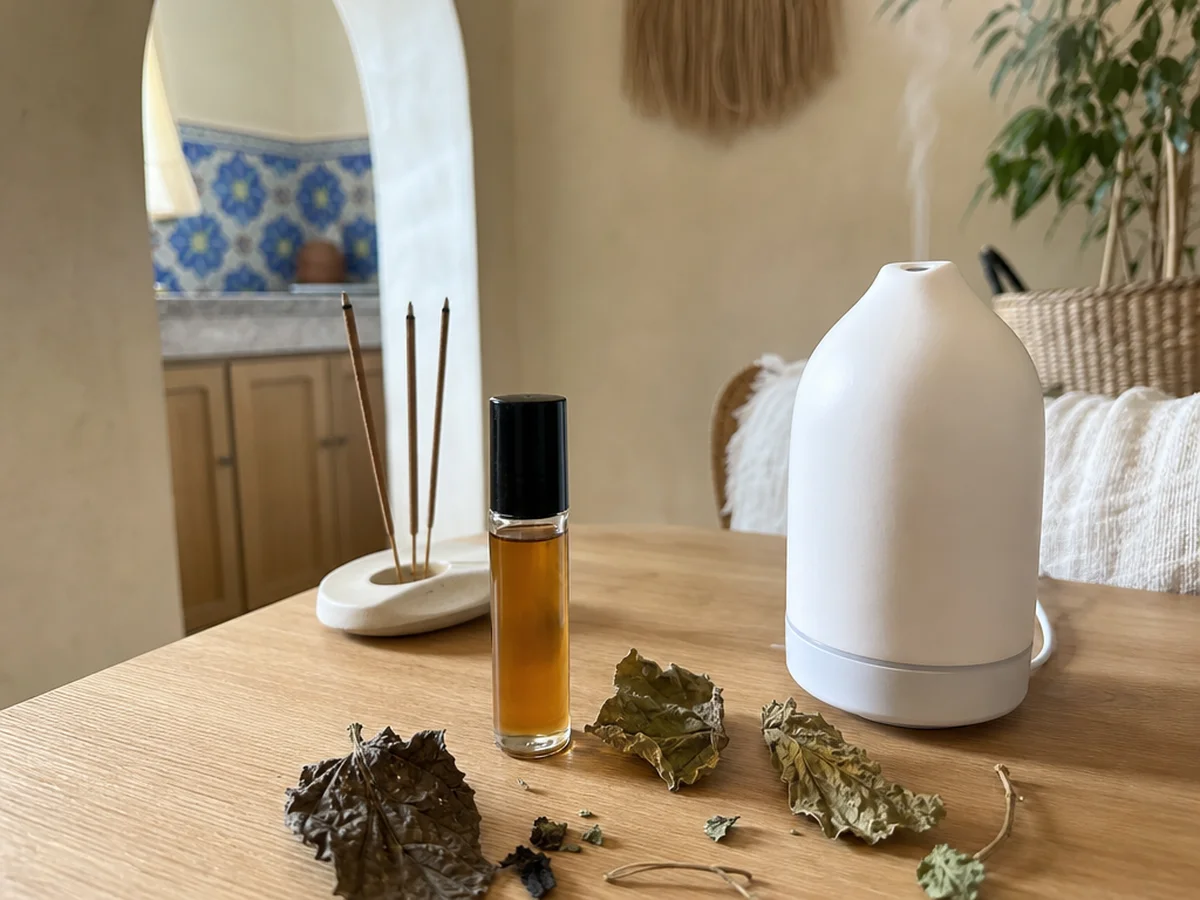
This is the most forgiving use. Patchouli is a good base for a diffuser blend because it anchors lighter oils, and PROSEA notes it is used almost universally as a fixative in perfumery, mostly in very small doses (Pogostemon (PROSEA), Pl@ntUse). Start with just a few drops, fewer than another brand's suggestion if in doubt, and pair it with a lighter oil from a craft or supply shop. Keep the bottle and any diffuser liquid well out of reach of children and pets: Poison Control advises locking essential oils away (Essential oils: Poisonous when misused, Poison Control). Our post on aromatherapy research covers what has been measured about breathing it in.
On skin
Diluted massage oil is one of the uses we have in mind for patchouli, and carrier oil is the key ingredient. Pick a carrier you like from a grocery or craft shop (our carrier oil comparison helps), do a patch test, and keep it off broken skin. Poison Control advises stopping and washing with soap and water if a rash appears. If your skin is dry, reactive or eczema-prone, or you are pregnant or nursing, speak to your physician or dermatologist first. Our post on patch testing explains what a home test can miss. For a hair or beard oil, we suggest a drop or two.
In perfume
Here patchouli is at home. A review of the plant describes a powerful sweet, herbaceous, spicy fragrance and notes that the oil's fixative properties help it hold a blend together (A Comprehensive Review on the Phytochemical Constituents and Pharmacological Activities of Pogostemon cablin Benth.: An Aromatic Medicinal Plant of Industrial Importance, Molecules, 2015). We describe it as a base note and natural fixative that blends well with rose, geranium, bergamot, sandalwood and cedarwood. Build with patchouli at the low end and judge the blend after a day, not at the first sniff, because it deepens and rounds out as it settles. Our guide to building a perfume at home goes through it step by step.
In soap
A review of the plant lists soaps among the common uses of the oil (A Comprehensive Review on the Phytochemical Constituents and Pharmacological Activities of Pogostemon cablin Benth.: An Aromatic Medicinal Plant of Industrial Importance, Molecules, 2015), and cold-process soap is one of the uses we have in mind. It is dark, so expect a little tan or amber in a light bar and make a small batch first. A bar is a rinse-off product, so the amount that suits it is not the same as a leave-on dose; check the usage guidance for your own recipe before you scale up.
A note on patience
The most common mistake is adding a little more because you cannot smell it yet. Patchouli is slow to bloom, and your nose gets used to it quickly. We suggest making your blend, walking away for an hour or a day, and then coming back to judge. If it still seems quiet, add a single drop and wait again. It is a lot easier to add than to take out.
A notebook helps here: jot down how many drops went into what, and what you thought the next day. In a few batches you will have your own favorite proportions.
Whatever you make, store the bottle cool, dark and tightly closed. Patchouli improves as it rests, and a good bottle will reward the patience.
Patchouli Essential Oil
Patchouli Essential Oil from our own shop, in sizes from 0.5 oz to bulk.
From $20.99
Shop Now →Sources & Further Reading
- Dilution for essential oils, Tisserand Institute
- Safety and efficacy of a feed additive consisting of an essential oil derived from the leaves of Pogostemon cablin Benth. (patchouli oil) for use in all animal species (FEFANA asbl), EFSA FEEDAP Panel, 2025
- Pogostemon (PROSEA), Pl@ntUse
- Essential oils: Poisonous when misused, Poison Control
- A Comprehensive Review on the Phytochemical Constituents and Pharmacological Activities of Pogostemon cablin Benth.: An Aromatic Medicinal Plant of Industrial Importance, Molecules, 2015