Patchouli Aromatherapy: Scent, Memory and the Research
Open a bottle of patchouli and the smell does not introduce itself politely. It arrives as deep, earthy and wine-like, with a hint of damp forest floor and aged wood, and it tends to stay in the memory long after the cap is back on. That staying power is the most reliable thing science can tell us about a scent like this one, and it is a better story than any promise about what an oil does to your body.
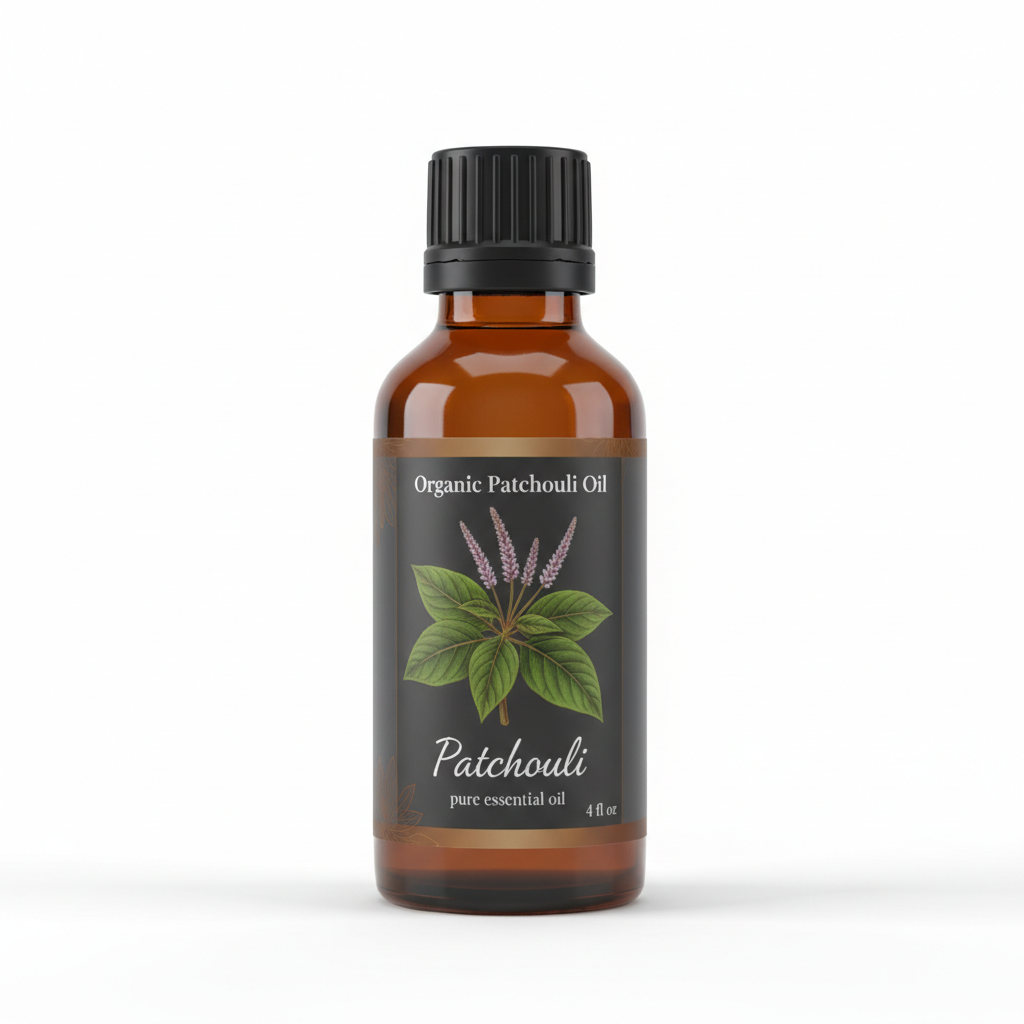
Patchouli Essential Oil
Our own Patchouli Essential Oil, in sizes from 0.5 oz to bulk.
From $20.99
Shop Now →Why a smell sticks to a moment
Smell takes a shorter route into the brain than sight or sound. A review of the olfactory system describes how odors reach regions that also handle emotion and memory, which is why a scent can pull a feeling back before you have worked out what it is (Soudry and colleagues, 2011). Experiments on memory point the same way: people asked to recall events from their own lives gave more detailed accounts when the cue was an odor than when it was a word (Chu and Downes, 2002).
What that means in practice is simple, and it is our own reasoning rather than a finding about patchouli. A scent you use in the same way again and again, in the same corner or the same part of the evening, becomes attached to it. Patchouli is unusually good at this because it is so distinctive. Nobody confuses it with anything else.
The patchouli result people quote
If you have read that patchouli is calming, the claim very likely traces to one Japanese study. Healthy adults inhaled a range of essential oils, and the researchers tracked a marker of relative sympathetic nervous activity (the low-frequency swing in systolic blood pressure) against an odorless solvent. Pepper, estragon, fennel and grapefruit oils pushed the marker up by one and a half to two and a half times. Rose and patchouli oils brought it down by about 40% (Haze, Sakai and Gozu, 2002).
It is a lovely detail and it deserves to be read for what it is. The measurement was physiological, taken in healthy adults, and the authors' own conclusion was careful: inhaled oils may modulate sympathetic activity. The study did not ask anyone how they felt, so it tells us what a body measurement did, and not that anyone felt calmer. We mention it because it is genuinely interesting, and we leave it there.
The wider picture
A systematic review pulled together 76 studies of inhalation aromatherapy involving 6,539 patients. More than 70% reported a positive effect on anxiety compared with a control, but the authors could only summarise the results in words, because the studies differed so much and bias was a concern. They also noted that many reports were vague about the plant species and the dose, and called for standard protocols (Hedigan, Sheridan and Sasse, 2023). That is a hopeful but unfinished picture, and it covers aromatherapy in general rather than patchouli in particular.
One more thing makes scent research hard. Patchouli is so recognisable that a volunteer handed the oil rather than an odorless solvent knows which one they have. When you read a result, it helps to ask what the comparison smelled like.
How we would use it at home
Treat patchouli as the heavy base note it is. In a diffuser blend, a single drop alongside lighter oils is a good place to start, in a room you can air out. A little goes a long way, and one drop too many lingers on skin and cloth for days.
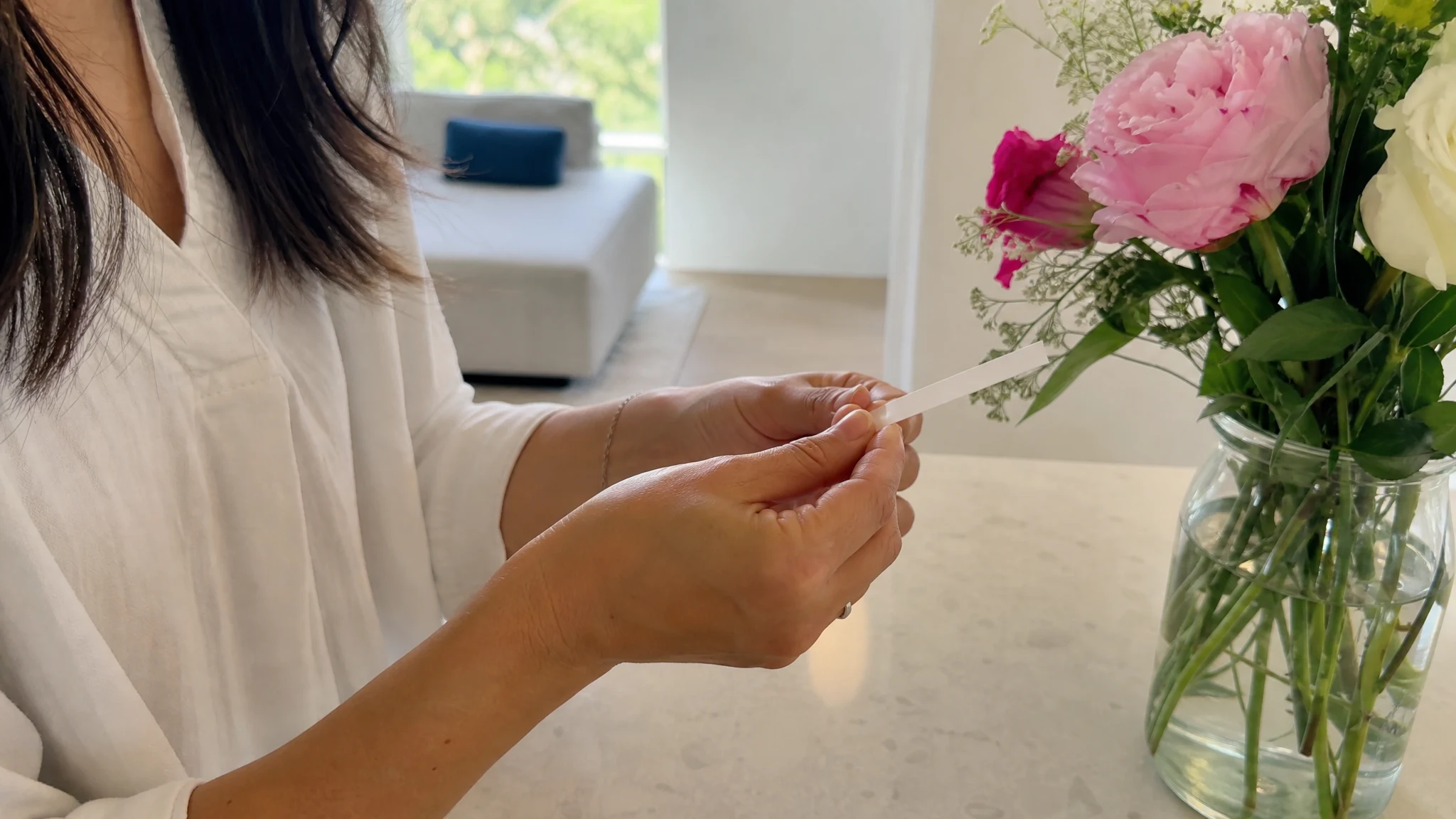
Before you use it in any way, give the bottle an honest smelling. Put a drop on a paper strip, wave it gently and notice the deep, earthy, wine-like opening, then come back after ten minutes and again after an hour. You will probably notice the damp forest floor and aged wood becoming clearer as the first sharpness fades. Knowing where you are in that story helps you decide how much to use, because the same drop smells quite different at minute one and hour two.
On skin, we recommend diluting to 0.5% to 2% in a carrier oil and patch testing first. Because the European Food Safety Authority classes the patchouli oil it assessed as an irritant to skin and eyes and as a skin and respiratory sensitiser (EFSA FEEDAP Panel, 2025), we start at the low end, around 0.5% to 1%, and see how the skin responds. At roughly 20 drops per ml, 1% of an ounce of carrier is about six drops. Our oil is for aromatic and cosmetic use only, never for swallowing, and it belongs away from eyes, children and pets. Our dilution chart does the arithmetic for other bottle sizes.
We sell patchouli as an aroma. The FDA decides whether a product is a cosmetic or a drug by its intended use (FDA, Is It a Cosmetic, a Drug, or Both? (Or Is It Soap?)), so we describe how it smells and stop there. If low mood or anxiety is getting in the way of your days, a doctor is the right person to talk to, and a scent is a pleasant companion to that conversation rather than a stand-in for it.
To explore how the aroma itself is described, our scent profile is a good next stop, and patchouli as a quiet-time cue takes the memory idea further. Pick a routine, keep the scent consistent, and let the association do the work.
Patchouli Essential Oil
Patchouli Essential Oil from our own shop, in sizes from 0.5 oz to bulk.
From $20.99
Shop Now →Sources & Further Reading
- Soudry Y, Lemogne C, Malinvaud D, Consoli SM, Bonfils P, 2011. Olfactory system and emotion: common substrates. Eur Ann Otorhinolaryngol Head Neck Dis. PubMed 21227767
- Chu S, Downes JJ, 2002. Proust nose best: odors are better cues of autobiographical memory. Mem Cognit. PubMed 12184552
- Haze S, Sakai K, Gozu Y, 2002. Effects of fragrance inhalation on sympathetic activity in normal adults. Jpn J Pharmacol. PubMed 12499579
- Hedigan F, Sheridan H, Sasse A, 2023. Benefit of inhalation aromatherapy as a complementary treatment for stress and anxiety in a clinical setting - A systematic review. Complement Ther Clin Pract. PubMed 37031643
- EFSA FEEDAP Panel, 2025. Safety and efficacy of a feed additive consisting of an essential oil derived from the leaves of Pogostemon cablin Benth. (patchouli oil) for use in all animal species (FEFANA asbl). EFSA J. PMC12004087
- FDA. Is It a Cosmetic, a Drug, or Both? (Or Is It Soap?) fda.gov