What Is Patchouli Oil? From Leaf to Bottle
Patchouli oil comes from a leaf, not a flower, and that is half its charm. The plant is a modest, bushy herb about as tall as a person's chest, and yet the oil distilled from its dried leaves has been anchoring perfumes for generations. Here is what it is, how it is made, and why a few drops go so far.
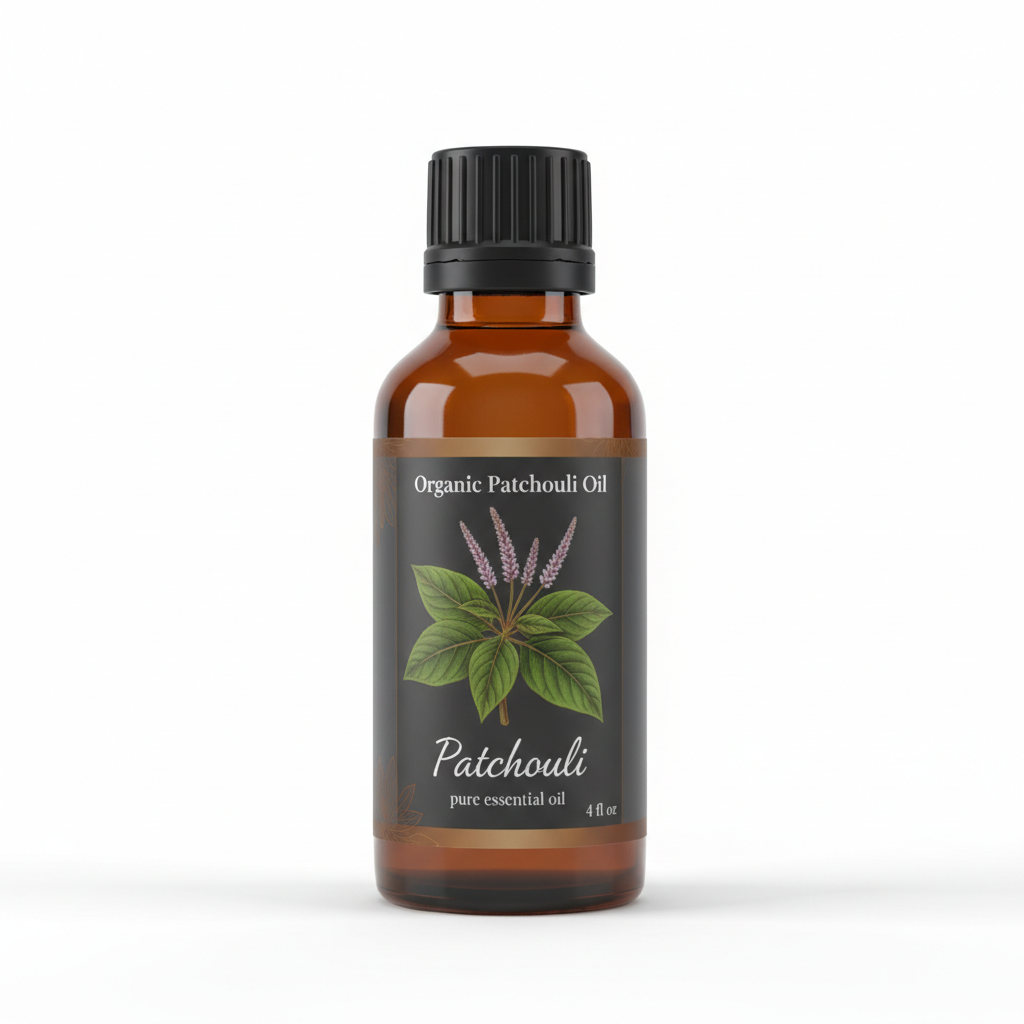
Patchouli Essential Oil
Our own Patchouli Essential Oil, in sizes from 0.5 oz to bulk.
From $20.99
Shop Now →A mint cousin that rarely blooms
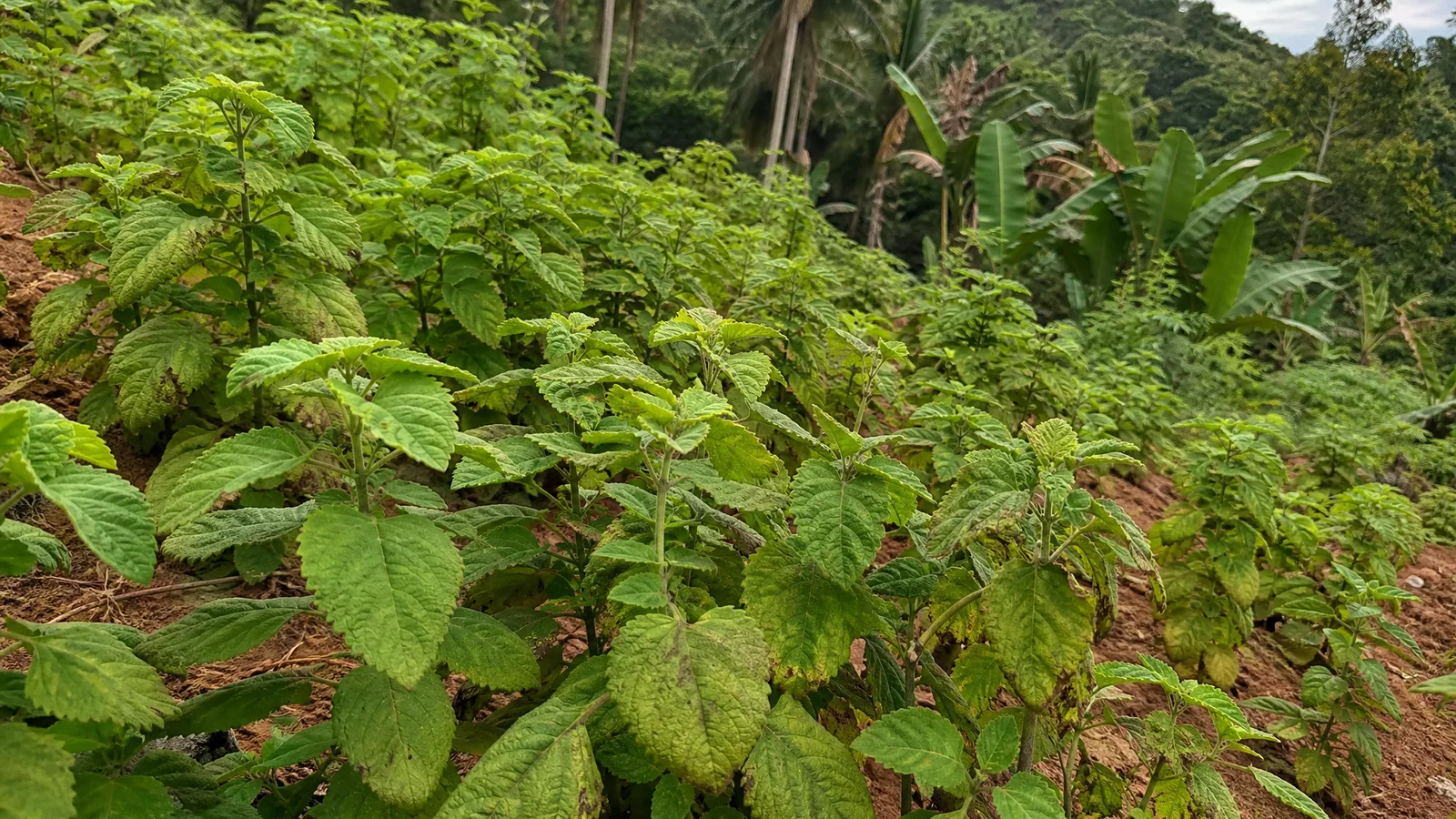
The patchouli plant, Pogostemon cablin, is an erect aromatic herb up to about a metre tall, with ovate leaves 5 to 10 centimetres long. PROSEA, the plant-resources reference, notes that in cultivation it rarely flowers, so growers propagate it from cuttings taken from semi-mature stems instead of seed. The first harvest comes when plants are 6 to 8 months old, and further cuts follow every 3 to 5 months for about three years. The leaves matter most, and PROSEA says the best oil comes from leaves cut in the wet season.
The botanical name is worth looking for on any bottle. PROSEA warns that oils from other plants, such as Chinese patchouli (Microtoena insuavis), have been sold as patchouli oil, and the 2015 review of the plant adds that Pogostemon cablin itself has more than one chemical type. Our oil is a patchouli leaf oil, Pogostemon cablin, and the label says so.
From leaf to bottle
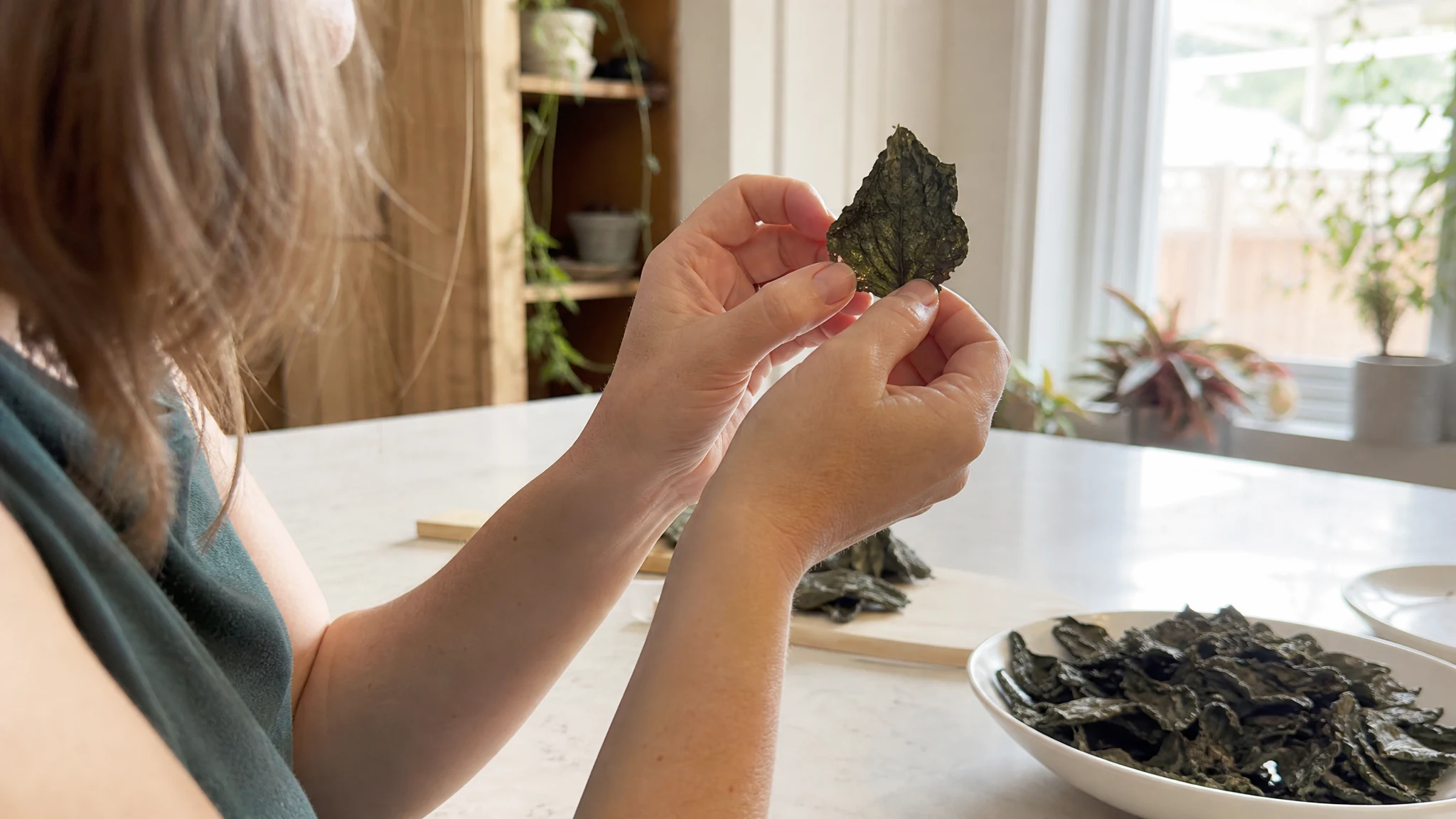
The route is quietly craft-like. The cut stems and leaves are dried for two to five days, ideally in ventilated shade, then stripped from the stems and packed in humid conditions to cure. That curing step is a kind of controlled fermentation: too much and the oil picks up a mouldy note, too little and the yield drops. Skilled growers judge it by smell. Ours is a steam-distilled oil from shade-dried, lightly fermented leaves, and we sell it neat. The distillation itself is slow: PROSEA puts a charge of 75 to 100 kg at 6 to 8 hours, sometimes stretched to 24, because the most desirable fractions are the last to come over.
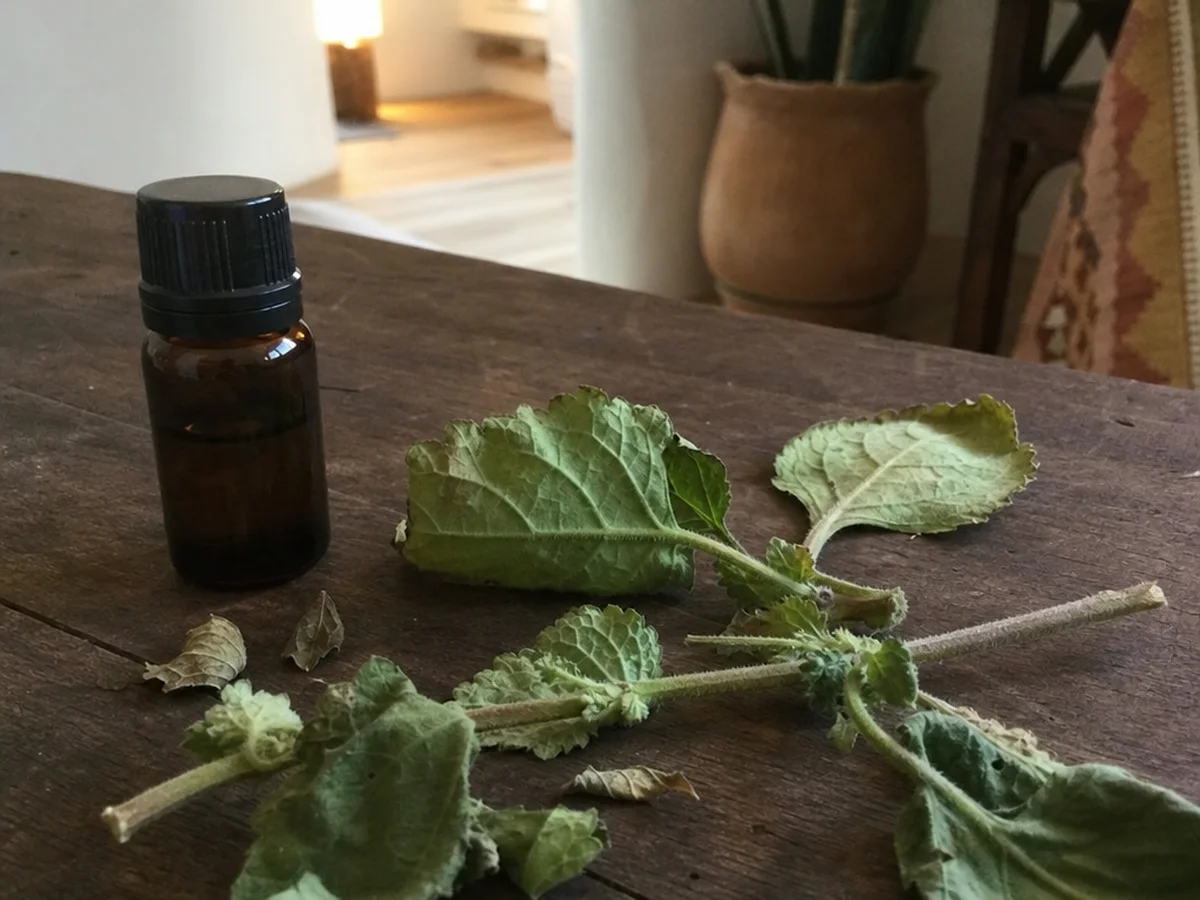
The reward for that patience is concentration. PROSEA gives the oil content of distilled leaf as roughly 1.3% to 2.2% in the Indonesian conditions it describes, so a kilogram of oil takes dozens of kilograms of leaf. That is one reason the oil is used by the drop, and our price guide picks up the story from there.
What it smells like and what it does
In scent, patchouli is deep, earthy and wine-like, with notes of damp forest floor and aged wood. If you would like the full tour, we wrote one: what patchouli smells like. In a blend its job is that of a base note and natural fixative, giving the lighter, quicker notes something to hold on to. PROSEA describes the oil as almost universally used as a fixing agent in perfumery, mostly in very small doses, and often a fundamental note in oriental-type perfumes. The 2015 review lists soaps, scents, body lotions and detergents among its uses.
We keep our own claims simple. We make no medical claims about patchouli. Its value is as a base note and a natural fixative, which is a perfumer's argument and not a clinical one. You can use it as a heavy base note in a diffuser blend, in cold-process soap, in a diluted massage oil or as the scent in a hair or beard oil, and we say more about the commercial side on our wholesale page.
A few ways to get to know it
If you have never met patchouli, start gently. Put a single drop on a paper blotter and hold it a little way from your nose. The first impression is usually earthy, and then something sweeter and rounder arrives, like old wood and a splash of wine. Come back to it an hour later, and again the next morning, and you will see why people call it a base note: it is the part of a scent that stays.
Then try it the way most people actually use it, in small amounts, mixed into something else. A drop is enough to change the character of a blend, and a bottle goes a long way. That, more than anything, is what we love about it.
Handling a very strong oil
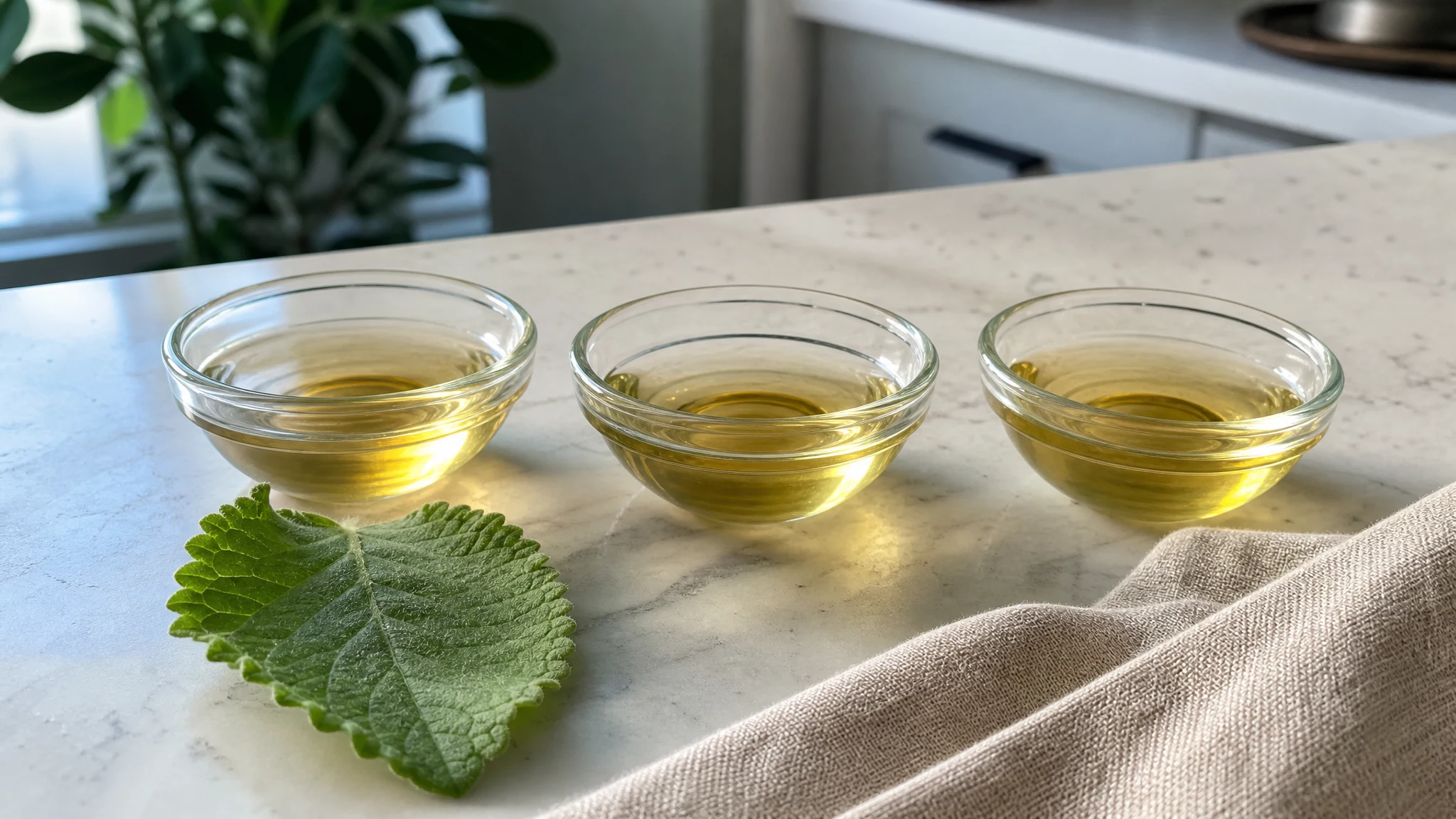
Patchouli is sold neat, which means it is concentrated and meant for aromatic and cosmetic use only, never for swallowing. For skin, we recommend diluting to 0.5% to 2% in a carrier oil and patch testing first, and we would start at the low end: the European Food Safety Authority classes the patchouli oil it assessed as an irritant to skin and eyes and a skin and respiratory sensitiser. Our dilution chart turns those percentages into drops.
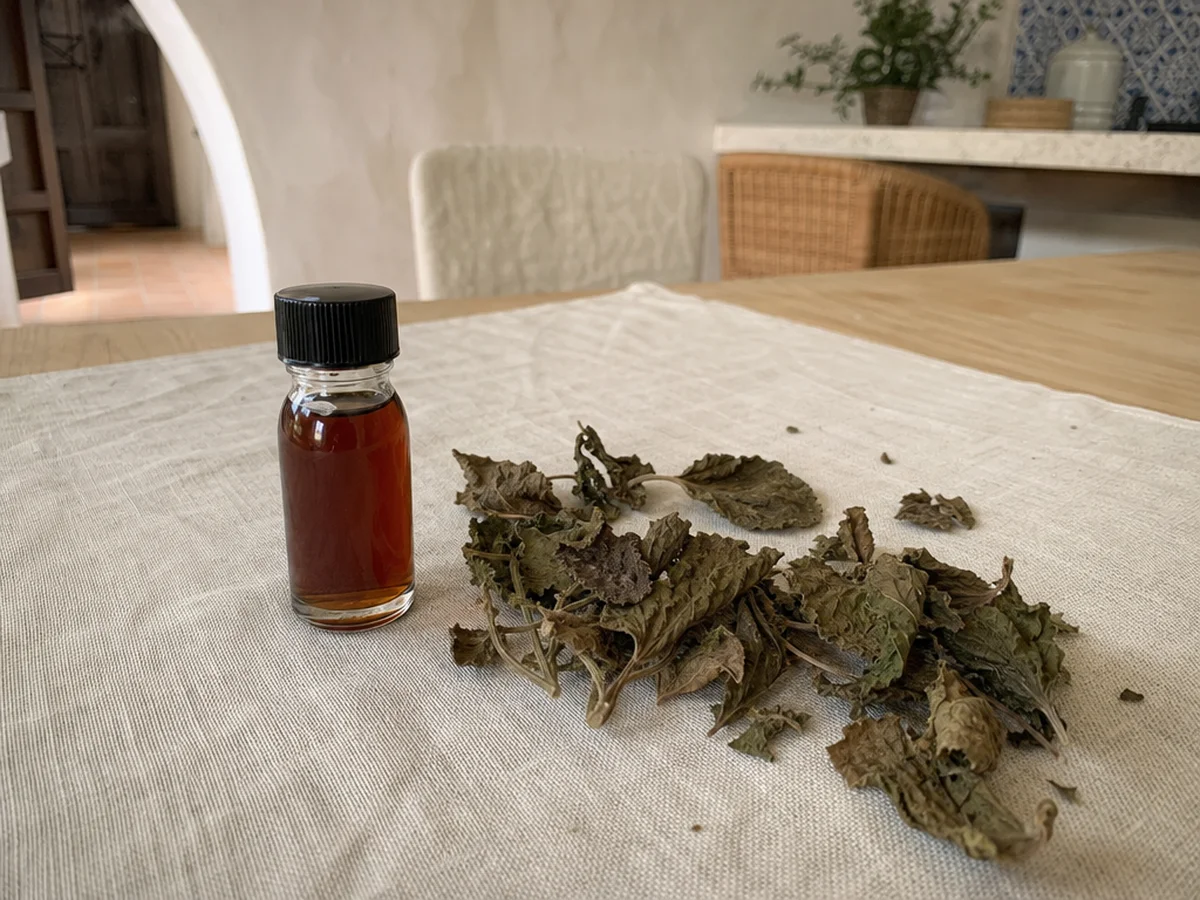
Keep the bottle somewhere cool and dark, away from heat and direct sunlight, and well out of reach of children and pets. Poison Control gives the same advice for all essential oils, and the number to call if one is swallowed is 1-800-222-1222. Patchouli also lingers and can stain light surfaces and pale fabric, so handle it over something you do not mind scenting.
Where to go next
If you are comparing patchouli with other ways of capturing the plant, our comparison of absolute, CO2 extract and steam-distilled oil shows how the routes differ.
Patchouli is a plant that rewards patience at every stage, from the slow cure of the leaf to the long mellowing of the oil in the bottle, and a little goes a very long way.
Patchouli Essential Oil
Patchouli Essential Oil from our own shop, in sizes from 0.5 oz to bulk.
From $20.99
Shop Now →Sources & Further Reading
- Pogostemon (PROSEA) - Pl@ntUse. plantuse.plantnet.org/en/Pogostemon_(PROSEA)
- A Comprehensive Review on the Phytochemical Constituents and Pharmacological Activities of Pogostemon cablin Benth.: An Aromatic Medicinal Plant of Industrial Importance. Molecules, 2015. pmc.ncbi.nlm.nih.gov/articles/PMC6272783
- Safety and efficacy of a feed additive consisting of an essential oil derived from the leaves of Pogostemon cablin Benth. (patchouli oil) for use in all animal species (FEFANA asbl). EFSA Journal, 2025. pmc.ncbi.nlm.nih.gov/articles/PMC12004087
- Essential oils: Poisonous when misused | Poison Control. poison.org/articles/essential-oils