Why Patchouli Oil Costs What It Does: Price Factors
Patchouli oil asks a lot of patience from the people who make it, and once you see how, a price starts to make sense. Before a single drop reaches a bottle there are months of growing, days of careful drying, a long curing step and a still that may run for most of a day. So when you compare prices, the useful question is not whether a number is low or high but what is behind it. We leave actual prices out of this article, since they change by size and by season, and look instead at the things that move them.
Patchouli Essential Oil
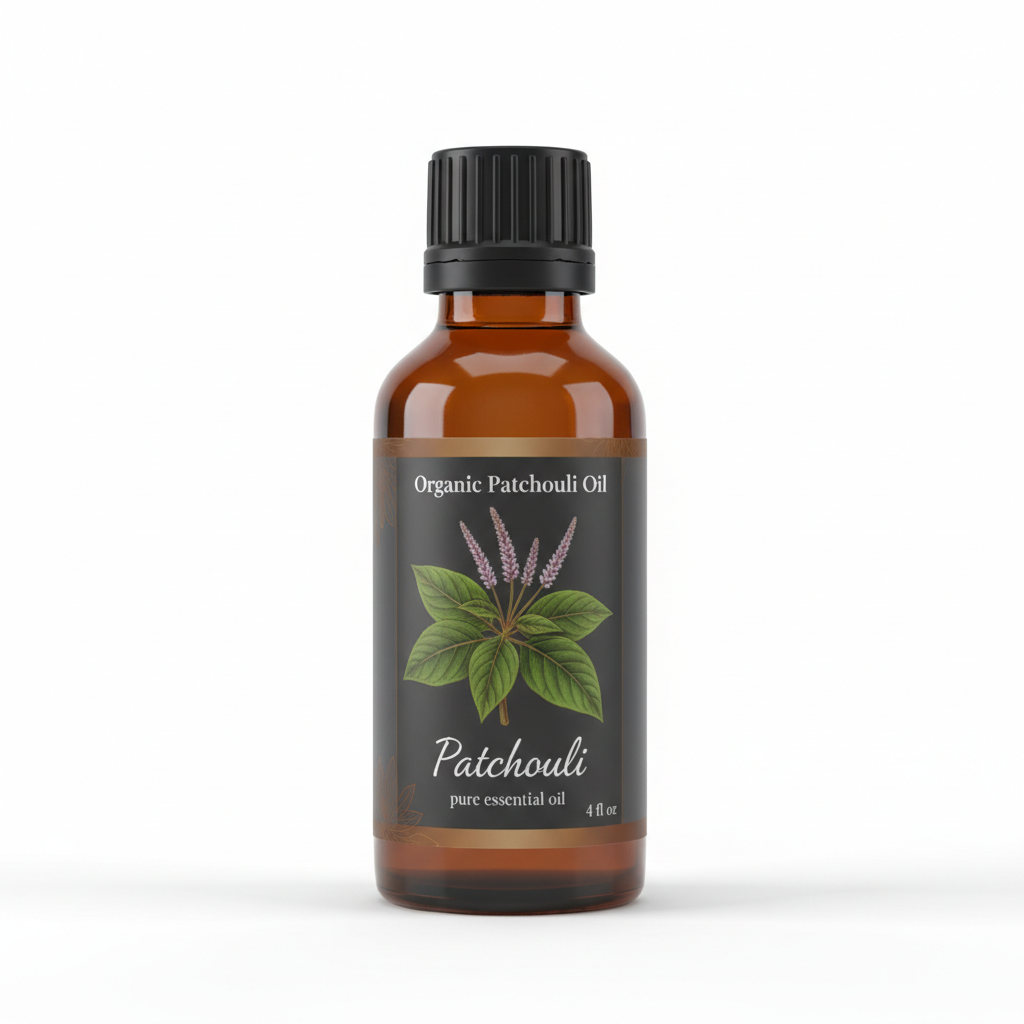
Our own Patchouli Essential Oil, in sizes from 0.5 oz to bulk.
From $20.99
Shop Now →How much leaf makes a kilo of oil
PROSEA, the plant-resources reference, gives the oil content of distilled patchouli leaf as roughly 1.3% to 2.2% under the Indonesian steam conditions it describes. Our arithmetic from those figures: at 2.2% it takes about 45 kg of leaf to yield a kilogram of oil, and at 1.3% about 77 kg. PROSEA also reports a field yield of 40 to 60 kg of oil per hectare in Indonesia. A swing of that size means a producer's cost per kilogram is never quite fixed, even before the weather has its say.
The craft in the middle
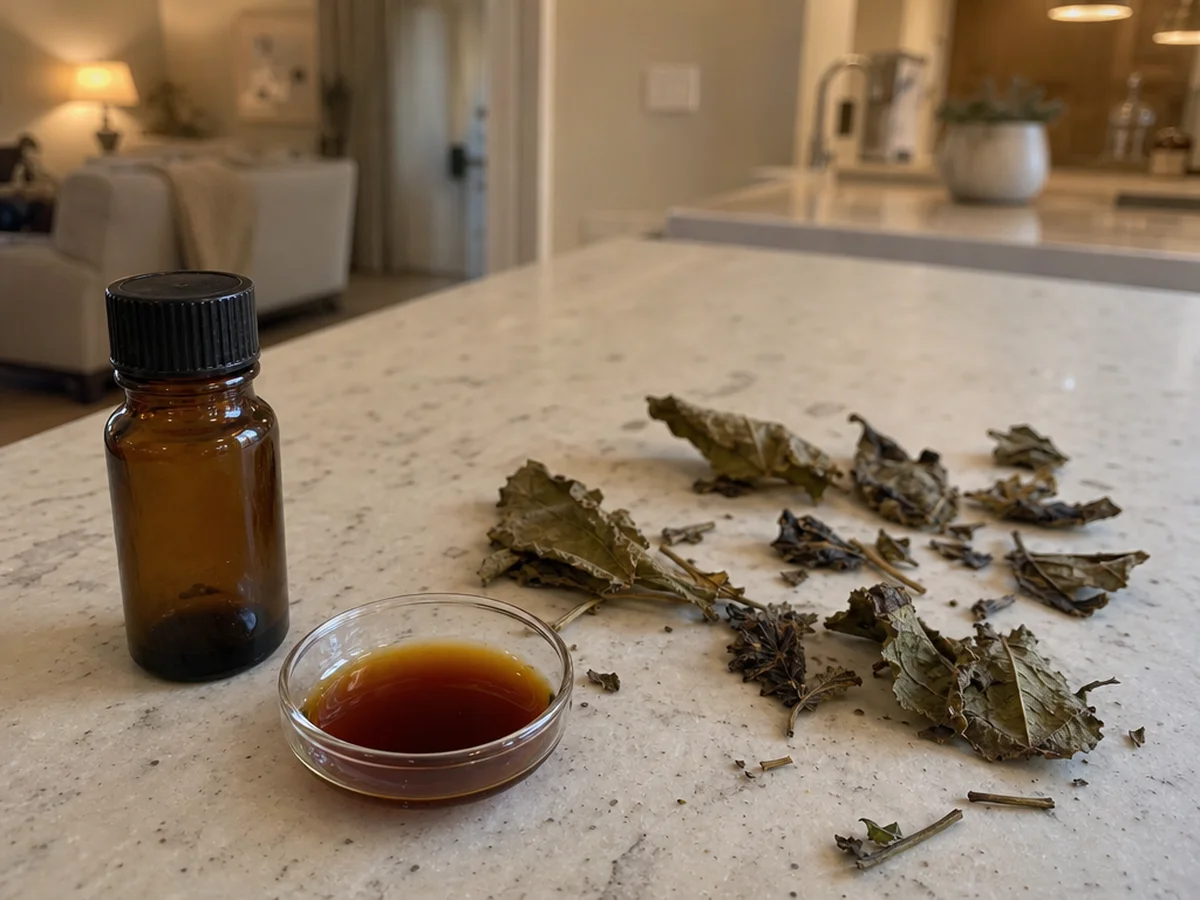
The plant is cut from about 6 to 8 months and then every 3 to 5 months for roughly three years. The leaves are dried for two to five days, and the method matters: PROSEA says shade drying is preferred, and in one Malaysian account a drying temperature above 40 C cost about 80% of the oil. Then comes curing, where the leaf is packed humid and judged by smell; too much fermentation gives a mouldy note and too little lowers yield. Distilling a charge of 75 to 100 kg takes 6 to 8 hours, sometimes stretching to 24, because the most desirable fractions come over last. None of this needs fancy equipment, but each step can lose oil or quality, and the cost of a misstep lands on the maker.
A concentrated crop
PROSEA reports that over 80% of the roughly 1,000 tonnes of world patchouli oil in 1995 came from Sumatra. That is a dated figure, but it shows the pattern: when one region dominates a crop, a poor season echoes through the whole market. Our article on Indonesian and Indian patchouli looks at how origins compare.
Why age can add value
PROSEA says patchouli oil is stored after distillation to mature, and that the quality improves in storage. Reasoning from that, a seller who holds oil for months has paid to do so, so an "aged" oil can reasonably cost more than a fresh one. The caveat is that "aged" is only useful alongside a distillation or bottling date and a batch number you can check. We describe our own oil as growing noticeably smoother after about a year in the bottle, which is how we expect it to behave, and we do not put an age statement on any individual bottle.
Comparing two listings fairly
- Use the same unit. Divide by millilitres of oil, not by the bottle. One US fluid ounce is 29.57 ml. For pounds, one pound is 453.6 g; divide the grams by the density to get millilitres. The Certificate of Analysis we publish states a density range of 0.950 to 0.975, which is a stated range and not a measurement.
- Check what is inside. A patchouli already diluted in a carrier is a different product from a neat oil, so a lower price per ml of liquid can mean a higher price per ml of patchouli. Cosmetic ingredient lists run in descending order of predominance, and fragrance oils are another mix-up worth knowing.
- Work out the cost of a finished blend. A 1% blend in a 1 oz bottle needs about 0.3 ml of oil, so the patchouli in each bottle costs about 0.3 times your price per ml. For body or beard oil that is usually a small number, which is a good reminder that for hobby use the cost per ml matters less than the smell you love.
- See what the seller shows. A named plant, a batch and a report with measured values add real information. Our GC-MS guide explains what a report should contain.
When a gap deserves a question
PROSEA lists the extenders that have been sold in patchouli's name. We have no price for those, but heavy solvents are presumably much cheaper than the oil they stretch, so a listing far below its peers is a fair prompt to ask what is in the bottle and for the paperwork that says so. The same discipline goes for the other direction: a higher price is not, on its own, a statement about quality, so ask for the same documents either way.
Thinking about how you will use it
Before you chase the lowest number, picture the bottle in your hands. A base note like patchouli is used in tiny amounts, so a small bottle can last a long time in a soap, a candle or a perfume. If you make something every week, a larger size starts to make sense. If you just love the smell and use a drop now and then, a small bottle that you finish while the aroma is fresh is a happier choice than a big one that sits in a cupboard.

Where our oil sits
We sell one patchouli oil, neat, in ten sizes, all poured from the same standard with no separate bulk grade, so a bigger size is a quantity decision and not a quality step. Our shop page shows the current price for each size. Our size guide explains how to match one to your pace, and our buying guide offers a wider checklist.
The simple rule is to compare per millilitre, ask for documents, and treat adjectives such as aged or premium as a starting point for a question and not the answer to one.
Patchouli Essential Oil
Patchouli Essential Oil from our own shop, in sizes from 0.5 oz to bulk.
From $20.99
Shop Now →Sources & Further Reading
- Pogostemon (PROSEA) - Pl@ntUse. plantuse.plantnet.org/en/Pogostemon_(PROSEA)
- 21 CFR 701.3 - Designation of ingredients. (Legal Information Institute). law.cornell.edu/cfr/text/21/701.3