Patchouli Beard Oil: How Many Drops per Bottle
A beard sits right under your nose for sixteen hours a day, which makes it the one place where a strong scent is working at close range. Patchouli is a lovely, grounded fragrance for a beard oil, and the secret to enjoying it is how little you need. Here is how we would work out the drops for a 15, 30 or 50 ml bottle.
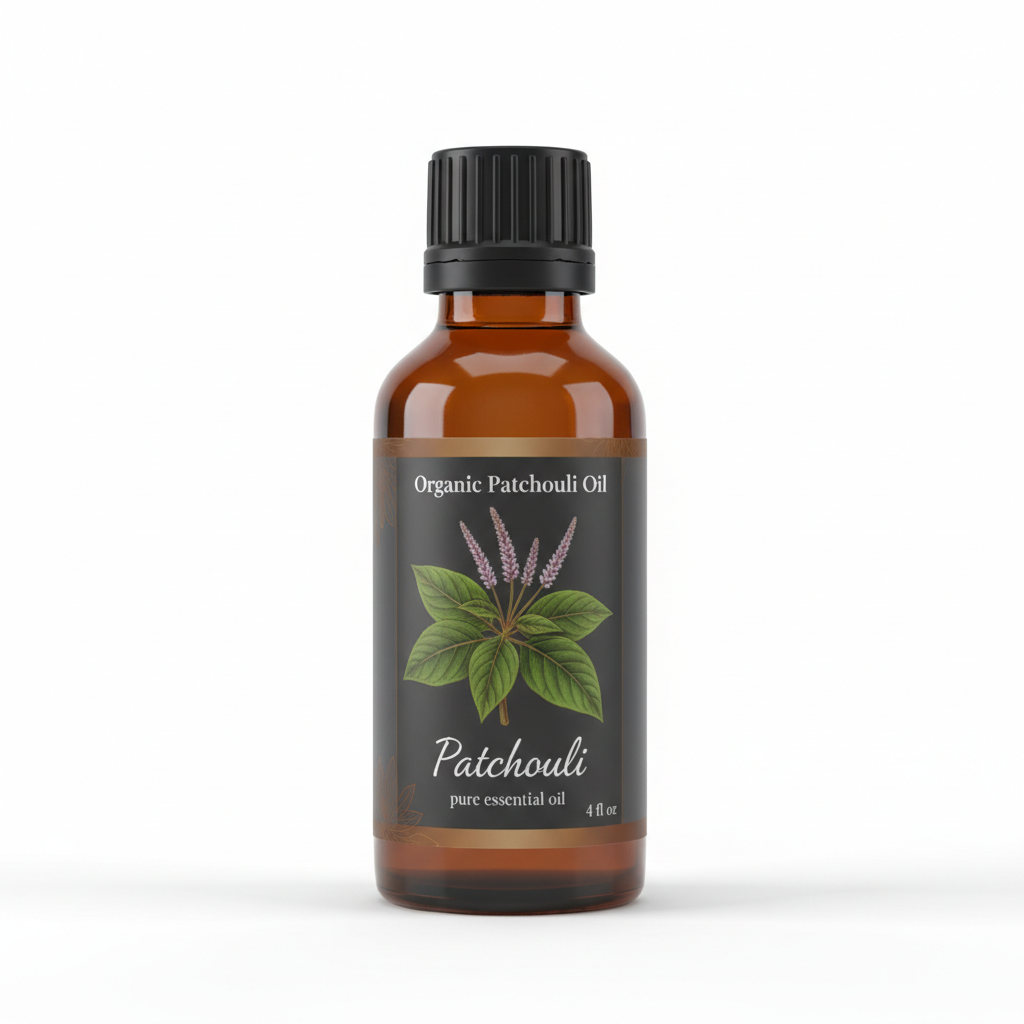
Patchouli Essential Oil
Our own Patchouli Essential Oil, in sizes from 0.5 oz to bulk.
From $20.99
Shop Now →Start from the skin under the beard
A beard oil is a leave-on product for the face. IFRA, the fragrance industry's standards body, files care products for beard and mustache under Category 5B with facial moisturizers, separate from the body-lotion category (IFRA, Guidance for the use of IFRA Standards, 51st Amendment, third-party mirror). The point of separate categories is that the same fragrance can be used at different levels depending on where it goes on the body.
For essential oils in general, the Tisserand Institute gives 0.5% to 1.2% for facial cosmetics and underarms, 1% to 3% for body oils, and 0.2% to 1% for sensitive skin. It calls these guidelines and says to start low (Tisserand Institute, Dilution for essential oils). Our own guidance for skin is 0.5% to 2% in a carrier oil with a patch test first, and a drop or two for a hair or beard oil. Putting those side by side, we recommend the lower end for the face, 0.5% to 1%. Part of the reason is that the European Food Safety Authority classes the patchouli oil it assessed as an irritant to skin and eyes and as a skin and respiratory sensitiser (EFSA FEEDAP Panel, 2025). That opinion is about a feed additive, so it describes what the oil is capable of, and not how likely a reaction is in your bottle. It is simply a good reason to begin gently.
The drops, worked out
This is arithmetic, using the usual rough convention of 20 drops per ml. Droppers vary, so a graduated pipette is more precise if you have one.
| Carrier oil in the bottle | 0.5% | 1% | 1.2% (Tisserand facial ceiling) |
|---|---|---|---|
| 15 ml | about 1.5 drops | 3 drops | about 3.6 drops |
| 30 ml (1 oz) | 3 drops | 6 drops | about 7 drops |
| 50 ml | 5 drops | 10 drops | 12 drops |
The numbers look small, and that is the charm of it. A 30 ml bottle at 1% holds six drops of patchouli. If a recipe calls for 15 or 20 drops in the same bottle, that works out to roughly 2.5% to 3.3%, more than any facial range above. Because patchouli is persistent (one drop too many lingers on skin and cloth for days), a first batch at the low end is easy to nudge up next time, while an over-strong batch can only be fixed by adding more carrier.
Making it
- Choose a carrier you already use on your face without trouble. We sell only the patchouli oil, so carriers come from a craft or supply shop, a pharmacy or a grocery; our carrier oil comparison walks through the usual choices.
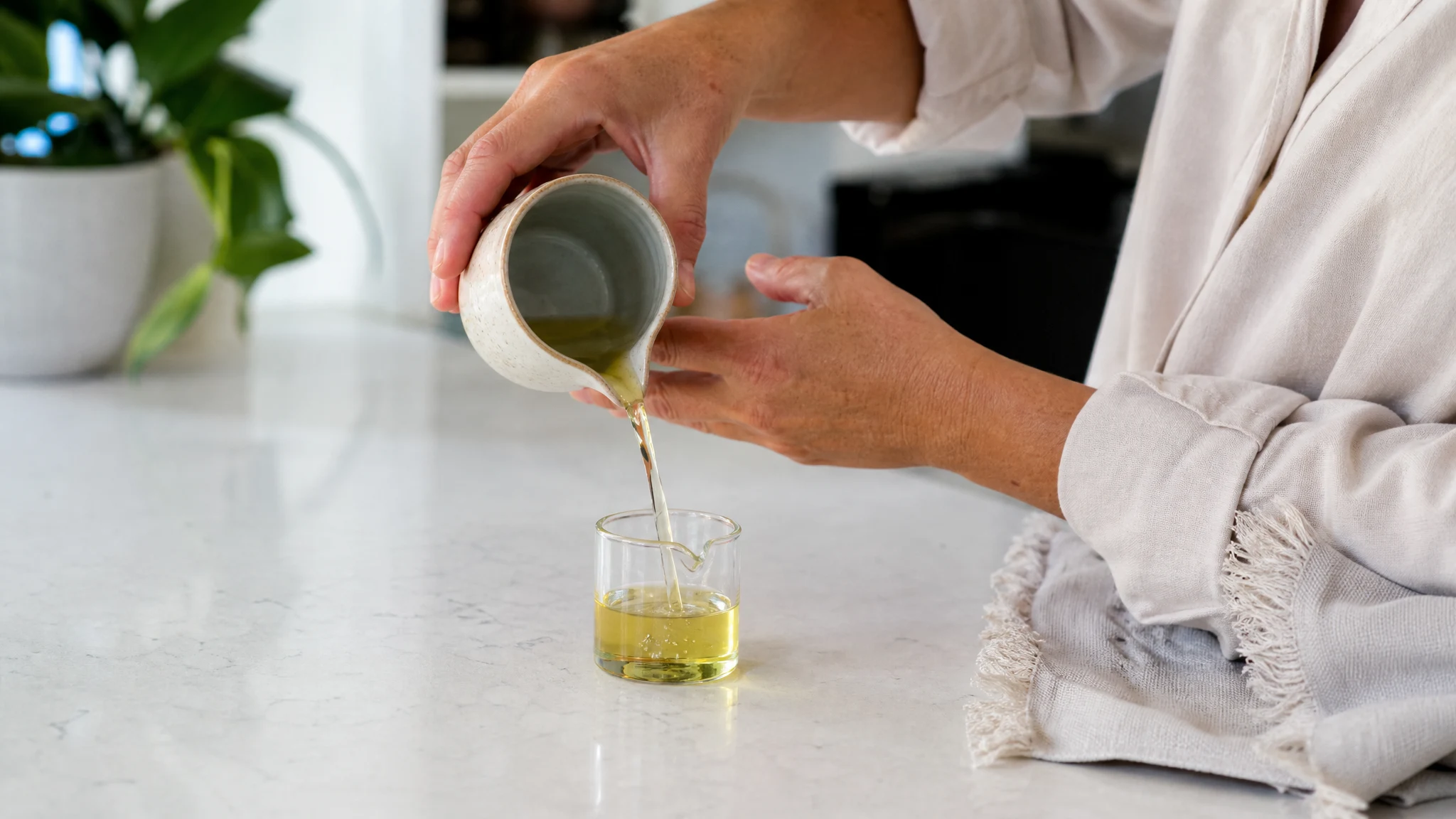
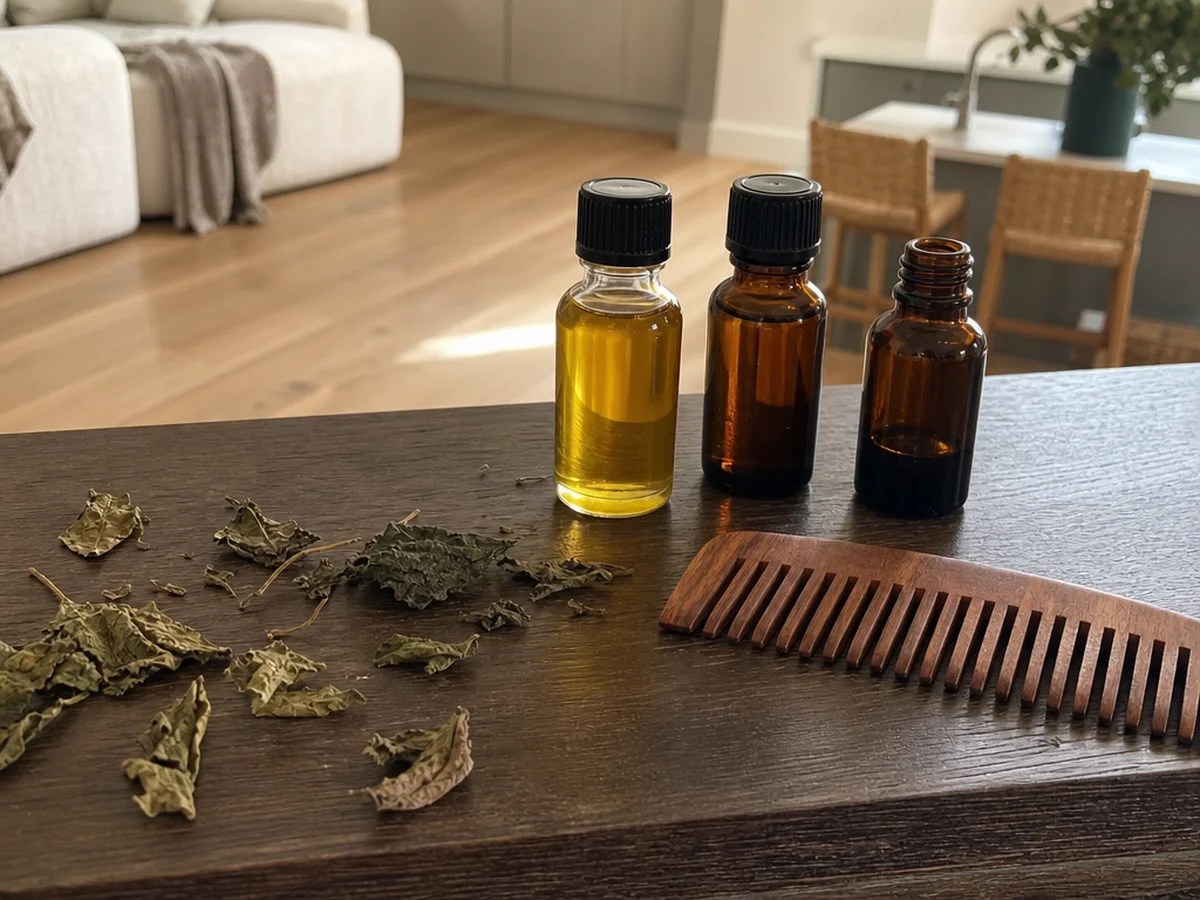
- Measure the carrier into a clean amber glass bottle. Amber keeps light off the oil, which suits the cool, dark place we recommend for storing patchouli.
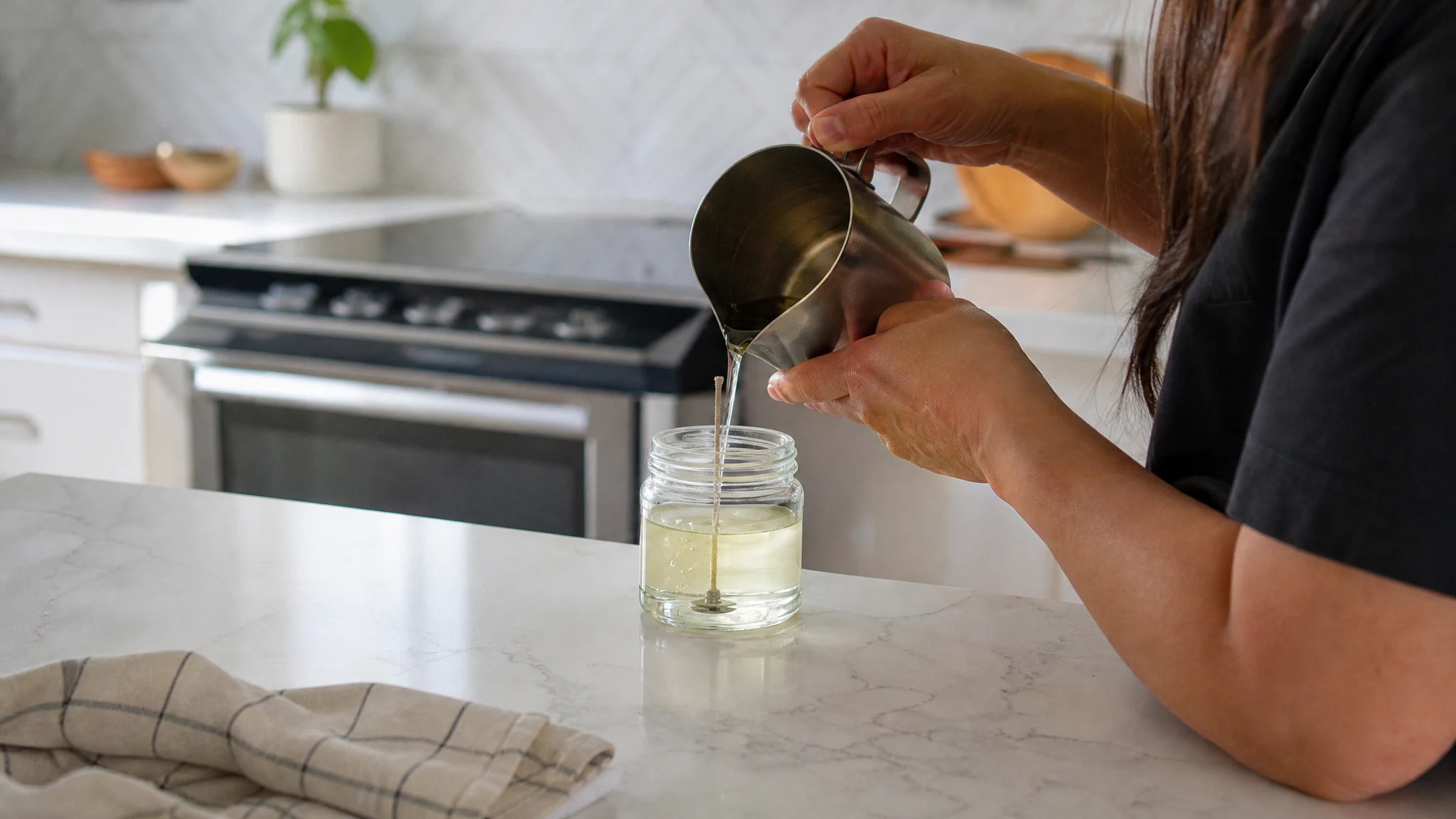
- Add the patchouli from the table, cap, and swirl gently.
- Write the percentage and the date on the bottle, so next time you can adjust with confidence.
- Keep it out of sight and reach of children and pets. Poison Control's advice is that essential oils should be locked up, out of sight and reach (Poison Control, Essential oils: Poisonous when misused).
Wearing it well
Once the bottle is made, a little goes a long way. Warm two or three drops of the finished beard oil between your palms, then work it through from the skin outward and finish with a comb. Because patchouli lingers, you will notice the scent mostly in the first hour and then as a quiet background that comes and goes when you turn your head.
Give the bottle a few days to settle before you judge it. A new blend can smell rougher on day one than on day five, and a note on the bottle label makes it easy to decide whether the next batch needs another drop or less.
Patch test, and a note on colour
Put a small amount of the finished blend, not the neat oil, on a patch of skin and wait before using it on your beard. A home test is a modest screen; our patch testing article explains what it can miss. If a rash or irritation appears, Poison Control says to stop and wash the area with soap and water, and to avoid essential oils on damaged skin. Anyone with eczema-prone or already irritated facial skin should read our caution article first. If you are pregnant or nursing, we advise checking with your physician before using patchouli.
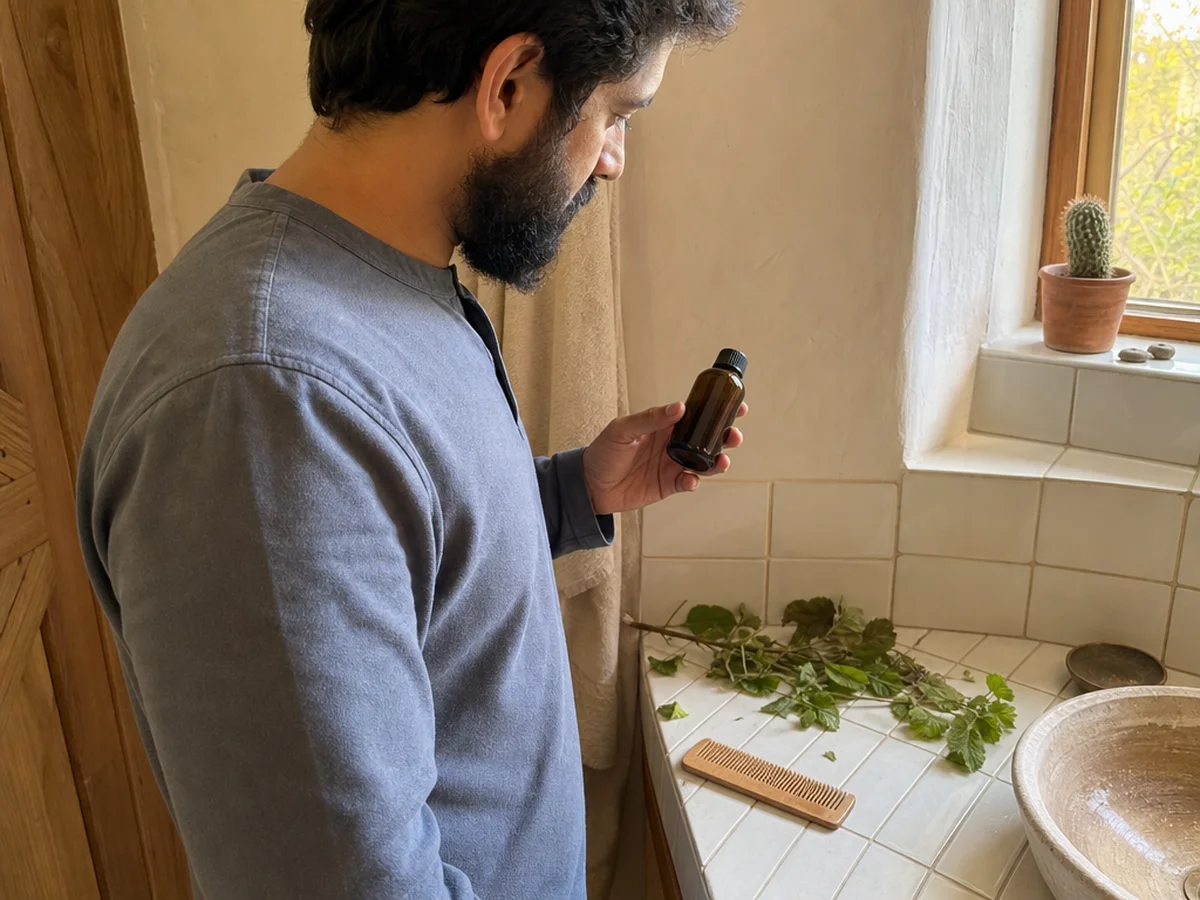
Patchouli oil is naturally dark reddish-brown, and it can stain a light surface and does not wash out of pale cloth easily. A beard oil meets collars, pillowcases and towels, so a modest dose is kind to your laundry too. If a bottle ever gets away from you, this guide to removing the smell helps.
We think a patchouli beard oil is best treated as a fragrance: warm, earthy and quietly woody. Make a small bottle, give it a week, and decide whether the next one needs another drop or none.
Patchouli Essential Oil
Patchouli Essential Oil from our own shop, in sizes from 0.5 oz to bulk.
From $20.99
Shop Now →Sources & Further Reading
- IFRA, 2023. Guidance for the use of IFRA Standards, 51st Amendment (third-party mirror). IFRA guidance mirror
- Tisserand Institute. Dilution for essential oils. tisserandinstitute.org/safety/dilution
- EFSA FEEDAP Panel, 2025. Safety and efficacy of a feed additive consisting of an essential oil derived from the leaves of Pogostemon cablin Benth. (patchouli oil) for use in all animal species (FEFANA asbl). EFSA J. PMC12004087
- Poison Control. Essential oils: Poisonous when misused. poison.org/articles/essential-oils