Patchouli in a Cleaning Spray: How Much to Add
Picture a clean kitchen counter that also smells like a stand of damp, warm woodland. That is the appeal of putting a little patchouli in a cleaning spray: the oil is a scent, a deep and earthy one, and it turns a chore into something you notice in a good way. It is also a scent only. Here is how to add it sensibly to a cleaner you already trust.
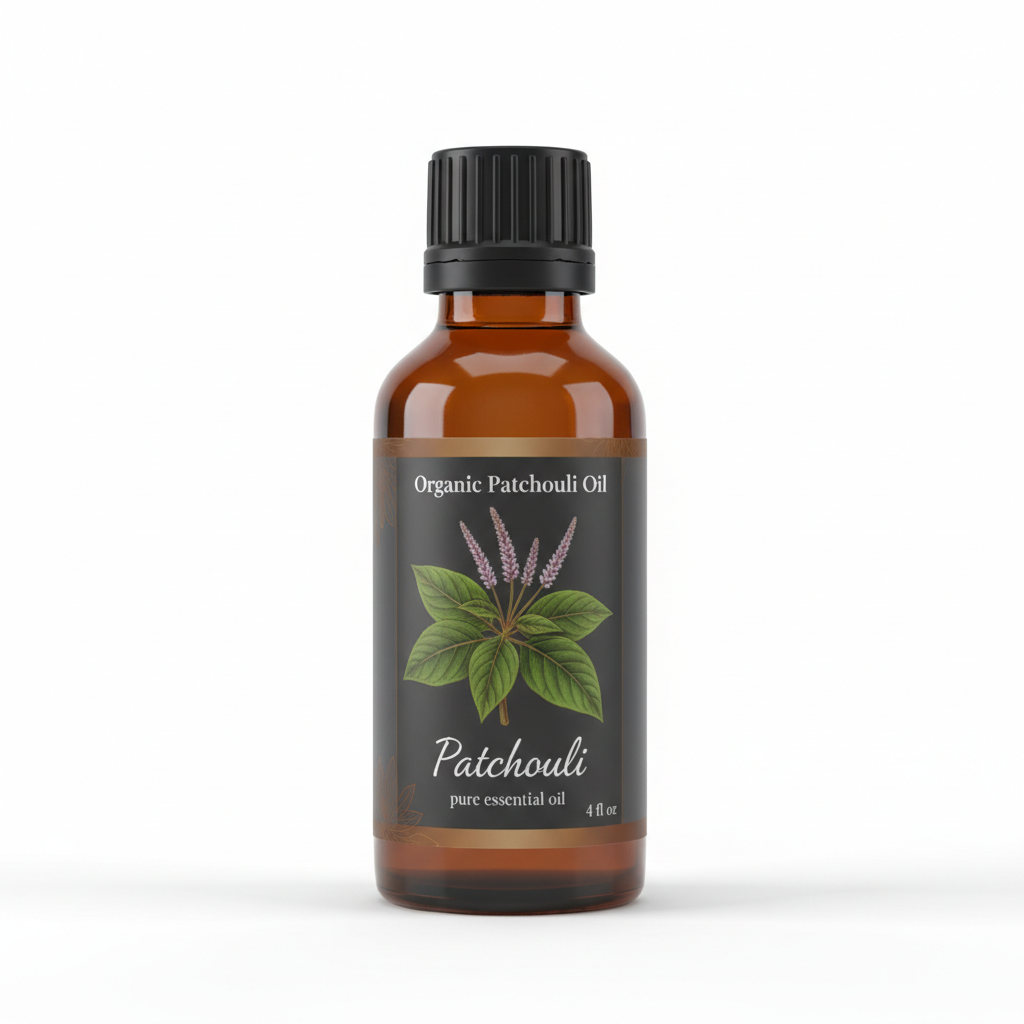
Patchouli Essential Oil
Our own Patchouli Essential Oil, in sizes from 0.5 oz to bulk.
From $20.99
Shop Now →What patchouli does, and does not, do in a cleaner
Cleaning lifts soil with detergent and water. Disinfecting is a separate step, done with a product registered for that purpose. The EPA notes that many antimicrobial products are registered to control infectious microorganisms and so protect public health (US EPA, What are Antimicrobial Pesticides?), and its conditions for minimum risk products leave claims about sterilizing, disinfecting or sanitizing to registered products (US EPA, Conditions for Minimum Risk Pesticides). So we describe patchouli here as fragrance, and when a surface needs disinfecting, use a registered product and follow its label.
A simple base
Start with warm water and a mild liquid dish detergent, diluted as its own label gives for general cleaning. It comes from the supermarket. Iowa State University Extension names exactly this, mild dish soap and warm water, as the thing to use on marble (Iowa State University Extension, Caring for Stone Countertops), so it is a careful base across many surfaces.
For the oil we suggest 0.5% by volume. That is our own suggestion for a spray, not an authority's limit, and it is deliberately low because patchouli lingers and stains. Our 0.5% to 2% guidance is written for skin in a carrier oil. At about 20 drops per ml (droppers vary):
| Bottle | Oil at 0.5% | Drops |
|---|---|---|
| 1 oz (29.57 ml) | 0.15 ml | about 3 |
| 8 oz (237 ml) | 1.2 ml | about 24 |
| 16 oz (473 ml) | 2.4 ml | about 47 |
At 1%, everything doubles. A 16 oz bottle at 0.5% needs under half a teaspoon of oil, so small amounts go a long way.
Oil and water do not blend on their own
Oil floats on water, so without help the first sprays are mostly water and the last are mostly oil, and a concentrated spot is where a stain begins. The simplest fix is to shake the bottle before each spray. A solubiliser from a soap-making or cosmetic supply shop is the other route; ask the supplier for the application guidance on the product you buy, premix the oil with it, and add the water afterwards. We would try a small bottle first and check it for clarity.
What to keep out of the bottle, and off the surface
- Vinegar with soap. Lisa Bronner explains that vinegar, an acid, breaks down true soap, a base, leaving a curdled, oily mixture that does not clean, and recommends using them separately (Lisa Bronner, Why Vinegar & Castile Soap Don't Mix Well). Detergents differ from true soaps, so check what you actually have.
- Acids on stone. Iowa State warns that acidic cleaners such as lemon juice, ammonia and window cleaners may damage granite, so we would not make a vinegar version for stone.
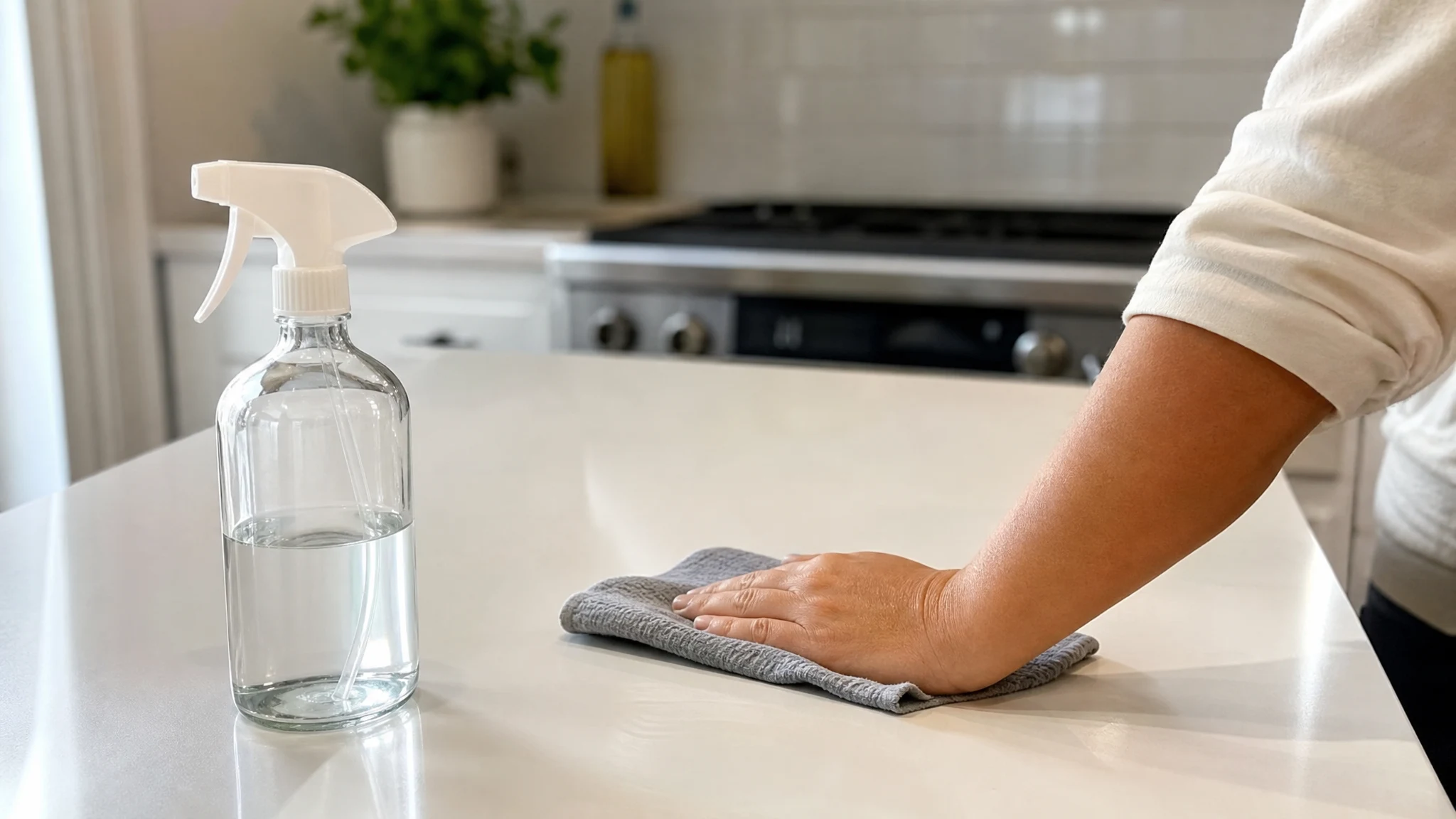
- Pale cloth and light surfaces. Patchouli oil is naturally dark reddish-brown, it can stain a light surface, and it does not wash out of pale cloth easily. Spray onto a dark cloth you do not mind keeping, then wipe.
- Finishes you have not tested. Try an unseen corner of painted, varnished, plastic or leather surfaces for a day before going further.
What you will notice when you spray it
Patchouli does not behave like a lemon or pine cleaner. Instead of a quick bright burst, you will notice a slow, low scent that settles into the room: the deep, earthy, wine-like aroma we love, with hints of damp forest floor and aged wood. Because it is a base note, it hangs around after the first impression has gone, which is exactly why we keep the amount small. Spray once, wipe, and give it a few minutes before you decide whether it needs more. Your nose adapts quickly to a heavy scent, so a counter that seems only lightly scented to you after ten minutes may feel stronger to a visitor walking in.
Air, animals and hands
Sprays put fine droplets into the air, so ventilate and aim the spray at the cloth. Pets are worth a thought: the ASPCA says cats are especially sensitive to essential oils and does not recommend using essential oils in areas where pets have access, unless the pets are supervised or a veterinarian approves (ASPCA, Pet Poisons: Be Mindful of these Household Products and Cleaning Agents). A veterinarian is the right person to ask about your own animals. Keep the bottle away from children, and wear gloves if a cleaner makes your hands red or itchy. If it does, a pharmacist or physician can advise. Our oil is for aromatic use and is never to be swallowed.
Think of patchouli as the bass line rather than the tune. A very simple cleaner with the earthy note as its only fragrance gives the oil room to be heard, while a bottle crowded with other scents hides it. Label the bottle clearly, keep it with the cleaning supplies and away from anything you drink, and give it a sniff test on a cloth before the first full wipe-down.
Store the finished spray out of direct sun and heat, as we advise for the oil itself. Shake it hard after it has been sitting, and test a corner again before using it widely.
For a first bottle, make an ounce, label it with the date and the 0.5%, and try it on a surface that can take a little tint. Our notes on storing patchouli keep the oil in good shape between batches, and this guide helps if a spill needs clearing.
Patchouli Essential Oil
Patchouli Essential Oil from our own shop, in sizes from 0.5 oz to bulk.
From $20.99
Shop Now →Sources & Further Reading
- US EPA. What are Antimicrobial Pesticides? epa.gov
- US EPA. Conditions for Minimum Risk Pesticides. epa.gov
- Iowa State University Extension and Outreach, AnswerLine, 2018. Caring for Stone Countertops. blogs.extension.iastate.edu
- Lisa Bronner. Why Vinegar & Castile Soap Don't Mix Well. lisabronner.com
- ASPCA. Pet Poisons: Be Mindful of these Household Products and Cleaning Agents. aspca.org