Patchouli vs Tea Tree Oil: Which One Is for You?
Search for patchouli and tea tree side by side and you will find them pitched as rivals for skin. They are really more like a cello and a trumpet. One is dark, earthy, slow to fade and used for depth. The other is sharp, camphor-bright and fast. Choosing between them is mostly a question of what you want from the bottle.
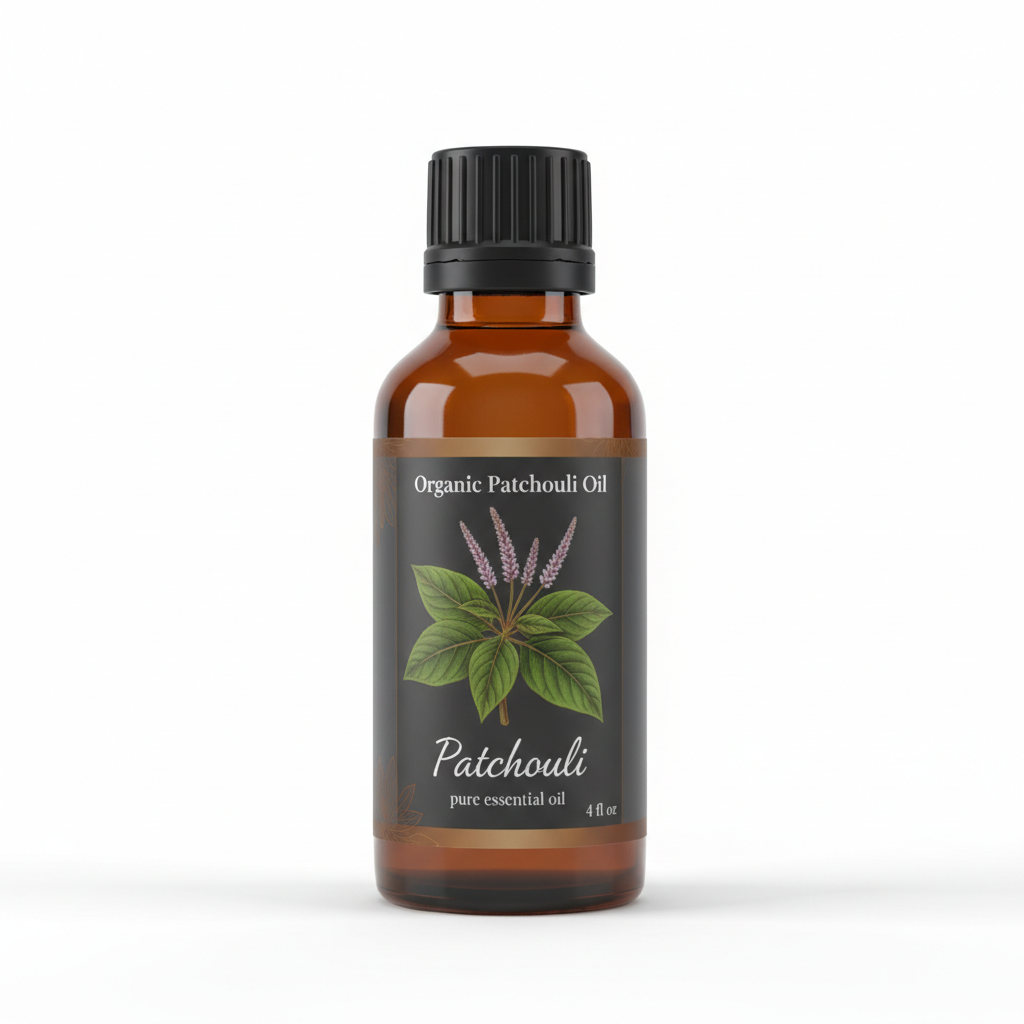
Patchouli Essential Oil
Our own Patchouli Essential Oil, in sizes from 0.5 oz to bulk.
From $20.99
Shop Now →The scent decides most of it
Patchouli is a base note and a fixative. PROSEA says it is used almost universally as a fixing agent in perfumery, usually in very small doses, and that in Oriental-type perfumes it is often a fundamental note (Pogostemon (PROSEA), Pl@ntUse). A review of the plant describes a powerful sweet, herbaceous, spicy fragrance with a wine-like quality (A Comprehensive Review on the Phytochemical Constituents and Pharmacological Activities of Pogostemon cablin Benth.: An Aromatic Medicinal Plant of Industrial Importance, Molecules, 2015). We describe ours as deep, earthy and wine-like, with notes of damp forest floor and aged wood. It blends with rose, geranium, bergamot, sandalwood and cedarwood, which you will find at a craft or supply shop.
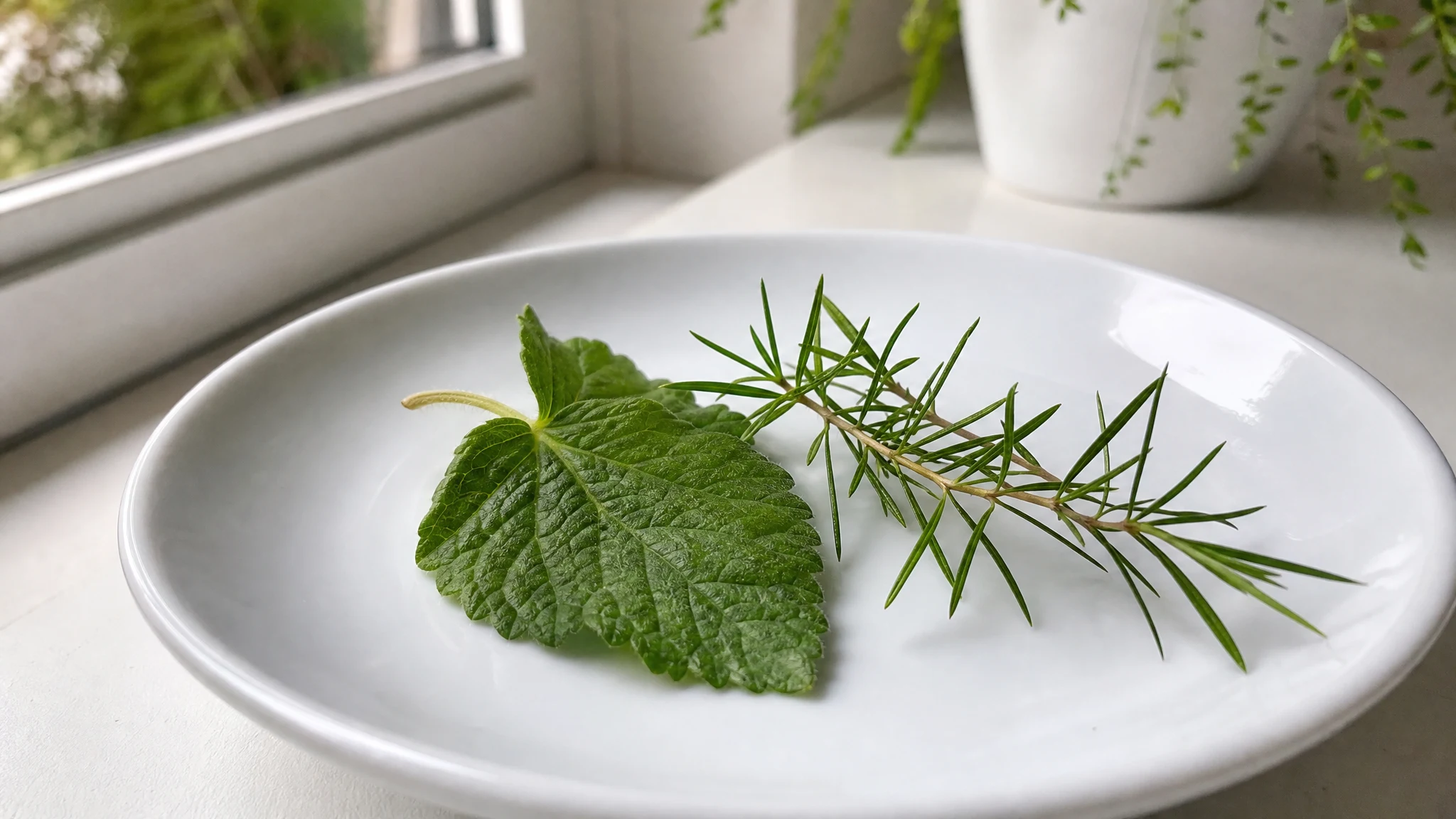
Tea tree is a different animal, a sharper, more medicinal-smelling oil that we do not sell, so we will leave its use to others. The point is that if you want a scent that sits under a blend and lasts on cloth for days, patchouli is the one. If you want something brisk, it is not.
What the research record looks like
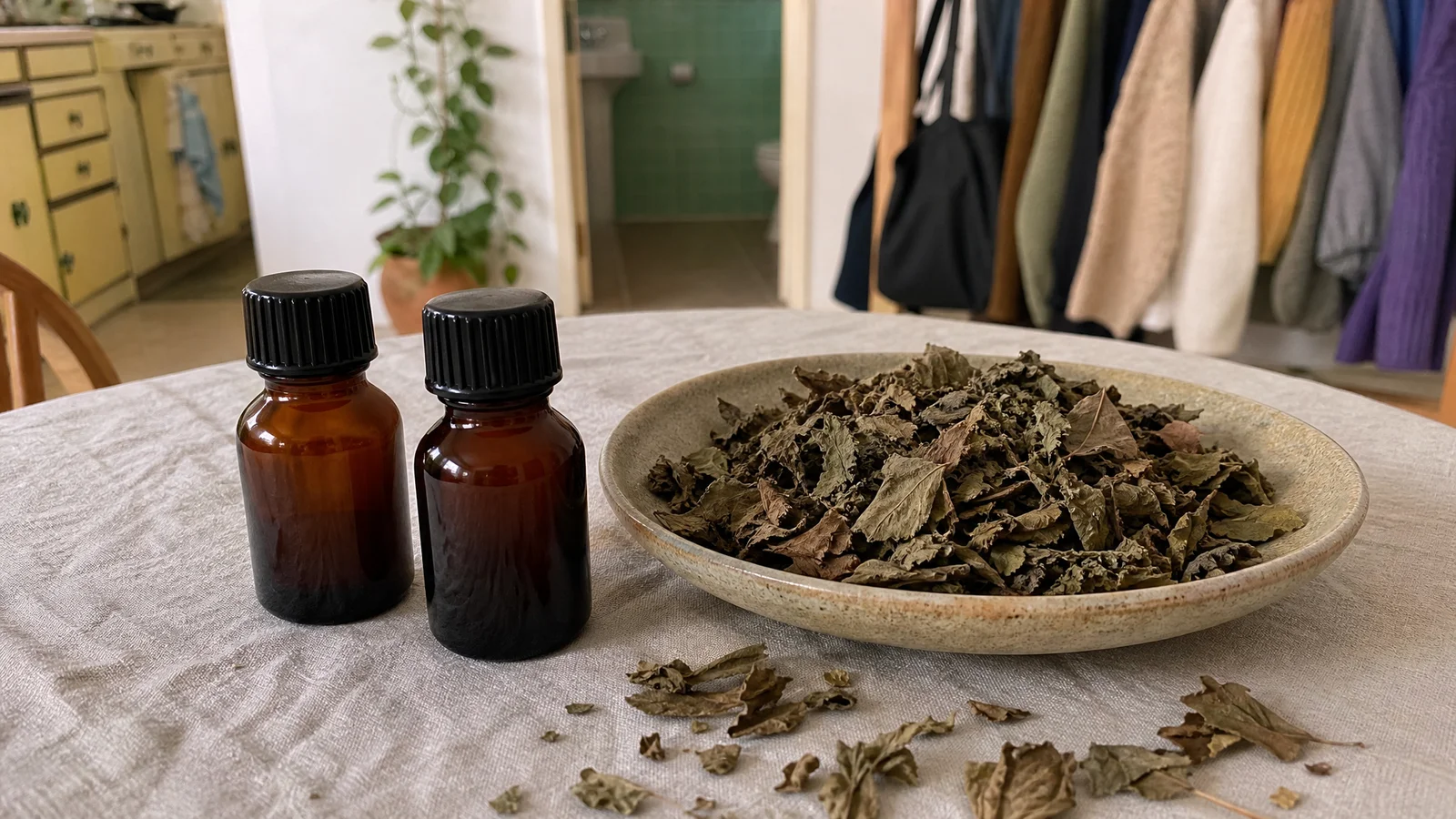
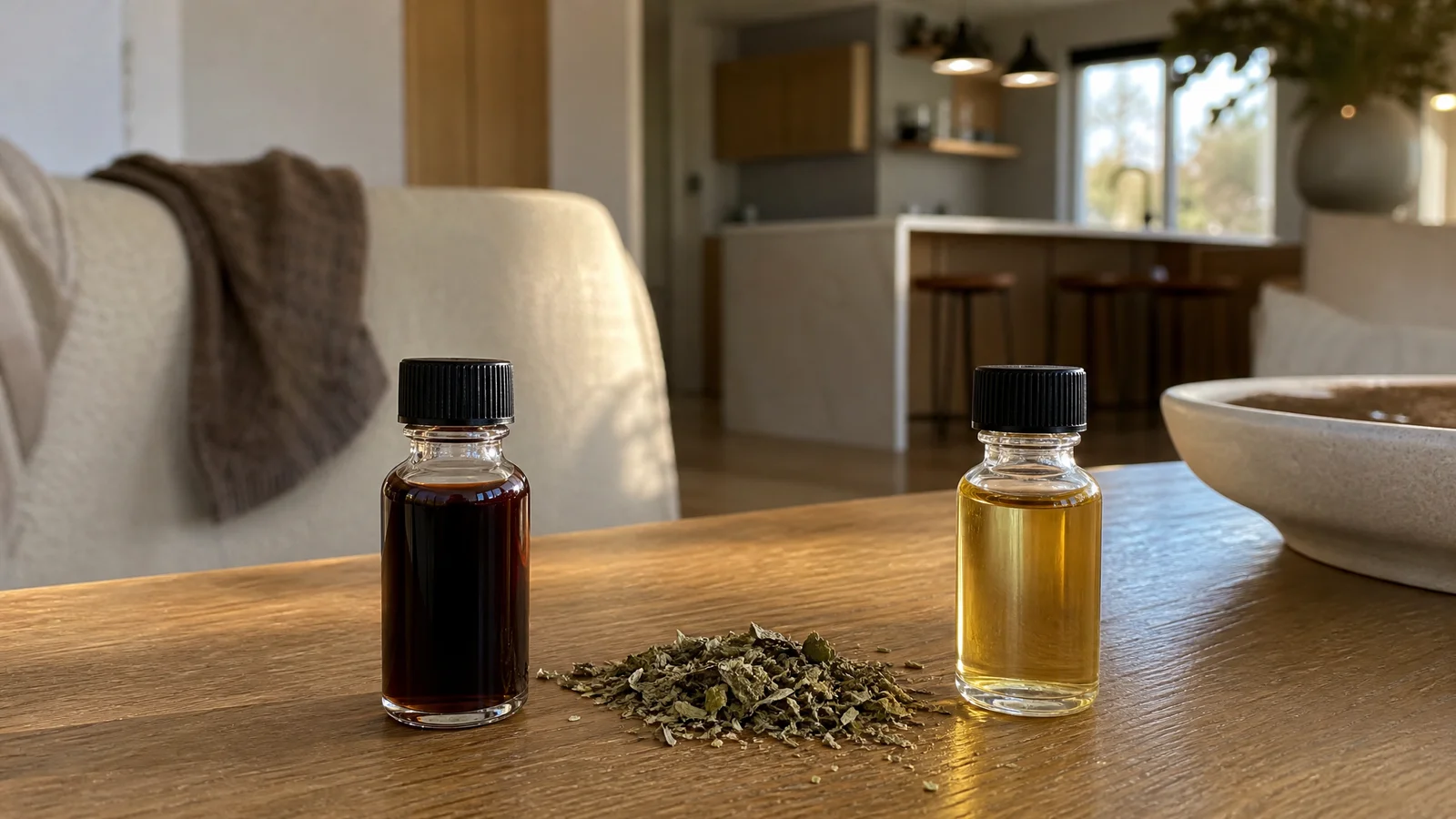
Open the two bottles side by side, on separate paper blotters, and the difference is plain within seconds. Tea tree arrives all at once and is gone almost as quickly. Patchouli starts slowly, and an hour later it is still there, rounder and sweeter than when you began. That tells you a lot about where each oil belongs: one in a quick, bright blend, the other at the bottom of anything you want to last.
We would also suggest smelling each one on its own before you smell them together. Strong oils compete, and a nose that has just met tea tree will have a hard time picking up the quieter layers of patchouli. Give yourself a minute, or a sniff of your own sleeve, between the two.
Tea tree has a body of human trials, and a 2023 systematic review of the randomised trials rated the research quality poor to modest and found the evidence insufficient to confirm benefit for acne lesions (Efficacy and safety of Melaleuca alternifolia (tea tree) oil for human health - A systematic review of randomized controlled trials, Frontiers in Pharmacology). That is a candid summary of a much-studied oil: even with trials to read, the picture is cautious. For patchouli oil on skin we did not find controlled human trials, and the work we did find was laboratory research. Neither record gives either oil a skin-care claim, and we do not make one for ours. We sell patchouli oil as an external aromatic and cosmetic ingredient.
Handling matters for both
Both are strong essential oils that belong in a carrier, never neat on skin. A review of tea tree oil allergy reported patch-test positives from 0.1% to 3.5% of people tested and noted that oxidation raises potency (Tea tree oil: contact allergy and chemical composition, Contact Dermatitis, 2016), which is a good reason to keep any essential oil tightly closed and fresh. For patchouli, the EFSA panel considers the oil it assessed an irritant to skin and eyes and a dermal and respiratory sensitiser (Safety and efficacy of a feed additive consisting of an essential oil derived from the leaves of Pogostemon cablin Benth. (patchouli oil) for use in all animal species (FEFANA asbl), EFSA FEEDAP Panel, 2025). Reasoning from that, we recommend diluting our oil to 0.5% to 2% in a carrier oil, patch testing first, and starting low, since we could not find a published patchouli maximum for skin products to confirm 2%. The Tisserand Institute's general guidelines run from 0.2% to 1% for sensitive or impaired skin up to 1% to 3% for body products (Dilution for essential oils, Tisserand Institute), and our dilution chart turns percentages into drops.
Keep both away from eyes, children and pets, and store them locked away. Poison Control advises exactly that, and says to dilute in a carrier oil and stop if a rash appears (Essential oils: Poisonous when misused, Poison Control). If you have eczema or a skin condition, or you are pregnant or nursing, speak to your physician or dermatologist before using either. Our post on dry and eczema-prone skin goes further.
A practical way to decide
- You want depth under a blend: choose the slow, dark one.
- You want something brisk and clean-smelling: look at the brighter oil, from a shop that sells it.
- You are not sure: start with a single drop of each on separate blotters and come back to them the next morning.
It is a small test, but it settles the question better than any comparison chart, because scent preference is personal.
So which one
If you came for a scent to build a blend around, to give a body oil or a hair oil a grounded base, or to make a soap or a candle smell richer, patchouli is the oil we love and know best. If you came for a brisk, medicinal-smelling oil, you will want a different shelf. Either way, treat both as aromatic ingredients that need respect, and let the smell be the guide. If patchouli is the direction you are leaning, our guide to blending with patchouli is a good next stop.
Patchouli Essential Oil
Patchouli Essential Oil from our own shop, in sizes from 0.5 oz to bulk.
From $20.99
Shop Now →Sources & Further Reading
- Pogostemon (PROSEA), Pl@ntUse
- A Comprehensive Review on the Phytochemical Constituents and Pharmacological Activities of Pogostemon cablin Benth.: An Aromatic Medicinal Plant of Industrial Importance, Molecules, 2015
- Efficacy and safety of Melaleuca alternifolia (tea tree) oil for human health - A systematic review of randomized controlled trials
- Tea tree oil: contact allergy and chemical composition, Contact Dermatitis, 2016
- Safety and efficacy of a feed additive consisting of an essential oil derived from the leaves of Pogostemon cablin Benth. (patchouli oil) for use in all animal species (FEFANA asbl), EFSA FEEDAP Panel, 2025
- Dilution for essential oils, Tisserand Institute
- Essential oils: Poisonous when misused, Poison Control