Patchouli Essential Oil vs Fragrance Oil: Read the Label
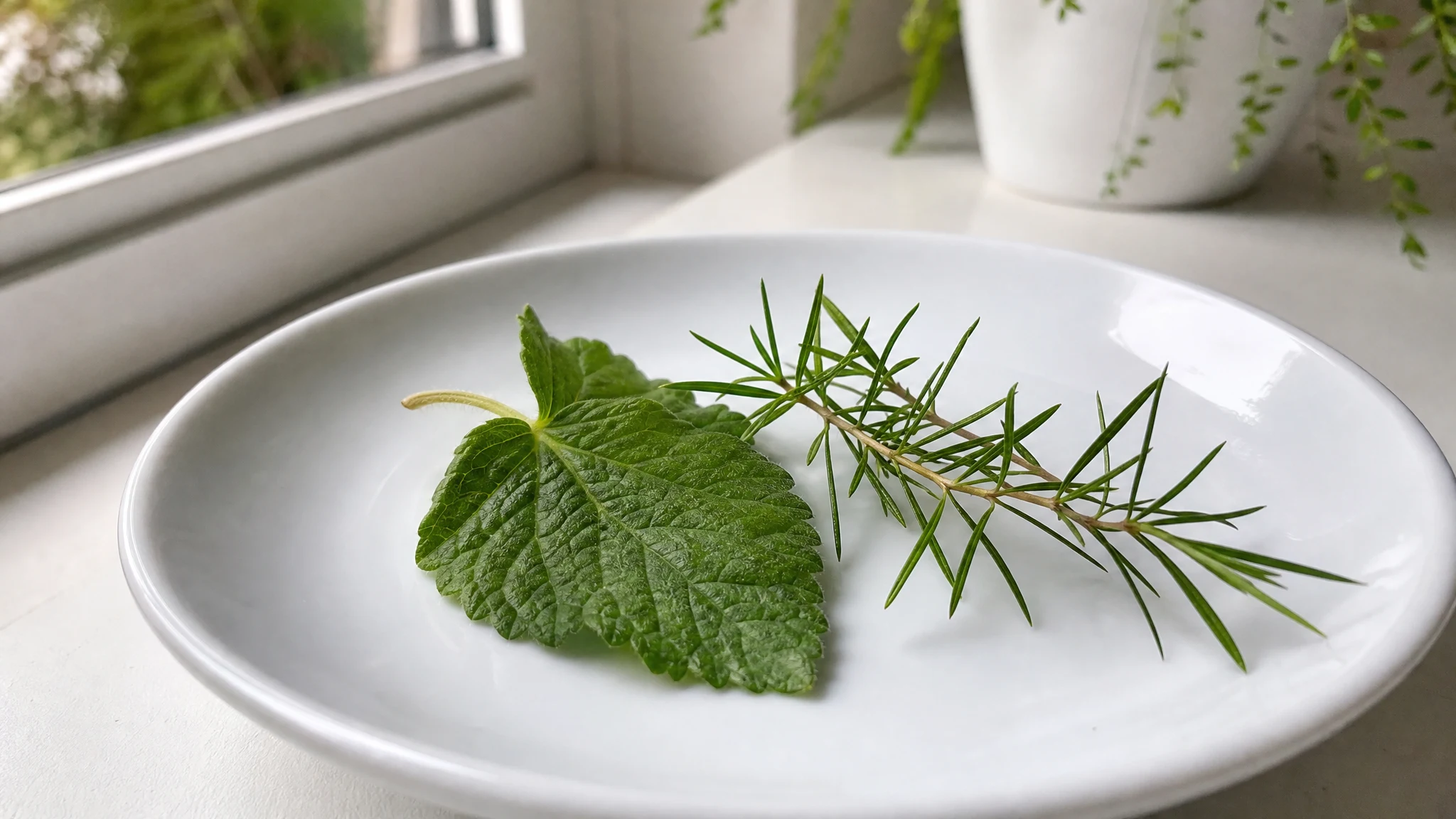
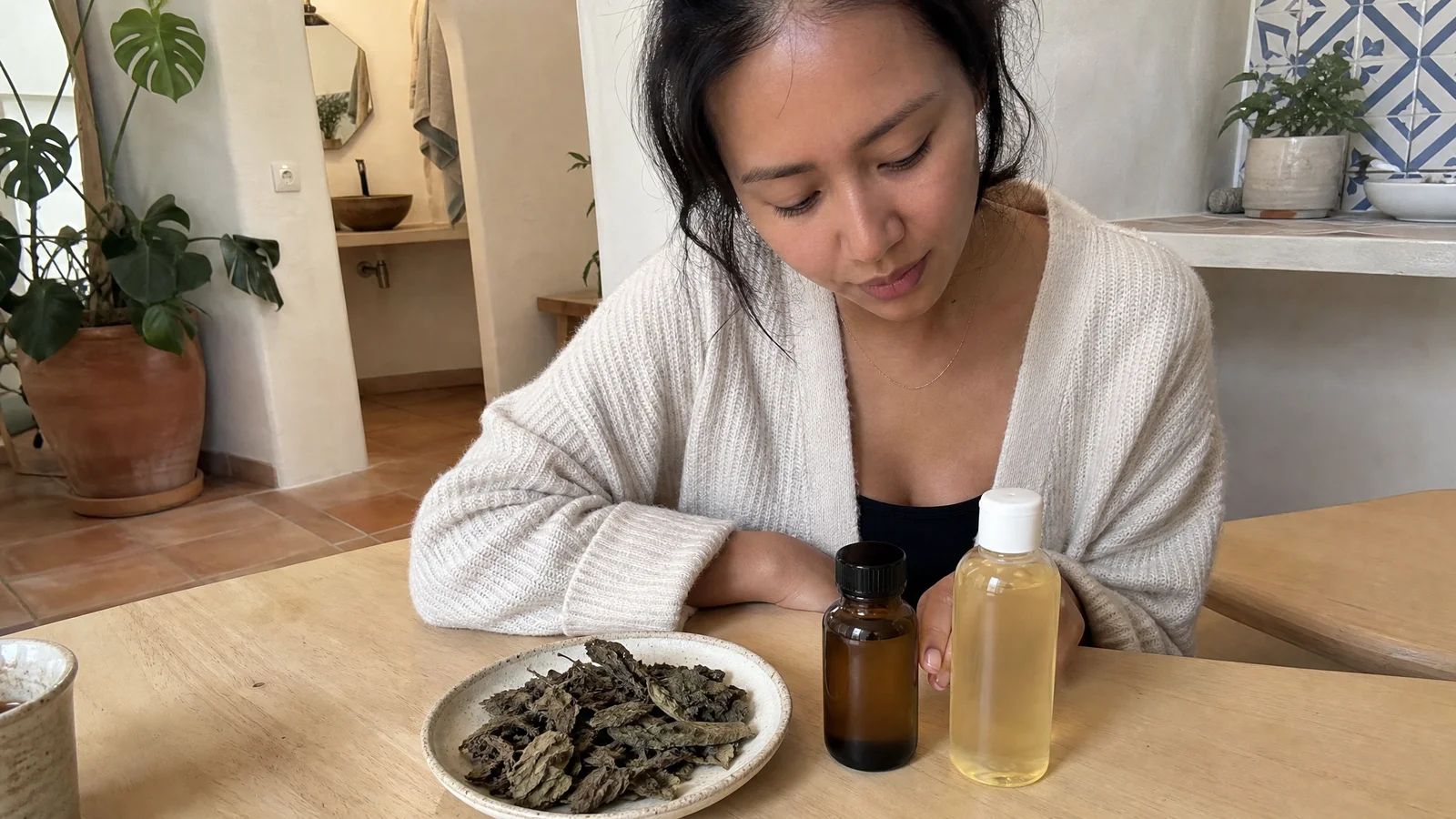
Walk down the aisle of any craft supplier and you will find patchouli in two very different bottles. One is oil steamed from the leaves of a plant. The other is a fragrance, composed in a laboratory to smell like it. Both can be wonderful in the right place, and both are often labelled with just the word patchouli, which is why it pays to know how to read the bottle.
Patchouli Essential Oil
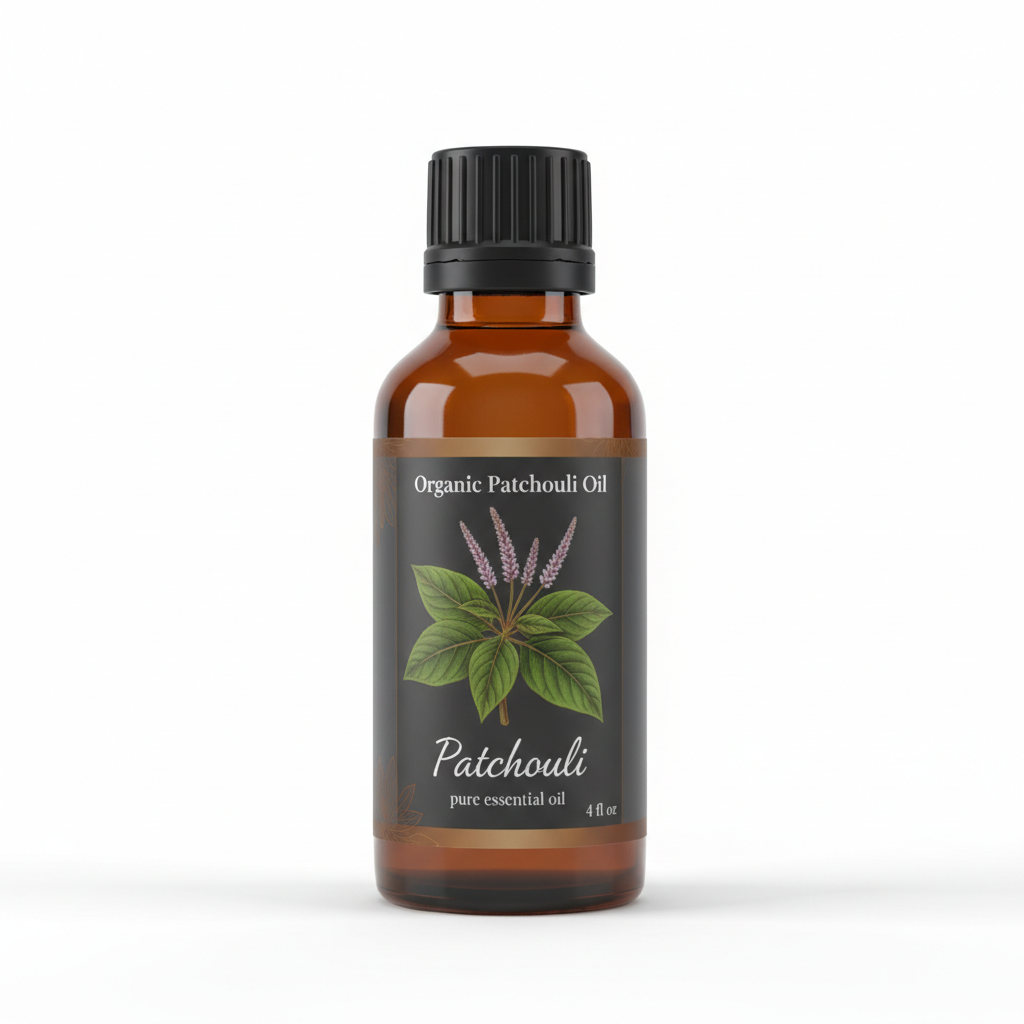
Our own Patchouli Essential Oil, in sizes from 0.5 oz to bulk.
From $20.99
Shop Now →Start with the back label
For cosmetics sold in the US, the ingredient rule lists ingredients in descending order of predominance and allows "fragrance or flavor" to stand as a name for fragrance ingredients (21 CFR 701.3 - Designation of ingredients., e-CFR). The FDA's fragrance page adds the reason: companies are not required to disclose the contents of a fragrance because they are treated as trade secrets, and the formulas are complex mixtures of natural and synthetic chemicals (Fragrances in Cosmetics, FDA).
That gives you a simple way to read a label:
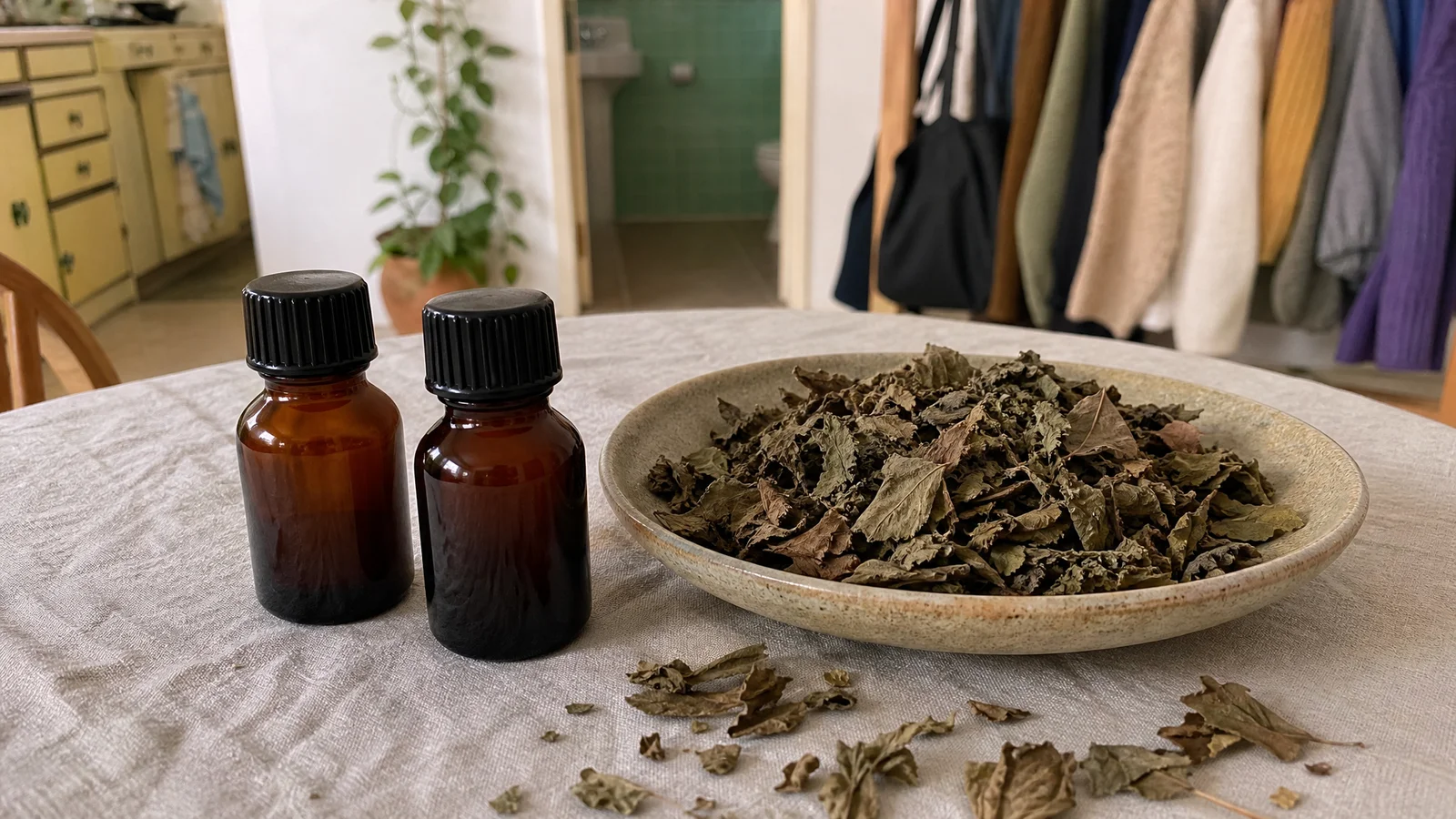
- A botanical name, Pogostemon cablin, a plant part and a process such as steam distilled point to an essential oil.
- "Fragrance", "parfum" or "fragrance oil" with no plant name points to a composed scent, which may contain natural material, synthetic material or both.
- "Patchouli type" or "inspired by" describes the aroma. It is not an ingredient list.
Why makers copy it at all
Natural patchouli oil is a crop product. A 1987 US patent assigned to a German chemical company describes it as available only in limited quantity and often of very variable quality, says patchoulol and a related compound are what decide its fragrance, and says no economically practical synthesis of them was known when it was filed (Trimethylcyclohexene derivatives, their preparation and use as perfume substances, US 4,704,477). The patent's goal was to offer synthetic substances that could replace natural oil in fragrance compositions. That is the applicant's claim rather than an independent test, but it shows why composed patchouli exists: consistency and cost. Leaf oil varies with plant, harvest, curing and still, which is part of its character.
A review of the plant gives a feel for that natural spread, reporting patchouli alcohol around 32% to 38% in leaf oils from China and Vietnam, and describing the aroma as a powerful sweet, herbaceous, aromatic, spicy fragrance with a wine-like quality (A Comprehensive Review on the Phytochemical Constituents and Pharmacological Activities of Pogostemon cablin Benth.: An Aromatic Medicinal Plant of Industrial Importance, Molecules, 2015). The EFSA panel describes the oil it assessed as leafy and humic (Safety and efficacy of a feed additive consisting of an essential oil derived from the leaves of Pogostemon cablin Benth. (patchouli oil) for use in all animal species (FEFANA asbl), EFSA FEEDAP Panel, 2025). A fragrance oil, by contrast, smells the way its maker designed it to.
Smelling the difference
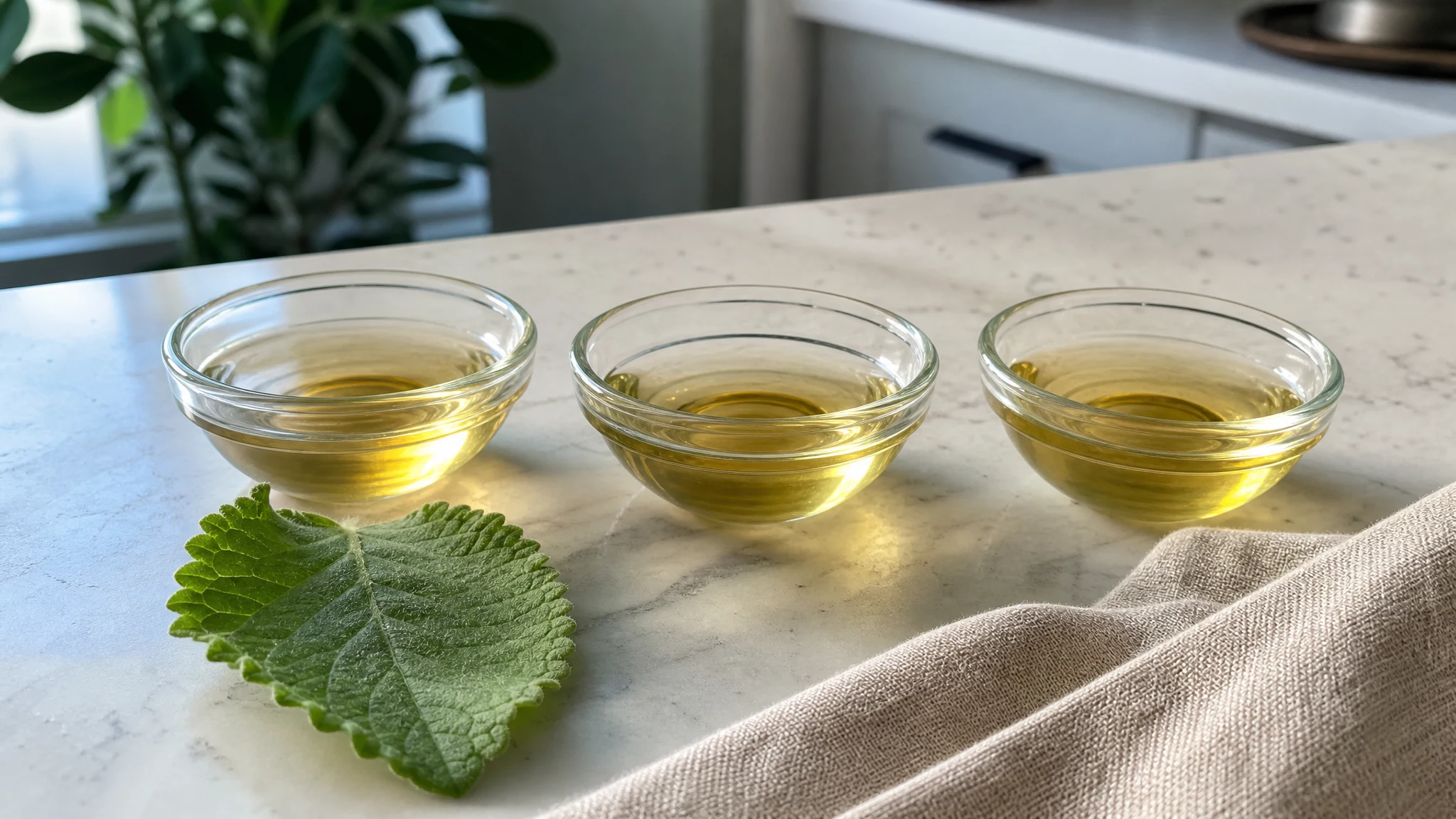
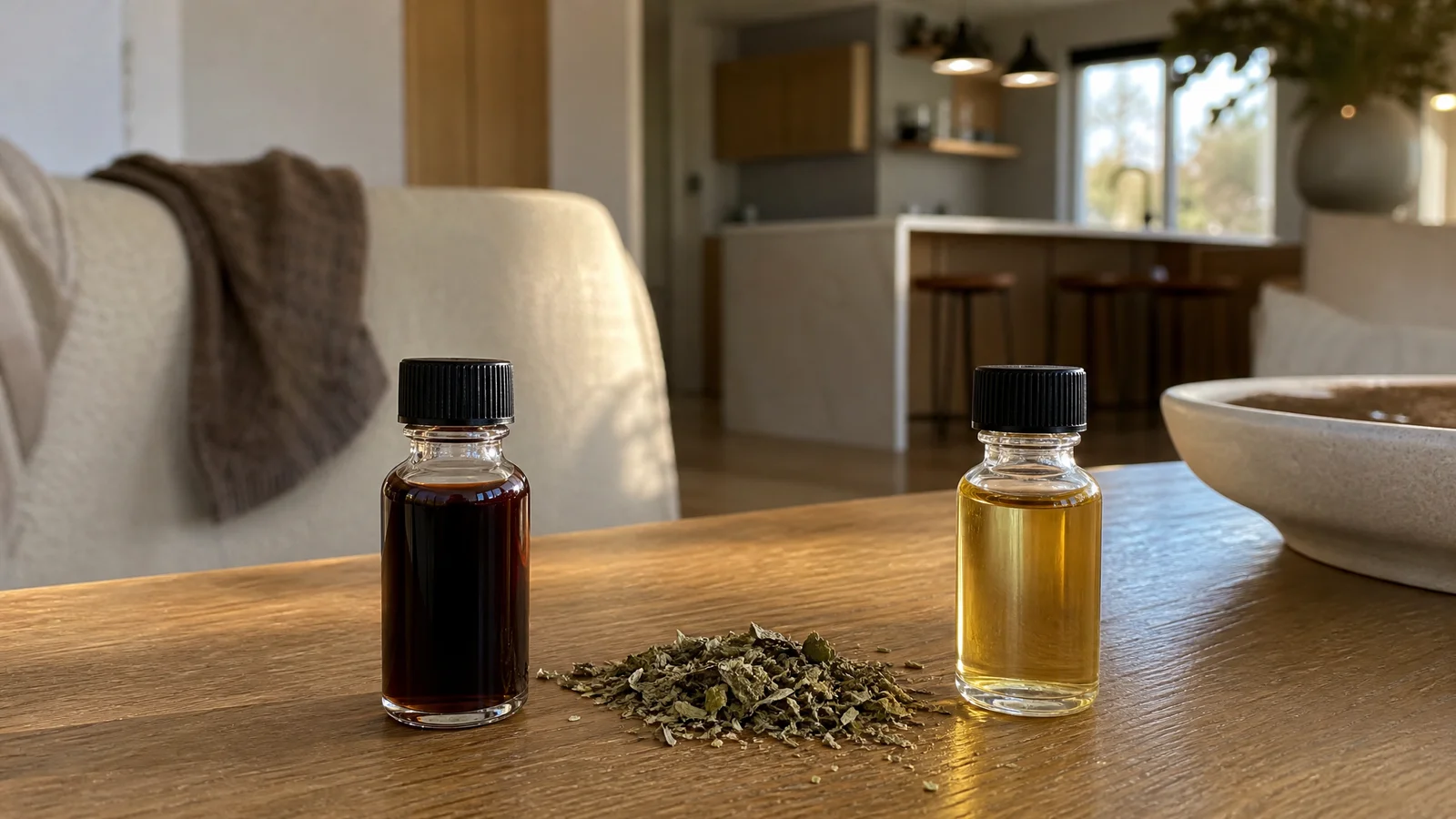
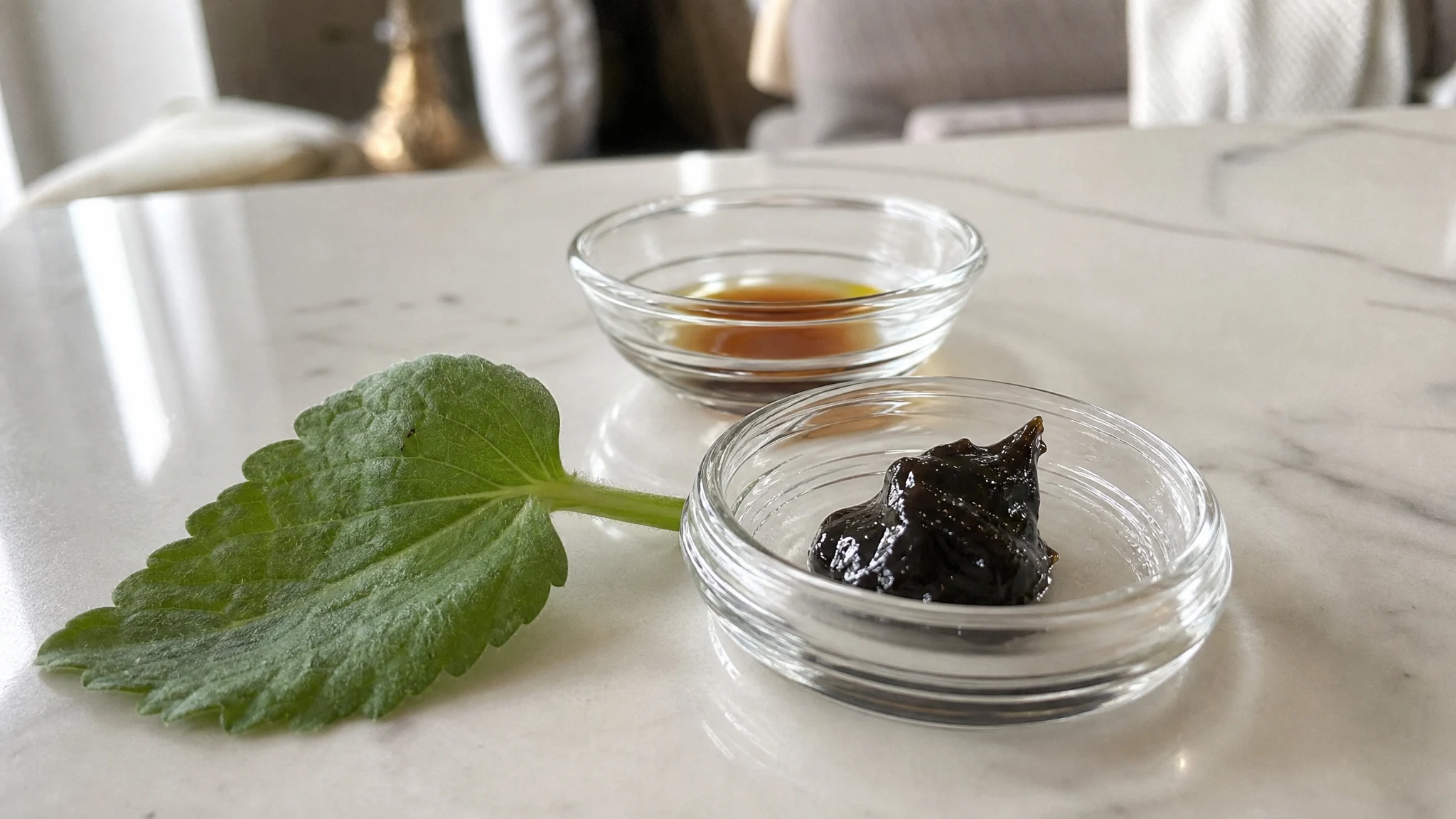
If you can, open both bottles side by side and sniff from a paper strip rather than straight from the bottle. Our oil has a deep, earthy, wine-like character, with damp forest floor and aged wood and a little cocoa behind it. A composed fragrance can smell tidier and more even, since it was designed that way. Neither is wrong; they simply have different personalities. Come back to the strip after a few minutes, because the first sniff of a base note is rarely the whole story.
Which one for which job
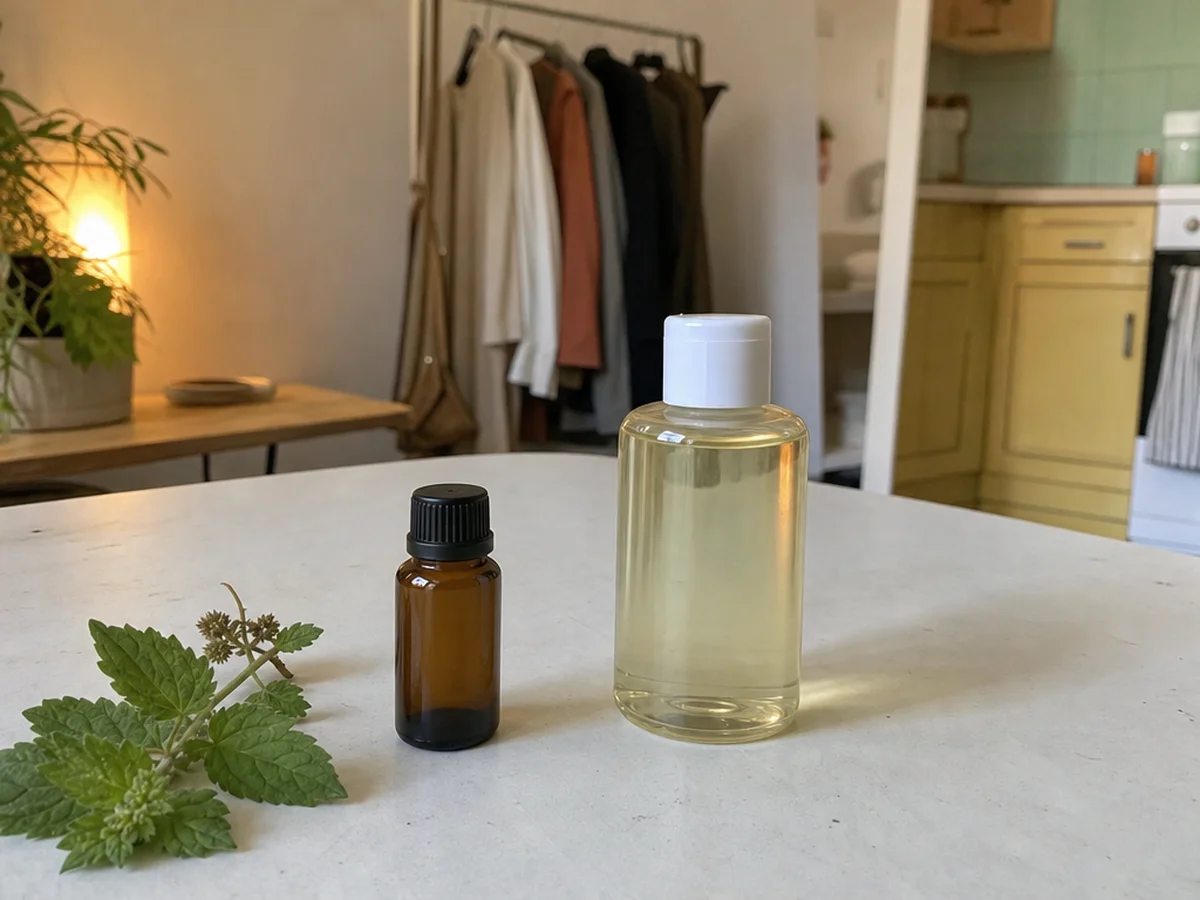
Leaf oil makes sense when you want the real plant: perfume, a diffuser blend, an unscented base given an earthy note, a soap or cosmetic where the label should name a botanical. Because the only authority statement we could read, EFSA's, classes the oil it assessed as an irritant and a dermal and respiratory sensitiser, we suggest diluting our oil to 0.5% to 2% in a carrier and patch testing first, and starting at the lower end.
A fragrance oil makes sense when you need an exact, repeatable scent at a modest cost and the label can carry the word fragrance, such as a candle line or a household product. Its safety information comes from its maker, not from a general rule: the FDA says marketers are legally responsible for making sure cosmetics are safe and properly labelled. Neither type is automatically gentler on skin, so check each maker's usage guidance before you put one in a leave-on product.
Single-ingredient labels are not a guarantee either. PROSEA notes that oils of other plants are sold as patchouli and that extenders such as benzyl benzoate and propylene glycol are used (Pogostemon (PROSEA), Pl@ntUse), so a batch analysis tells you more than a word on the front. Our guide to reading a GC-MS report shows how, and the post on what patchouli oil is goes through the label wording line by line.
A habit worth keeping
Whichever you choose, keep the label. Copy the botanical name, the plant part and the process into your project notebook, or tape the label itself inside the cover. When you come back to a recipe months later, you will know exactly what went in and you will be able to repeat it. It is small housekeeping that pays off the moment a batch turns out better than you expected.
We sell leaf oil only, steam-distilled and sold neat, so any fragrance oil will have to come from a craft or supply shop. Whichever you choose, the best habit is to let the back of the bottle make the decision and leave the front to the marketing.
Patchouli Essential Oil
Patchouli Essential Oil from our own shop, in sizes from 0.5 oz to bulk.
From $20.99
Shop Now →Sources & Further Reading
- 21 CFR 701.3 - Designation of ingredients., Legal Information Institute
- Fragrances in Cosmetics, FDA
- Trimethylcyclohexene derivatives, their preparation and use as perfume substances, Google Patents
- A Comprehensive Review on the Phytochemical Constituents and Pharmacological Activities of Pogostemon cablin Benth.: An Aromatic Medicinal Plant of Industrial Importance, Molecules, 2015
- Safety and efficacy of a feed additive consisting of an essential oil derived from the leaves of Pogostemon cablin Benth. (patchouli oil) for use in all animal species (FEFANA asbl), EFSA FEEDAP Panel, 2025
- Pogostemon (PROSEA), Pl@ntUse