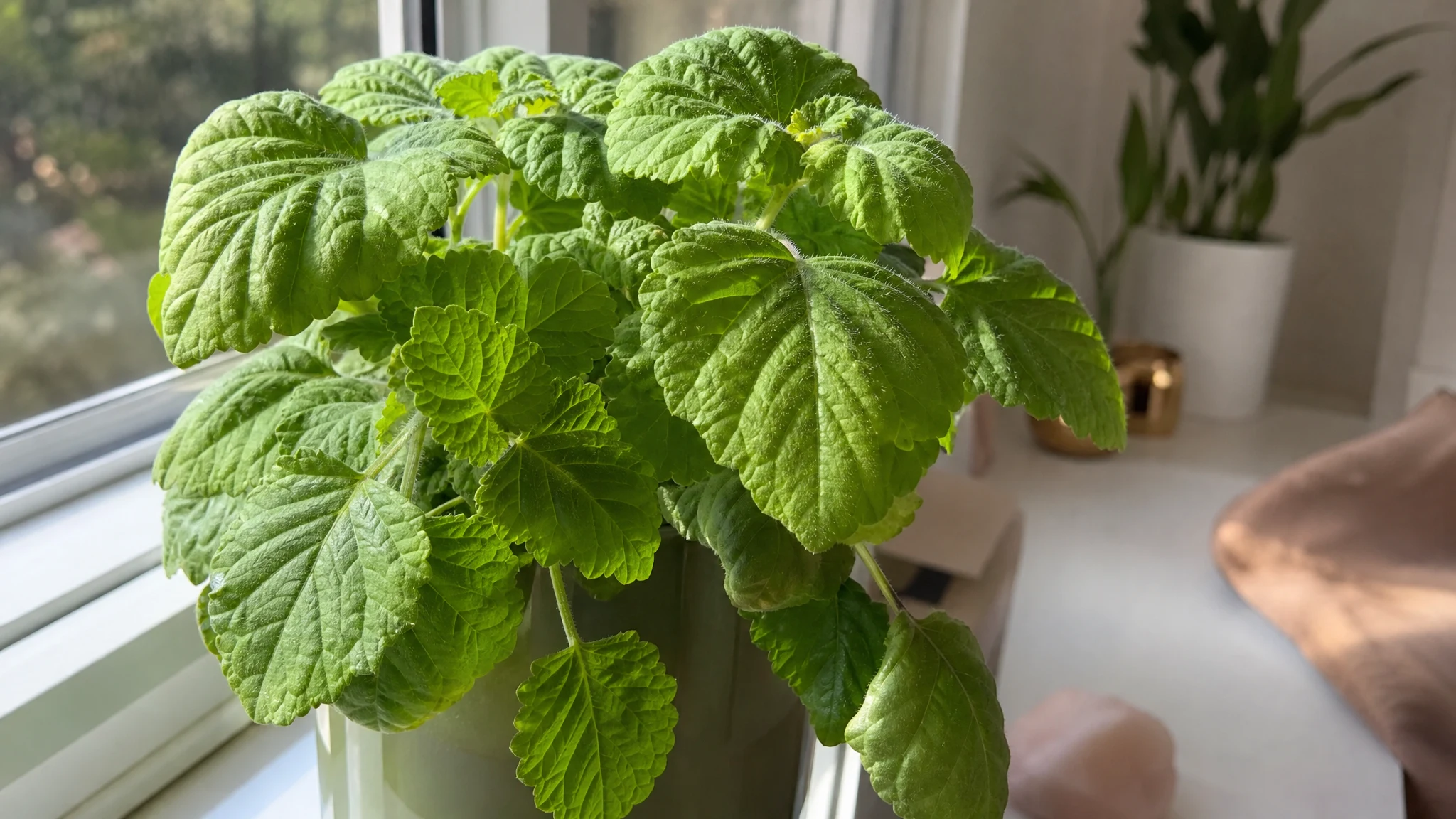
Does Patchouli Oil Repel Mosquitoes? What Studies Show
Burn a patchouli stick on the porch and the old lore says the mosquitoes will drift off. It is a charming idea with a real, if modest, scientific footprint: in cage experiments, patchouli oil has kept mosquitoes off treated skin for a while. The interesting part is how much oil it took, and what that means for the way you would actually use it.
Patchouli Essential Oil
Our own Patchouli Essential Oil, in sizes from 0.5 oz to bulk.
From $20.99
Shop Now →What the cage studies found
The best-known result comes from a 2005 study that tested 38 essential oils on volunteers' forearms against Aedes aegypti, the yellow fever mosquito. Each oil went on at 0.1 ml per 30 square centimetres. Undiluted patchouli, citronella, clove and a Thai oil called makaen all gave two hours of complete protection. At 10% or 50% strength, none of the 38 oils held for two hours. Clove then went on to protect for two to four hours against all three mosquito species tested.
A 2023 study looked at seven oils against Aedes mosquitoes in hand-in-cage tests. Clove bud and patchouli oil were the top performers, so the two were examined further. Clove came out well ahead: the dose needed for a 50% repellent response was about 1,248 times lower for clove than for patchouli. In other words, patchouli did something, and clove did a lot more of it.
Two different experiments will never give the same minutes. They used different mosquito species, different carriers and different ways of counting a "bite". What they agree on is the shape of the finding: patchouli shows activity in a cage, the stronger the dose the better, and clove consistently beats it.
How much oil is two hours?
Here is arithmetic worth doing before you reach for the bottle. Neat oil at 0.1 ml per 30 square centimetres, over a forearm we will assume is about 600 square centimetres, comes to roughly 2 ml. At about 20 drops to the millilitre that is around 40 drops on one arm. Our own guidance for skin is 0.5% to 2% in a carrier oil. A full ounce (29.57 ml) of a 2% blend holds about 0.6 ml of patchouli, or roughly 12 drops, so the two-hour result used more than three times the oil in the strongest blend we describe, on a single arm.
That gap explains why we do not suggest skin application as a mosquito plan. A European safety assessment classes patchouli oil as irritant to skin and eyes and as a dermal and respiratory sensitiser, and we keep our own skin use at the low end, 0.5% to 1%, with a patch test first. A dose built for a cage is not a dose built for your forearm.
A story in a smoky evening
Part of why this idea lasts is how patchouli smells outdoors. It carries well in warm air, earthy and a little sweet, and it blends into the smell of cut grass, damp soil and evening dew. Many people associate it with porches, festivals and open windows in summer, so it is no surprise that the stories link it to keeping insects away. Lovely associations are not evidence, though, and it is worth keeping the memory and the data in separate boxes.
When a mosquito bite matters
For a backyard evening where mosquitoes are a nuisance and nothing more, scent is a pleasant extra and the choice is yours. Where mosquitoes can carry dengue, malaria, Zika or West Nile virus, the CDC recommends repellents registered with the EPA. Its list of active ingredients is DEET, picaridin, IR3535, oil of lemon eucalyptus, para-menthane-diol and 2-undecanone. Patchouli is not on it. A travel clinic or your physician can tell you what applies to your destination. We sell a fragrance oil, not a repellent, and we make no repellency claim for it.
If you just want a pleasant evening outdoors
Think about what you actually control. Empty anything that holds standing water, since that is where many mosquitoes breed, use a fan to keep air moving over your seat, and wear long, loose sleeves when the evening turns buzzy. These are plain, practical steps with nothing to do with any oil. Then, if you like, let the scent of patchouli be part of the mood of the evening rather than part of the plan.
If you are ever tempted to sell a homemade product with a mosquito claim, the EPA page on personal insect repellents and minimum risk pesticides is the place to start, because a repellent claim brings its own rules.
Keeping the oil where it belongs
If you simply love the smell of patchouli out of doors, enjoy it as a fragrance. Keep the bottle capped and out of reach of children, and think twice about scenting spaces that pets use; our posts on children and pets explain why. The older story of patchouli between folded clothes is a closer fit to how the plant has really been used, and our closet article follows it. For the broader picture of repellent studies, see our insect repellent post.
Patchouli's reputation among mosquitoes is part lore, part lab result, and a good reminder that a promising number in a cage is only the first chapter of the story.
Patchouli Essential Oil
Patchouli Essential Oil from our own shop, in sizes from 0.5 oz to bulk.
From $20.99
Shop Now →Sources & Further Reading
- CDC. Preventing Mosquito Bites. www.cdc.gov/mosquitoes/prevention/index.html
- Trongtokit Y et al., 2005. Comparative repellency of 38 essential oils against mosquito bites. Phytotherapy Research. pubmed.ncbi.nlm.nih.gov/16041723/
- Deng W et al., 2023. Repellent Screening of Selected Plant Essential Oils Against Dengue Fever Mosquitoes Using Behavior Bioassays. Neotropical Entomology. pubmed.ncbi.nlm.nih.gov/36928838/
- EPA. Personal Insect Repellents and Minimum Risk Pesticides. www.epa.gov/minimum-risk-pesticides/personal-insect-repellen
- EFSA FEEDAP Panel, 2025. Safety and efficacy of a feed additive consisting of an essential oil derived from the leaves of Pogostemon cablin Benth. (patchouli oil) for use in all animal species (FEFANA asbl). pmc.ncbi.nlm.nih.gov/articles/PMC12004087/