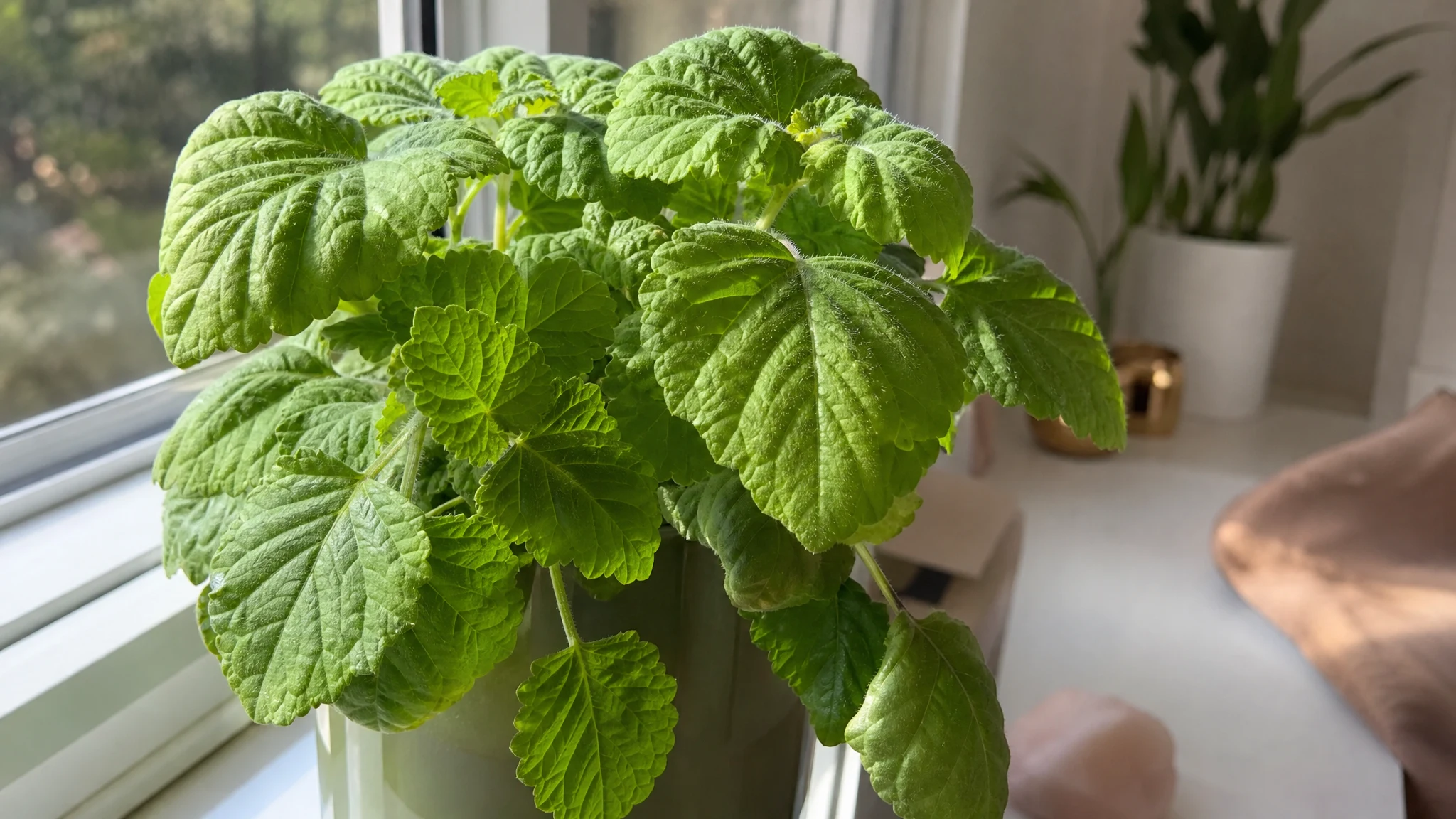
Does Patchouli Repel Insects? Folklore and Facts
Patchouli's reputation with insects is older than its reputation as a perfume. Long before the oil was bottled, the dried leaves of Pogostemon plants were tucked between stored clothing to keep insects away. It is a charming bit of history, and it is also the best place to start when separating folklore from what patchouli can do for you today.
Patchouli Essential Oil
Our own Patchouli Essential Oil, in sizes from 0.5 oz to bulk.
From $20.99
Shop Now →Where the reputation began
The plant reference PROSEA records that the dried leaves of several Pogostemon species are placed between stored clothing to repel insects. It also notes that patchouli was probably grown in China some 2,000 years ago, where it even perfumed ink. The habit of storing cloth with strong-smelling leaves is a long one, and patchouli's strong, lingering scent suits it.
That is a statement about folk practice, not a guarantee. A fragrant wardrobe is pleasant whether or not it deters anything, and we describe our oil as a base note and natural fixative rather than a pest control product. If you enjoy the smell in a closet, a drop on a cotton pad kept away from the fabric itself is a gentle way to enjoy it, because patchouli can stain pale cloth and does not wash out easily. You can see our thoughts on that in our closet and wool article.
A closet the old way
If you like the idea of a scented wardrobe, keep it simple. Put one drop on a cotton pad, set the pad in a small dish or tuck it into a little fabric pouch, and place it on the shelf beside your folded clothes rather than touching them. Patchouli lingers and can stain pale cloth, so the oil should never meet the fabric itself. Shut the door, and when you open it again you will notice the scent first: deep, earthy, a little like damp woodland and aged wood.
The scent fades with time, so refresh the pad when you can no longer smell it. Think of it as a pleasant habit that perfumes your clothes, not as a guarantee against anything.
When bites are the worry
Mosquitoes and ticks are a different matter, because some of them carry disease. The CDC lists six active ingredients to look for in EPA-registered repellents: DEET, picaridin, IR3535, oil of lemon eucalyptus, para-menthane-diol and 2-undecanone. It says registered products are proven safe and effective when used as directed, and that the effectiveness of non-registered repellents, including some natural ones, is unknown. Patchouli oil is not on that list.
The EPA runs a search tool for finding a registered repellent that suits your situation, and it limits results to skin-applied products the agency has registered. Where there is any disease risk, from travel to local mosquitoes to ticks, that is the route we would point you to. We sell an aroma oil, not a repellent, and we make no claim of repellency for it.
Most of us meet patchouli through a market stall or a friend's coat, and that is where the oil is happiest. It belongs in your senses, not in your first-aid kit, and a folk habit is a perfectly good reason to enjoy it.
If you are curious about the practice, a good starting point is to ask older relatives what they tucked into their linen cupboards. You may be surprised how many fragrant leaves and flowers turn up, and how much of it was about the pleasure of opening a drawer.
What lab studies add
Researchers have tested patchouli oil on insects in laboratory assays. In a screen of 38 essential oils against mosquitoes biting human volunteers, undiluted patchouli oil gave about two hours of complete protection, while at 10% and 50% none of the 38 oils reached two hours. Studies like that are useful for scientists, but they are a poor guide for the home. The best result involved undiluted oil on skin, and our guidance for skin is the opposite: dilute to 0.5% to 2% in a carrier oil and patch test first. The European Food Safety Authority's 2025 opinion describes patchouli oil as an irritant to skin and eyes and a skin and respiratory sensitiser, so we would not copy that protocol.
For a sense of scale, a landmark 2002 comparison in the New England Journal of Medicine tested 16 products on 15 volunteers. A 23.8% DEET product averaged about five hours of complete protection, and the botanical products it tested did far worse. A cage assay is also a best case, so real outdoor protection is likely to be shorter still.
Sorting folklore from planning
It helps to keep two questions apart. One is "what do I like the smell of?" and the other is "what do I need to protect myself on a trip or a hike?" Patchouli can answer the first beautifully. The second belongs to a registered repellent, bought at a pharmacy or outdoors shop and used as its label directs. Keeping the two in separate mental boxes means you can enjoy the folklore without leaning on it.
Enjoy it for the aroma
That leaves patchouli with a role it has always been good at: smelling earthy and rich, and quietly scenting the places where you keep things. Keep the bottle away from children and pets, and never take it internally.
If you like the history, our history of patchouli follows the shawls and the perfume trade, and our mosquito article looks at the studies in more depth.
Patchouli's story with insects is a lovely one to tell, and one best kept in the wardrobe rather than on the trail.
Patchouli Essential Oil
Patchouli Essential Oil from our own shop, in sizes from 0.5 oz to bulk.
From $20.99
Shop Now →Sources & Further Reading
- Pogostemon (PROSEA) - Pl@ntUse. plantuse.plantnet.org
- Preventing Mosquito Bites | Mosquitoes | CDC. cdc.gov/mosquitoes/prevention
- Find the Repellent that is Right for You | US EPA. epa.gov/insect-repellents
- Trongtokit Y et al., 2005. Comparative repellency of 38 essential oils against mosquito bites. Phytotherapy Research. pubmed.ncbi.nlm.nih.gov/16041723
- Fradin MS, Day JF, 2002. Comparative efficacy of insect repellents against mosquito bites. New England Journal of Medicine. pubmed.ncbi.nlm.nih.gov/12097535
- EFSA FEEDAP Panel, 2025. Safety and efficacy of a feed additive consisting of an essential oil derived from the leaves of Pogostemon cablin Benth. (patchouli oil) for use in all animal species (FEFANA asbl). EFSA Journal. PMC12004087