Patchouli vs Cedarwood Oil: Which Base Note?
Both patchouli and cedarwood are base notes, and both turn up in soaps, candles and perfume bases. But hold a strip of each to your nose and the difference is immediate: one smells of a wet forest, the other of a freshly sharpened pencil. Here is how they differ and where each fits.
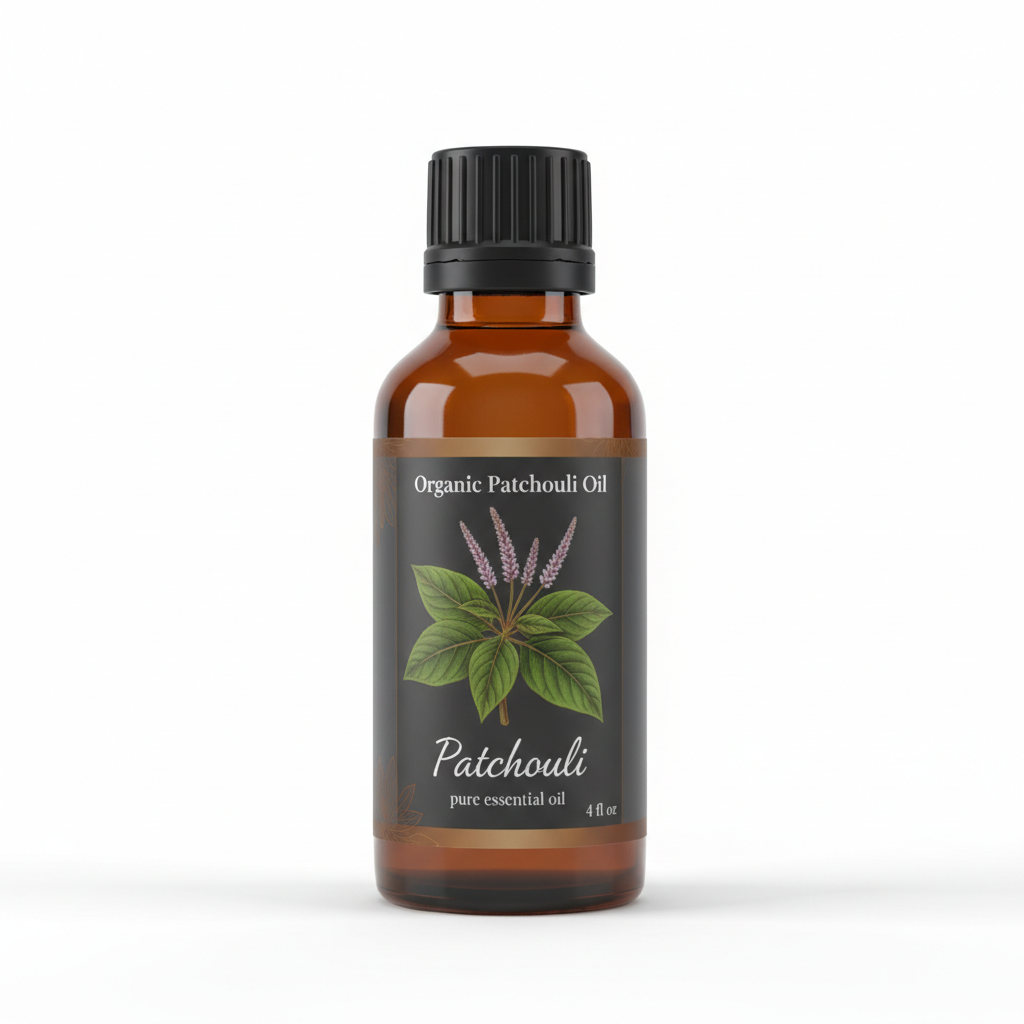
Patchouli Essential Oil
Our own Patchouli Essential Oil, in sizes from 0.5 oz to bulk.
From $20.99
Shop Now →The scent difference
We describe our patchouli as deep, earthy and wine-like, with damp forest floor, aged wood and a hint of cocoa. Cedarwood, in the broad sense, is drier. The compounds that give cedarwood oils their woody fragrance are mostly sesquiterpenoids, and a 2026 review of cedarwood oils notes that these are generally responsible for the woody fragrances of the group. In plain terms, patchouli is the damp ground and cedar is the dry timber. That is why they complement each other. We list cedarwood among the oils that blend well with patchouli.
"Cedar" is not one tree
This is the part that surprises people. Patchouli is one species, Pogostemon cablin. "Cedarwood oil" is a trade name for oils from wood of many different trees, and the same review lists genera as varied as Cedrus, Juniperus, Cupressus, Thuja and Cedrela, all commonly called cedar. Their chemistry differs a good deal:
- True cedars of the genus Cedrus, such as Atlas cedar, are dominated by himachalenes and atlantones.
- Virginia cedarwood, from Juniperus virginiana, is built mostly on cedrenes, thujopsene and cedrol. In the 56 commercial samples the authors analysed, alpha-cedrene averaged about 32 per cent, thujopsene about 19 per cent and cedrol about 13 per cent.
So when a recipe says "cedarwood", ask which one. Two bottles with the same name can smell noticeably different, and the Latin name on the label is your best clue. Patchouli is simpler; there is far less naming ambiguity to sort through, though we still advise checking the botanical name, as in our guide to reading a patchouli label.
How they behave in a blend
Both last. PROSEA says patchouli is almost universally used as a fixing agent in perfumery, in very small doses. Cedarwood oils are also base notes. The difference is in what they add: patchouli adds darkness, sweetness and a lingering, almost wine-like depth, while cedarwood adds dryness and structure. Used together, cedarwood stops patchouli from feeling muddy and patchouli gives cedarwood some warmth.
As an arithmetic suggestion, not a tested recipe: in a 10 ml perfume or room spray base, you might start with 3 drops of cedarwood to 1 of patchouli (about 20 drops per ml is a convention, droppers vary), smell, then add patchouli a drop at a time. Patchouli is the stronger personality, so it is easier to add than to take back. Our blend partners guide and autumn and winter diffuser blends give more ideas.
Which suits which use
- Candles and room scent: both are fine in a base. Our oil's natural dark reddish brown can shift a light wax toward tan or amber, so test a small batch. See our patchouli candles guide.
- Soap: patchouli is dark in colour and strong in scent; cedarwood is pale and softer. Neither is a substitute for the other.
- Body products: follow dilution guidance for each oil. Ours is 0.5 per cent to 2 per cent in a carrier oil with a patch test first. For cedarwood, which we do not sell, follow the supplier's guidance and check current IFRA standards for your formulation, since different cedarwood oils carry different constituents.
Where to buy and what to ask
We sell patchouli only. Cedarwood is easy to find at a craft supply shop; look for the Latin name on the bottle, since "cedarwood" alone could mean any of several species, and ask for the batch analysis if you need to know exactly what is in it.
The short answer
If you want your base note damp, dark and long-lingering, take patchouli. If you want it dry, clean and woody, take cedarwood. For most blends, you want some of each, and the ratio is where you get to be a perfumer.
Patchouli Essential Oil
Patchouli Essential Oil from our own shop, in sizes from 0.5 oz to bulk.
From $20.99
Shop Now →Sources & Further Reading
- Setzer WN, Satyal P. Cedarwood Oils: The Wood Essential Oil Compositions from Trees Known as "Cedar". Plants (Basel), 2026.
- Pogostemon (PROSEA) - Pl@ntUse.