Patchouli vs Sandalwood: Earthy Base or Sweet Wood?
Patchouli and sandalwood are often poured into the same blend, and fans of one often wonder about the other. They are both base notes and both last for hours on a blotter, but one smells of leaves and damp ground and the other of warm, soft wood. Here is how to tell which suits what you are making.
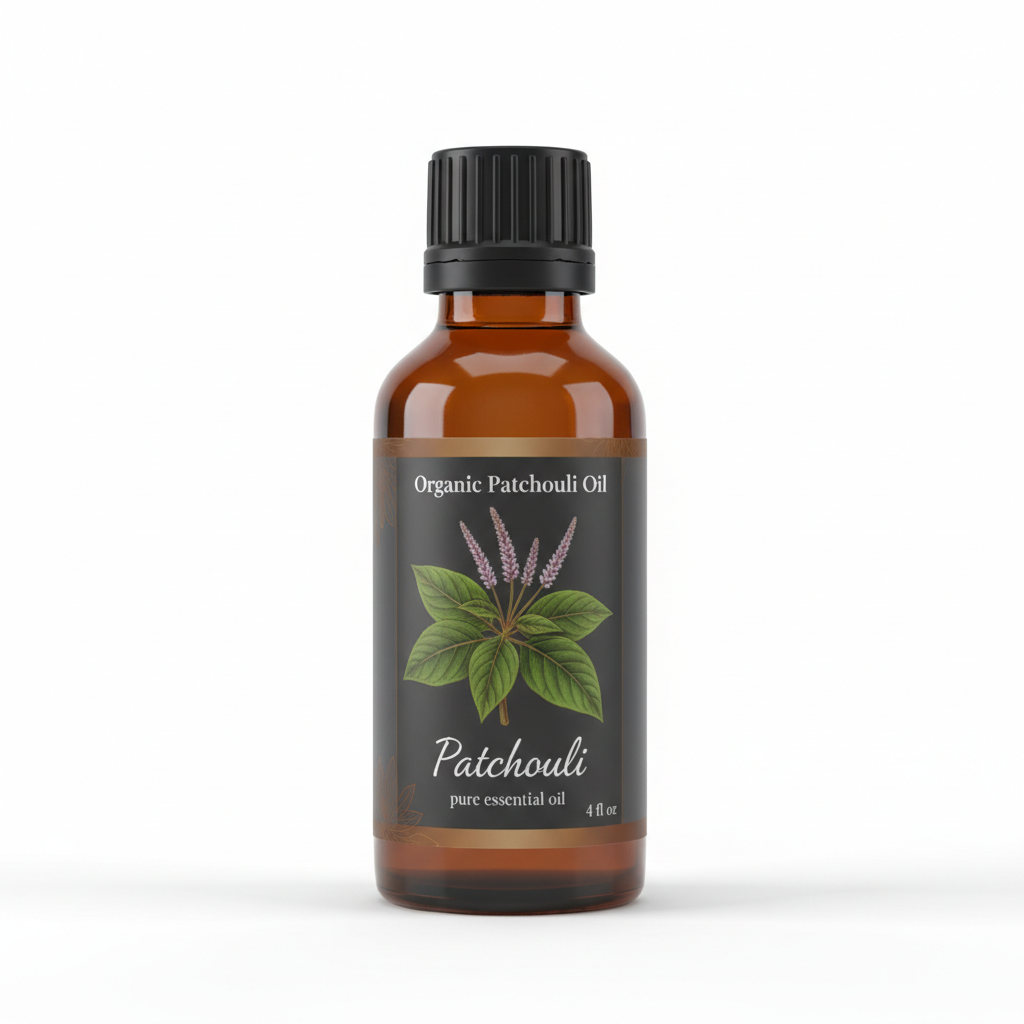
Patchouli Essential Oil
Our own Patchouli Essential Oil, in sizes from 0.5 oz to bulk.
From $20.99
Shop Now →Two different moods
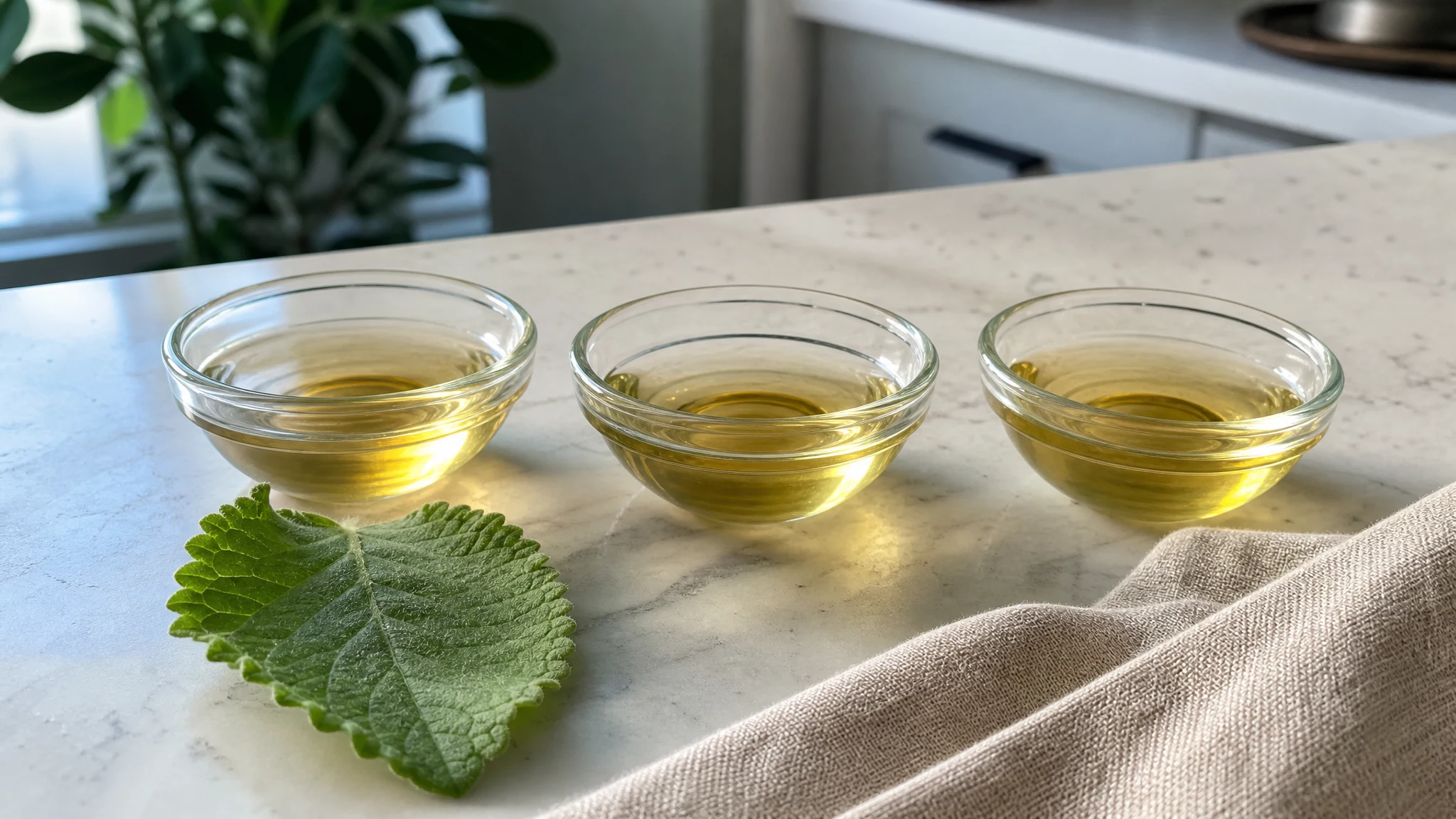
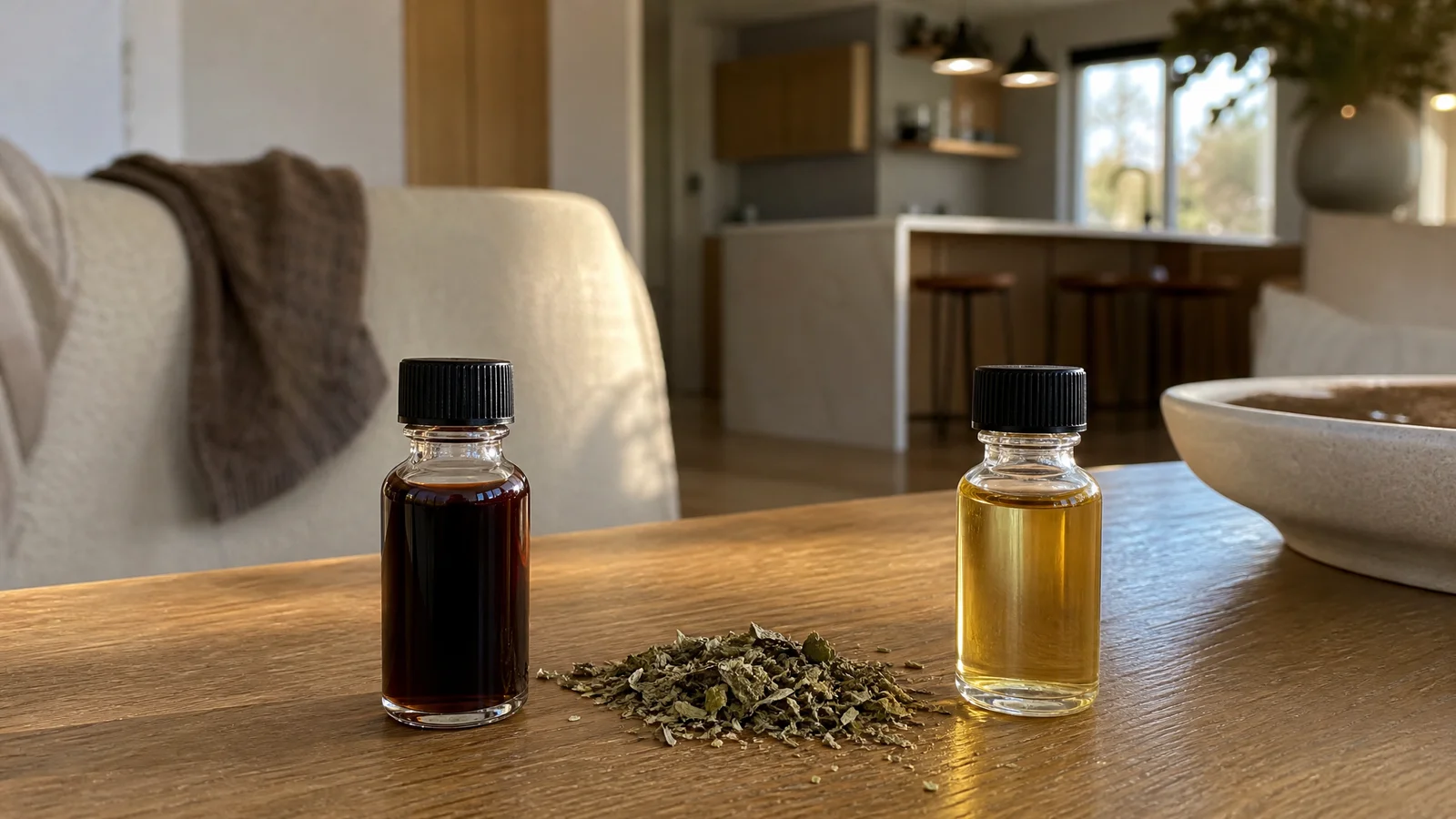
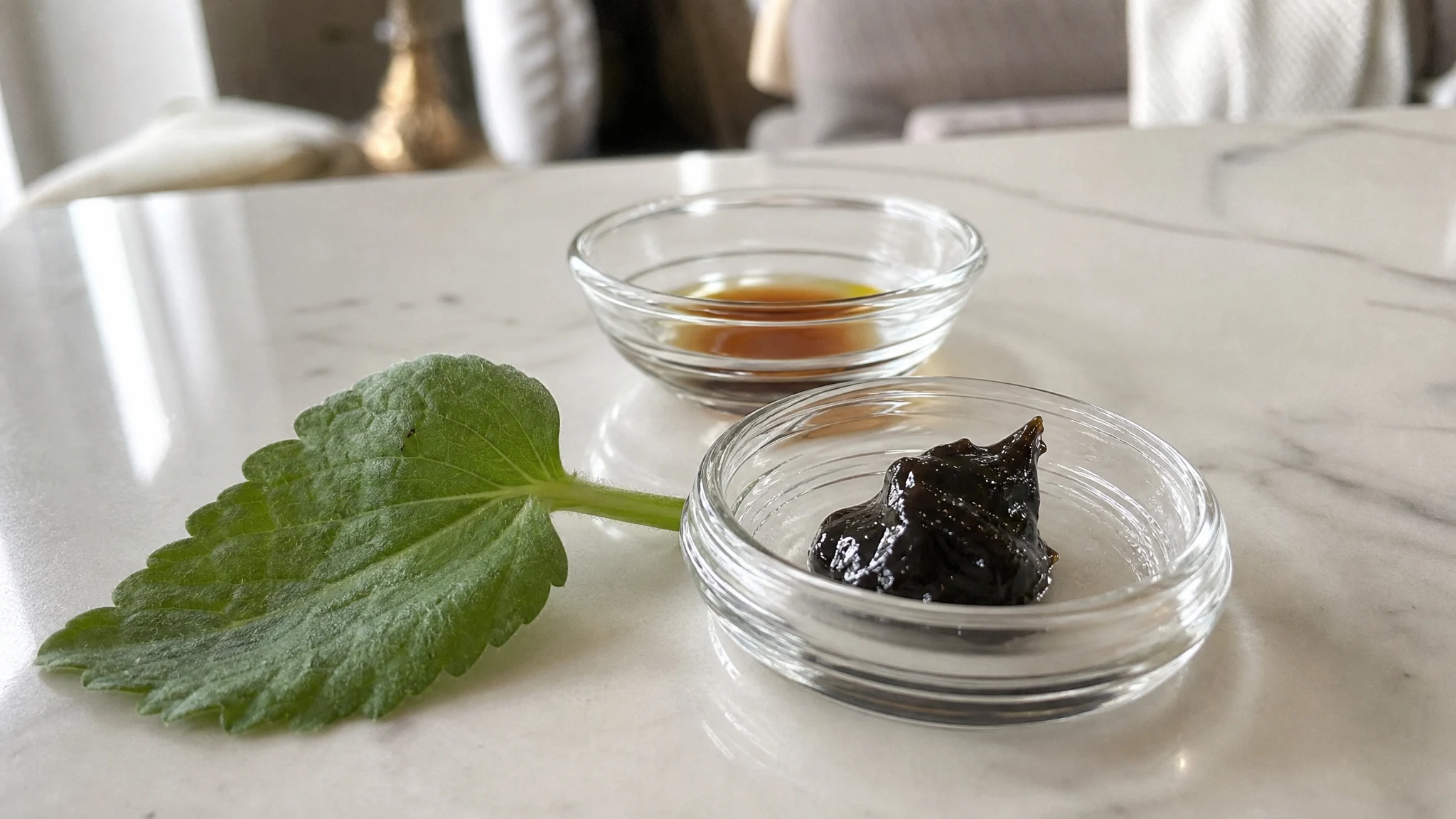
We describe our patchouli as deep, earthy and wine-like, with notes of damp forest floor, aged wood and cocoa. It is dark, a little sweet and unmistakably botanical. Sandalwood is a gentler thing. A 2021 paper on sandalwood oil quality describes true sandalwood oil as a transparent, slightly viscous liquid, almost colourless to pale yellow, with a persistent, woody, sweet "oriental" fragrance. Put bluntly: patchouli grows on you like moss, sandalwood like a warm wooden spoon.
That contrast is why they pair so well. We list sandalwood among the oils that blend well with patchouli, and the logic is easy to hear: sandalwood rounds off patchouli's edges and patchouli gives sandalwood some depth.
Where each comes from
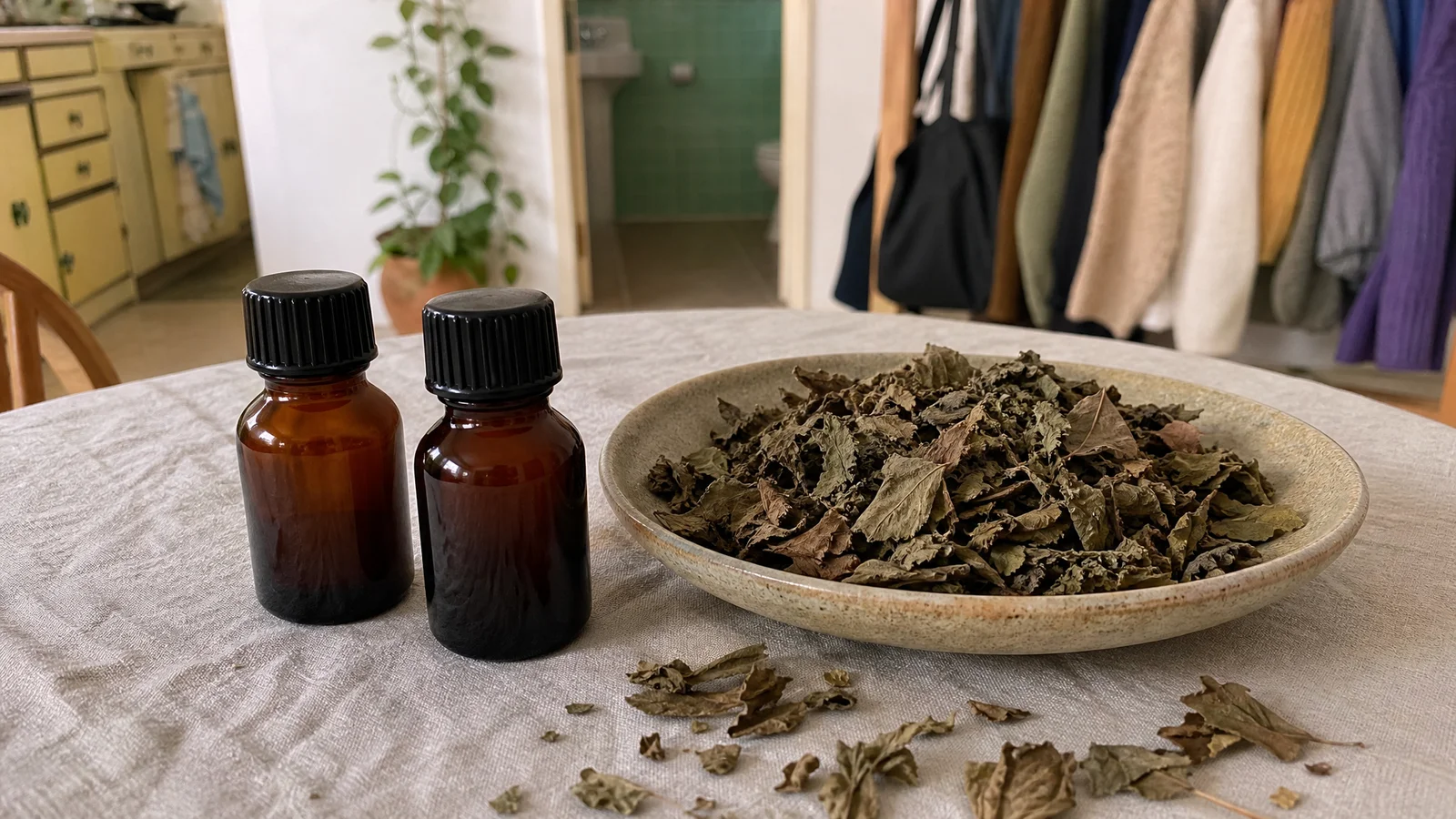
Patchouli oil is steam distilled from leaves. Sandalwood oil, according to the same paper and the ISO 3518 standard it describes, is distilled from the wood and roots of Santalum album, the East Indian sandalwood tree. A tree that takes decades to mature makes a very different supply story from a quick-growing herb, and that helps explain why sandalwood has a reputation as one of the world's most valuable raw materials, while patchouli is a relatively approachable base note.
What is in the bottle
Patchouli's signature is patchoulol; a European Food Safety Authority assessment of a patchouli oil found about 34 per cent in five batches. True sandalwood leans on santalols. The same ISO standard, as summarised in the paper, expects free alcohols of around 90 per cent, with alpha-santalol at 41 to 55 per cent and beta-santalol at 16 to 24 per cent. You do not need to memorise any of that. The point is that the two oils are built around different molecules, which is why they do not smell alike and cannot stand in for each other.
The sandalwood labelling trap
If you go shopping for sandalwood, be alert. The 2021 study looked at 50 websites each in Polish, German and English and found that only a small share offered oil that was clearly Santalum album at a believable price. Many products called "sandalwood" were actually West Indian sandalwood, Amyris balsamifera, a tree in the citrus family, and on the Polish sites that was more than half the products. Some listings gave no botanical name at all. The takeaway is practical: check the Latin name on any bottle before you buy, and ask the seller for a batch analysis if the price looks too good. That habit is just as good for patchouli, and our guide to checking whether patchouli oil is genuine lays it out.
Which to pick for what
- Soap and body products: patchouli brings a strong, dark character that is easy to overdo, so start small. Our cold process soap guide covers scent and colour.
- Perfume: patchouli is an anchor and fixative; sandalwood is the soft landing. Our patchouli perfume guide has a worked starting formula in drops.
- Diffusing: patchouli is heavy, and a single drop goes far; sandalwood is subtler. We sell only the patchouli, so you will find sandalwood at a craft supply shop or specialist retailer.
A simple way to blend them
As a suggestion only, built on arithmetic and not on a tested recipe: for 10 ml of perfume oil base you might try 2 drops of patchouli to 4 of sandalwood and adjust by nose. Because patchouli is so persistent, add it first, a drop at a time. Dilute any blend for skin to 0.5 to 2 per cent in a carrier oil with a patch test first, which is our guidance for patchouli. For sandalwood, check the IFRA standards for your own formulation instead of relying on our figures.
So which one?
If you want dark and earthy with a long memory, patchouli. If you want creamy, soft and quiet, sandalwood. If you cannot choose, a little of both is the oldest answer in the book.
Patchouli Essential Oil
Patchouli Essential Oil from our own shop, in sizes from 0.5 oz to bulk.
From $20.99
Shop Now →Sources & Further Reading
- Hartman-Petrycka M, Lebiedowska A. The Assessment of Quality of Products Called Sandalwood Oil Based on the Information Provided by Manufacturer of the Oil on Polish, German, and English Websites. Evidence-Based Complementary and Alternative Medicine, 2021.
- Safety and efficacy of a feed additive consisting of an essential oil derived from the leaves of Pogostemon cablin Benth. (patchouli oil) for use in all animal species (FEFANA asbl). EFSA FEEDAP Panel, 2025.