Patchouli vs Vetiver: Leaf Oil or Root Oil?
Ask a perfumer to name two base notes that smell like the ground and you will hear patchouli and vetiver in the same breath. They share a job and a reputation, yet they come from different parts of different plants and they smell, once you look closely, quite unlike each other. Knowing the difference saves you from buying one when you wanted the other.
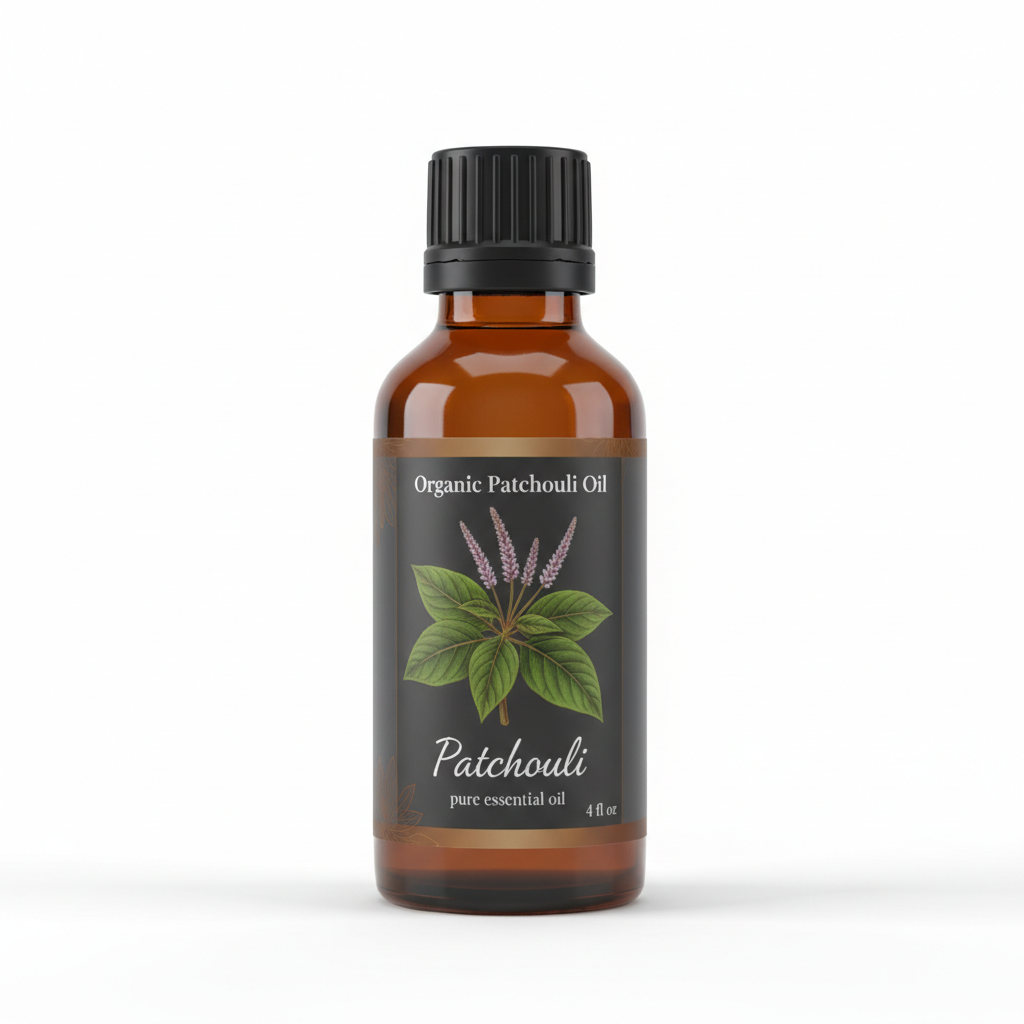
Patchouli Essential Oil
Our own Patchouli Essential Oil, in sizes from 0.5 oz to bulk.
From $20.99
Shop Now →Leaf against root
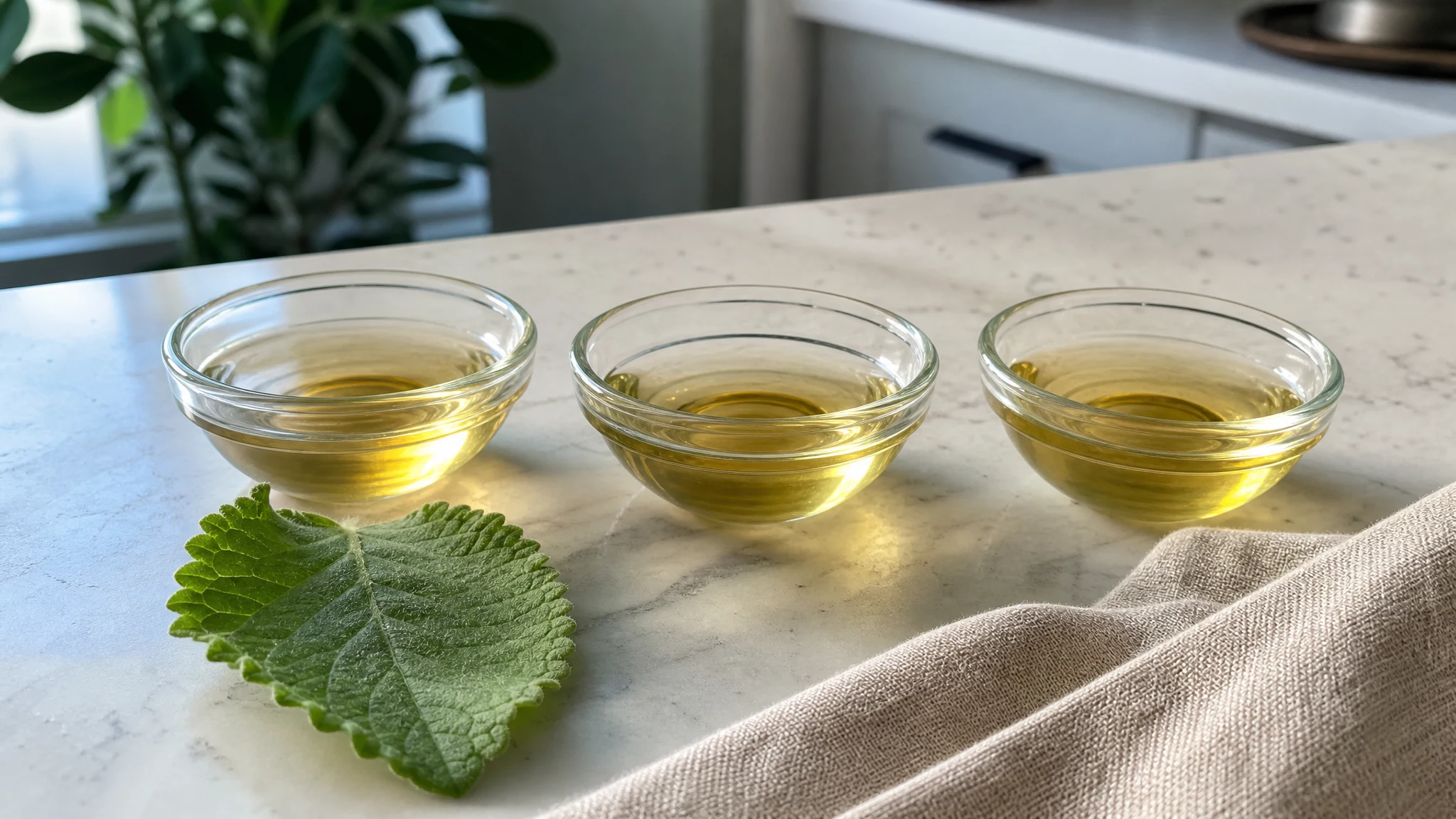
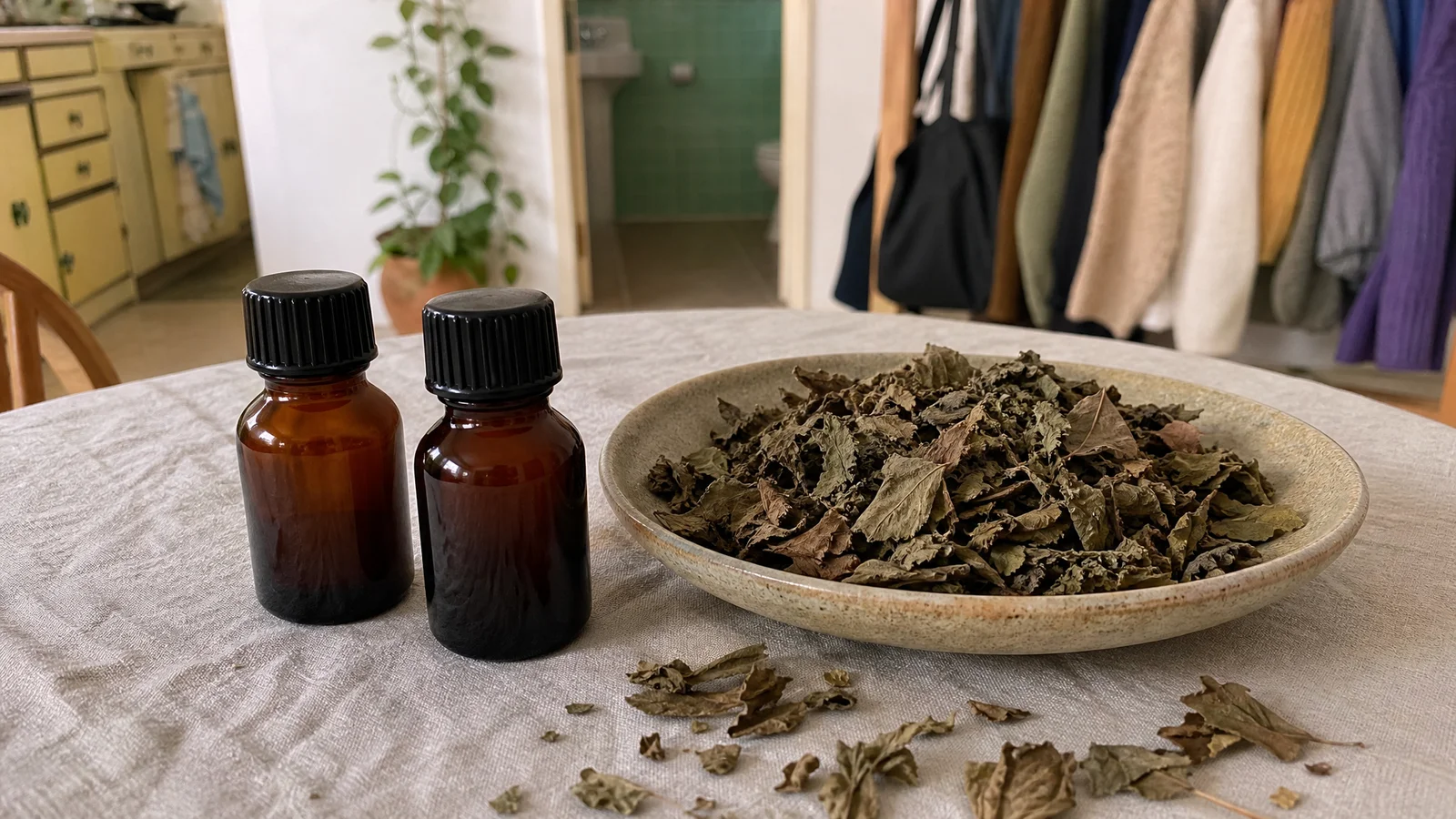
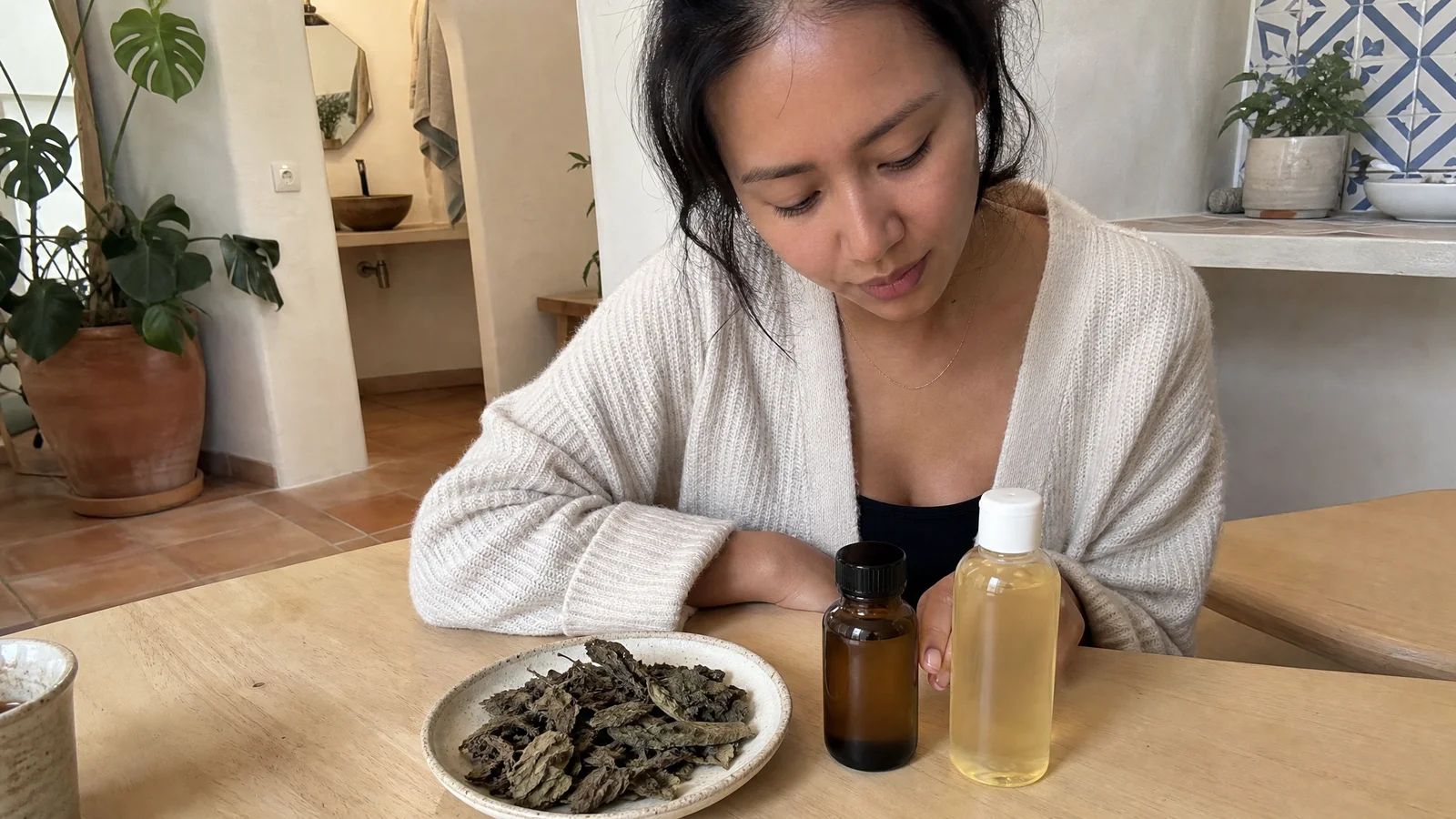
Patchouli oil is steam distilled from the leaves of Pogostemon cablin, a leafy herb in the mint family. PROSEA notes that the leaves are dried and cured before distillation. Ours is a steam-distilled leaf oil, with an aroma we describe as deep, earthy and wine-like, with hints of damp forest floor, aged wood and cocoa.
Vetiver oil comes from underground. A 2017 paper in Medicines on vetiver in cosmetics describes it as obtained from distilling the dried roots of the grass, and says the oil has heavy, earthy-woody and extremely persistent notes. That is the same word we use of patchouli: persistent. It is also why both oils end up in the base of so many perfumes.
How they smell side by side
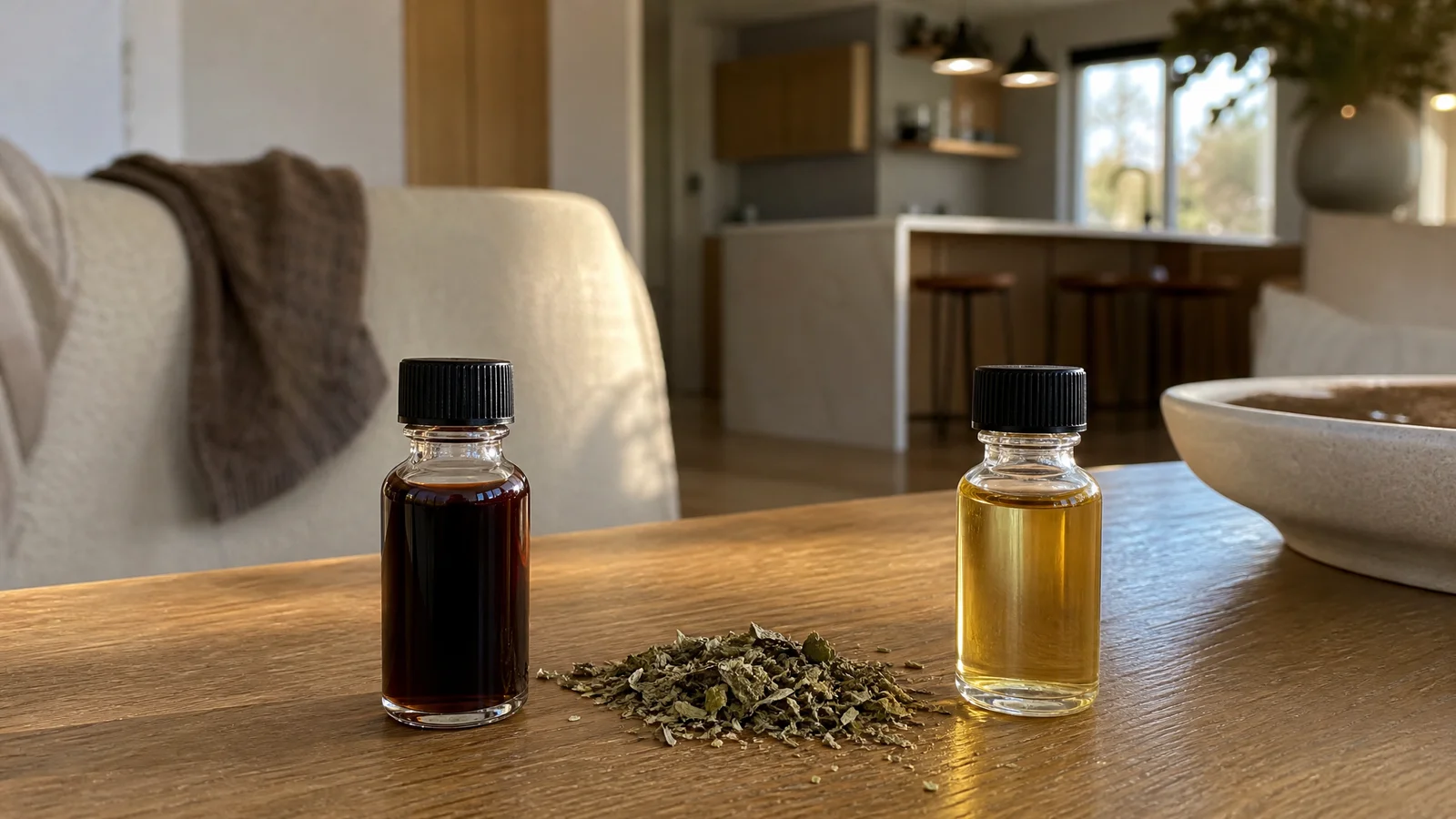
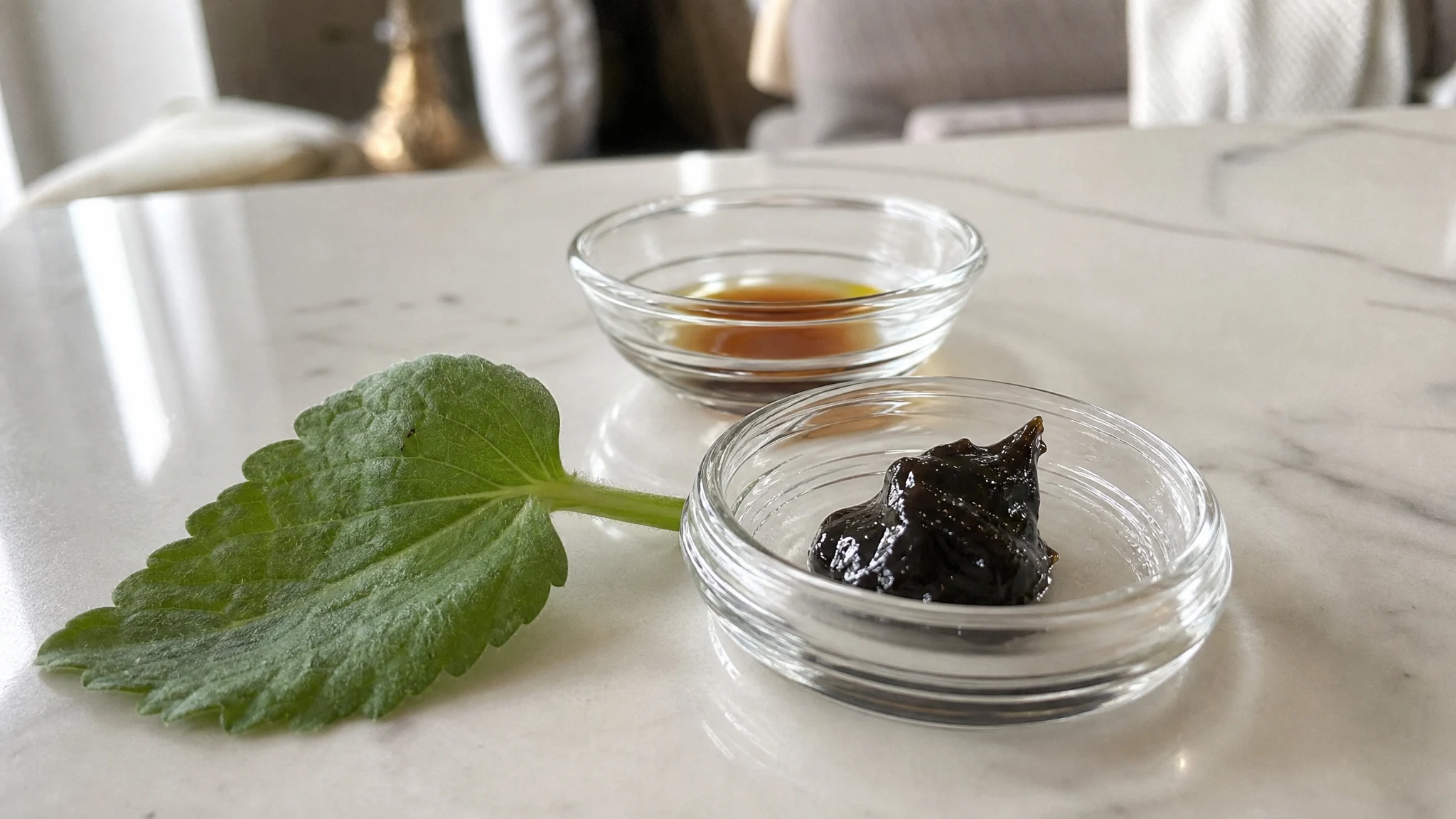
Leaf and root give different pictures of "earth". Patchouli is damp and dark and a little sweet, with that rounded, almost wine-like richness that deepens with time in the bottle. Vetiver is drier and smokier, closer to roots, soil and rough wood. The same paper includes a perfumer's description of three vetiver oils, with notes such as smoky, gaiac-like and peanut, and one oil whose flat character was linked to a low level of khusimol, a compound thought to contribute to the typical vetiver scent. Vetiver varies with where it is grown and how it is distilled, and so does patchouli, so treat any single description as a guide and not a rulebook.
If you want a quick test, smell them on separate paper strips and wait ten minutes. Patchouli tends to turn rounder and sweeter; vetiver tends to stay dry and woody. That is a suggestion for your own nose rather than a measurement.
What is in each bottle
Both oils are rich in sesquiterpenes, the larger, heavier aroma molecules that evaporate slowly, which is why they last. The signature compound in patchouli is patchoulol (also called patchouli alcohol): a European Food Safety Authority assessment of a patchouli oil measured about 34 per cent of it across five batches. Vetiver has a different cast. The Medicines paper lists compounds such as alpha-vetivone (8.4 to 13.3 per cent in the three oils it analysed) and khusimol (0.6 to 8.9 per cent), and the spread of figures shows how much vetiver samples can differ. For a reader, the takeaway is that the two oils have different chemical fingerprints, not a shared recipe with different labels. Our guide to patchoulol and patchouli chemistry goes deeper on ours.
Using them: where each fits
Both are base notes and both act as fixatives, meaning they help lighter notes last longer. PROSEA says patchouli is almost universally used as a fixing agent in perfumery, usually in very small doses. The vetiver paper describes vetiver as used both as a base note and a fixative.
- Choose patchouli when you want a round, dark, slightly sweet earthiness that sits well with rose, geranium, bergamot, sandalwood and cedarwood. Our patchouli blend partners guide covers ratios.
- Choose vetiver when you want something drier and smokier that reads as root and soil. You will find it at a craft supply shop or specialist aroma retailer, since we only sell patchouli.
- Use them together in a small amount if you like a deeper base: the combination is a matter of taste and a drop or two goes a long way.
Skin and storage
The same habits apply to both. Dilute well before skin contact. Our guidance for patchouli is 0.5 per cent to 2 per cent in a carrier oil with a patch test first, and our patch test guide shows how. For vetiver, follow the supplier's guidance and the current IFRA standards for your formulation; we do not give a figure for an oil we do not sell. Both oils are best kept cool, dark and tightly closed.
A quick way to decide
Do you want the smell of a forest floor after rain, or a freshly dug root? If the first, patchouli. If the second, vetiver. If you are building a perfume or a soap and cannot decide, buy a small bottle of each and let your nose settle it.
Patchouli Essential Oil
Patchouli Essential Oil from our own shop, in sizes from 0.5 oz to bulk.
From $20.99
Shop Now →Sources & Further Reading
- Burger P, et al. Vetiver Essential Oil in Cosmetics: What Is New? Medicines (Basel), 2017.
- Pogostemon (PROSEA) - Pl@ntUse.
- Safety and efficacy of a feed additive consisting of an essential oil derived from the leaves of Pogostemon cablin Benth. (patchouli oil) for use in all animal species (FEFANA asbl). EFSA FEEDAP Panel, 2025.