Patchouli in Cold Process Soap: Scent and Color Tips
Patchouli and handmade soap go together the way coffee and a cold morning do: the deep, earthy, wine-like aroma we love in it is exactly what many soap makers have in mind when they say "natural-smelling bar". It is also an oil with a few quirks, a dark colour, a stubborn scent trail and a need for careful percentages, so it pays to know them before you pour.
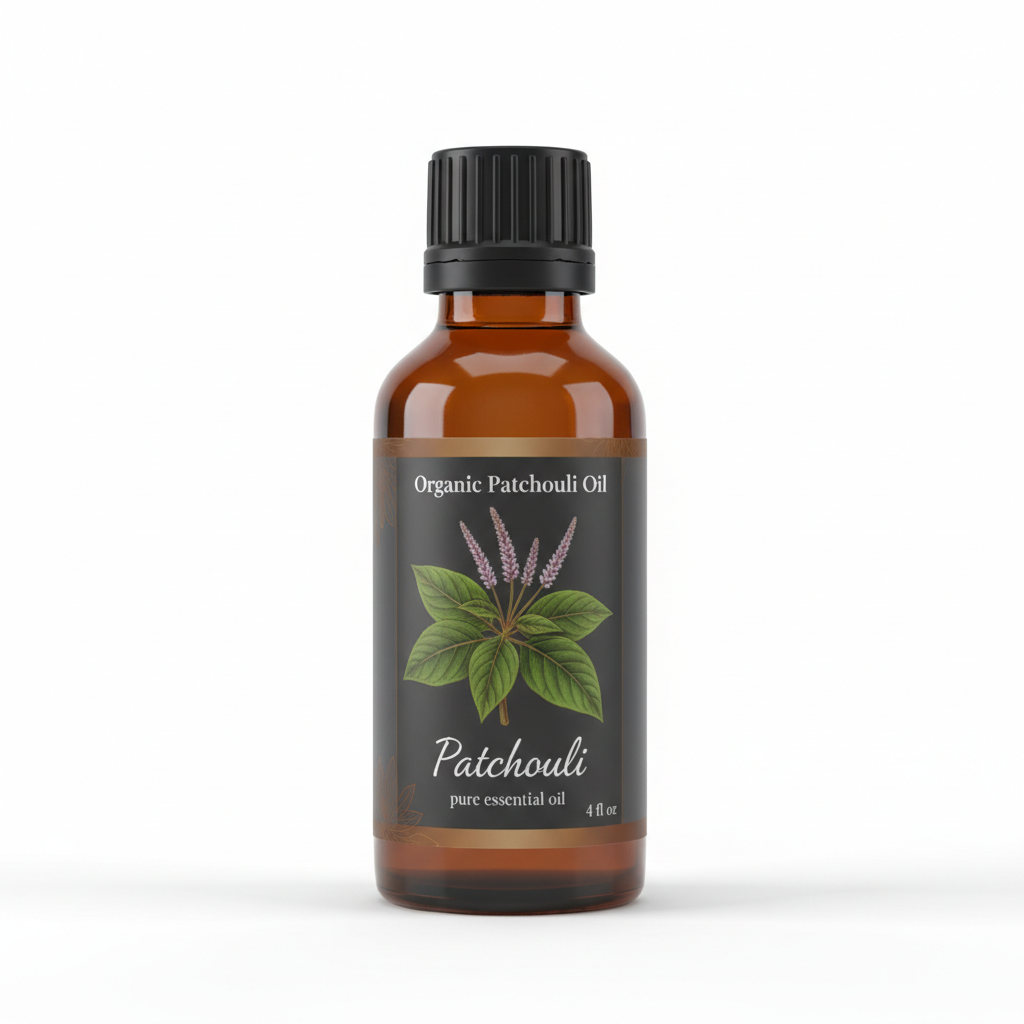
Patchouli Essential Oil
Our own Patchouli Essential Oil, in sizes from 0.5 oz to bulk.
From $20.99
Shop Now →First, make sure your bar is a soap
The FDA draws a clear line. A product is legally soap when it is made mainly of the alkali salts of fatty acids, those salts are the only thing doing the cleaning, and it is labelled and sold only as soap. A bar like that falls under the Consumer Product Safety Commission. Once you say a bar moisturises, it becomes a cosmetic, and any disease-related promise turns it into a drug. The CPSC adds that soaps meant mainly for children 12 and under are children's products with their own testing rules.
The practical lesson for a patchouli bar: describe the scent and leave the benefits out. "Earthy, woody, rich" is a perfectly good selling line, and it keeps you in the simplest category. If you plan to sell, read the FDA and CPSC pages below and ask a cosmetic regulatory adviser about your exact label.
How much patchouli goes in the pot
There is no standard published usage rate for patchouli in cold process soap, so any number is a starting point you refine with a test bar. Here is how we would set that starting point. Our guidance for skin is to dilute to 0.5% to 2% in a carrier oil, and the Tisserand Institute lists 0.2% to 1% for sensitive skin, 0.5% to 1.2% for facial products, 1% to 3% for body oils and 2% to 4% for bath products. Soap is rinsed away, which argues for a bit more room, but patchouli is a strong oil and a European safety assessment classes it as a skin and eye irritant and a dermal sensitiser. Putting those together, we suggest beginning at 1% of total batch weight and moving up to 2% only if the scent calls for it.
Base the percentage on the whole batch, lye water included, rather than on the oils alone, because that is how the guidelines are written. We have no measured density for our oil, so the table uses the 0.950 to 0.975 g/ml range printed on the Certificate of Analysis we publish for one batch. It is simple arithmetic, not a tested recipe.
| Share of batch | 500 g batch | 1,000 g batch |
|---|---|---|
| 1% | 5 g (about 5.1 to 5.3 ml) | 10 g (about 10.3 to 10.5 ml) |
| 2% | 10 g (about 10.3 to 10.5 ml) | 20 g (about 20.5 to 21.1 ml) |
Weigh the oil on a scale. It is thick, and drops (roughly 20 to the millilitre) are a rough guide at best.
Colour, staining and the test bar
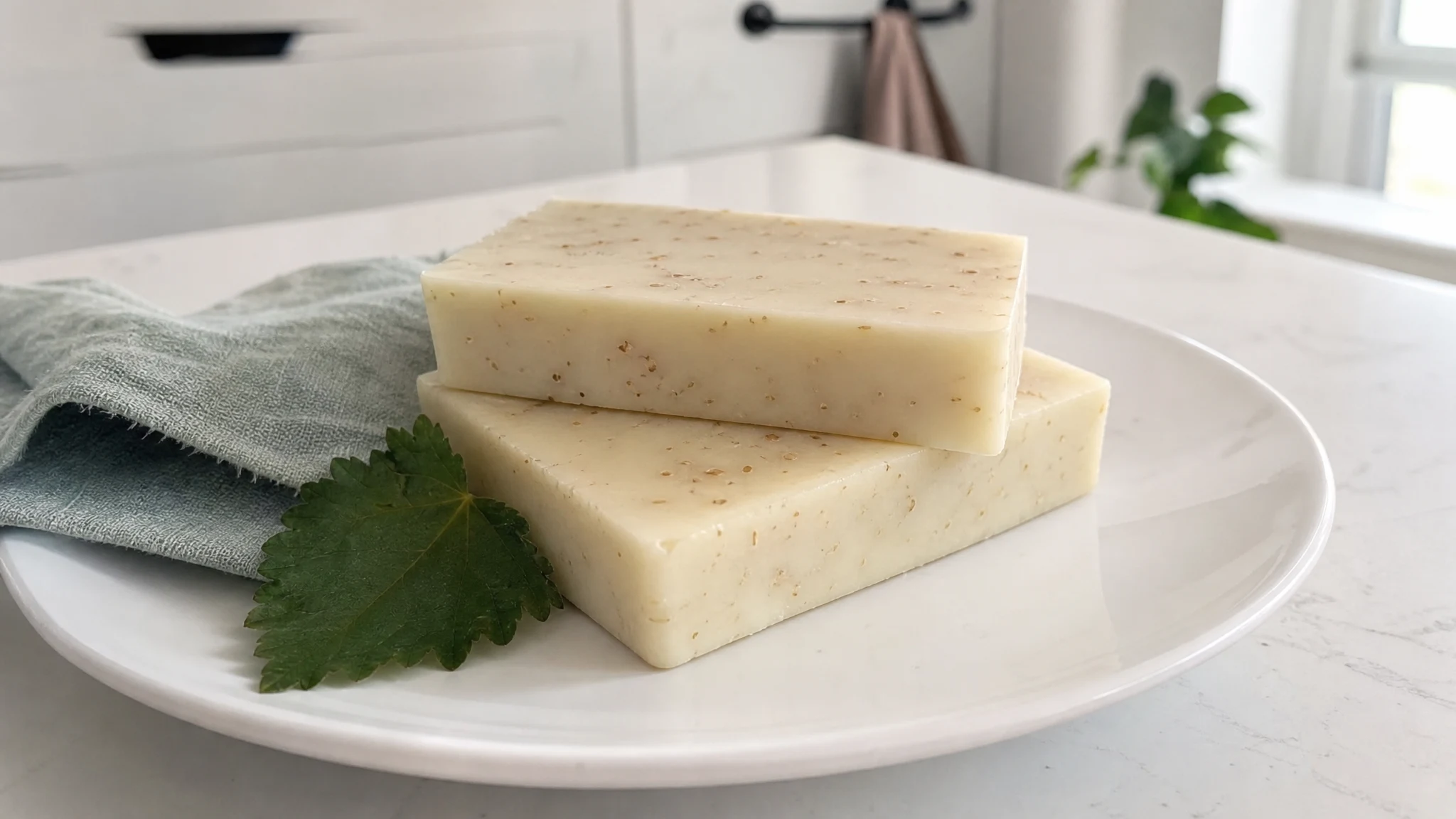
Patchouli oil is naturally dark reddish-brown, so it can nudge a pale soap toward tan or amber. That is part of the look of a patchouli bar, and a small test batch shows you exactly how far the shade travels. The plant-resources reference PROSEA notes that oil distilled in Indonesia tends to be dark orange or brownish while European or US-distilled oil is paler, so colour varies between oils as well. Expect it to stain light cloth and surfaces too: keep towels, cutting boards and moulds in mind, and wipe spills promptly.
A short test plan answers the questions no reference can answer for you: scent strength once the bar has cured, how quickly the batter thickens, and how the colour sits after a few weeks. Make three tiny batches of the same recipe with no patchouli, 1% and 2%, keep everything else identical, and note what you see. Your own nose and your own recipe are the right judges.
Waiting for the bar to speak
The hardest part of a patchouli bar is the wait. Fresh from the mould the scent can seem loud and a little rough around the edges, the way fresh patchouli oil itself does. The oil mellows and rounds out with time in the bottle, and a bar rewards the same patience: sniff it on the day you cut it, again after a few weeks of curing, and write down what you notice. A strip of masking tape on each bar with the percentage and the date is a cheap habit that keeps your 1% and 2% test bars from getting mixed up.
If you plan to gift or sell your bars, a tan or amber tone is something to lean into. A plain kraft paper band and a label in earthy colours suit the scent, and a simple line such as "earthy, woody, rich" keeps the label honest.
Handle the lye like it matters, because it does
The NIOSH pocket guide for sodium hydroxide lists irritation of the eyes, skin and mucous membranes and burns of the eyes and skin. Its first-aid advice is to flush with water immediately. Wear goggles and gloves, work somewhere ventilated, and keep children and pets well out of the room. We sell a single patchouli essential oil, so lye, base oils, moulds and scales come from a soap-making supplier.
Why a fixative still earns its place
Perfumers have long treated patchouli as a fixative, and PROSEA describes it as almost universally used that way in perfumery, usually in very small amounts. In soap that reputation is what makes it appealing, even if the effect on a rinse-off bar is yours to judge as the bar cures. Patchouli also keeps developing in the bottle, which we cover in our storage article. For per-percentage arithmetic beyond soap, our dilution chart has the numbers, and the pairing guide covers the other oils that sit well beside it.
Start small, measure by weight, keep the lye respected and the labelling modest, and a patchouli bar rewards your patience with a scent that lingers in the best way. If you want a document for your own files, ask us in writing through the contact page and we will tell you what we can offer.
Patchouli Essential Oil
Patchouli Essential Oil from our own shop, in sizes from 0.5 oz to bulk.
From $20.99
Shop Now →Sources & Further Reading
- FDA. Frequently Asked Questions on Soap. www.fda.gov/cosmetics/cosmetic-products/frequently-asked-que
- CPSC. Soap Business Guidance. www.cpsc.gov/Soap
- Tisserand Institute. Dilution for essential oils. tisserandinstitute.org/safety/dilution/
- CDC NIOSH. NIOSH Pocket Guide to Chemical Hazards, Sodium hydroxide. www.cdc.gov/niosh/npg/npgd0565.html
- Pl@ntUse. Pogostemon (PROSEA). plantuse.plantnet.org/en/Pogostemon_(PROSEA)
- EFSA FEEDAP Panel, 2025. Safety and efficacy of a feed additive consisting of an essential oil derived from the leaves of Pogostemon cablin Benth. (patchouli oil) for use in all animal species (FEFANA asbl). pmc.ncbi.nlm.nih.gov/articles/PMC12004087/