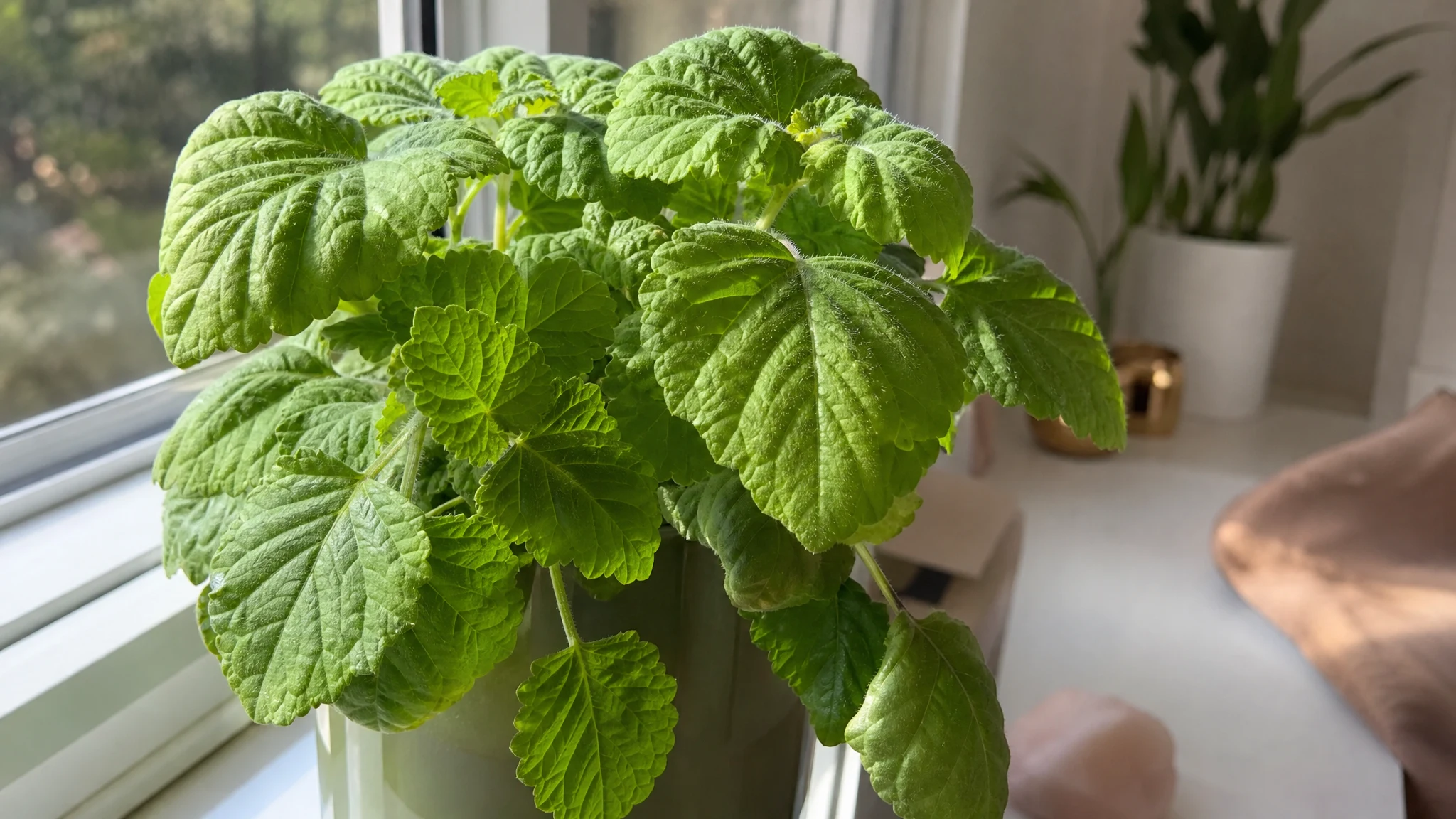
Why Perfumers Love Patchouli: The Base Note Explained
Patchouli is the note perfumers use to give a scent a floor to stand on. Open a bottle of the oil and you get a deep, earthy, wine-like aroma with hints of damp forest floor and aged wood, which is the opposite of a bright top note. In a blend it sits underneath everything else, and that quiet, anchoring job is why it has stayed in perfumery for so long.
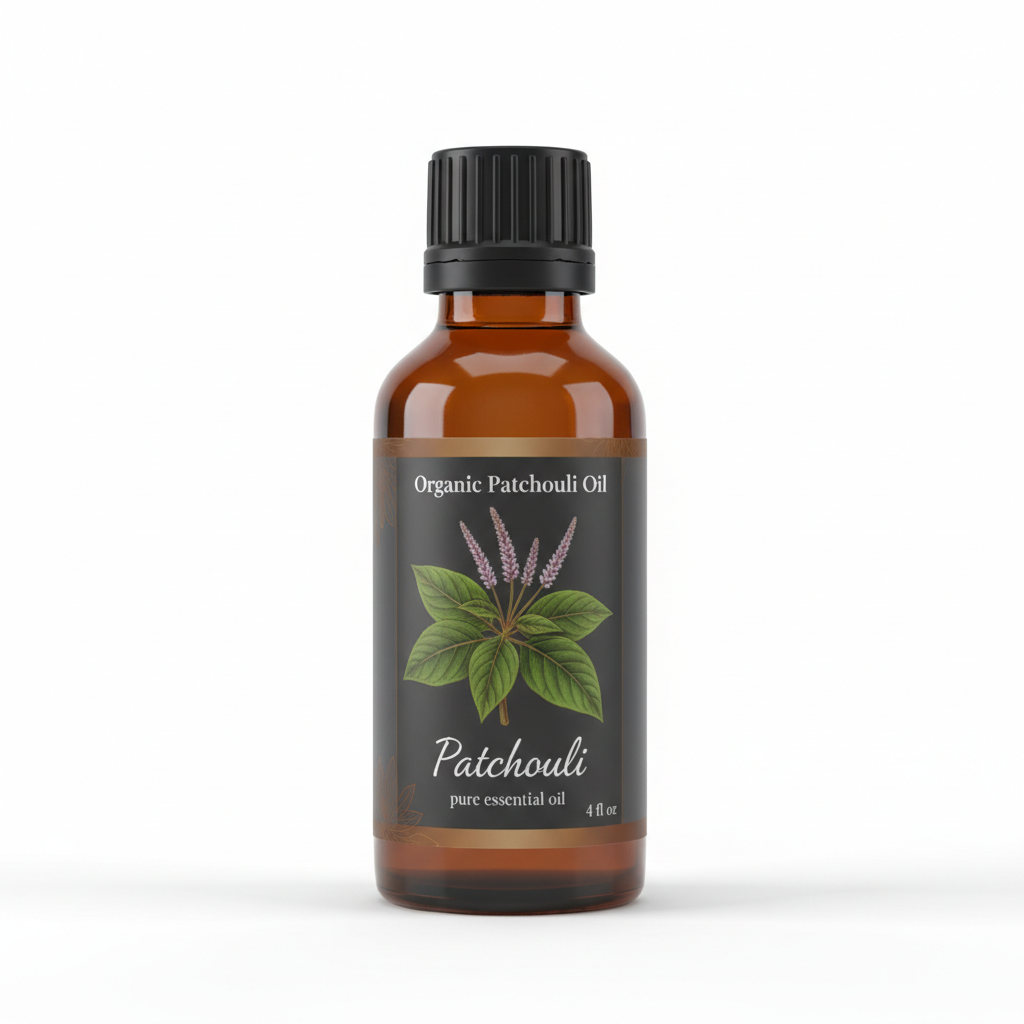
Patchouli Essential Oil
Our own Patchouli Essential Oil, in sizes from 0.5 oz to bulk.
From $20.99
Shop Now →A base note with a fixative reputation
The plant-resources reference PROSEA describes patchouli oil as almost universally used as a fixing agent in perfumery, usually in very small doses, but often a fundamental note in Oriental-type perfumes. A 2015 review in Molecules says much the same from another angle: patchouli blends with other essential oils to give "a strong base, lasting character, fixative properties". We describe it the same way: a base note and a natural fixative.
"Fixative" is a role perfumers assign rather than a stopwatch result, so the best way to judge it is to try your own blend on a blotter strip and come back in a few hours. Patchouli's depth tends to show most as the lighter notes fade, which is exactly where a base note is meant to matter.
What a real formula looks like
Patents are one of the rare places where perfume formulas are public. US patent 4,704,477 (filed 1986, since expired) gives an example of a woody base containing 100 parts by weight of natural patchouli oil, and a test version where a synthetic compound is added at 12% to boost brilliance and give a warm, powdery back note. In that example the patchouli is roughly a tenth of the base, so it is a leading character, not a garnish. It is one example from one applicant, not a rule, but it shows the scale perfumers work at.
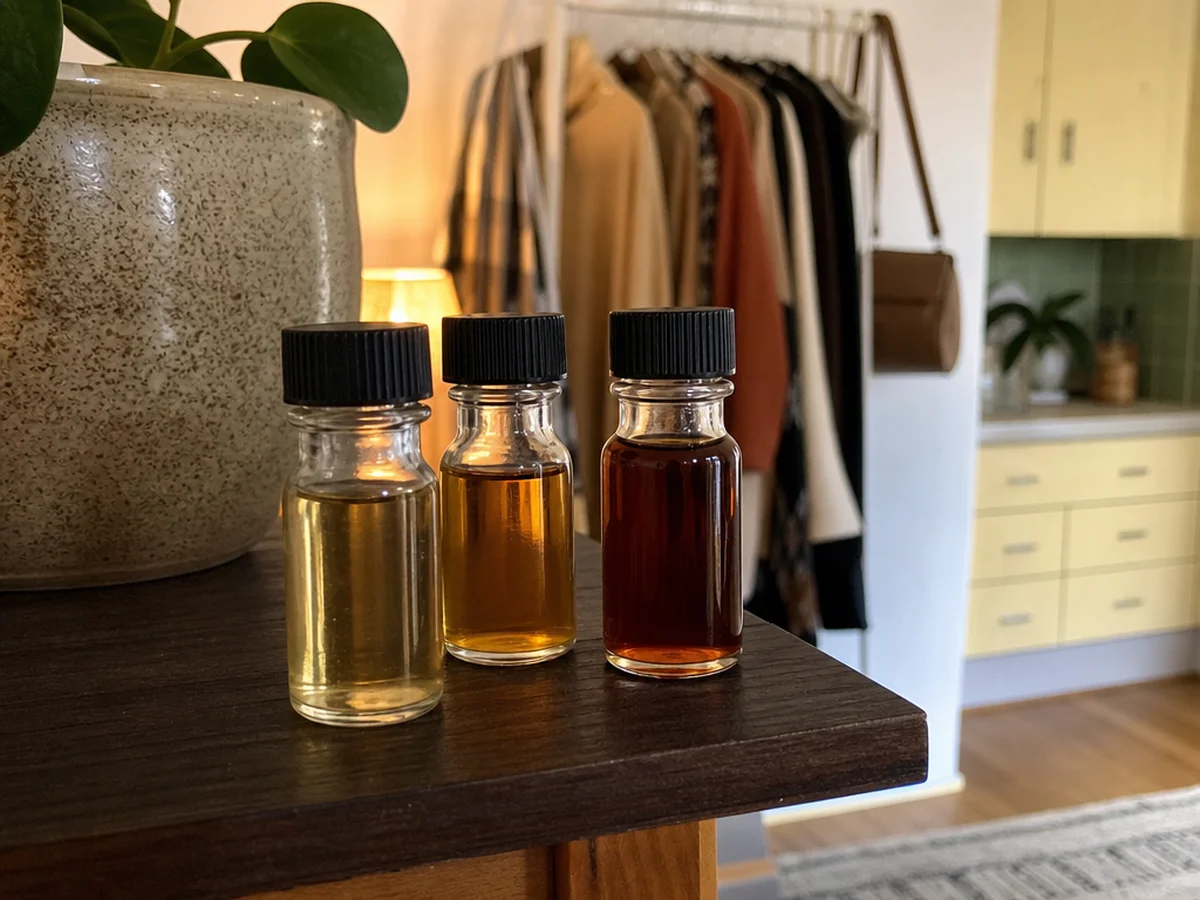
Reasoning from that, for a home blend patchouli earns its place in modest proportions of the oil portion, with the other notes doing the talking on top. Our home perfume article works through the arithmetic, and the pairing guide suggests partners. Rose, geranium, bergamot, sandalwood and cedarwood are the ones we recommend, and you will find them at a supplier of botanicals, since our shop sells patchouli alone.
Why chemists keep trying to copy it
The same patent says natural patchouli oil is "available only in limited quantity and often of very variable quality", names patchoulol and norpatchoulenol as the components that determine its fragrance, and says no economically practical way to make them was known. That is the root of a long chemistry story. A 2010 paper in the journal Chemistry described new silicon-based patchouli odorants and reported that two of them smelled most like natural patchouli oil, with a lower odour threshold than patchoulol itself. Supply swings and a hard-to-copy molecule explain why substitutes exist. If you want to understand where our natural oil sits, our essential oil versus fragrance oil article lays out the differences.
How to smell a base note
If you have never paid attention to base notes, try it with a paper strip. Put a drop of a diluted oil on the strip, wave it, and smell it straight away, then at ten minutes, an hour and the end of the day. In the first minute you may notice the earthy edge. Later, the damp forest floor and aged wood come forward, with a hint of cocoa, and that slow, steady finish is what perfumers mean by a base. Keeping a strip in a small envelope for a day or two is a lovely way to learn how a scent ages.
Wearing it: what the numbers say
Because patchouli is potent, it is worth being deliberate about how much goes on skin. Our guidance is to dilute to 0.5% to 2% in a carrier oil and patch test first. The Tisserand Institute lists general guidelines of 0.2% to 1% for sensitive or impaired skin, 0.5% to 1.2% for facial cosmetics and deodorants and 1% to 3% for body oils and lotions, for oils without specific restrictions. A European safety assessment classes patchouli oil as an irritant to skin and eyes and a dermal sensitiser, which is why we start at the lower end of our own range and suggest staying there for anything on the face.
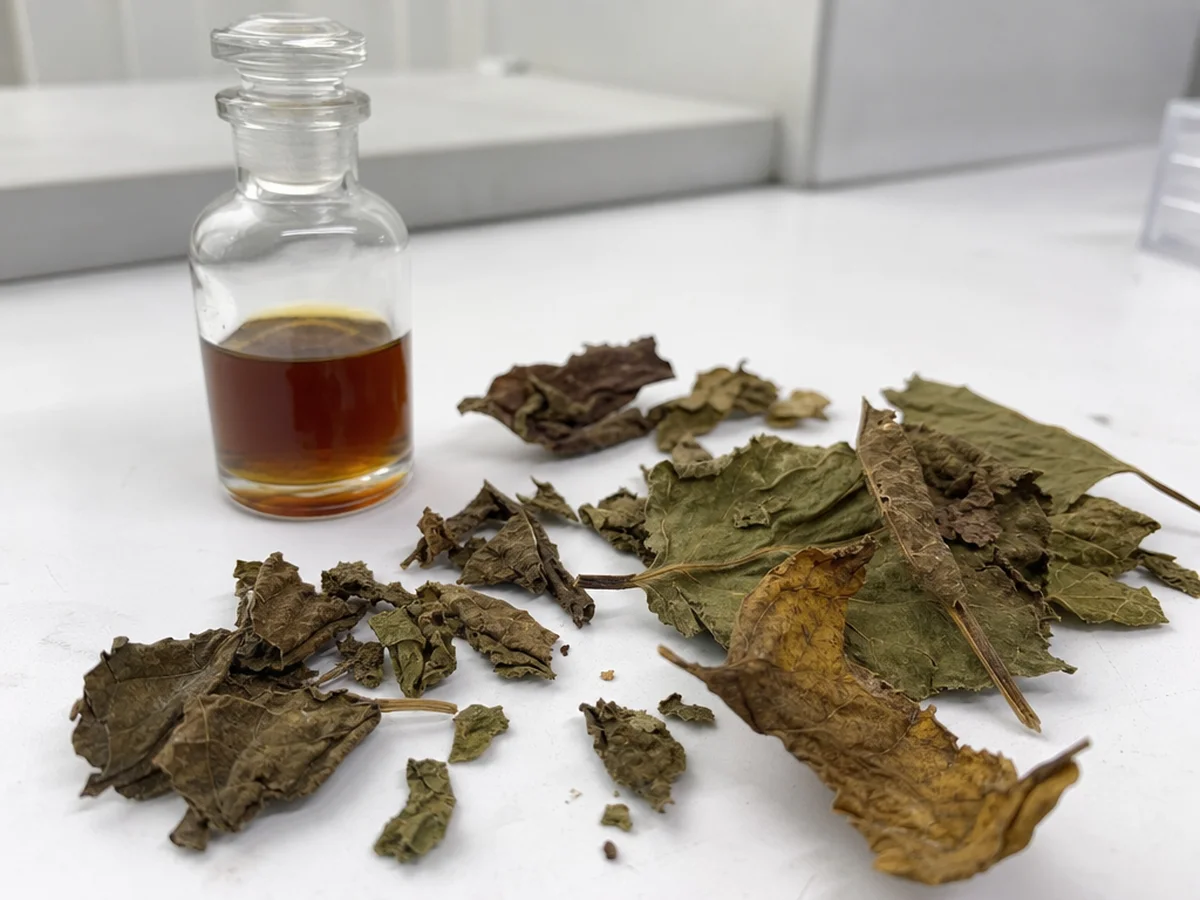
The IFRA guidance sorts perfumes by where they are worn: fine fragrance such as solid perfume, eau de toilette and cologne is Category 4, generally applied to neck, face and wrists; body oils and lotions fall in 5A; facial moisturisers are 5B. The guidance does not name patchouli, and it explains that a maximum for any restricted material is worked out from information the supplier and user exchange, so a finished-product formulator should check the standards for their category. If you are formulating a perfume to sell, check the IFRA standards for your category, and ask us in writing through the contact page about the documentation we can offer.
What the label may and may not say
If you make perfume to sell, US cosmetic rules let ingredients appear simply as "fragrance". The FDA notes that the word can stand for a mixture of natural and synthetic ingredients and that the maker is responsible for safety and labelling. For a fragrance-sensitive buyer that single word hides a lot, which is one reason a straightforward single-oil blend is easier to understand.

Choosing partners by ear
If you are putting a blend together, let your nose lead. Rose, geranium, bergamot, sandalwood and cedarwood are the partners we recommend, and each shifts the mood: rose softens it, bergamot lifts it, cedarwood dries it. Smell two at a time on separate strips, hold them together, and notice which pair makes you want to smell again.
Patchouli has earned its place by being steady, deep and good at making other notes last. Treat it as the foundation of a blend and give it time to settle, and it will repay you. Whether it's a first solid perfume or a long-held favourite, it is a note that rewards patience.
Patchouli Essential Oil
Patchouli Essential Oil from our own shop, in sizes from 0.5 oz to bulk.
From $20.99
Shop Now →Sources & Further Reading
- Pl@ntUse. Pogostemon (PROSEA). plantuse.plantnet.org/en/Pogostemon_(PROSEA)
- Swamy MK, Sinniah UR, 2015. A Comprehensive Review on the Phytochemical Constituents and Pharmacological Activities of Pogostemon cablin Benth.: An Aromatic Medicinal Plant of Industrial Importance. Molecules. pmc.ncbi.nlm.nih.gov/articles/PMC6272783/
- Gebauer H, Mehlin H, Regiert M, 1987. Trimethylcyclohexene derivatives, their preparation and use as perfume substances. US Patent 4,704,477. patents.google.com/patent/US4704477A/en
- Sunderkotter C et al., 2010. Novel silicon-based patchouli odorants of the trialkyl(1-hydroxy-1-methylethyl)silane type: design, synthesis, and olfactory properties. Chemistry. pubmed.ncbi.nlm.nih.gov/20549722/
- Tisserand Institute. Dilution for essential oils. tisserandinstitute.org/safety/dilution/
- IFRA, 2023. Guidance for the use of IFRA Standards (51st Amendment, third-party mirror). cdn.shopify.com/s/files/1/0457/0333/1991/files/ifra-51st-ame
- FDA. Fragrances in Cosmetics. www.fda.gov/cosmetics/cosmetic-ingredients/fragrances-cosmet
- EFSA FEEDAP Panel, 2025. Safety and efficacy of a feed additive consisting of an essential oil derived from the leaves of Pogostemon cablin Benth. (patchouli oil) for use in all animal species (FEFANA asbl). pmc.ncbi.nlm.nih.gov/articles/PMC12004087/