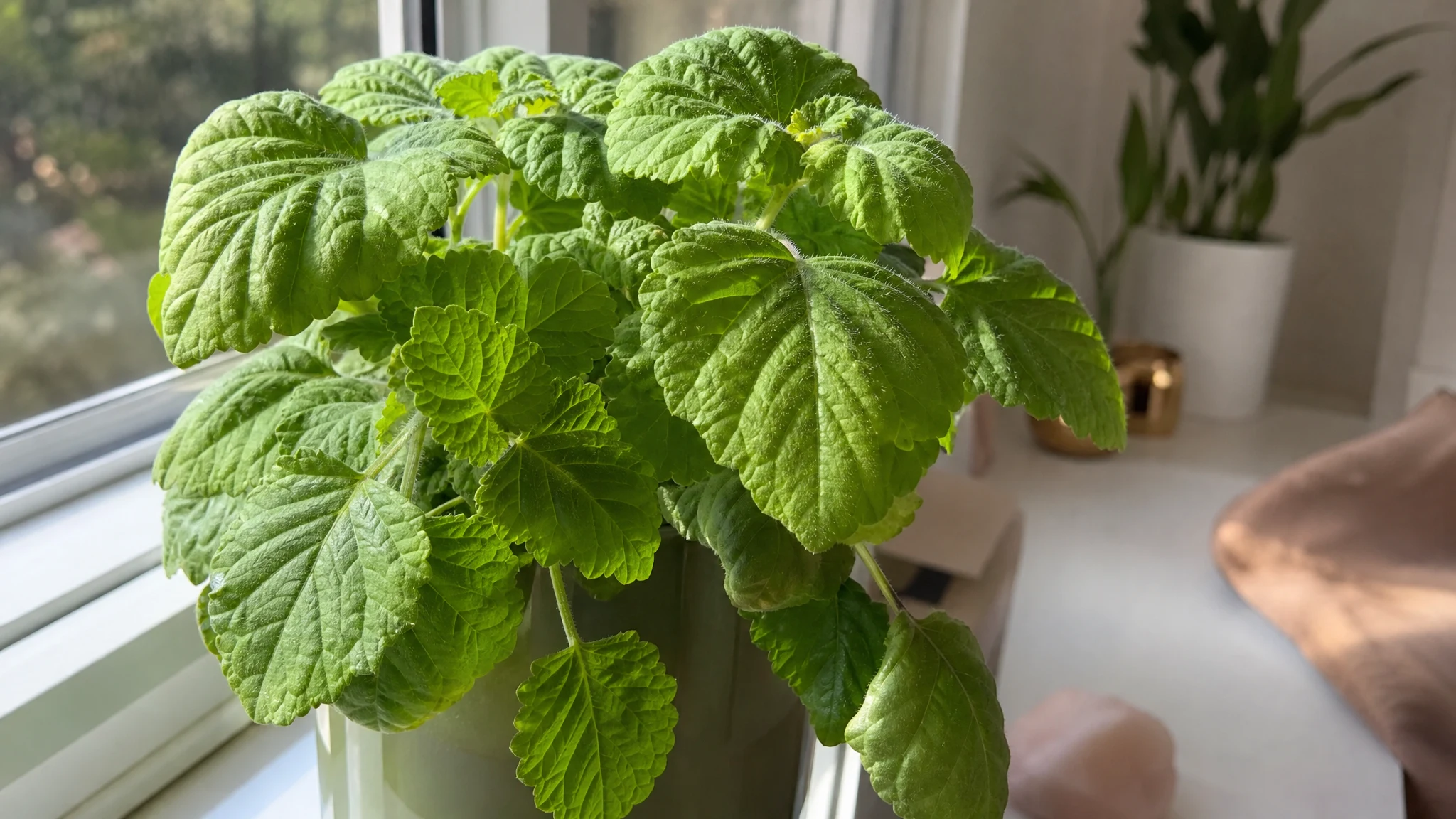
Patchouli Oil on Your Face: Dilution and Scent Tips
Patchouli's earthy, wine-like depth is lovely, and some people like to wear it close to the face. We think that is a perfectly good reason to use it. It is also worth being clear about what it is: a fragrance. We sell an aroma oil, and we do not make claims about changing how skin ages or looks, so this page is about the scent decision and how to make it comfortably.
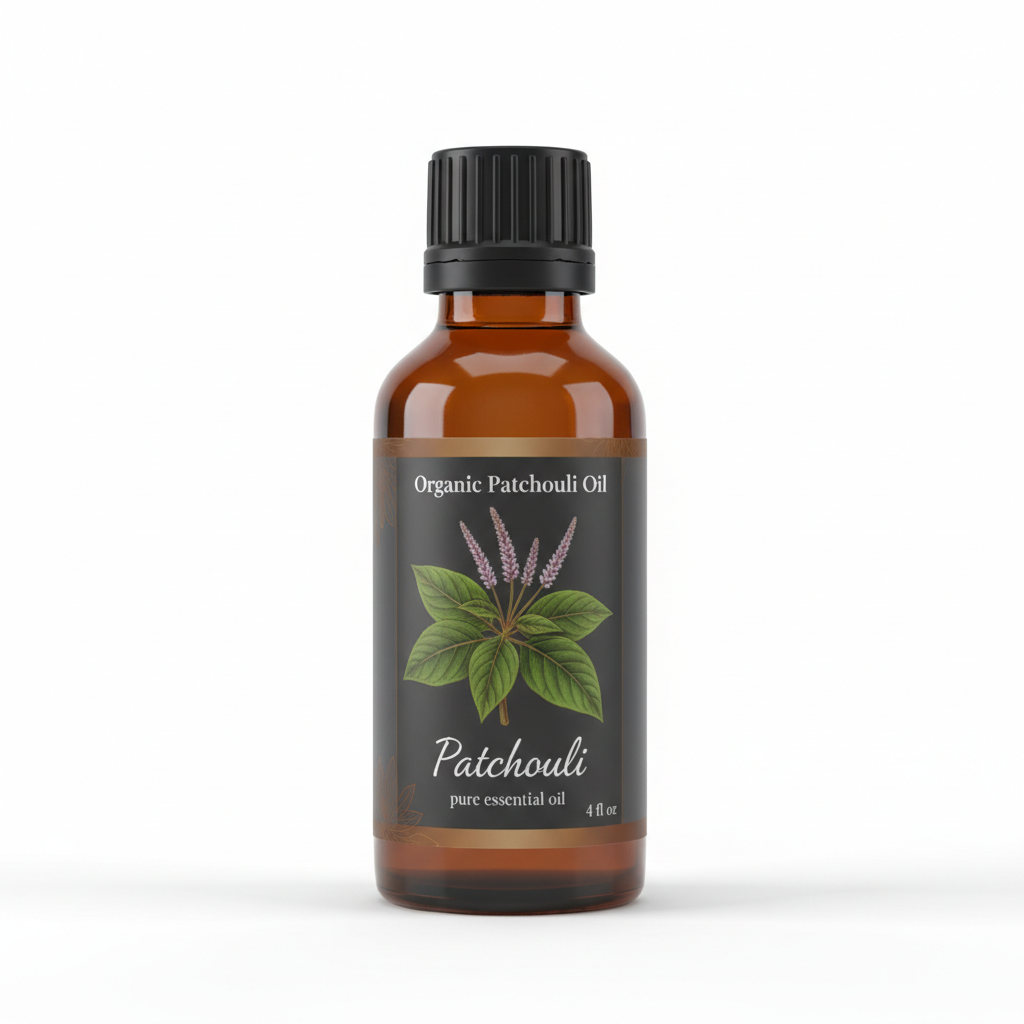
Patchouli Essential Oil
Our own Patchouli Essential Oil, in sizes from 0.5 oz to bulk.
From $20.99
Shop Now →Anyone who has met patchouli knows it is not a shy scent. Open the bottle and you will notice how dark and earthy it is, with something close to damp forest floor and aged wood underneath. Close to the face, where your nose is only a few inches away, all of that is magnified. That is why a face blend is a different decision from a body oil, and why we ask you to slow down before you start.
Start lower than you think
Our general guidance for skin is to dilute patchouli to 0.5% to 2% in a carrier oil and to patch test first. For the face, we would stay at the bottom of that range. The Tisserand Institute's dilution guidelines suggest 0.5% to 1.2% for facial cosmetics and 0.2% to 1% for sensitive or reaction-prone skin. They are general guidelines that apply to oils without specific restrictions, not a patchouli-specific limit, but they line up with our preference for starting small.
The European Food Safety Authority's 2025 opinion on patchouli oil adds a reason for gentleness: it describes the oil as an irritant to skin and eyes and as a skin and respiratory sensitiser. That is a hazard classification of the oil it assessed, in a feed-additive review, not a cosmetic limit, but it is a good argument for beginning with a drop or two.
The arithmetic is quick. An ounce of carrier oil is about 29.6 ml. At about 20 drops per ml, 0.5% is roughly 3 drops and 1% roughly 6. A small roller or a 10 ml bottle needs only 1 or 2 drops. Please treat that as arithmetic to adapt rather than a finished recipe.
The patch test, done properly
Dab a little of your diluted oil on the inner forearm, cover it, and wait a day. If there is redness, itching or burning, wash it off and leave that blend alone. After that, try a small spot near the jaw before using it more widely. Keep the oil clear of the eyes entirely, and skip it on the thin skin around them. Anyone who has reacted to fragrance before, or lives with eczema or rosacea, should ask a dermatologist or allergist first.
What about the sun?
This is a common question, and the answer is reassuring on one point. The Tisserand Institute lists patchouli among oils that carry only extremely small amounts of furanocoumarins, the compounds behind light-triggered skin reactions, not enough to make them phototoxic. That is a statement about phototoxicity only. It does not make patchouli a sun protector, and we do not describe it as one. Sun care is its own job, and a dermatologist is the person to ask about it.
Smell it where you will wear it
A scent behaves differently on a wrist than under your nose. Before you commit to a face blend, put a drop of your finished, diluted oil on a cotton pad and hold it at arm's length, then bring it closer. If it already feels like too much at that distance, it will feel like more on your skin. It also helps to wait an hour and come back to it, because patchouli keeps changing as the lighter edges fade and the woody depth comes forward.
Then think about where you spend your day. A scent you love on a quiet weekend can be a lot in a small office or on a crowded train, so a very light hand is usually the kinder choice for everyone, including you.
Choosing the carrier
The oil you dilute into matters for how a face blend feels. Lighter carriers such as jojoba, sweet almond or grapeseed spread thinly and absorb quickly, while heavier ones sit on the skin longer. Because patchouli is a fixative that lingers, a light carrier and a very small amount often feels best. Carrier oils are not something we sell; you will find them at a craft shop, pharmacy or grocery, and it is worth buying a small bottle first.
A note on claims
The FDA calls something a cosmetic when it is intended to cleanse, beautify or promote attractiveness, and the intended use is shown by labels, advertising and online claims. Patchouli suits that definition well: it smells wonderful and it lingers. It does not need to promise anything else.
Keeping the cloth clean
Because the oil is dark and reddish-brown, it is worth treating your pillowcase and collar with a little respect. Let a face blend settle for a few minutes before you dress or lie down, and keep a dark towel for the days you wear it. Small habits like these make it much easier to enjoy the scent without a surprise on a pale shirt.
Patchouli leaves a trail, too. It can stain pale cloth and linger for days, so a collar or pillowcase will carry it. Keep it away from children and pets, and never take it by mouth.
If you want to go further, our skin routine article covers where patchouli fits on the body, the allergy and patch testing guide goes deeper on testing, and the carrier oil guide helps you pick a base.
Worn lightly and diluted well, patchouli can give a face oil a deep, grounded aroma that is entirely its own.
Patchouli Essential Oil
Patchouli Essential Oil from our own shop, in sizes from 0.5 oz to bulk.
From $20.99
Shop Now →Sources & Further Reading
- Tisserand Institute. Dilution for essential oils. tisserandinstitute.org/safety/dilution
- Tisserand Institute. Phototoxicity: essential oils, sun and safety. tisserandinstitute.org/safety/phototoxicity
- EFSA FEEDAP Panel, 2025. Safety and efficacy of a feed additive consisting of an essential oil derived from the leaves of Pogostemon cablin Benth. (patchouli oil) for use in all animal species (FEFANA asbl). EFSA Journal. PMC12004087
- FDA. Is It a Cosmetic, a Drug, or Both? (Or Is It Soap?). fda.gov