Does Patchouli Oil Go Bad? Signs, Shelf Life, Storage
Most oils tell you plainly when they have turned: a citrus oil gets sharp and turpentine-like, a carrier oil goes crayon-stale. Patchouli is harder to read. It starts out dark, thick and earthy, so the usual clues (a deeper colour, a thicker pour, a heavier smell) are things a fresh bottle already has. That makes it worth knowing what is actually happening inside the glass.
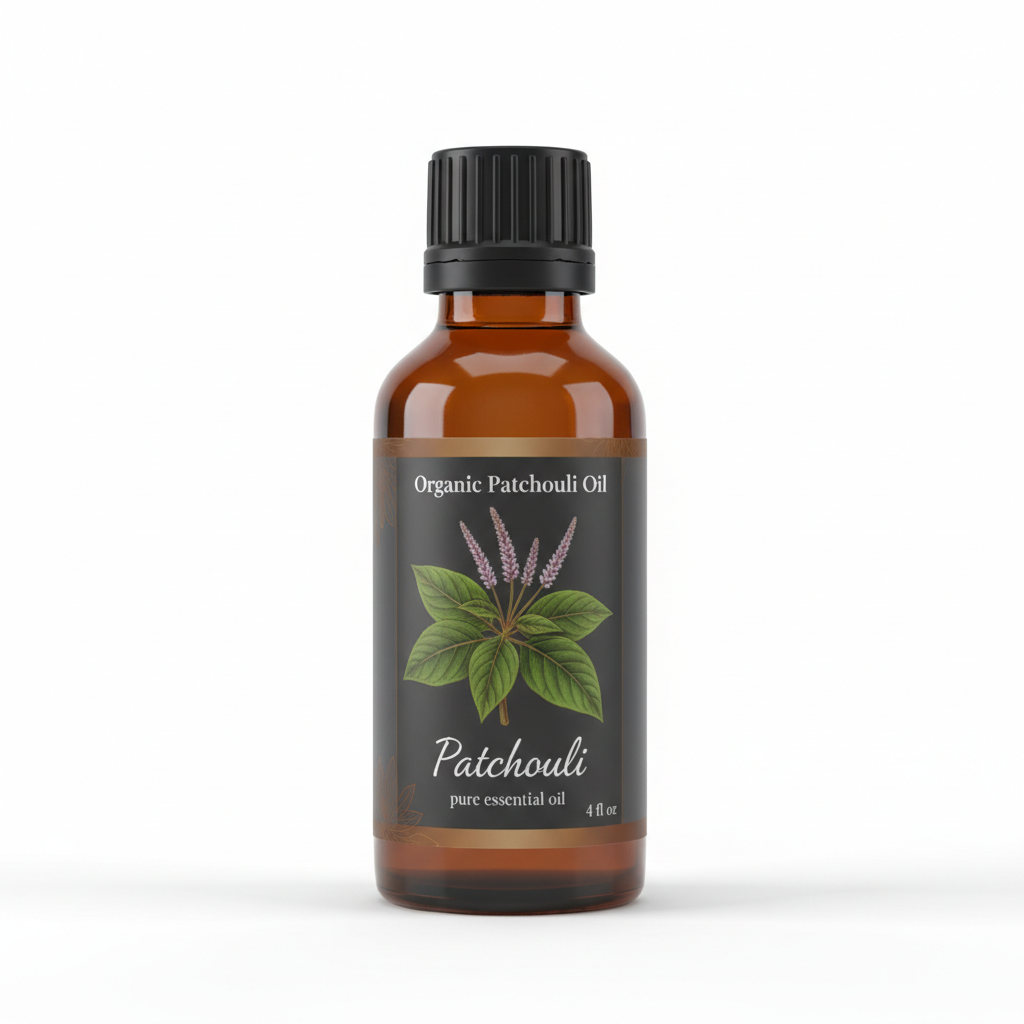
Patchouli Essential Oil
Our own Patchouli Essential Oil, in sizes from 0.5 oz to bulk.
From $20.99
Shop Now →What "going bad" means for an essential oil
An essential oil does not spoil the way food does. There is no mould and nothing to ferment, because there is almost no water in it. What happens is chemical: oxygen slowly reacts with the aroma molecules, and heat and light speed the reaction up. A widely cited review by Turek and Stintzing describes essential oils as mixtures of many volatile, fat-loving compounds that are open to conversion and degradation, and says oxidative and polymerization processes can reduce quality. Temperature, light and oxygen are the three factors it singles out.
In practice that gives you three habits: keep the bottle cool, keep it out of light, and keep air away from it. Everything else in this article is a version of those three.
Why patchouli is a special case
Patchouli has a reputation for improving with age. The plant-resources reference PROSEA says the oil is stored after distillation to mature, and that patchouli oils improve on ageing, losing sharp green and wet earthy notes. We describe our own oil the same way: it mellows and rounds out with time. So a bottle that smells smoother after a year is not a bottle that has gone off. It may be doing exactly what patchouli is known for.
The trouble is that mellowing and oxidising are both changes in smell, and they can look alike from the outside. Sources we can point to are general ones, not a study of aged patchouli, so this is where honest judgment comes in. We would treat the first year as mellowing territory when a bottle has been kept cool, dark and tightly closed, and watch more carefully after that.
What to watch for
Because colour and thickness are poor guides for a dark oil, lean on your nose and on what the oil leaves behind.
- The smell turns sharp, sour or flat. Mellow means rounder, deeper, smoother. If the earthy warmth gives way to something thin, solvent-like or rancid, that is a different direction.
- Sticky residue around the cap or neck. Oils that dry out into a gummy film are polymerising. Patchouli is syrupy anyway, but a tacky crust that builds up and does not wipe clean is worth noticing.
- Cloudiness or particles that were not there when you opened it.
- A skin reaction to an oil that never bothered you. Stop using it. Oxidised terpenes are a documented cause of contact allergy: a 2021 review in Contact Dermatitis traces it back through a century of turpentine research. That work is about monoterpenes, a different family from the sesquiterpenes that dominate patchouli, so it is a reason for care and not a measurement of patchouli itself.
A year-long habit that settles the question
The simplest way to know what your own bottle is doing is to write the date you opened it on the bottle or its box. Tisserand's retail guidance for patchouli says to keep it somewhere cool and dry and to use it within 12 months of opening. A European Food Safety Authority assessment of a patchouli oil states a shelf life of at least 12 months in tightly closed containers, cool, dry and away from light, while noting that no supporting data were provided. Neither is a hard expiry. They are planning figures, and twelve months from opening is a conservative window for anything that goes on skin.
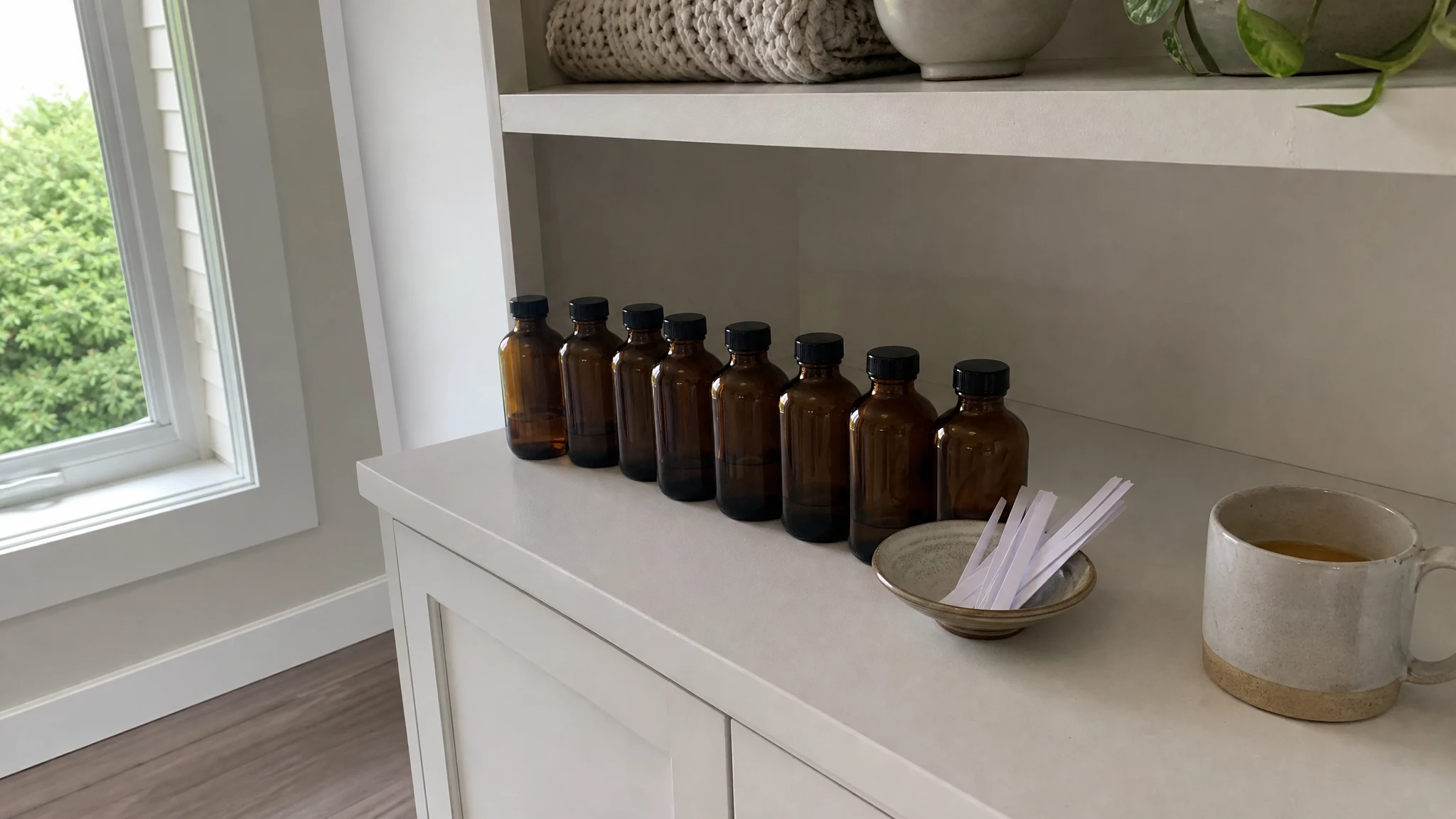
If you want to keep a bottle longer to let it ripen, that is fine for scent work such as a perfume base or a soap you will use as a fragrance. Smell a fresh drop on a paper strip beside your notes from earlier, and trust the comparison more than memory.
Keeping it well
- Our guidance is a cool, dark place away from direct sunlight and heat. A cupboard beats a windowsill; a car glovebox is the worst place.
- Cap it tightly every time. Air is one of the three drivers, and a nearly empty large bottle holds more air than oil. If you buy a larger size, decant working amounts into smaller airtight bottles and keep the main container sealed.
- Wipe the neck. A film of oil on the rim picks up dust and oxidises first, and patchouli marks whatever it touches. Our guide to storing patchouli oil so it mellows well has the full routine, and reading a patchouli label helps when you are checking dates on bottles you did not fill yourself.
- Keep it locked away from children and pets.
If a bottle smells wrong to you, do not use it on skin. Our patchouli FAQ answers other common questions about the oil. Patchouli forgives a lot, and a bottle kept dark and closed tends to repay you.
Patchouli Essential Oil
Patchouli Essential Oil from our own shop, in sizes from 0.5 oz to bulk.
From $20.99
Shop Now →Sources & Further Reading
- Turek C, Stintzing FC. Stability of Essential Oils: A Review. Comprehensive Reviews in Food Science and Food Safety, 2013.
- Pogostemon (PROSEA) - Pl@ntUse.
- Karlberg AT, Lepoittevin JP. One hundred years of allergic contact dermatitis due to oxidized terpenes: What we can learn from old research on turpentine allergy. Contact Dermatitis, 2021.
- Organic Patchouli Essential Oil | Tisserand Aromatherapy.
- Safety and efficacy of a feed additive consisting of an essential oil derived from the leaves of Pogostemon cablin Benth. (patchouli oil) for use in all animal species (FEFANA asbl). EFSA FEEDAP Panel, 2025.