Is Patchouli an Aphrodisiac? Myth, Memory and Scent
Patchouli has carried a romantic reputation for as long as most of us can remember: a scent for candlelit rooms, incense-filled evenings and long-ago decades. It is easy to see why the reputation stuck. The honest answer to the aphrodisiac question is that it is a reputation and not a result. The research does not show patchouli doing that, and we sell our oil as an aroma with no claim about desire.
Patchouli Essential Oil
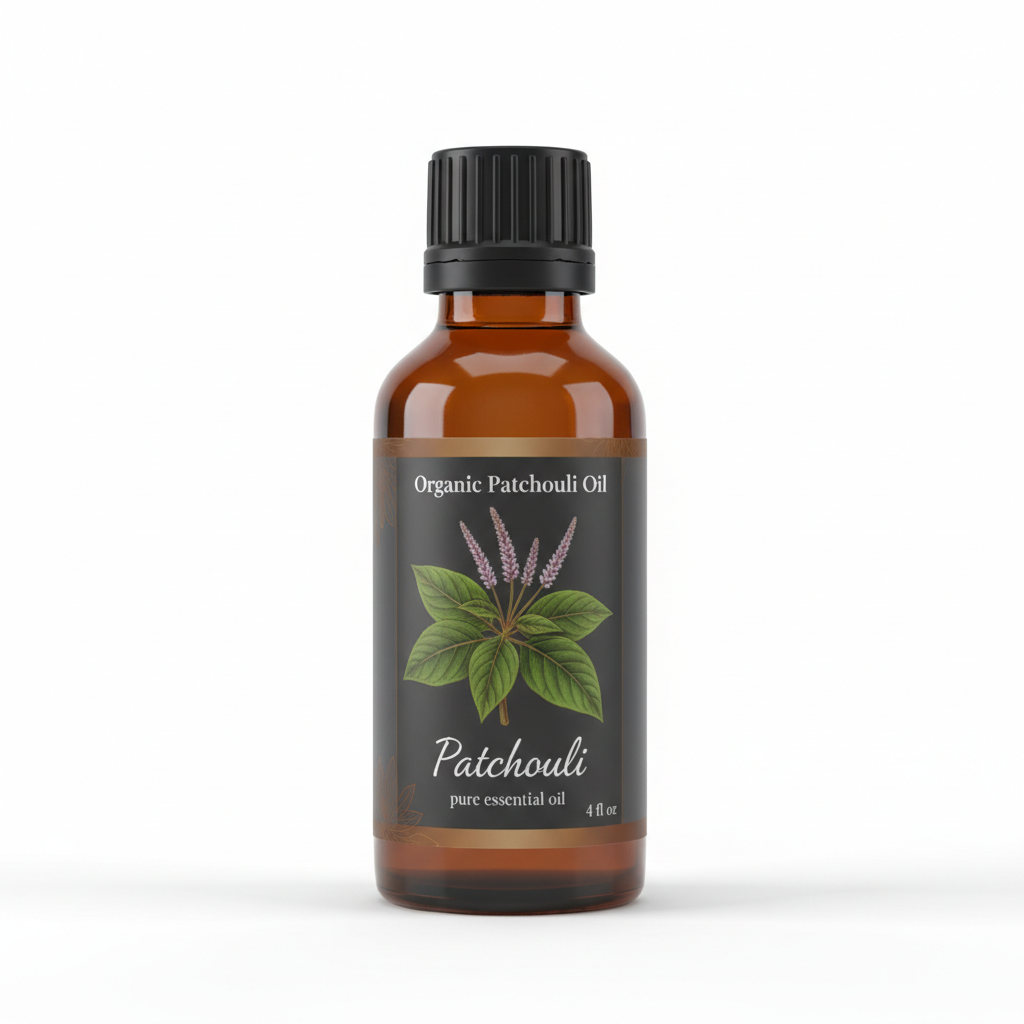
Our own Patchouli Essential Oil, in sizes from 0.5 oz to bulk.
From $20.99
Shop Now →Where the claim comes from
The claim tends to trace back to a single review of the plant's chemistry and pharmacology. Its summary lists "aphrodisiac" among reported activities, and its aromatherapy section says the oil's wine-like aroma functions as an aphrodisiac. The passages describe no study behind that: no species, dose, route or outcome (Swamy and Sinniah, 2015). The authors also say that some of the plant's traditional uses still need to be verified. So the idea seems to have travelled from one list into another and stayed there, which is how many folklore claims grow.
Why a skeptical eye is healthy here
The history of aphrodisiacs is crowded. A historical review sorts them by whether they aim at libido, potency or pleasure, and its examples range from ambergris and toad-skin preparations to ginseng and "Spanish fly". The last of these, cantharidin from blister beetles, has caused significant harm, and the author's message to physicians is to steer people toward evidence-based options (Sandroni, 2001). It is a good reason to ask for evidence before trusting any product sold on the promise.
A popular shortcut says patchouli works "like a pheromone". A pheromone is a signal passed between members of the same species, and patchouli is a plant oil, so the comparison fails at the first step. The wider field is shaky too. A 2015 review found no robust evidence that four well-known steroid molecules act as human pheromones, and cautioned that positive results often come from small samples and publication bias (Wyatt, 2015). A 2020 follow-up said that almost 60 studies claiming effects of two putative human pheromones are quite possibly false positives (Wyatt, 2020). If the best-known candidates struggle to clear that bar, a perfumery oil reached through word of mouth has a long way to go.
What a scent can plausibly do
Here is the documented, and rather lovely, part. Odors reach brain regions that handle emotion and memory (Soudry and colleagues, 2011), and memories cued by a smell can be more detailed than those cued by a word (Chu and Downes, 2002). Putting those together is our own inference: if patchouli reminds you of a person, a place or a decade, it will bring that back, and the association is yours. Someone who met it in a head shop and someone who met it in a grandmother's drawer carry different feelings, and that variety is exactly what we would expect. Our scent profile explores why the same molecules delight one nose and put off another, and our history of patchouli follows how it became tied to a generation.
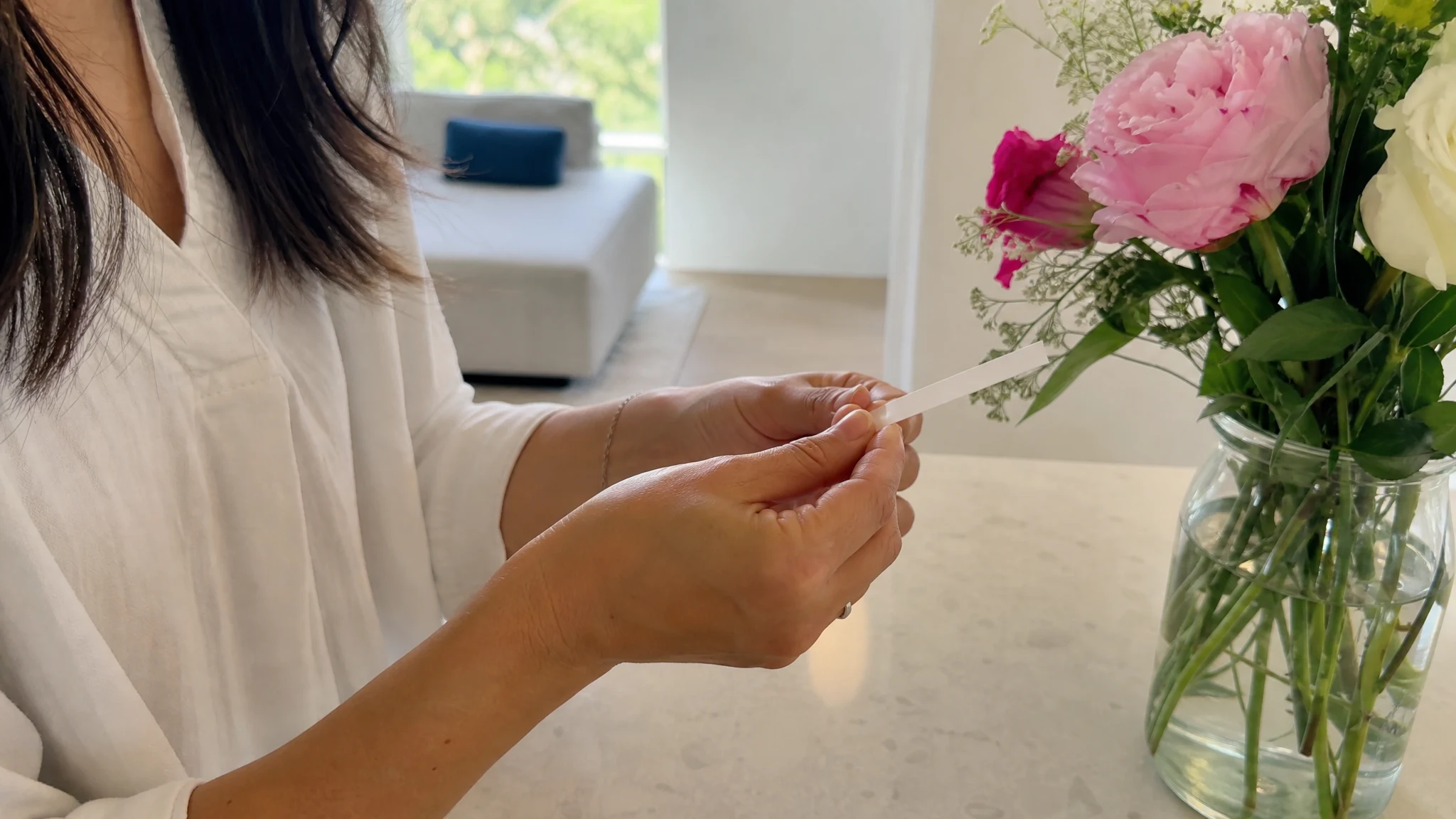
Here is a gentle experiment if you are curious. Put a drop on a paper strip, hold it under a friend's nose and ask what it reminds them of before you say anything else. One person may say a forest, another a record shop, another their grandmother's scarf drawer. None of those answers is wrong, and together they show how personal a scent really is.
If your real question is about desire
Low interest in sex is common and has many causes. The NHS lists relationship problems, stress, anxiety or depression, hormone changes (including pregnancy and menopause), some medicines, alcohol, and long-term conditions such as heart disease, diabetes and an underactive thyroid. It suggests seeing a GP if you are worried, or if you think a medicine may be affecting you (Low sex drive (loss of libido) - NHS). A physician is the right person for that conversation, and an oil is not a substitute.
Enjoying it as a fragrance
If you like patchouli, wear it for the pleasure of the smell. Sniff it on a paper strip first, then try it diluted on skin after a patch test, since skin changes how a base note develops. It is worth asking whoever shares your space whether they like it, because one drop too many lingers on skin and cloth for days. As a fragrance strength, 2% in a carrier is about 12 drops per ounce at roughly 20 drops per ml, and 0.5% is about 3. That describes a scent level, nothing more.
Our guidance for skin is 0.5% to 2% in a carrier oil with a patch test first. Because the European Food Safety Authority classes the patchouli oil it assessed as an irritant to skin and eyes and a skin and respiratory sensitiser (EFSA FEEDAP Panel, 2025), we suggest 0.5% to 1% for anything that stays on the skin. Never swallow the oil, and be wary of "love oils" that promise an effect.
The FDA decides whether a product is a cosmetic or a drug by its intended use, shown in its labeling and advertising (FDA, Is It a Cosmetic, a Drug, or Both? (Or Is It Soap?)). That is why we describe patchouli as deep, earthy and wine-like and stop there. If you are blending your own, our perfume at home article shows how to build a signature around it.
So patchouli earns its place on aroma alone: a rich, memorable scent that means whatever you have lived alongside it.
Patchouli Essential Oil
Patchouli Essential Oil from our own shop, in sizes from 0.5 oz to bulk.
From $20.99
Shop Now →Sources & Further Reading
- Swamy MK, Sinniah UR, 2015. A Comprehensive Review on the Phytochemical Constituents and Pharmacological Activities of Pogostemon cablin Benth.: An Aromatic Medicinal Plant of Industrial Importance. Molecules. PMC6272783
- Sandroni P, 2001. Aphrodisiacs past and present: a historical review. Clin Auton Res. PubMed 11758796
- Wyatt TD, 2015. The search for human pheromones: the lost decades and the necessity of returning to first principles. Proc Biol Sci. PubMed 25740891
- Wyatt TD, 2020. Reproducible research into human chemical communication by cues and pheromones: learning from psychology's renaissance. Philos Trans R Soc Lond B Biol Sci. PubMed 32306877
- Soudry Y, Lemogne C, Malinvaud D, Consoli SM, Bonfils P, 2011. Olfactory system and emotion: common substrates. Eur Ann Otorhinolaryngol Head Neck Dis. PubMed 21227767
- Chu S, Downes JJ, 2002. Proust nose best: odors are better cues of autobiographical memory. Mem Cognit. PubMed 12184552
- Low sex drive (loss of libido) - NHS. nhs.uk
- EFSA FEEDAP Panel, 2025. Safety and efficacy of a feed additive consisting of an essential oil derived from the leaves of Pogostemon cablin Benth. (patchouli oil) for use in all animal species (FEFANA asbl). EFSA J. PMC12004087
- FDA. Is It a Cosmetic, a Drug, or Both? (Or Is It Soap?) fda.gov