Patchouli Perfume at Home: Building Your Own Signature Earthy Scent
There is something quietly satisfying about wearing a scent you built yourself. No department store counter, no guessing at ingredients listed under the catch-all label "fragrance." Just you, a handful of oils, and the deep, woody richness of patchouli at the center of it all.
DIY patchouli perfume is more accessible than most people expect. You do not need a laboratory or a formal background in perfumery. What you do need is a basic understanding of how fragrance layers work, a few quality materials, and a willingness to experiment. This guide walks you through every step, from choosing your carrier to blending your top notes, so the finished scent feels genuinely like yours.
Why Patchouli Makes Such a Strong Perfume Base
Patchouli oil is what perfumers call a base note. It evaporates slowly, which means it lingers on skin for hours after lighter notes have already faded. That staying power is one reason so many classic oriental and earthy fragrances anchor themselves in patchouli.
The scent profile itself is complex. Organic patchouli oil carries a rich, loamy earthiness with underlying sweetness, a faint woodiness, and (in aged oils) almost a dark-chocolate depth. It is polarizing to some noses at full concentration, but when diluted and balanced with complementary notes, it becomes a grounding presence rather than an overwhelming one.
For a deeper look at how patchouli behaves on skin and in blends, the guide on how to use patchouli oil for fragrance and skin covers the fundamentals in detail.
Understanding Fragrance Notes Before You Start
Every well-balanced perfume is built in layers. Understanding these layers before you pick up a dropper will save you a lot of frustration later.
- Top notes are what you smell immediately. They are bright, light, and short-lived. Common examples include citrus oils (bergamot, lemon, grapefruit), light herbs (basil, clary sage), and green notes.
- Middle notes (also called heart notes) emerge after the top notes settle. They carry the personality of the fragrance. Florals, spices, and warmer herbs typically live here. Think rose absolute, geranium, cardamom, or clove.
- Base notes are the foundation. They anchor everything else and give the scent longevity. Patchouli oil perfume belongs squarely in this category, alongside sandalwood, vetiver, frankincense, and cedarwood.
A classic starting ratio for a balanced perfume is roughly 30% top notes, 50% middle notes, and 20% base notes. That said, because patchouli is so potent, you may find that 10 to 15% base concentration is more than enough when you are first learning.
Materials You Will Need
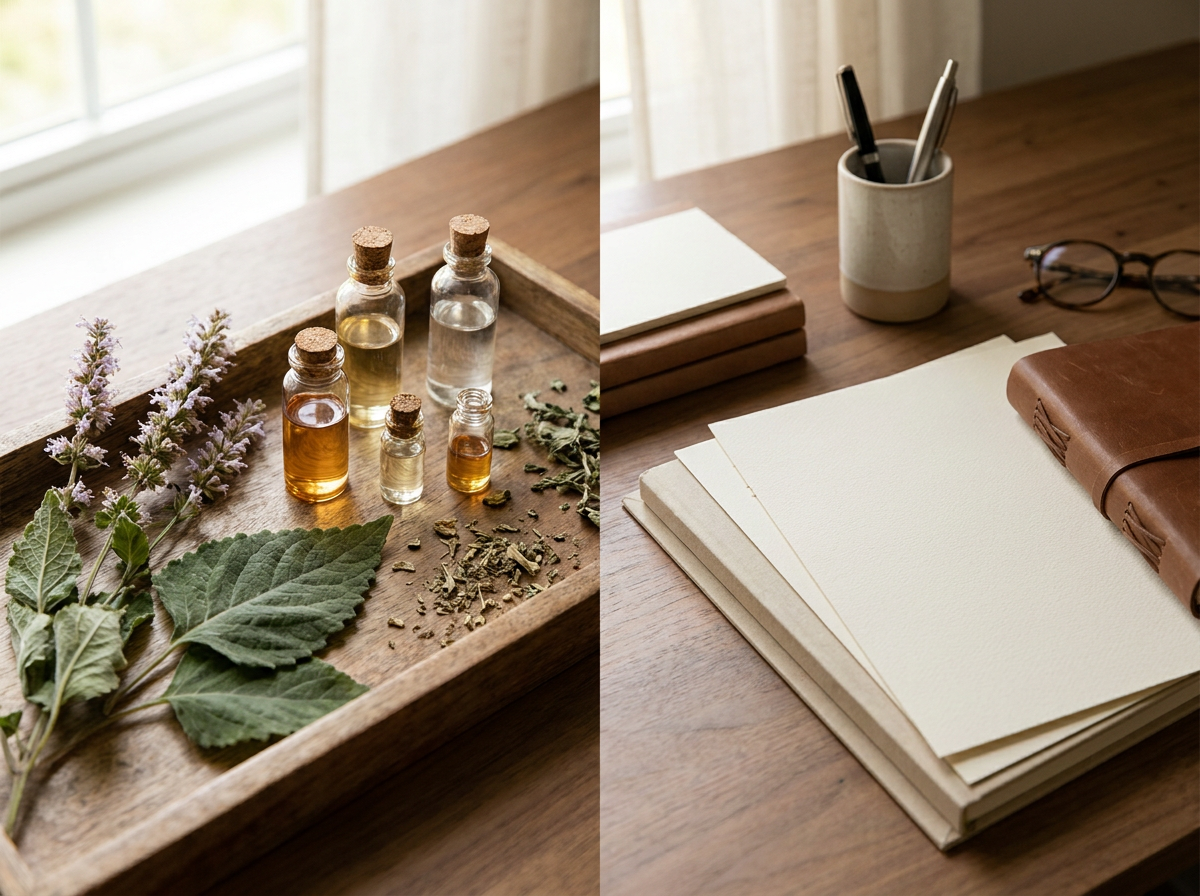
Quality ingredients make a real difference here. A poor-quality patchouli oil can read as musty or flat rather than rich and dimensional. Look for certified organic patchouli, steam-distilled from Pogostemon cablin leaves, with a dark amber color and a scent that deepens as it warms on the skin.
Ingredients
- Organic patchouli essential oil (your base note)
- Your chosen middle note oils (see blending suggestions below)
- Your chosen top note oils
- Carrier: either high-proof perfumer's alcohol (such as Everclear or cosmetic-grade ethanol at 190 proof) for an eau de parfum, or a light, odorless carrier oil such as fractionated coconut oil or jojoba for a patchouli perfume oil roll-on
- Distilled water (optional, only if making an alcohol-based spray and diluting to a lower concentration)
Equipment
- Small amber or cobalt glass bottles with tight-fitting caps (5 ml to 10 ml work well for testing)
- A 1-ounce amber glass spray bottle or roll-on bottle for the finished product
- A dropper or pipettes (dedicated to each oil to avoid cross-contamination)
- A small notebook or spreadsheet for recording your formula
- Scent strips or unscented wrist strips for testing
- Labels for your bottles
Step-by-Step Instructions: Building Your DIY Patchouli Perfume
Step 1: Decide on Your Format
Before you measure a single drop, decide whether you want an alcohol-based eau de parfum or an oil-based patchouli perfume oil. This affects everything from texture to how long the scent projects.
Alcohol-based spray: Higher sillage (the trail the scent leaves in the air), faster drying, more traditional perfume feel. Concentration for an eau de parfum is typically 15 to 20% total essential oils in ethanol.
Oil-based roll-on: More intimate projection, stays closer to the skin, moisturizing on application, and easier to make at home without sourcing high-proof alcohol. Concentration is typically 5 to 15% total essential oils in carrier oil.
For beginners, an oil-based roll-on is often the simpler starting point. The process is more forgiving, and you can adjust the blend more easily before committing to a larger batch.
Step 2: Choose Your Supporting Notes
Patchouli pairs beautifully with a wide range of oils. Below are some combinations that work particularly well, organized by the mood they create.
| Blend Profile | Middle Notes | Top Notes |
|---|---|---|
| Earthy and Woody | Cedarwood, vetiver, frankincense | Bergamot, black pepper |
| Floral and Grounded | Rose absolute, geranium, ylang ylang | Bergamot, clary sage |
| Spiced and Warm | Cardamom, clove bud, cinnamon bark (use sparingly) | Sweet orange, grapefruit |
| Citrus and Fresh | Lavender, neroli | Lemon, lime, grapefruit |
Pick one profile to start. Mixing elements from multiple profiles on your first attempt usually leads to a muddy result. Simplicity is your friend in early blending sessions.
Step 3: Work Out Your Formula
For a 10 ml oil-based patchouli perfume oil at 10% concentration, you are working with 1 ml of total essential oils in 9 ml of carrier oil. Since most pipettes dispense about 20 drops per ml, that gives you approximately 20 drops of essential oil total.
A workable starting formula for an earthy-floral blend might look like this:
- Patchouli oil (base): 4 drops
- Cedarwood (base/middle): 3 drops
- Rose absolute or geranium (middle): 4 drops
- Bergamot (top): 5 drops
- Clary sage (top): 4 drops
Write this down before you start blending. Every successful perfume formula was recorded so it could be refined or repeated. Relying on memory across multiple sessions rarely ends well.
Step 4: Blend the Essential Oils First
Add your essential oils into a small, dedicated mixing bottle before introducing the carrier. Blending the concentrate first gives you a chance to smell the accord before it is diluted, and allows you to make adjustments.
Add your drops in order from heaviest base note to lightest top note. Gently swirl the bottle rather than shaking it. Then place a single drop on a scent strip and let it sit for 30 seconds before evaluating. The initial blast of top notes will settle quickly, giving you a truer read of how the blend will develop.
If the patchouli reads as too dominant, reduce it by one drop and add one more drop of your middle note. If it feels too light and sharp, add one more drop of patchouli. Make small adjustments and re-test each time.
Step 5: Add the Carrier
Once you are satisfied with the concentrate, add it to your carrier oil in the final bottle. For a 10 ml roll-on, pour approximately 9 ml of fractionated coconut oil or jojoba into the bottle first, then add your 20-drop concentrate. Seal the bottle and roll it gently between your palms for 30 seconds to combine.
For an alcohol-based spray, combine your concentrate with 190-proof ethanol in the spray bottle. Seal and swirl gently. Some perfumers prefer to let the alcohol blend rest for 48 hours before adding any distilled water (if diluting further), as this can help the accord develop a more cohesive character.
Step 6: Let the Blend Mature
This step is easy to skip and genuinely important. Seal your finished perfume and set it in a cool, dark place for at least 48 hours. One week is better. Some blenders wait four to six weeks for a complex accord to fully develop.
During this resting period, the molecules in the blend interact and soften in ways that are noticeable on the skin. A patchouli blend that smells a little sharp on day one often rounds out into something far more cohesive by day five.
Step 7: Test on Skin and Adjust
After the maturation period, apply a small amount to the inside of your wrist. Wait 15 minutes. Smell again. Note which notes are dominant, which feel balanced, and whether the dry-down (the scent as it settles into your skin chemistry over an hour) is what you were aiming for.
Everyone's skin chemistry interacts differently with patchouli perfume oil. A blend that reads as perfectly balanced on one person can tip floral or sharply earthy on another. This is not a flaw. It is the nature of natural perfumery, and it is also why your DIY version can become genuinely personal in a way that mass-produced fragrances cannot.
Safety Guidelines: Read Before You Blend
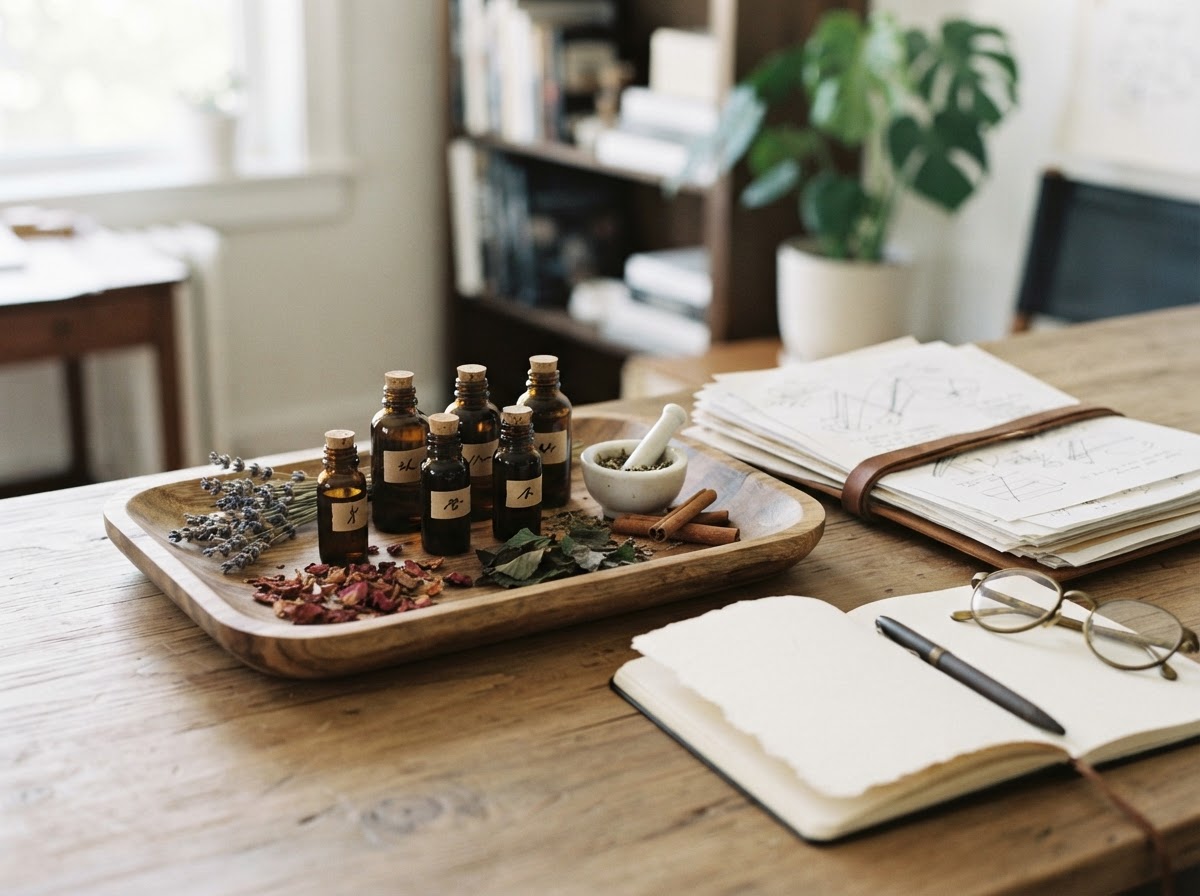
Working with concentrated essential oils requires a few straightforward precautions. These are not optional steps.
- Dilute properly. Never apply undiluted essential oils directly to skin. The dilution ratios in this guide (10% for a roll-on perfume, 15 to 20% for an eau de parfum) fall within generally accepted cosmetic use guidelines, but individual sensitivities vary.
- Patch test before wearing. Apply a small amount of the finished diluted blend to the inside of your elbow. Wait 24 hours. If you notice any redness, itching, or irritation, discontinue use of that blend.
- Citrus oils and sun exposure. Bergamot, lemon, lime, and grapefruit contain compounds that can increase skin sensitivity to UV light. If your top notes include any of these, use only furocoumarin-free (FCF) versions, or avoid sun exposure on areas where you applied the perfume for at least 12 hours.
- Pregnancy and other sensitivities. Some essential oils are not recommended during pregnancy or for people with certain sensitivities. Please consult a qualified healthcare provider before using essential oil blends if you are pregnant, nursing, or have any relevant health considerations.
- Keep away from children and pets. Store finished perfumes in sealed, labeled bottles out of reach. Many essential oils are not appropriate for use around young children or animals.
Common Mistakes to Avoid
Using Too Much Patchouli Too Soon
It is tempting to lean into the main ingredient. Resist the urge. Patchouli is powerful, and in a 20-drop blend, even two extra drops can shift the entire character of the fragrance toward something that feels heavy rather than grounded. Start conservative and build up.
Evaluating Wet Blends
Smelling a blend the moment it hits the strip or your skin gives you a distorted reading. Top notes dominate immediately and then fade. Always give a blend 5 to 10 minutes before making a judgment, and another 30 minutes to assess the dry-down.
Skipping the Notebook
If you make a blend you love but did not write it down, you will not be able to recreate it. Write every drop count and every oil before you blend, every time.
Using Low-Quality Oils
Synthetic fragrance oils are not the same as essential oils and will not behave the same way in a blend. For a genuine patchouli oil perfume built on natural materials, source certified organic essential oils from reputable suppliers who provide batch-specific testing documentation (GC/MS reports). The difference in complexity is significant.
Bottling in Clear Glass
Light degrades essential oils and can shorten their shelf life substantially. Always use amber or cobalt glass for your finished perfume. Store away from heat sources.
Expanding Your Practice
Once you have your first blend dialed in, the natural next steps are to explore how patchouli behaves in other body care formats. A patchouli-forward skin oil doubles beautifully as a light daily moisturizer, and the blending principles translate directly. The article on patchouli oil for skin care routines is a useful companion if you want to extend your practice beyond pure fragrance.
For those who prefer a more concentrated, leave-on format, a patchouli beard oil follows similar blending logic. The guide on DIY patchouli beard oil walks through ratios suited to thicker carrier oils and longer skin contact.
A Note on Aged Patchouli Oil
If you have the opportunity to source aged patchouli oil (sometimes labeled as vintage or aged for three or more years), it is worth experiencing at least once. As patchouli oil ages, its sharper green facets mellow and the sweeter, more complex base notes deepen considerably. Aged patchouli integrates into a blend with noticeably less effort and tends to read as rounder and more polished straight out of the bottle. It comes at a premium, but for a signature blend you plan to wear regularly, the investment is reasonable.
Storing Your Finished Perfume
Oil-based patchouli perfume oils have a shelf life of roughly one to two years when stored properly. Keep them in a sealed amber bottle, away from direct sunlight and heat. Fractionated coconut oil is particularly stable and extends the life of a blend compared to some other carrier oils.
Alcohol-based perfumes can last two to three years or longer under the same conditions. If you notice any change in scent character (sour, rancid, or significantly altered from the original) the blend has turned and should be discarded.
Label every bottle with the formula name, the date you made it, and the dilution percentage. Future you will appreciate the organization.
Making It Truly Yours
The most satisfying part of DIY patchouli perfume is iteration. Your first blend will probably not be your last. Each small adjustment, a drop more of rose absolute here, a shift from bergamot to neroli there, teaches you something about how these ingredients interact and how your own nose works.
Patchouli is one of the most forgiving and versatile base notes available to a home blender. It anchors, it extends, and it brings a sense of depth that is genuinely difficult to achieve without it. Start with one simple blend, wear it for a few weeks, and see what you want to shift. That process, slow and sensory and personal, is where signature scents are actually born.