Patchouli Oil for Skin: A Grounded Routine for Face and Body Care
Patchouli has a long history in personal care, and for good reason. The oil pressed from Pogostemon cablin leaves carries a rich, earthy depth that blends beautifully into carrier oils, balms, and body butters. Beyond its scent, patchouli oil for skin has become a quiet staple in slow-beauty routines worldwide. Its texture is thick and resinous, its aroma evolves on the skin over hours, and it layers well with both light and heavy carriers.
This guide walks you through building a practical, grounded routine using organic patchouli oil from face to body. You will find materials lists, numbered steps, dilution guidance, safety notes, and honest expectations for what this oil can and cannot do for your skin.
Understanding Patchouli Oil Before You Begin
Organic patchouli essential oil is steam-distilled from the dried, fermented leaves of the patchouli plant. The resulting oil is deep amber or brownish-orange, and its viscosity is noticeably thicker than most essential oils. It is worth knowing that aged patchouli oil develops a smoother, less sharp character over time, much like a fine wine.
Patchouli is not a carrier oil. It is an essential oil and must always be diluted before skin contact. This is the single most important rule in any patchouli skin care routine. Undiluted essential oils applied directly to skin can cause irritation, sensitization, or adverse reactions, even in people who do not consider themselves sensitive.
For a broader introduction to working with patchouli across fragrance and skin applications, see our guide on how to use patchouli oil: the ultimate fragrance and skin guide.
What to Look for in an Organic Patchouli Oil
- Certification: Look for USDA Organic or equivalent third-party certification.
- Botanical name on the label: It should read Pogostemon cablin.
- Country of origin: Indonesia is the most common and well-regarded source. India also produces quality oil.
- GC/MS testing: Reputable suppliers publish gas chromatography and mass spectrometry reports confirming purity.
- Color and viscosity: Genuine patchouli is amber to dark brown and pours slowly.
Part One: Face Care with Patchouli Oil
Patchouli works best on the face when blended into a light carrier such as jojoba or rosehip seed oil. The dilution rate for facial use is lower than for body use, since facial skin is more delicate and more likely to react.
Materials Needed for the Face Routine
- Organic patchouli essential oil
- Carrier oil: jojoba oil (cold-pressed, unrefined) or rosehip seed oil
- A 10 ml amber or cobalt glass roller bottle or a 1 oz dark glass dropper bottle
- A small funnel (optional but helpful)
- Labels and a permanent marker
Step-by-Step: Patchouli Face Serum
- Choose your carrier oil. Jojoba oil closely mimics the skin's natural sebum and is suitable for most skin types. Rosehip seed oil has a lighter feel and is a popular choice for dry or mature-feeling skin. Pick one and have it ready.
- Calculate your dilution. For facial use, a 1% dilution is the standard starting point. In a 10 ml roller bottle, 1% equals 3 drops of patchouli essential oil. If you have sensitive skin or are using this around the eye area (avoiding direct contact), start at 0.5%, which is 1 to 2 drops per 10 ml.
- Add the essential oil first. Drop the patchouli directly into your empty bottle before the carrier oil. This ensures the oils mix properly rather than the essential oil floating on top.
- Fill with your carrier oil. Pour jojoba or rosehip seed oil into the bottle until it is nearly full, leaving a small gap at the top. Cap the bottle.
- Roll gently to combine. Do not shake vigorously. A slow roll between your palms blends the oils without introducing air bubbles.
- Patch test before use. Apply a small amount to the inside of your wrist or the crook of your elbow. Wait 24 hours and check for any redness, itching, or irritation. If any reaction occurs, do not use the blend on your face.
- Apply to clean skin. After cleansing and toning, while the skin is still slightly damp, apply 2 to 4 drops of the serum to your fingertips. Press lightly into cheeks, forehead, and chin. Avoid the eye area.
- Label and date your bottle. Jojoba-based blends keep well for up to 12 months. Rosehip-based blends are best used within 6 months, as rosehip oil oxidizes more quickly.
Tip: Patchouli's scent is strong at first application and softens noticeably within 15 to 20 minutes. If you find the initial aroma too intense, reduce your dilution rather than skipping it entirely.
Common mistake: Using patchouli undiluted because "just a drop" seems harmless. Even a single undiluted drop on the face can cause sensitivity over time. Always dilute.
Part Two: Body Care with Patchouli Oil
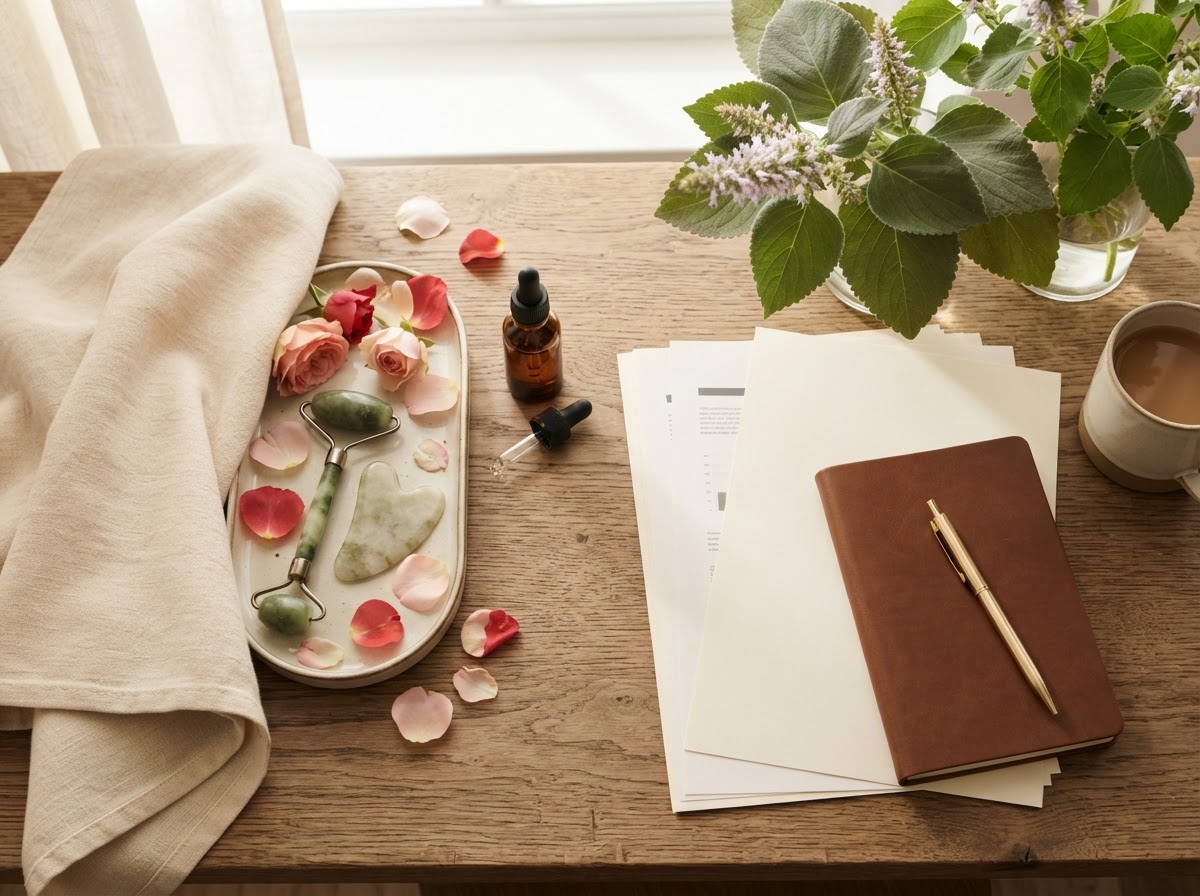
Patchouli body oil is one of the most satisfying ways to use this ingredient. The body tolerates a slightly higher dilution than the face, and the warmth of the skin after a shower amplifies patchouli's earthy, slightly sweet character throughout the day.
Materials Needed for the Body Routine
- Organic patchouli essential oil
- Carrier oil: sweet almond oil, fractionated coconut oil, or grapeseed oil
- A 2 oz (60 ml) dark glass bottle with a pump or dropper cap
- Optional additions: a few drops of cedarwood, sandalwood, or bergamot essential oil for a layered scent profile
- Measuring spoons or a small scale
Step-by-Step: Patchouli Body Oil Blend
- Select your carrier oil. Sweet almond oil is nourishing and absorbs at a moderate pace. Fractionated coconut oil is lighter and leaves less residue. Grapeseed oil is the lightest of the three and suits those who dislike any oily feeling on the skin.
- Determine your dilution. For body use, a 2% dilution is the widely accepted standard for adults. In a 60 ml bottle, 2% equals approximately 24 drops of essential oil total. If you are blending multiple essential oils, the 24-drop count is the combined total, not per oil.
- Build your scent blend (optional). Patchouli pairs beautifully with cedarwood (grounding and woody), bergamot (bright and citrusy), and sandalwood (smooth and creamy). A simple starting point: 16 drops patchouli, 6 drops cedarwood, 2 drops bergamot. Adjust to your preference.
- Combine oils in the bottle. Add essential oils first, then fill with your carrier oil. Cap and roll gently.
- Patch test. Even on the body, patch testing matters. Apply to the inside of the upper arm and wait 24 hours before using across larger areas.
- Apply to damp skin after bathing. The best moment to apply patchouli body oil is within 2 minutes of stepping out of the shower, while skin is still slightly damp. The moisture helps the oil absorb more evenly and the warmth of the skin helps diffuse the scent.
- Focus on dry areas. Elbows, knees, shins, and heels respond particularly well to a body oil routine. Apply a few extra drops to these spots.
- Allow time to absorb before dressing. Give the oil at least 3 to 5 minutes to sink in before putting on clothing, especially light-colored fabrics, to avoid any staining from the carrier oil.
For a more detailed recipe including a solid perfume variation, visit our guide on DIY patchouli body oil and solid perfume for long-wearing wear.
Safety Guidelines and Contraindications
Patchouli essential oil is considered low-risk compared to many other essential oils, but careful use still matters. Keep the following in mind before building any routine.
- Pregnancy and nursing: Consult a qualified healthcare provider before using any essential oil during pregnancy or while nursing.
- Children: Essential oils are generally not recommended for use on young children without professional guidance. Keep all essential oils and blended products out of reach of children.
- Photosensitivity: Patchouli itself is not considered a photosensitizing oil, but if you blend it with citrus oils such as bergamot or lemon, wait at least 12 hours before sun exposure on treated skin areas.
- Medication interactions: If you take prescription medications or have an existing health condition, speak with your healthcare provider before introducing new botanical products into your routine.
- Storage: Store your blends in dark glass away from heat and direct sunlight. Heat and light accelerate oxidation, which can affect both the scent and the quality of the oil over time.
Tips for Getting the Most from Your Patchouli Skin Care Routine

Start Low, Go Slow
New users often reach for higher dilutions hoping for a stronger result. In practice, starting at 1% for face and 2% for body and living with that for two to four weeks gives you the most useful information about how your skin responds. You can always increase incrementally from there.
Keep a Simple Scent Journal
Patchouli's scent evolves on skin over 4 to 6 hours. Noting how the oil smells at application, at the 2-hour mark, and by evening helps you understand its dry-down and decide whether you want to add complementary notes to your blend.
Consistency Matters More Than Concentration
A daily or every-other-day routine with a properly diluted patchouli body oil tends to produce more noticeable, lasting impressions on skin texture and scent presence than an occasional high-concentration application.
Use Pumps, Not Open Bottles
Every time you open your carrier oil blend to the air, a small amount of oxidation occurs. Pump-top or dropper-cap bottles reduce air exposure and extend the shelf life of your product.
What to Realistically Expect
Patchouli skin care is not a fast-results category. People who use patchouli-based body oils and face serums regularly often report that their skin feels more comfortable and that the scent builds a subtle, recognizable presence over weeks of use. The oil may support a sense of skin softness and may contribute to a calming, grounding atmosphere in your morning or evening ritual. Those effects are real and worth pursuing. They are simply not medical claims.
Patchouli is also one of the more forgiving oils when it comes to blending. It anchors other scents, extends their longevity on skin, and softens over time rather than sharpening. If you are new to working with essential oils, it is a sensible place to begin.
If you are also interested in using patchouli in a facial grooming context, our DIY patchouli beard oil recipe walks through an earthy, skin-friendly blend built on similar principles.
Quick Reference: Dilution Guide
| Application Area | Recommended Dilution | Drops per 10 ml Carrier |
|---|---|---|
| Sensitive facial skin | 0.5% | 1 to 2 drops |
| General face use | 1% | 3 drops |
| Body (standard adult) | 2% | 6 drops |
| Body (short-term, small area) | 3% | 9 drops |
Always perform a patch test before applying any new essential oil blend to a large area of skin. Consult a qualified healthcare provider if you have questions about whether patchouli oil is appropriate for your situation.
Building a patchouli skin care routine takes a little patience and a willingness to experiment with ratios and carrier oils. The reward is a deeply personal ritual that carries one of the most distinctive, time-honored scents in botanical history.