DIY Patchouli Beard Oil: An Earthy Grooming Recipe That Lasts All Day
Patchouli has a reputation that precedes it, rich and woody, a scent that deepens rather than fades. That staying power is exactly what makes it an ideal anchor for a homemade beard oil. Most commercial options lean toward citrus or barbershop-style woods. This recipe goes a different direction, grounding the scent in dark earth and warm botanicals that carry through from morning coffee to evening wind-down.
This patchouli beard oil is also genuinely useful as a grooming product. The carrier oils in this formula were chosen for their compatibility with both coarse facial hair and the skin underneath, which is often drier and more prone to flaking than the rest of the face. Good beard oil addresses both layers at once. This one does.
Before You Start: Difficulty Level and Prep Time
- Difficulty: Beginner-friendly
- Active prep time: 10 to 15 minutes
- Cure/rest time: 24 hours recommended before first use (allows the blend to mellow and integrate)
- Yield: Approximately 1 ounce (30 ml), enough for 60 to 90 daily applications depending on beard length
No special equipment is required. You need a small funnel, a glass measuring cup or pipette, and your bottles. That is the full toolkit.
Why Patchouli Works in a Beard Oil
Patchouli essential oil (Pogostemon cablin) is steam-distilled from the dried, fermented leaves of a plant native to tropical Asia. It is one of the few essential oils that actually improves with age. A bottle of organic patchouli that has been open for a year will smell smoother and less sharp than a freshly opened one. This matters for beard oil because the scent sits close to your face all day, and a raw, piercing note gets tiring quickly.
Patchouli also blends generously. It rounds out citrus notes that might otherwise go sharp in the afternoon heat, deepens woody accords, and holds softer florals in place. For an earthy beard oil, it is the obvious foundation, not a novelty addition.
If you want to explore patchouli's scent profile more broadly before committing to a recipe, the guide on how to use patchouli oil for fragrance and skin covers its aromatic character and layering potential in detail.
Ingredients
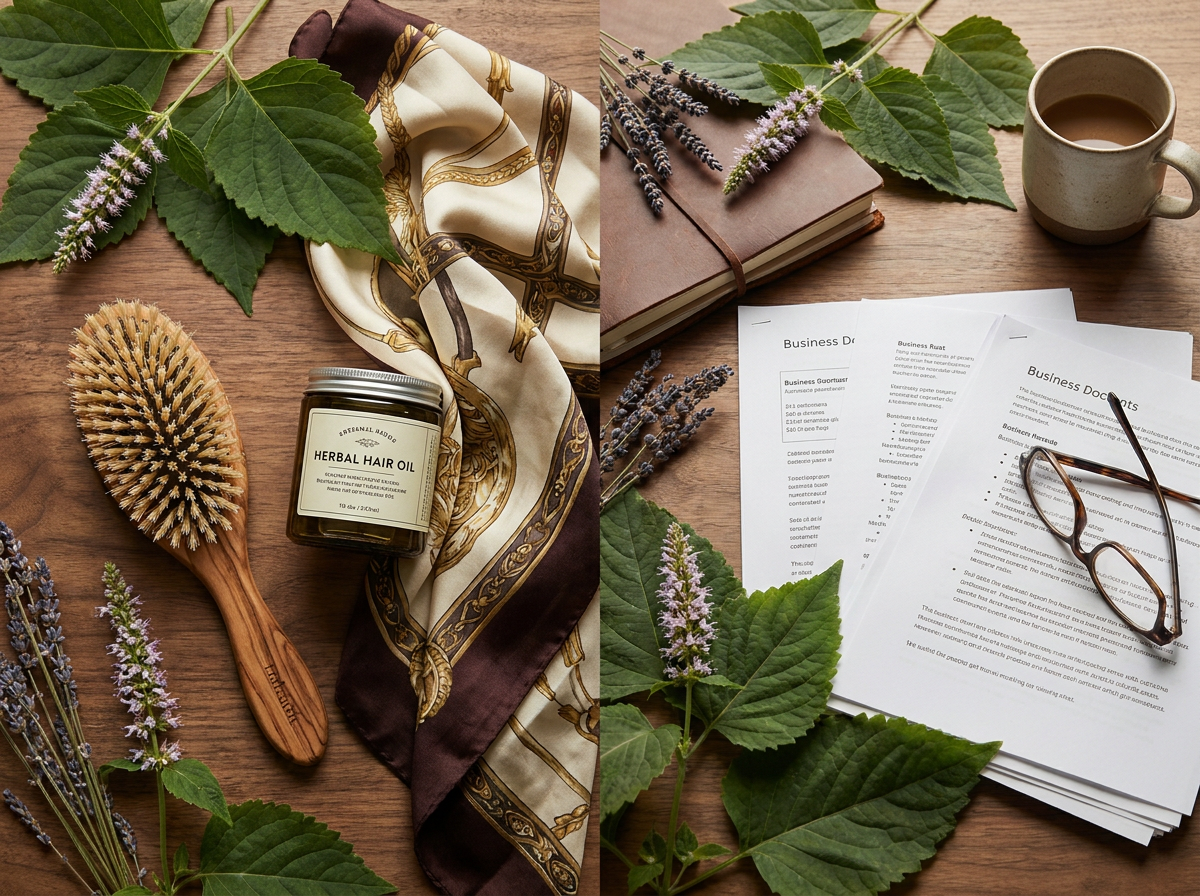
All measurements are by volume. A 1-milliliter graduated pipette makes the essential oil drops easier to control than guessing from a dropper tip.
Carrier Oil Base (29 ml total)
| Ingredient | Amount | Purpose |
|---|---|---|
| Jojoba oil (golden or clear) | 15 ml | Primary conditioner; closely mimics skin's natural sebum; long shelf life |
| Argan oil | 10 ml | Adds shine and softness; absorbs quickly without greasiness |
| Sweet almond oil | 4 ml | Lightweight slip; helps the blend spread evenly through dense beard hair |
Essential Oil Blend (1 ml total, 3.3% dilution)
| Essential Oil | Drops (approx.) | Scent Role |
|---|---|---|
| Organic patchouli (aged preferred) | 10 drops | Base note anchor; earthy, deep, long-lasting |
| Cedarwood (Atlas or Virginia) | 6 drops | Woody middle note; adds warmth and complements patchouli |
| Bergamot (bergapten-free) | 3 drops | Bright top note; lifts the blend without going citrus-sharp |
| Vetiver | 1 drop | Deepens the earthy quality; use sparingly, it is potent |
Total essential oil volume: approximately 1 ml (20 drops at standard drop size)
Dilution rate: approximately 3.3%, which is within the safe range for leave-on adult facial skin products
Step-by-Step Instructions
- Sanitize your workspace and tools. Wipe down your glass measuring cup, funnel, and any pipettes with isopropyl alcohol and let them dry completely. Oil and water do not mix, so moisture contamination is the main enemy of shelf life here.
- Measure the carrier oils. Using a clean pipette or small measuring cup, measure out 15 ml jojoba, 10 ml argan, and 4 ml sweet almond oil. Pour them into your glass mixing vessel. Swirl gently to combine.
- Add the essential oils. Working from heaviest to lightest (vetiver first, then patchouli, then cedarwood, then bergamot), drop the essential oils directly into the carrier blend. This order helps heavier molecules disperse more evenly.
- Stir or cap and roll. Use a clean glass stirring rod, or simply cap your mixing vessel and roll it between your palms for 30 seconds. Avoid shaking vigorously, as this can introduce air bubbles that slightly destabilize the blend over time.
- Transfer to your bottle. Using a small funnel, pour the finished oil into a 1-ounce (30 ml) dark glass dropper bottle or pump bottle. Dark glass (amber or cobalt blue) protects the essential oils from UV degradation.
- Label and date your bottle. Include the batch date and the formula name. It takes about 10 seconds and saves confusion later.
- Rest for 24 hours. Set the bottle in a cool, dark spot for a full day before first use. The scent compounds continue to integrate during this period, and the difference in the final aroma is noticeable.
How to Apply

Dispense 3 to 6 drops into your palm (adjust for beard length and density). Rub hands together briefly to warm the oil, then work it through your beard from root to tip. Finish by combing or brushing to distribute evenly. Apply after a shower when the hair shaft is clean and slightly warm for best absorption.
Safety Warnings and Contraindications
Please read before making or using this product.
Dilution
This recipe is formulated at approximately 3.3% essential oil dilution, appropriate for a leave-on adult skin product used on the face. Do not increase the essential oil quantity without recalculating your dilution rate. Higher concentrations on facial skin may cause irritation or sensitization.
Patch Testing
Before applying this blend to your full beard and the skin beneath it, perform a patch test. Apply a small amount of the finished oil to the inside of your wrist or elbow. Wait 24 hours. If you notice redness, itching, or any skin response, do not proceed with facial use. Discontinue and consult a qualified healthcare provider if a reaction occurs.
Bergamot Note
This recipe specifies bergapten-free (also called FCF) bergamot. Standard bergamot contains a compound called bergapten, which can cause photosensitization, meaning skin exposed to sunlight after application may darken or burn more easily. Bergapten-free versions are widely available and labeled as such. Do not substitute with standard bergamot for a leave-on product.
Sweet Almond Oil and Nut Sensitivities
Sweet almond oil is derived from almonds. Individuals with known tree nut sensitivities should substitute with an alternative carrier (see Variations below) and consult a healthcare provider before use.
Not for Use On
- Children or adolescents without professional guidance on age-appropriate essential oil use
- Broken, irritated, or compromised skin
- Near eyes or mucous membranes
Pregnancy and Nursing
Consult a qualified healthcare provider before using essential oil products if you are pregnant or nursing.
Storage Instructions and Shelf Life

Store your patchouli beard oil in a cool, dark location away from direct sunlight and heat sources. A bathroom cabinet works fine as long as it does not get consistently steamy.
- Expected shelf life: 9 to 12 months
- Shelf life limiter: Sweet almond oil, the most perishable carrier in this formula, has a typical shelf life of around 12 months. Jojoba oil, by contrast, is exceptionally stable and can last several years. The overall blend life is governed by the least stable ingredient.
- Signs of spoilage: A rancid, crayon-like, or sour smell indicates oxidation. Discard and make a fresh batch if the scent changes noticeably from the original blend.
- Extending shelf life: Adding 0.5 ml of vitamin E oil (tocopherol) to the batch acts as an antioxidant for the carrier oils and can extend usable life by several months. It does not affect the scent profile.
Variations and Substitutions
Carrier Oil Swaps
- No sweet almond oil: Substitute with an equal volume of grapeseed oil (lighter, faster-absorbing) or hemp seed oil (slightly nuttier, rich in fatty acids).
- Heavier conditioning for very coarse beards: Replace part of the argan oil with castor oil. Start with a 2 ml swap. Castor oil is thick and adds slip but can feel heavy if overused.
- More lightweight feel: Increase jojoba and reduce argan. Jojoba absorbs very cleanly and leaves less surface residue.
Scent Variations
- Darker and more resinous: Replace cedarwood with sandalwood (use sustainably sourced Australian sandalwood) and add 2 drops of frankincense. The result is a richer, almost meditative accord.
- Lighter and fresher: Swap bergamot for distilled lime (not cold-pressed, which carries photosensitization risk) and reduce vetiver to a half drop if your dropper allows. This keeps the patchouli foundation but lifts the overall impression.
- Spiced variation: Add 2 drops of black pepper essential oil for a warm, slightly sharp edge that pairs well with the earthiness of patchouli. Start conservatively; black pepper is potent.
For more ideas on building body-friendly oil blends with patchouli as the central note, the recipe guide on DIY patchouli body oil and solid perfume covers layering techniques that transfer directly to beard oil formulation.
Fragrance-Only Version
If you prefer to separate your grooming product from your fragrance ritual, omit all essential oils and use the carrier blend as a pure conditioning oil. Then apply a separately made patchouli-based cologne or room mist for scent. The guide on DIY patchouli room mist outlines a complementary scenting approach you can layer on top of an unscented base oil.
Scaling the Recipe
The formula scales directly. To make a 2-ounce batch, simply double every measurement. The dilution percentage stays constant as long as you maintain the same carrier-to-essential-oil ratio. Larger batches make sense if you have a full beard that requires more oil daily, or if you are making this as a gift set.
Keep the essential oil proportion at or below 3.5% for any leave-on facial product. If you are curious about what that math looks like across different batch sizes, a dilution calculator (available free through several aromatherapy organizations) takes the guesswork out completely.
A Note on Oil Quality
The quality of the patchouli you use matters more in this recipe than in a wash-off product. Beard oil sits on skin and hair for hours. A synthetic or low-grade patchouli will smell flat or harsh and will not deepen the way a properly distilled organic oil does. Look for oils that list the botanical name (Pogostemon cablin), the country of origin (Indonesia is the most common source for high-quality patchouli), and the extraction method (steam distillation). Certified organic is worth the premium here because the oil is concentrated and you are applying it to facial skin daily.
Aged patchouli costs more but performs differently than a fresh batch. If your budget allows, it is worth seeking out. The scent rounds and mellows with time in a way that suits a long-wear grooming product especially well.
This recipe is a starting point. Adjust the carriers to your skin type, shift the essential oil ratios to suit your scent preference, and keep notes on what you change. The best version of this earthy beard oil will be the one you have refined over a few batches into something that is genuinely yours.