How to Store Patchouli Oil: Why This Is the Rare Oil That Improves with Age
Most essential oils are a race against the clock. Citrus oils fade in a matter of months. Delicate florals lose their brightness faster than you expect. Patchouli operates by entirely different rules. Stored correctly, a bottle of high-quality organic patchouli oil does not simply last a long time. It actually gets better. The scent deepens, softens, and rounds out into something far more complex than what you first opened.
This guide walks you through exactly how to store patchouli oil to protect that potential, explains the science behind aged patchouli oil, and gives you a practical framework for building a small home aging collection that can reward you for years.
Why Patchouli Oil Is Different: The Case for Aging
To understand why storage matters so much with patchouli, it helps to know a little about what is actually inside the bottle. If you want the full botanical picture, the complete guide to patchouli oil covers its chemistry and character in depth. The short version is this: patchouli oil is dominated by sesquiterpene compounds, particularly patchoulol. These are large, dense molecules that oxidize very slowly compared to the lighter terpenes found in most other essential oils.
Slow, controlled oxidation over time is what causes aged patchouli oil to mellow. The sharp, green, almost camphoraceous note that characterizes fresh patchouli gradually gives way to a warmer, earthier, more balsamic quality. Perfumers have long sought out aged patchouli for exactly this reason, and the same transformation is available to anyone willing to store their oil with a little patience and intention.
The key word there is controlled. Aging patchouli well is not the same as simply forgetting a bottle in a drawer. Exposure to the wrong conditions during storage can cause undesirable oxidation: a stale, rancid quality rather than a rich maturation. The steps below are designed to give your oil the conditions it needs to age gracefully.
Understanding Patchouli Oil Shelf Life
A well-stored bottle of patchouli oil carries a practical shelf life of four to six years at minimum. Many experienced collectors and perfumers work with patchouli that is ten, fifteen, or even twenty years old. The patchouli oil shelf life in ideal conditions is essentially open-ended, with the caveat that the scent profile continues shifting throughout that time rather than simply holding steady.
Compare this to lavender (one to three years) or sweet orange (one year or less), and you begin to see why patchouli deserves a dedicated storage strategy. The investment of a few careful habits at the start can protect a bottle for decades.
What You Will Need
Before you begin, gather the following materials:
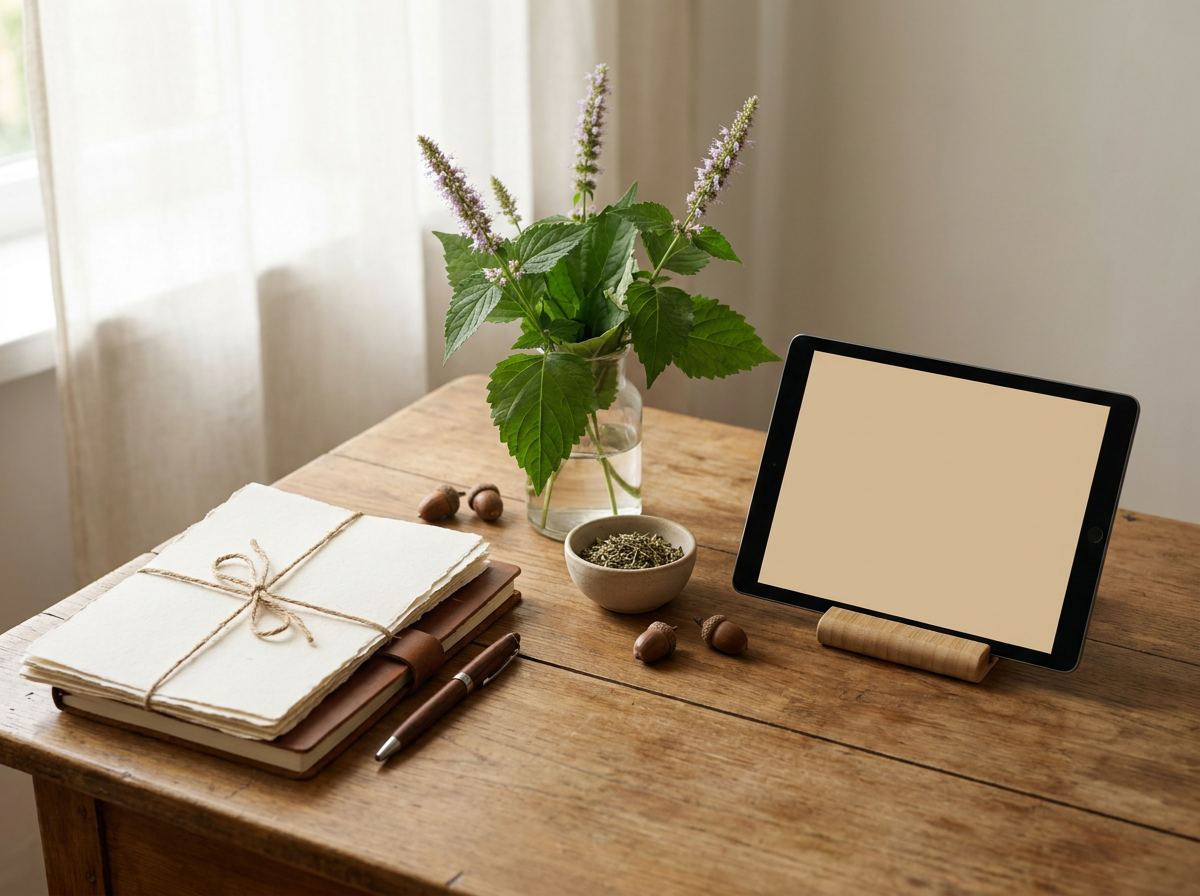
- Dark glass bottles: Amber or cobalt blue glass, sized appropriately for your volume. Avoid clear glass entirely.
- Orifice reducers or droppers with tight seals: These minimize air exposure each time you open the bottle.
- Bottle labels or masking tape and a permanent marker: For dating your bottles accurately.
- A cool, dark storage location: A cabinet, a drawer, a dedicated box, or a cellar shelf away from heat sources.
- Optional, for serious aging: inert storage containers or a wine-style cooler set to a stable cool temperature.
You do not need expensive equipment to store patchouli oil well. The fundamentals are darkness, consistent cool temperature, minimal air exposure, and accurate labeling. Everything else is refinement.
Step-by-Step: How to Store Patchouli Oil for Long-Term Aging
Step 1: Choose the Right Bottle from the Start
If your patchouli oil arrives in a dark glass bottle with a well-fitting dropper or orifice reducer, you may not need to transfer it at all. Check that the seal is snug. A loose cap or a damaged dropper allows air to slowly work its way into the bottle during storage, which accelerates oxidation unevenly.
If your oil came in a large bottle and you plan to use it gradually over years, consider decanting a portion into smaller dark glass bottles. A smaller bottle that is nearly full has less headspace (the air gap above the oil), which slows oxidation. Reserve the rest in a well-sealed larger bottle. This is the same principle behind wine storage.
Step 2: Label Everything Immediately
Write the purchase date, the source, and if known, the origin country directly on the bottle or on a label you apply the same day. This sounds obvious, but it is one of the most commonly skipped steps. When you open a bottle of aged patchouli oil two years from now, you will want to know exactly how long it has been aging and where it came from.
Patchouli from different regions, such as Indonesia, India, or China, develops slightly differently with age. Tracking your sources helps you learn your own preferences over time.
Step 3: Find the Right Storage Location
The three enemies of essential oil quality are heat, light, and fluctuating temperature. Choose a location that avoids all three.
- Temperature: Aim for a consistent range between 60 and 70 degrees Fahrenheit (15 to 21 degrees Celsius). A kitchen cabinet near the stove is not suitable. A bathroom cabinet near a hot shower is not suitable. A cool interior closet, a basement shelf, or a dedicated drawer in a temperature-stable room all work well.
- Light: Even ambient indoor light can degrade oil over months. Store bottles inside a box, a tin, or a closed cabinet rather than on an open shelf where they receive regular light exposure.
- Consistency: Repeated temperature swings are more damaging than a consistently cool or a consistently moderate temperature. Stability matters more than achieving a perfect number.
Step 4: Minimize Air Exposure During Use
Every time you open a bottle, you introduce fresh oxygen. For a bottle you use daily, this is unavoidable. For a bottle you are setting aside to age, handle it with intention. Open it only to check on the scent periodically, perhaps every six months, and reseal it firmly each time.
When using oil from an active bottle, replace the cap promptly after each use. Do not leave bottles open on a counter while you work. This applies to all essential oils, but it matters especially here because you are actively trying to preserve a long-term aging process rather than simply slowing degradation.
Step 5: Set Up a Simple Rotation and Tracking System
If you are storing multiple bottles or beginning a small patchouli aging project, create a simple log. A notebook, a spreadsheet, or even a dated note in your phone works fine. Record the purchase date, the source, the batch number if available, and a brief scent note from your initial impression.
Check in every six months. Open each bottle, take a small sniff, and jot down how the scent has shifted. This practice builds your nose over time and gives you a genuine record of how your specific oils are developing. It also makes the whole project genuinely enjoyable rather than simply precautionary.
Step 6: Know When the Oil Has Peaked or Turned
Aged patchouli oil at its best smells deep, smooth, woody, and slightly sweet, with none of the sharp green edge of fresh oil. If, on the other hand, your oil develops a sour, acrid, or genuinely unpleasant smell that does not fade after a brief airing, it has likely oxidized in an undesirable direction. This can happen if the storage conditions were inconsistent or if the original oil was adulterated or of poor quality to begin with.
Aged patchouli oil that has turned should not be used in skin-contact applications. You can still use it in a diffuser at your discretion, though the aromatic experience will be disappointing. This outcome is the main reason starting with a high-quality organic oil matters. A compromised oil going into storage tends to age poorly.
Common Mistakes to Avoid

- Storing in clear glass: UV and visible light degrade aromatic compounds over months. Always use dark glass.
- Skipping the label: You will not remember the purchase date a year from now. Label it today.
- Storing near appliances that generate heat: Refrigerators, ovens, radiators, and even sunny windowsills create temperature variation that works against good aging.
- Transferring to plastic: Essential oils can interact with certain plastics over time, compromising both the container and the oil. Glass is always the correct choice for long-term storage.
- Confusing aging with neglect: Aging patchouli is an active, periodic process. Check your bottles. Note what you observe. An unattended bottle in a hot closet is not aging. It is degrading.
What to Expect Over Time
In the first six to twelve months, well-stored patchouli oil may show only subtle changes. The sharper top notes begin to soften. The earthy base becomes a little more prominent. Many people find the oil more immediately wearable at this stage than when it was fresh.
Between one and three years, the transformation becomes unmistakable. The scent is warmer, more rounded, and noticeably less austere. This is the range where aged patchouli oil starts to earn its reputation in perfumery.
Beyond three years, in ideal conditions, the oil may develop a richness that approaches vintage Indonesian patchouli. The full history and cultural significance of this kind of aged patchouli is worth exploring. The history of patchouli from the Silk Road onward gives useful context for why aged oil was historically so prized and so expensive.
It is worth noting that results vary. The starting quality of the oil, the precision of your storage conditions, and the specific chemical composition of your batch all influence how the oil develops. Some bottles reward you handsomely. Others plateau early. This variability is part of what makes the practice interesting.
Putting Aged Oil to Work
Once your patchouli oil has matured to a stage you love, the applications are genuinely broad. Aged oil tends to blend more smoothly than fresh patchouli because its sharp edges have softened. It anchors a blend without dominating it. It performs beautifully in homemade solid perfumes, diffuser blends, and personal care formulations.
For practical starting points across all of those uses, the 20 earthy ideas for fragrance and home article is a good companion to this one. Many of those applications benefit specifically from an aged oil rather than a fresh one.
Start with one well-sourced bottle, date it today, and tuck it somewhere cool and dark. Then let time do the work. Few rituals in the aromatic world are this effortless or this rewarding.