Patchouli and Counterculture: A Short History from Silk Roads to the Sixties
Few scents carry as much cultural freight as patchouli. Rich, earthy, and unmistakably itself, it has wound through centuries of trade routes, religious practice, and social revolt before landing in the amber-colored bottles lining aromatherapy shelves today. Understanding patchouli history means tracing a plant that refused to stay in one place, one culture, or one meaning.
This deep-dive covers the botanical and chemical profile of Pogostemon cablin, the compound responsible for its signature scent, what researchers have observed in laboratory settings, and how to read quality indicators when selecting an organic oil. But the story starts long before any of that, somewhere along a dusty road between India and the Mediterranean.
The Silk Road and the Scented Chest
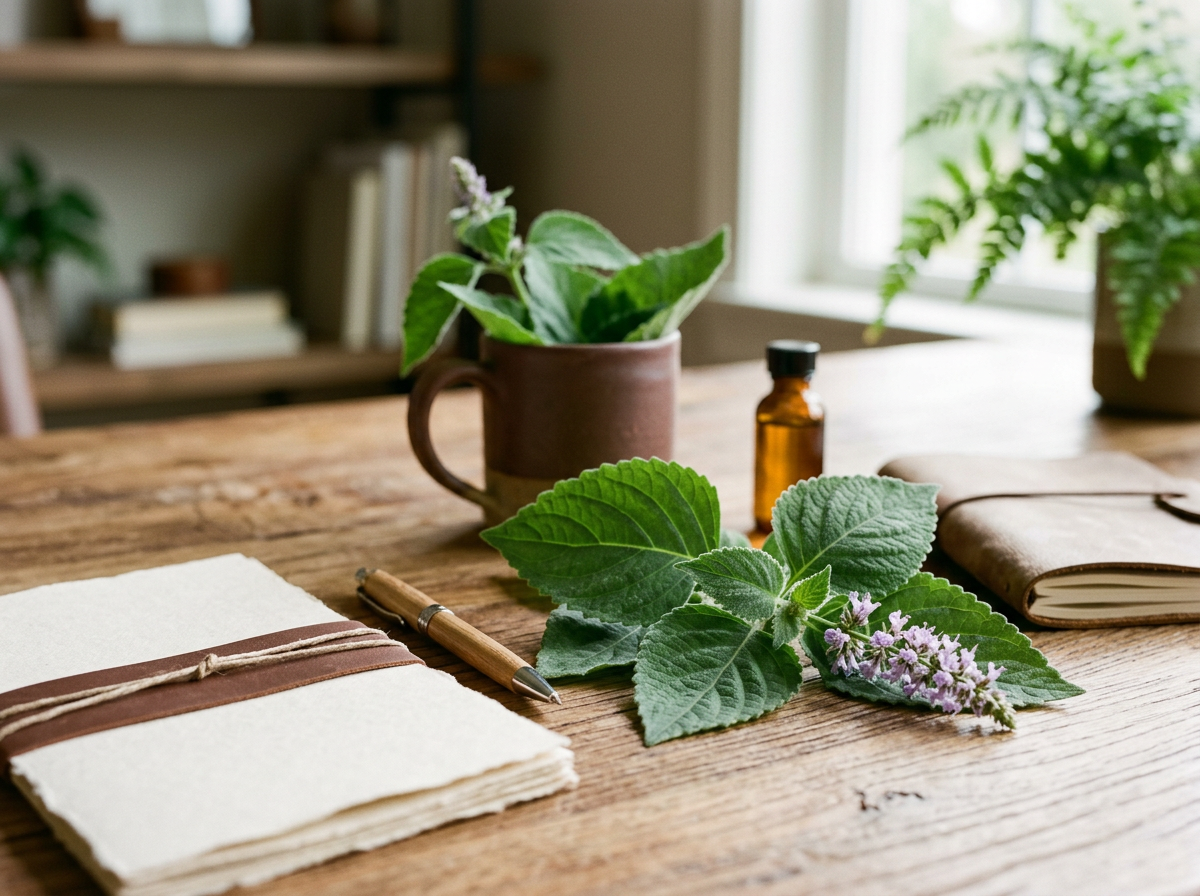
Patchouli's formal origins are rooted in Southeast Asia, specifically in the tropical lowlands of Indonesia, the Philippines, and India's southern coast. The plant, a bushy member of the mint family (Lamiaceae), thrives in warm, humid climates with well-draining soil. For centuries, cultivators harvested and dried its broad, serrated leaves, using them for everything from textile protection to ritual fumigation.
The Silk Road connection is more than romantic myth. Textile merchants in India routinely packed dried patchouli leaves between bolts of Kashmir shawls and fine silks before shipping them westward. The leaves functioned as a natural deterrent against moths and insects, keeping goods intact on long overland journeys. By the time a shawl arrived in Persia, Egypt, or eventually Victorian England, it carried a faint but distinct earthy sweetness that European buyers came to associate with authenticity. Imitation Kashmir shawls made in European factories lacked the scent entirely, and savvy buyers used that absence as a red flag.
This association between patchouli and luxury goods gave the plant a subtle prestige it would carry for the next two centuries, even as its cultural meaning shifted dramatically.
Colonial Trade and the First Western Encounter
European interest in patchouli as a fragrance ingredient intensified during the 19th century. French and British perfumers began importing dried leaves and crude extractions, drawn to a quality that set the oil apart from floral absolutes and citrus expressions: its remarkable fixative properties. Patchouli's heavy, complex molecules evaporate slowly, meaning they help anchor lighter notes in a fragrance blend and extend overall longevity on the skin.
Victorian perfumery embraced patchouli with enthusiasm, weaving it into orientalist compositions that reflected (and romanticized) the colonial imagination's idea of the East. It appeared in fougères and chypres, often paired with oakmoss, labdanum, and rose. This is also the period when patchouli first became associated in the Western mind with something foreign, sensual, and slightly transgressive. That framing, as it turned out, would prove useful to a later generation with very different ideas about transgression.
Spiritual Meaning Across Cultures
Long before European perfumers discovered it, patchouli held significance in the spiritual and folk practices of the regions where it grows. In parts of India and Southeast Asia, the plant's smoke was traditionally used in ritual contexts, burned to create a grounding aromatic atmosphere during ceremonies. Some Ayurvedic texts reference the plant within broader aromatic traditions, though specific attributed uses vary considerably by region and source.
In Japan, the dried leaves were historically used in incense blending, valued for their depth and longevity. The patchouli essential oil spiritual meaning that circulates in contemporary aromatherapy circles, linking the scent to grounding, earthiness, and connection to the physical body, draws loosely on these older associations. Whether that modern framing faithfully reflects any single historical tradition is worth approaching with some skepticism. What is clearer is that across cultures and centuries, patchouli's scent was consistently linked to the weighty and the earthbound rather than the airy or the ethereal.
For a fuller exploration of how aromatherapy practitioners describe its aromatic character today, see our guide on what patchouli smells like: a full profile.
Patchouli and Hippie Culture: The 1960s Turn
The most dramatic chapter in patchouli history unfolded between roughly 1965 and 1975 in the counterculture movements of the United States and Western Europe. The scent became so closely identified with patchouli hippie culture that for many people of a certain age it remains essentially synonymous with it.
How did this happen? Several factors converged. Young Americans traveling the "hippie trail" through India and Southeast Asia in the mid-1960s encountered patchouli as incense, as aromatic oil, and as a feature of the subcontinental landscapes they were romanticizing. They brought it back to San Francisco, London, and Amsterdam, where it circulated through head shops, music festivals, and communal living spaces.
Patchouli also served a practical social function. Strong and persistent, it was effective as a personal scent in environments where conventional grooming was being deliberately rejected. For a generation performing its break from mainstream consumer culture, a raw, earthy oil from a head shop was a more legible statement than a designer fragrance from a department store counter.
The scent became so thoroughly coded as countercultural that it absorbed both the affection and the mockery directed at the movement as a whole. By the 1980s, when mainstream culture was busy caricaturing the previous decade's idealism, patchouli was shorthand for aging hippies and unwashed radicalism. That association lingered in popular consciousness for years, even as the fragrance industry quietly continued using patchouli as an anchor ingredient in major commercial perfumes.
The rehabilitation came gradually. As interest in natural fragrance, sustainable sourcing, and botanical skincare grew in the 2000s and 2010s, patchouli began shedding its stigma. Niche perfumers reframed it as a sophisticated earthy base note. Organic skincare brands highlighted its cosmetic applications. A new generation encountered it without the cultural baggage.
The Chemistry Behind the Scent
Understanding what makes patchouli distinctive means looking at what is actually inside the oil. Steam distillation of dried Pogostemon cablin leaves produces a viscous, amber-to-dark-brown oil with a complex chemical profile. The dominant compound is patchoulol (also called patchouli alcohol), a sesquiterpene alcohol that typically makes up 30 to 40 percent of the oil's composition in high-quality expressions.
Patchoulol is the molecule most responsible for the scent's deep, musty-sweet earthiness. Its heavy molecular weight accounts for patchouli's fixative behavior in blending. Alongside patchoulol, the oil contains alpha-bulnesene, alpha-guaiene, norpatchoulenol, and pogostol, each contributing different facets of the overall aromatic profile: slight woodiness, a faint camphoraceous lift, and the warm, balsamic undertone that develops with age.
Patchouli is one of relatively few essential oils that improves with age. Freshly distilled oil can smell sharp and slightly green. After one to three years of proper storage, oxidation and molecular transformation mellow and deepen the scent considerably. Reputable suppliers often note the vintage of their stock for this reason.
Some laboratory research suggests that patchoulol interacts with specific biological pathways in ways researchers find worth investigating. Studies have explored it in the context of cellular signaling and aromatic receptor behavior. These are early-stage observations from controlled settings. They are interesting from a botanical science perspective. They should not be interpreted as evidence of clinical efficacy for any condition.
Safety Profile and Contraindications
Patchouli essential oil has a well-documented safety profile relative to many other essential oils. It is generally considered a low-risk oil in terms of skin sensitization when used at appropriate dilutions. The International Fragrance Association (IFRA) provides usage guidelines for patchouli in leave-on and rinse-off products, and responsible formulators follow these standards.
Dilution matters. Undiluted application of any essential oil directly to the skin is not recommended. For most adult topical uses, aromatherapists suggest diluting patchouli in a carrier oil at approximately 1 to 2 percent concentration. That is roughly 6 to 12 drops of essential oil per ounce of carrier oil.
A patch test before wider use is always advisable, particularly for individuals with sensitive skin. Apply a small amount of the diluted preparation to the inner forearm, wait 24 hours, and check for any reaction before using more broadly.
Patchouli is not recommended for use during pregnancy without prior consultation with a qualified healthcare provider. Those with existing skin conditions should also seek professional guidance before incorporating it into their routines. This article does not constitute medical advice. When in doubt, consult a qualified healthcare provider.
Sourcing and Quality Indicators
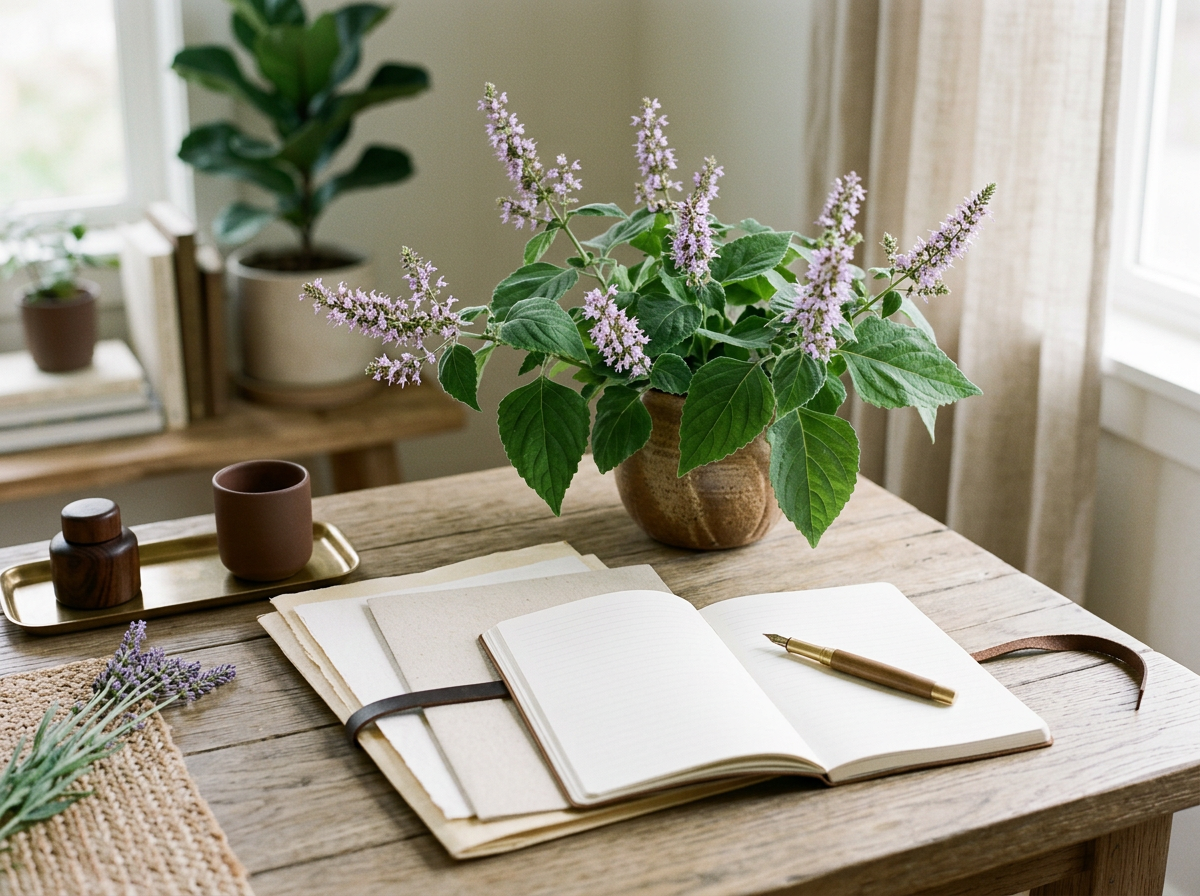
Origin matters significantly with patchouli oil. Indonesia, particularly Sumatra and Sulawesi, produces the majority of the world's patchouli supply. Indonesian patchouli is characterized by its deep, complex earthiness. Indian patchouli (from Tamil Nadu in particular) tends toward a slightly lighter, greener expression. Both can be excellent; the difference is largely one of aromatic preference.
Organic certification is worth seeking out. Conventionally grown patchouli may involve pesticide applications that, while not necessarily preserved in detectable quantities through distillation, raise questions about agricultural sustainability and ecosystem impact. Certified organic sourcing provides greater transparency about farming practices.
Key quality indicators to look for:
- GC/MS testing (Gas Chromatography/Mass Spectrometry): A reputable supplier will provide a GC/MS report confirming the chemical composition. Look for patchoulol content in the 30 to 40 percent range as a general benchmark for quality oil.
- Stated distillation vintage: Given patchouli's improvement with age, knowing when the oil was distilled helps you assess where it is in its maturation arc.
- Dark glass packaging: Quality essential oils should be sold in amber or cobalt glass to protect against UV degradation.
- Transparent sourcing: The supplier should be able to tell you the country of origin, plant part used (leaves), and extraction method (steam distillation).
- Botanical name on the label: The label should clearly state Pogostemon cablin. Adulteration with cheaper aromatic materials is a known issue in the patchouli trade.
For a broader orientation to the oil and how it fits into everyday use, our complete guide to patchouli oil covers the fundamentals in depth.
Patchouli in Contemporary Use
Today, patchouli appears across a remarkably wide range of product categories. Fine fragrance still accounts for significant consumption; estimates suggest it is present in a substantial proportion of commercial perfumes, usually as a base note rather than a headline. Natural cosmetics brands incorporate it for its skin-feel properties and aromatic contribution. Candle and home fragrance makers reach for it to add depth and longevity to blends.
In personal aromatherapy practice, people often use patchouli in bedtime wind-down routines, diffusing it during quiet evening hours to create a grounded, settled atmosphere. Others layer it with citrus or floral oils in personal scent blending. Its longevity on skin makes it a practical choice for those who want a natural fragrance that persists through the day.
If you are curious about putting patchouli to work in practical contexts, our article on 20 earthy ideas for fragrance and home offers concrete starting points.
A Scent Still in Motion
Patchouli's journey from a Silk Road packing material to a countercultural emblem to a contemporary organic skincare ingredient is not a story with a tidy endpoint. The plant keeps acquiring new associations, new users, and new interpretive layers while remaining chemically and aromatically consistent beneath all of it. That stability is part of what makes it interesting: the scent is always recognizably itself, even as the cultural meanings piled on top of it shift with every generation.
What the history makes clear is that patchouli's persistence in human culture is not accidental. The chemistry is genuinely distinctive. The scent is genuinely memorable. And the plant's willingness to cross cultural contexts, from Southeast Asian ritual to Victorian parlor to Haight-Ashbury to modern organic beauty, suggests a versatility that runs deeper than any single historical moment's claim on it.