Cold Process Soap with Organic Patchouli: A Six-Batch Trial
Patchouli is one of the more forgiving essential oils to work with in cold process soap. It is a base note, it holds up reasonably well against alkali, and it does not evaporate off the top of a batch the way lighter citrus oils tend to. But "holds up reasonably well" is doing a lot of work in that sentence, and the soapmaking forums are full of conflicting advice about usage rates, when to add it, and whether aged oil behaves differently than fresh. We wanted our own data, even if informal, so we ran six batches of the same base recipe and changed one variable at a time.
Patchouli Essential Oil
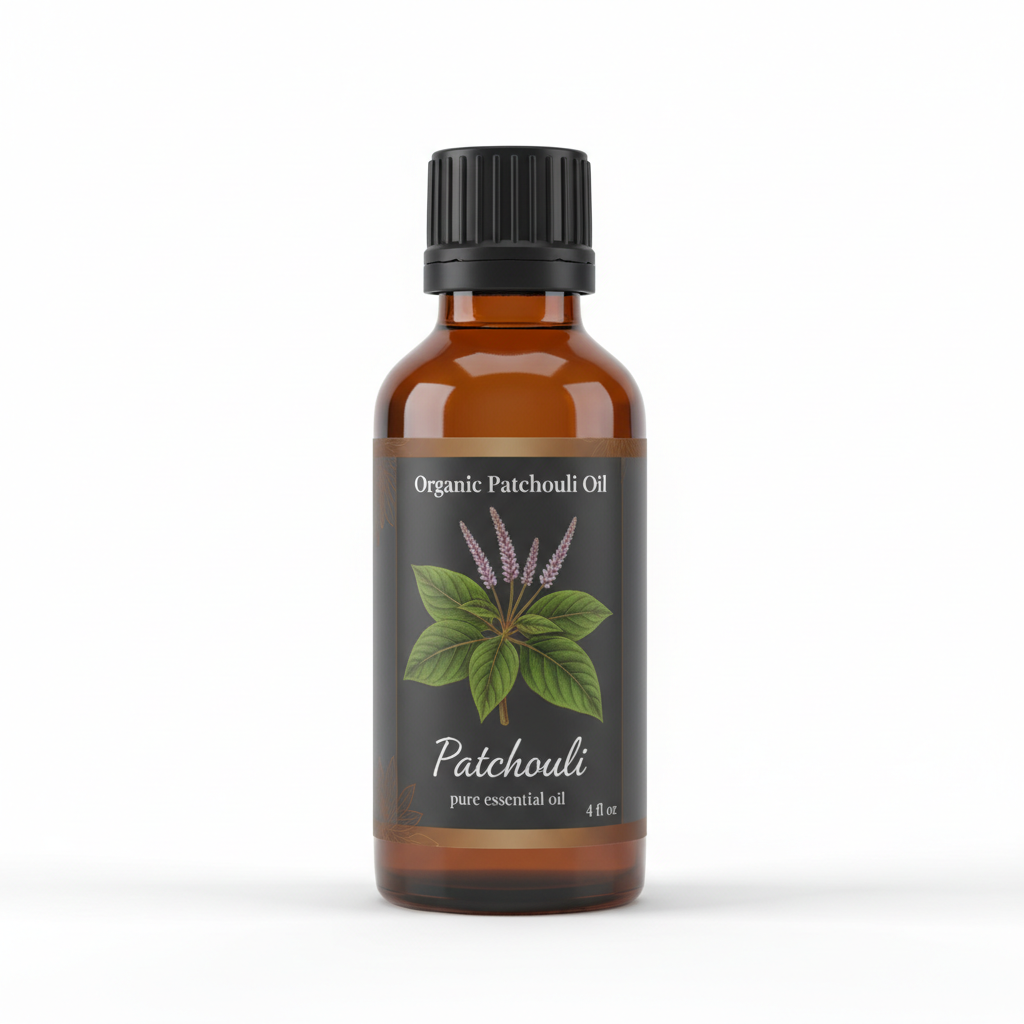
Our own Patchouli Essential Oil, in sizes from 0.5 oz to bulk.
From $18.99
Shop Now →This is not a laboratory study. We did not use a gas chromatograph to measure sesquiterpene loss, and we are not claiming these results would replicate in someone else's kitchen with a different lye concentration or a different bottle of oil. What follows is a set of observations from six batches made over eleven weeks, written up the way we'd want to read it if someone else had done the work first.
Why Patchouli in Cold Process Soap Raises Questions
Patchouli cold process soap shows up constantly in small-batch soap shops, usually paired with something citrus or woodsy to round out the scent. Part of the appeal is practical: patchouli oil in soap making is comparatively stable next to something like sweet orange, which can fade within days of unmolding. The tradeoff is that patchouli's aroma shifts as it ages, both in the bottle and inside the bar, and a soap that smells rich and earthy at trace can smell noticeably thinner (or, depending on who you ask, more mellow and rounded) six weeks later.
The other recurring question is discoloration. Patchouli oil carries a natural amber-to-brown tint, and soapers report that bars scented heavily with it tend to darken over the rest period regardless of the base oils used. We wanted to see how consistent that was across batches, and whether anything in our process made it worse or better.
The Trial Setup
Every batch used the same base recipe: a blend of olive, coconut, and sustainable palm oils at a 5 percent superfat, water discount kept constant, and the same batch size (2 pounds of oils) so usage rates would scale evenly. We sourced a single large bottle of organic patchouli essential oil for the whole trial to remove supplier variation as a factor, and we logged ambient kitchen temperature, trace consistency, and mold type for each pour.
Six variables were tested, one per batch:
- Batch 1 (control): Fresh-bottle patchouli oil, added at light trace, standard usage rate of 0.7 oz per pound of oils.
- Batch 2: Same oil and rate, but added at a much heavier trace, closer to soft-serve consistency.
- Batch 3: Patchouli oil that had been resting, capped, in a dark cabinet for roughly a year before use.
- Batch 4: Usage rate increased to 1.0 oz per pound, testing whether more oil simply meant more retained scent later.
- Batch 5: Patchouli blended with a small amount of kaolin clay, added as a possible scent anchor.
- Batch 6: Patchouli blended with a low percentage of benzoin resinoid, a common fixative in perfumery, to see if it changed how the scent read after resting.
All six batches were unmolded at 24 hours, cut at 48 hours, and then set on a rack in the same room to rest for six weeks before final evaluation. We did informal sniff checks at 1, 3, and 6 weeks, comparing bars against a fresh sample of the same batch kept in a sealed bag as a rough baseline.
Batch Notes: What We Recorded
Below is a condensed version of our batch notes. Scent strength is a subjective 1 to 5 rating from our small sniff panel (three people), not an instrument reading, and should be read as directional rather than precise.
| Batch | Variable Tested | Scent Strength, Week 1 | Scent Strength, Week 6 | Visible Discoloration |
|---|---|---|---|---|
| 1 (control) | Standard rate, light trace | 4 | 3 | Mild tan |
| 2 | Heavy trace | 4 | 3 | Mild tan, slight mottling |
| 3 | Aged oil | 3.5 | 3 | Mild tan |
| 4 | Higher usage rate | 5 | 4 | Moderate brown |
| 5 | Clay anchor | 4 | 3.5 | Mild tan, more even |
| 6 | Benzoin fixative | 4 | 4 | Moderate brown |
A few things stood out immediately. Batch 4, the higher usage rate, started strongest and stayed strongest, which is not exactly a surprising finding on its own, but it also darkened the most of any bar in the trial, arguably past what we'd consider an attractive tan. If someone cares more about a pale bar than a strong scent, that tradeoff is worth knowing about going in.
Observations on Scent Retention
Essential oil scent retention in soap is a genuinely hard thing to test casually, because human noses adapt quickly and our own familiarity with a scent changes how strong we perceive it to be over repeated exposure. With that caveat firmly in place, here is what we observed:
- The trace consistency at the time of adding fragrance (Batch 1 vs Batch 2) did not appear to make a meaningful difference in retention by week six. Both batches read similarly on our panel's scale.
- Aged oil (Batch 3) started slightly softer in the fresh cut but seemed to lose less ground between week 1 and week 6 than the control. This lines up with something we'd heard anecdotally from other soapers: patchouli oil that has rested for a year or more tends to smell rounder and less sharp from the start, so the perceived drop-off across the rest period is smaller simply because there was less top-note sharpness to lose.
- The clay-anchored batch (5) held on to a slightly more even scent profile across the six weeks compared to the control, though the difference was subtle enough that we would not want to overstate it from a single trial.
- The benzoin-blended batch (6) was the closest thing to a standout for retention without also being the darkest bar, which suggests fixative blending may be worth exploring further, ideally with more repetitions than we ran here.
One thing our notes kept circling back to: the bars that smelled "different" at six weeks did not necessarily smell weaker, just changed. The bright, almost medicinal top note patchouli can have fresh out of the bottle mellowed into something rounder and more earthy across every batch, control included. Soapers who expect the bar to smell exactly like the bottle at pour time may be disappointed by any usage rate.
What We'd Change Next Time
Six batches and one sniff panel is a small sample, and we want to be upfront about the limits of what we can conclude. A few adjustments we'd make in a follow-up trial:
- Run each variable in duplicate to catch batch-to-batch noise that has nothing to do with the variable being tested.
- Extend the observation window past six weeks. Cold process soap keeps changing well past the point most makers call it ready to sell, and a scent that has stabilized by week six might still shift by week twelve.
- Bring in a larger, blinded sniff panel rather than three people who already knew which bar was which.
- Test a wider range of usage rates between 0.5 and 1.0 oz per pound to find where the retention curve actually bends, rather than jumping straight to the higher end.
Key Learnings from the Trial
A few patterns held up consistently enough across our patchouli soap batch notes that we'd feel comfortable passing them along, with the usual caveat that individual results will vary by base recipe, water content, and even the specific bottle of oil used:
- Higher usage rates produced a stronger scent at six weeks but came with more noticeable browning. Anyone making patchouli cold process soap for a market that expects a lighter-colored bar may want to stay closer to the standard rate and consider a fixative instead of simply adding more oil.
- Trace consistency at the time of fragrance addition did not appear to be a major factor in our results, which may be reassuring for soapers who find their batches tend to accelerate before they're ready to add scent.
- Aged patchouli oil behaved a little differently than fresh oil from the first pour, and that difference is worth factoring into recipe planning rather than treating all patchouli oil as interchangeable regardless of how long it has been open.
- Fixatives and clay anchors are a reasonable area for further experimentation, though we would not draw firm conclusions from a single batch of each.
A Note on Safety and Testing
Cold process soap involves working with lye, which is caustic and requires proper eye protection, gloves, and ventilation regardless of what essential oil is being added. Beyond the saponification process itself, anyone formulating with a concentrated essential oil like patchouli should stay within recognized usage guidelines for finished cosmetic products, since essential oils are potent even after being incorporated into a lye-based bar. We'd recommend patch testing any new soap formulation on a small area of skin before regular use, discontinuing use if any irritation develops, and keeping fragrance materials and finished bars well out of reach of children and pets. People with known sensitivities to fragrance materials, or anyone pregnant or caring for a young child, may want to check in with a qualified healthcare provider before introducing a new heavily scented product into their routine. None of the observations in this case study are intended as guidance for any use beyond soap crafting and topical cosmetic formulation.
Where This Leaves Us
Six batches is not enough to write a definitive guide to patchouli oil in soap making, and we are not going to pretend otherwise. What it did give us is a set of working notes we can build on: a usage rate that balances scent strength against discoloration, a reason to keep an older bottle of oil around rather than always reaching for the freshest one, and a couple of fixative ideas worth a second look. If you're running your own trial, we'd suggest logging more than we did on the first pass, because the details that seem unimportant during the pour are usually the ones you wish you'd written down by week six.